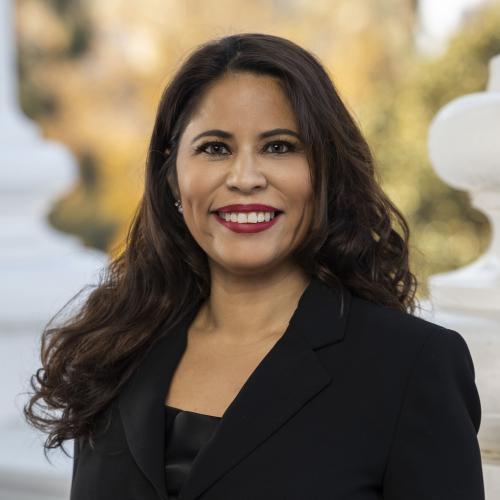
Photo of Liz Ortega
D California Assembly · District 20 On the 2026 ballot

Asm. Liz Ortega

Compare
Total votes
10,051
all sessions
Attendance
87%
1,103 missed
Higher than 86% of chamber peers
With party
99%
of cast votes
Near the chamber average
Bipartisan score
0%
crosses aisle rarely
Near the chamber average
Sponsored
921
bills & resolutions
Higher than 88% of chamber peers
Committees
9
assignments
921 bills and resolutions

Sponsored bills

Total
921
Primary
74
Co-sponsor
847
This page
921
matching current filters
Co-sponsor ACR 209
Signed into law · California Assembly · Co-sponsor
Relative to the 2024 International Day of Yoga.

Maddy summaryThis bill officially recognizes June 21, 2024, as the 2024 International Day of Yoga within the state of California. It does not create new laws or change existing regulations but serves as a formal acknowledgment of the global event. The measure is intended to highlight the history and benefits of yoga as a wellness practice.

Signed into law Aug 19, 2024 1 co-sponsor
Co-sponsor AB 2943
Signed into law · California Assembly · Co-sponsor
Crimes: shoplifting.

(1) Existing law divides theft into grand theft and petty theft. Existing law punishes petty theft as a misdemeanor while grand theft is punished as either a misdemeanor or a felony. Existing law lists specific types of theft which are grand theft and all other cases of theft as petty theft. Existing law authorizes a person to be charged with grand theft if the property taken exceeds $950 over the course of distinct but related acts. This bill would clarify that those related acts include acts committed against multiple victims or in counties other than the county of the current offense. The bill would also clarify that evidence that distinct acts are motivated by one intention, one general impulse, and one plan may include, but is not limited to, evidence that the acts involve the same defendant or defendants, are substantially similar in nature, or occur within a 90-day period. (2) Existing law prohibits the possession or receipt of stolen property, as specified. A violation of this prohibition is punishable as either a misdemeanor or a felony, depending on the value of the property and whether the offender has certain prior convictions. This bill would make it a crime for any person to possess property unlawfully that was acquired through one or more acts of shoplifting, theft, or burglary from a retail business, if the property is not possessed for personal use and the person has intent to sell, exchange, or return the merchandise for value, or the intent to act in concert with one or more persons to sell, exchange, or return the merchandise for value, and the value of the possessed property exceeds $950. The bill would, for the purpose of determining the value of the property, aggregate the property with any other property possessed by the person with that intent within the prior 2 years and with any property possessed by another person acting in concert with the first person to sell, exchange, or return the merchandise for value, if that property was also acquired unlawfully. The bill would make this crime punishable as a misdemeanor or a felony. By creating a new crime, this bill would impose a state-mandated local program. (3) Existing law prohibits shoplifting, defined as entering a commercial establishment with intent to commit theft while that establishment is open during regular business hours, where the value of the property that is taken or intended to be taken does not exceed $950. Existing law requires an act that falls within this definition to be charged as shoplifting and not as burglary or theft. Under existing law, shoplifting is punishable as a misdemeanor, except when the defendant has prior convictions, as specified. Existing law authorizes a peace officer to make a warrantless arrest for a misdemeanor when the officer has probable cause to believe the person to be arrested has committed the misdemeanor in the officer's presence. Existing law also authorizes a private person to make an arrest for a misdemeanor committed in their presence, and requires the person to deliver the arrested person to a peace officer or magistrate. Existing law additionally authorizes a merchant to detain a person for a reasonable time and in a reasonable manner to determine if a person has unlawfully taken merchandise. Existing law authorizes a peace officer to make a warrantless arrest for specified misdemeanors relating to domestic violence, violation of a restraining order, and carrying a concealed firearm at an airport that did not occur in the officer's presence. This bill would authorize a peace officer to make a warrantless arrest for a misdemeanor shoplifting offense not committed in the officer's presence if the officer has probable cause to believe that person has committed shoplifting, as specified. The bill would clarify that local law enforcement or a local jurisdiction is prohibited from bringing a nuisance action against a business solely for the act of reporting retail crime, unless the report is knowingly false. (4) Existing law requires a peace officer to release upon a signed promise to appear any person arrested for a misdemeanor, unless the person demands to be taken before a magistrate. Existing law provides certain reasons a person arrested for a misdemeanor shall not be released including that the person is intoxicated or in need of medical attention, the person is unable to provide satisfactory proof of identification, or there are outstanding arrest warrants for the person. Additionally, existing law exempts from this provision persons arrested for specified crimes including domestic violence, stalking, threatening a witness, and, until January 1, 2026, organized retail theft. This bill would extend that exemption for organized retail theft until January 1, 2031. (5) Existing law, until January 1, 2026, authorizes a city or county prosecuting authority or county probation department to create a diversion or deferred entry of judgment program for persons who commit a theft offense or repeat theft offenses, as specified. This bill would extend that authorization until January 1, 2031. (6) Existing law authorizes the court to suspend a criminal sentence and make and enforce terms of probation for a period not to exceed 2 years, and in misdemeanor cases, for a period not to exceed one year. Existing law authorizes the court to make and enforce the terms of probation for specified theft cases for a period not to exceed 3 years. This bill would, for an offense of shoplifting or petty theft, authorize the court to make and enforce the terms of probation for a period not to exceed 2 years. The bill would require a court that imposes a term longer than one year to consider referring the defendant to a collaborative court or rehabilitation program that is relevant to the underlying factor or factors that led to the commission of the offense, as specified. For a defendant under 25 years of age, the bill would require the court, to the extent such a program is available, to refer the defendant to a program modeled on healing-centered, restorative, trauma-informed, and positive youth development approaches that is provided in collaboration with community-based organizations. By increasing the period of probation, this bill would impose a state-mandated local program. (7) The California Constitution requires the state to reimburse local agencies and school districts for certain costs mandated by the state. Statutory provisions establish procedures for making that reimbursement. This bill would provide that, if the Commission on State Mandates determines that the bill contains costs mandated by the state, reimbursement for those costs shall be made pursuant to the statutory provisions noted above.


Signed into law Aug 16, 2024 1 co-sponsor
Co-sponsor AB 8
Passed · California Assembly · Co-sponsor
Ticket sellers.

Existing law provides comprehensive regulation of ticket sellers and makes violations of those provisions a misdemeanor. Existing law imposes various refund requirements on a ticket seller, including a requirement to issue a refund upon request to a ticket purchaser for canceled, postponed, or rescheduled events. Existing law also imposes various disclosure requirements on a ticket seller, including a requirement to disclose to a purchaser the location of the seat represented by the ticket, as specified. This bill would revise and recast those provisions by expanding the definition of a ticket seller to include a primary contractor or platform, as defined, and would instead apply the refund requirement relating to the postponement or rescheduling of an event only to primary contractors. The bill would impose various disclosure requirements on ticket sellers relating to ticket price, including that the ticket seller would be prohibited from advertising, displaying, or offering a price for a ticket that does not include all fees or charges that must be paid in order to purchase the ticket other than taxes or fees imposed by a government on the transaction. The bill would prohibit the resale of tickets that were initially offered at no charge and that were knowingly obtained using software or services that circumvent controls or measures that ensure an equitable ticket buying process for event attendees, and would require a ticket seller to provide printed tickets for a cellular telephone-free event, as defined, at the same price that a mobile or electronic ticket is sold. By expanding the scope of existing provisions regulating ticket sellers and imposing new requirements on ticket sellers and primary contractors, the violation of which would be a crime, this bill would impose a state-mandated local program. The California Constitution requires the state to reimburse local agencies and school districts for certain costs mandated by the state. Statutory provisions establish procedures for making that reimbursement. This bill would provide that no reimbursement is required by this act for a specified reason.

Passed Aug 15, 2024 1 co-sponsor
Co-sponsor AB 4
Passed · California Assembly · Co-sponsor
Covered California: expansion.

Existing federal law, the Patient Protection and Affordable Care Act (PPACA) , requires each state to establish an American Health Benefit Exchange to facilitate the purchase of qualified health benefit plans by qualified individuals and qualified small employers. Existing state law creates the California Health Benefit Exchange, also known as Covered California, to facilitate the enrollment of qualified individuals and qualified small employers in qualified health plans as required under PPACA. Existing law requires the Exchange to apply for a federal waiver to allow persons otherwise not able to obtain coverage through the Exchange because of their immigration status to obtain coverage from the Exchange. This bill would delete that requirement and would instead require the Exchange, no sooner than January 1, 2026, and upon appropriation by the Legislature for this purpose, to administer a program to allow persons otherwise not able to obtain coverage by reason of immigration status to enroll in health insurance coverage in a manner as substantially similar to other Californians as feasible, consistent with federal guidance and given existing federal law and rules. The bill would require the Exchange to undertake outreach, marketing, and other efforts to ensure enrollment, which would begin on October 1, 2027. The bill would also require the Exchange to adopt an annual program design for each coverage year to implement the program, provide appropriate opportunities for stakeholders, including the Legislature, and the public to consult on the design of the program, and report to the Department of Finance and the Legislature on progress toward implementation, as specified. The bill would establish the Covered California for All Fund in the General Fund, to be administered by the Exchange, into which user fees, appropriations, and other funds would be deposited to be used upon appropriation to pay for the administration of the program.

Passed Aug 15, 2024 1 co-sponsor
Co-sponsor SB 1446
Passed · California Senate · Co-sponsor
Grocery retail store and retail drug establishment employees: self-service checkout and consequential workplace technology.

Existing law imposes certain requirements on grocery employers, as defined, upon the purchase or change in control of a grocery establishment, including requiring a successor grocery employer to retain eligible grocery workers for a specified period after transfer of the grocery establishment. This bill would prohibit a grocery retail store or a retail drug establishment, as those terms are defined, from providing a self-service checkout option for customers unless specified conditions are satisfied, including having no more than 2 self-service checkout stations monitored by any one employee and requiring the employee to be relieved of all other duties. The bill would require a grocery retail store or retail drug establishment that offers self-service checkout to include self-service checkout in the employer's illness and prevention program, as required by Division of Occupational Safety and Health regulations. The bill would require a grocery retail store or retail drug establishment that intends to implement consequential workplace technology, as defined, to notify workers, their collective bargaining representatives, and the public at least 60 days in advance of the implementation of the technology with a general description of the technology and the intended purpose of the technology, as specified. This bill would establish remedies and penalties for a violation of the bill's provisions, including a civil penalty of $100 for each day in violation, not to exceed an aggregate penalty of $10,000.

Passed Aug 15, 2024 1 co-sponsor
Co-sponsor SB 1255
Passed · California Senate · Co-sponsor
Public water systems: needs analysis: water rate assistance program.

(1) The California Safe Drinking Water Act provides for the operation of public water systems and imposes on the State Water Resources Control Board various responsibilities and duties relating to the regulation of drinking water to protect public health. Existing law establishes the Safe and Affordable Drinking Water Fund in the State Treasury to help water systems provide an adequate and affordable supply of safe drinking water in both the near and long terms. Existing law requires the state board to annually adopt a fund expenditure plan, as provided, and requires expenditures from the fund to be consistent with the fund expenditure plan. Existing law requires the state board to base the fund expenditure plan on data and analysis drawn from a specified drinking water needs assessment. This bill would require the state board to update a needs analysis of the state's public water systems to include an assessment, as specified, of the funds necessary to provide a 20% bill credit for low-income households served by community water systems with fewer than 3,300 service connections and for community water systems with fewer than 3,300 service connections to meet a specified affordability threshold on or before July 1, 2026, and on or before July 1 of every 3 years thereafter. (2) Existing law requires the state board, by January 1, 2018, to develop a plan for the funding and implementation of the Low-Income Water Rate Assistance Program. Existing law requires the plan to include, among other things, a description of the method for collecting moneys to support and implement the program and a description of the method for determining the amount of moneys that may need to be collected from water ratepayers to fund the program. This bill would require qualified systems, defined as any retail water supplier that serves over 3,300 residential connections, to begin providing water rate assistance to eligible ratepayers, defined to mean a low-income residential ratepayer with an annual household income that is no greater than 200% of the federal poverty guideline level, on or before July 1, 2027. The bill would require a qualified system to automatically enroll an eligible ratepayer in the water rate assistance program if available information, which includes, among other things, authorizing a ratepayer to confirm eligibility by self-certification made under penalty of perjury, indicates that they are qualified to receive assistance and provide a water bill credit, as specified. By expanding the crime of perjury, the bill would impose a state-mandated local program. The bill would require a qualified system, on or before September 1, 2026, to provide an opportunity for each ratepayer to provide a voluntary contribution as part of the ratepayer's water bill to provide funding for the qualified system's water rate assistance program. The bill would require a qualified system to recommend a voluntary contribution amount on the bill of each ratepayer, other than an eligible ratepayer, at a level intended to raise sufficient funding to provide a bill credit to eligible ratepayers, pay for the qualified system's administrative costs to implement the program beginning January 1, 2025, and establish a balancing account if the qualified system chooses to do so. The bill would require a qualified system to notify ratepayers of the voluntary contribution on the water bill and provide each ratepayer the option and method of opting out of the voluntary contribution, as specified. The bill would also prohibit a qualified system from sanctioning or holding liable a ratepayer in any manner for not paying the voluntary contribution. The bill would authorize a qualified system to use any state or federal funds that are available to support a ratepayer assistance program by offsetting or supplementing the funds collected from voluntary contributions. The bill would authorize the Attorney General to bring an action in state court to restrain the use of any method, act, or practice in violation of these provisions, except as provided. (3) The California Constitution requires the state to reimburse local agencies and school districts for certain costs mandated by the state. Statutory provisions establish procedures for making that reimbursement. This bill would provide that no reimbursement is required by this act for a specified reason.

Passed Aug 15, 2024 1 co-sponsor
Co-sponsor SB 245
Passed · California Senate · Co-sponsor
California Food Assistance Program: eligibility and benefits.

Existing federal law provides for the Supplemental Nutrition Assistance Program (SNAP) , known in California as CalFresh, under which supplemental nutrition assistance benefits allocated to the state by the federal government are distributed to eligible individuals by each county. Existing law requires the State Department of Social Services to establish a food assistance program, known as the California Food Assistance Program (CFAP) , to provide assistance to a noncitizen of the United States if the person's immigration status meets the eligibility criteria of SNAP in effect on August 21, 1996, but the person is not eligible for SNAP benefits solely due to their immigration status, as specified. Existing law also makes eligible for the program an applicant who is otherwise eligible for the program, but who entered the United States on or after August 22, 1996, if the applicant is sponsored and the applicant meets one of a list of criteria, including that the applicant, after entry into the United States, is a victim of the sponsor or the spouse of the sponsor if the spouse is living with the sponsor. Existing law, to become operative on the date that the department notifies the Legislature that the Statewide Automated Welfare System (SAWS) has been updated to perform the necessary automation, and subject to an appropriation in the annual Budget Act, makes an individual 55 years of age or older eligible for the program if the individual's immigration status is the sole basis for their ineligibility for CalFresh benefits. This bill would delete the above-described contingency and, commencing on October 1, 2027, remove that age limitation and make any individual eligible for the program if the individual's immigration status is the sole basis for their ineligibility for CalFresh benefits. By extending eligibility for CFAP, which is administered by the counties, this bill would impose a state-mandated local program. The California Constitution requires the state to reimburse local agencies and school districts for certain costs mandated by the state. Statutory provisions establish procedures for making that reimbursement. This bill would provide that, if the Commission on State Mandates determines that the bill contains costs mandated by the state, reimbursement for those costs shall be made pursuant to the statutory provisions noted above.
Passed Aug 15, 2024 1 co-sponsor
Co-sponsor AB 311
Passed · California Assembly · Co-sponsor
California Food Assistance Program: eligibility and benefits.

Existing federal law provides for the Supplemental Nutrition Assistance Program (SNAP) , known in California as CalFresh, under which supplemental nutrition assistance benefits allocated to the state by the federal government are distributed to eligible individuals by each county. Existing law requires the State Department of Social Services to establish a food assistance program, known as the California Food Assistance Program (CFAP) , to provide assistance to a noncitizen of the United States if the person's immigration status meets the eligibility criteria of SNAP in effect on August 21, 1996, but the person is not eligible for SNAP benefits solely due to their immigration status, as specified. Existing law also makes eligible for the program an applicant who is otherwise eligible for the program, but who entered the United States on or after August 22, 1996, if the applicant is sponsored and the applicant meets one of a list of criteria, including that the applicant, after entry into the United States, is a victim of the sponsor or the spouse of the sponsor if the spouse is living with the sponsor. Existing law, to become operative on the date that the department notifies the Legislature that the Statewide Automated Welfare System (SAWS) has been updated to perform the necessary automation, and subject to an appropriation in the annual Budget Act, makes an individual 55 years of age or older eligible for the program if the individual's immigration status is the sole basis for their ineligibility for CalFresh benefits. This bill would remove that age limitation and make any individual eligible for the program if the individual's immigration status is the sole basis for their ineligibility for CalFresh benefits. By extending eligibility for CFAP, which is administered by the counties, this bill would impose a state-mandated local program. The California Constitution requires the state to reimburse local agencies and school districts for certain costs mandated by the state. Statutory provisions establish procedures for making that reimbursement. This bill would provide that, if the Commission on State Mandates determines that the bill contains costs mandated by the state, reimbursement for those costs shall be made pursuant to the statutory provisions noted above.

Passed Aug 15, 2024 1 co-sponsor
Showing 491 to 500 of 921 bills
Previous 1 … 49 50 51 … 93 Next