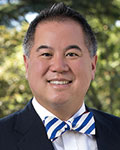
Photo of Phil Ting
D California Assembly · District 19 · Former member

Asm. Phil Ting

Contact Email
Compare
Total votes
25,223
all sessions
Attendance
97%
568 missed
Higher than 85% of chamber peers
With party
99%
of cast votes
Near the chamber average
Bipartisan score
0%
crosses aisle rarely
Near the chamber average
Sponsored
2,434
bills & resolutions
Near the chamber average
Committees
0
assignments
2,434 bills and resolutions

Sponsored bills

Total
2,434
Primary
338
Co-sponsor
2,096
This page
2,434
matching current filters
Primary AB 1046
Passed · California Assembly · Lead sponsor
Air Quality Improvement Program: Clean Vehicle Rebate Project.

Existing law establishes the Air Quality Improvement Program that is administered by the State Air Resources Board for the purposes of funding projects related to, among other things, the reduction of criteria air pollutants and improvement of air quality. Pursuant to its existing statutory authority, the state board has established the Clean Vehicle Rebate Project, as a part of the Air Quality Improvement Program, to promote the use of zero-emission vehicles by providing rebates for the purchase of new zero-emission vehicles. This bill would require the state board to develop a plan to provide for the funding of the Clean Vehicle Rebate Project, as specified. The bill would require the state board to provide to the Director of Finance a rebate structure designed to support the deployment of 5,000,000 zero-emission vehicles in the state by December 2030; a starting rebate level for all battery electric vehicles and hydrogen fuel cell vehicles in a specified amount; rebate levels, if any, for plug-in hybrid electric vehicles, as specified; and an estimate of the total amount of money to be paid as rebates between July 1, 2020, and the date at which 5,000,000 zero-emission vehicles are expected to be deployed. The bill would require the Department of Finance to specify a funding plan to maintain funding levels for any program impacted by that rebate structure and levels. The bill would require the state board to submit to the Legislature the proposed funding plan and rebate structure and levels.

Passed Aug 30, 2019 0 co-sponsors
Co-sponsor AB 1735
Signed into law · California Assembly · Co-sponsor
Evidence: privileges: human trafficking caseworker-victim privilege.

Existing law establishes the crime of trafficking of a person for forced labor or services or for effecting or maintaining other specified felonies, and the crime of trafficking of a minor for those purposes. Existing law establishes procedures governing the admissibility of evidence in civil and criminal actions in this state. Existing law recognizes various evidentiary privileges, including a victim‑caseworker privilege, under which a human trafficking victim may refuse to disclose, or may prevent another's disclosure of, a confidential communication made to a human trafficking caseworker, as defined. Existing law also sets forth circumstances under which a court may compel the disclosure of information otherwise protected by this privilege, and defines various terms for these purposes. This bill would allow a human trafficking victim's current caseworker to claim the privilege, even if that caseworker was not the victim's caseworker at the time the confidential communication was made, thereby expanding the scope of the privilege. This bill would adjust the definitions of "holder of the privilege" and "human trafficking caseworker" for these purposes, including by expanding the list of topics about which human trafficking caseworkers shall be trained. The California Constitution requires that a statute that would exclude relevant evidence in any criminal proceeding be enacted by a 23 vote of each house of the Legislature. Because this bill would exclude certain communications between a victim of human trafficking and a human trafficking caseworker in criminal proceedings, the bill would require a23 vote.

Signed into law Aug 30, 2019 1 co-sponsor
Co-sponsor AB 656
Passed · California Assembly · Co-sponsor
Office of Healthy and Safe Communities.

Existing establishes the State Department of Public Health, within the California Health and Human Services Agency, vested with certain duties, powers, functions, jurisdiction, and responsibilities over specified health programs, including, among others, a reporting system to collect data on violent deaths. This bill would create the Office of Healthy and Safe Communities (OHSC) under the direction of the State Department of Public Health, to provide a comprehensive violence prevention strategy. The bill would require the department to oversee the OHSC and would require the Governor to appoint the Director of the OHSC. The bill would set forth the duties of the OHSC, including the duty to develop, implement, and monitor a California vision and plan for violence prevention, safety, and healing. The bill would require the director to strengthen the professionalization of community violence intervention and prevention as a licensed occupation and facilitate the coordination and alignment of programming across statewide departments and agencies, among other duties. The bill would also require the director to assemble an advisory committee to inform and guide the execution of the duties of the OHSC. The bill would require the advisory committee to be selected by the President pro Tempore of the Senate and the Speaker of the Assembly and would specify the composition of the advisory committee. The bill would make the implementation of its provisions contingent on appropriate funding as determined by the department, upon appropriation by the Legislature or other sources.

Passed Aug 30, 2019 1 co-sponsor
Co-sponsor AB 1424
Passed · California Assembly · Co-sponsor
Electric Vehicle Charging Stations Open Access Act.

The Electric Vehicle Charging Stations Open Access Act prohibits the charging of a subscription fee on persons desiring to use an electric vehicle charging station, as defined, and prohibits requiring those persons to obtain membership in any club, association, or organization as a condition of using the station, except as specified. The act requires an electric vehicle charging station to provide to the general public 2 specified options for payment. The act also authorizes the State Air Resources Board, if no interoperability billing standards have been adopted by a national standards organization by January 1, 2015, to adopt interoperability billing standards, as defined, for network roaming payment methods for electric vehicle charging stations, and requires, if the state board adopts standards, all electric vehicle charging stations that require payment to meet those standards within one year. This bill instead would require an electric vehicle charging station to provide to the general public a toll-free telephone number for processing a credit card payment and onsite capacity for credit card payment, as defined. The bill instead would authorize the state board, if no interoperability billing standards, as defined, have been adopted by an international standards organization by January 1, 2021, to adopt interoperability billing standards for network roaming payment methods for electric vehicle charging stations, and would require, if the state board adopts standards, all electric vehicle charging stations that require payment to meet those standards by deadlines specified by the state board.


Passed Aug 30, 2019 1 co-sponsor
Primary AB 161
Passed · California Assembly · Lead sponsor
Solid waste: paper waste: proofs of purchase.

Existing law prohibits certain stores from providing a single-use carryout bag to a customer at the point of sale and prohibits full-service restaurants from providing single-use plastic straws to consumers unless requested by the consumer. This bill would require a business, as defined, that accepts payment through cash, credit, or debit transactions, subject to certain exceptions, to provide a proof of purchase to a consumer only at the consumer's option and would prohibit a business from printing a paper proof of purchase if the consumer opts to not receive a proof of purchase, unless otherwise required by state or federal law. The bill would prohibit a paper proof of purchase provided to a consumer by a business from containing bisphenol A or bisphenol S, and from including items not essential to the transaction, including, but not limited to, coupons or advertisements. The bill would specify that the first and 2nd violations of any of those provisions would result in a notice of violation and any subsequent violation would be punishable by a civil penalty of $25 for each day the business is in violation, but not to exceed an annual total of $300. The bill would authorize the Attorney General, a district attorney, or a city attorney to enforce those provisions. The bill would make these provisions operative on January 1, 2022.

Passed Aug 30, 2019 0 co-sponsors
Co-sponsor SB 23
Passed · California Senate · Co-sponsor
Unlawful entry of a vehicle.

Existing law defines the crime of burglary to include entering a vehicle when the doors are locked with the intent to commit grand or petit larceny or a felony. Existing law makes the burglary of a vehicle punishable as a misdemeanor or a felony. This bill would make forcibly entering a vehicle, as defined, with the intent to commit a theft therein a crime punishable by imprisonment in a county jail for a period not to exceed one year or imprisonment in a county jail for 16 months, or 2 or 3 years. By creating a new crime, this bill would impose a state-mandated local program. The California Constitution requires the state to reimburse local agencies and school districts for certain costs mandated by the state. Statutory provisions establish procedures for making that reimbursement. This bill would provide that no reimbursement is required by this act for a specified reason.

Passed Aug 30, 2019 1 co-sponsor
Co-sponsor AB 165
Passed · California Assembly · Co-sponsor
Peace officer training: gun violence restraining orders.

Existing law requires specified categories of law enforcement officers to meet training standards pursuant to courses of training certified by the Commission on Peace Officer Standards and Training. Existing law requires the commission to implement a course or courses of instruction for the training of law enforcement officers in California in the handling of domestic violence complaints and also to develop guidelines for law enforcement response to domestic violence. Existing law also requires the commission to adopt rules establishing minimum standards relating to the recruitment and training of local public safety dispatchers having a primary responsibility for providing dispatching services for local law enforcement agencies. This bill would require the commission to develop and implement, on or before January 1, 2021, a course of training regarding gun violence restraining orders. The bill would require the course to be incorporated into the course or courses of basic training for law enforcement officers on or before January 1, 2021, and would require the course or courses to include specified topics, including the process of filing a petition for gun violence restraining orders and situational training to assist officers in identifying when a gun violence restraining order is appropriate. The bill would authorize law enforcement officers, administrators, and executives to participate in supplementary training that includes these topics.

Passed Aug 30, 2019 1 co-sponsor
Co-sponsor ACR 104
Signed into law · California Assembly · Co-sponsor
Relative to Philippine Independence Day.

This measure would recognize June 12, 2019, as the 121st Anniversary of Philippine Independence and would call upon the people of the state to observe the month of June with appropriate ceremonies, programs, and activities.

Signed into law Aug 27, 2019 1 co-sponsor
Co-sponsor AJR 11
Signed into law · California Assembly · Co-sponsor
Immigration: Development, Relief, and Education for Alien Minors Act: Deferred Action for Childhood Arrivals: Deferred Enforced Departure: Temporary Protected Status.

This measure would urge the President and the Congress of the United States to enact legislation to provide permanent legal status and a path to citizenship for immigrant youths and individuals with Deferred Enforced Departure and Temporary Protected Status.

Signed into law Aug 27, 2019 1 co-sponsor
Showing 1,211 to 1,220 of 2,434 bills