

Existing law contains numerous provisions governing the qualifications, standards, and training of peace officers. Existing law specifies circumstances that disqualify a person from holding office or being employed as a peace officer, including, among other things, any person previously employed in law enforcement in any state or United States territory or by the federal government whose name is listed in any of specified indexes whose certification as a law enforcement officer in that jurisdiction was revoked for misconduct or who, while employed as a law enforcement officer, engaged in serious misconduct that would have resulted in their certification being revoked by the commission if employed as a peace officer in this state. This bill would specify that, for purposes of the disqualification circumstances described above, the terms "employed in law enforcement" and "law enforcement officer" include a law enforcement officer employed in any state or United States territory or by the federal government who engages in immigration enforcement, as provided. The bill would make the provisions of the act severable. The bill would include findings that changes proposed by this bill address a matter of statewide concern rather than a municipal affair and, therefore, apply to all cities, including charter cities. This bill would incorporate additional changes to Section 1029 of the Government Code proposed by AB 1896 to be operative only if this bill and AB 1896 are enacted and this bill is enacted last.
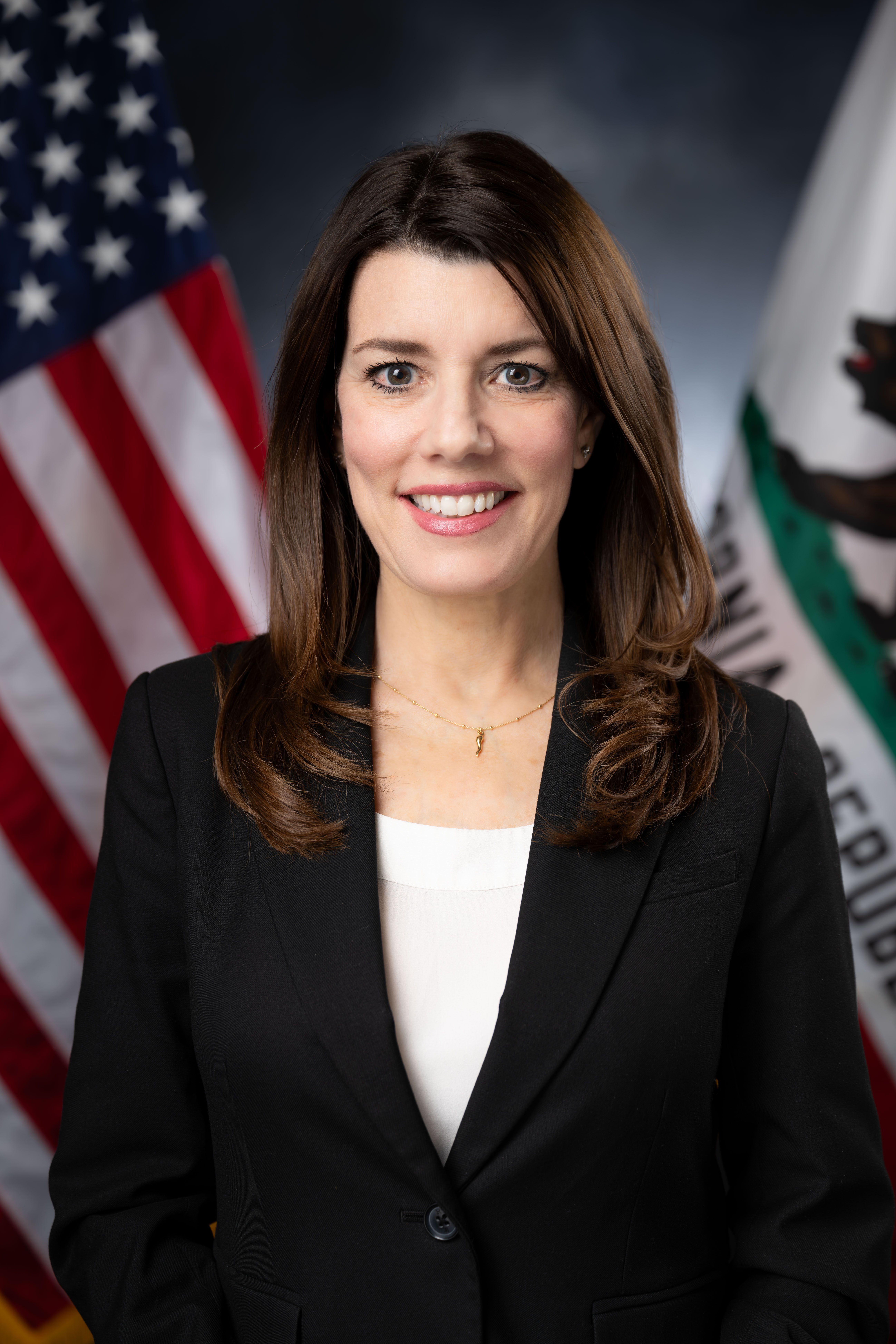
Rep. Catherine Stefani
Sponsored bills
Existing law establishes the Domestic Violence Prevention Act for the purpose of preventing acts of domestic violence, abuse, and sexual abuse and providing for a separation of the persons involved in the domestic violence for a period sufficient to enable those persons to seek a resolution of the causes of the violence. Existing law authorizes a court to issue an ex parte protective order enjoining a party from, among other things, stalking, battering, or disturbing the peace of the other party. This bill would authorize a court determining whether to issue a protective order to consider evidence submitted to it by either party that a military protective order has been issued against the respondent, as specified. The bill would additionally require a law enforcement officer who receives information at the scene of a domestic violence incident that a military protective order has been issued to verify the existence of that order. The bill would require a law enforcement officer who determines that a military protective order has been issued against a person involved in the domestic violence incident who violates a provision of a domestic violence protective order to notify the law enforcement agency that entered the military protective order that the restrained party may be in violation of a military protective order. By increasing duties on local law enforcement, this bill would impose a state-mandated local program. The bill would authorize each law enforcement agency in the state that petitions for or enforces domestic violence protective orders to develop and adopt memoranda of understanding with military law enforcement or other designated representatives of one or more military installations located in whole or in part within the borders of its jurisdiction that govern the investigation and actions related to domestic violence involving service members assigned to units on those installations, as specified. This bill would incorporate additional changes to Section 6383 of the Family Code proposed by AB 1753 and SB 1395, to be operative only if this bill and either or both of those bills are enacted and this bill is enacted last. The California Constitution requires the state to reimburse local agencies and school districts for certain costs mandated by the state. Statutory provisions establish procedures for making that reimbursement. This bill would provide that, if the Commission on State Mandates determines that the bill contains costs mandated by the state, reimbursement for those costs shall be made pursuant to the statutory provisions noted above.
Existing law sets forth provisions, under the California Constitution, regarding the fundamental right to choose to have an abortion. Existing law, the Reproductive Privacy Act, prohibits the state from denying or interfering with a pregnant person's right to choose or obtain an abortion prior to viability of the fetus, or when the abortion is necessary to protect the life or health of the pregnant person. This bill, the Access to Safe Abortion Care Act, would make legislative findings about medication abortion, with a focus on use of the drugs mifepristone and misoprostol. Under the bill, the Legislature would reaffirm that it has been, and would continue to be, lawful to cause the delivery of, or mail, ship, take, receive, or otherwise transport, any drug, medicine, or instrument that can be designed or adapted to produce an abortion that is lawful in the State of California. The bill would set forth provisions regarding the lack of civil or criminal liability, or professional disciplinary action, for accessing or administering brand name or generic mifepristone or any drug used for medication abortion that is lawful under the laws of the state, on or after January 1, 2020, with this provision applied retroactively, as specified. The bill would make its provisions severable.
Existing law prohibits a state or local law enforcement agency or officer from knowingly arresting or knowingly participating in the arrest of any person for performing, supporting, or aiding in the performance of a legally protected health care activity, as defined, or for obtaining a legally protected health care activity, if the legally protected health care activity is lawful in this state. Existing law prohibits a state or local public agency from cooperating with or providing information to an individual or agency from another state or a federal law enforcement agency, as specified, regarding a legally protected health care activity. Existing law prohibits specified persons, including a judicial officer, a court employee, or an authorized attorney, among others, from issuing a subpoena in connection with a proceeding in another state regarding an individual performing, supporting, or aiding in the performance of a legally protected health care activity in this state, or an individual obtaining a legally protected health care activity in this state, if the legally protected health care activity is lawful in this state. This bill would make those provisions apply regardless of the patient's location. Existing law authorizes the Governor to surrender, on demand of the executive authority of any other state, any person in this state charged in the other state with committing an act in this state, or in a 3rd state, intentionally resulting in a crime in the state whose executive authority is making the demand. This bill would additionally prohibit a state or local law enforcement agency or officer from knowingly arresting or participating in the arrest of any person who the Governor has declined to surrender. Existing law requires any out-of-state subpoena, warrant, wiretap order, pen register trap and trace order, or other legal process to include an affidavit or declaration under penalty of perjury that the discovery request is not in connection with an out-of-state proceeding relating to a legally protected health care activity, except as specified. Existing law prohibits a California corporation that provides electronic communication services or remote computing services to the general public from complying with an out-of-state subpoena, warrant, wiretap order, pen register trap and trace order, other legal process, or request by a law enforcement agent or entity seeking records that would reveal the identity of the customers using those services, data stored by, or on behalf of, the customer, the customer's usage of those services, the recipient or destination of communications sent to or from those customers, or the content of those communications, unless the out-of-state subpoena, warrant, wiretap order, pen register trap and trace order, other legal process, or request from law enforcement includes the affidavit or declaration described above. This bill would extend those provisions to also apply to a California corporation that provides financial services, as defined, to the general public. By expanding the situations in which a declaration under penalty of perjury is required, this bill would expand the scope of the crime of perjury and impose a state-mandated local program. The bill would authorize the Attorney General to commence an action to enforce these provisions, as specified, and would authorize the court to assess a statutory penalty of $10,000 for a first violation, and $15,000 for a 2nd or subsequent violation, against any person or entity found to have intentionally, knowingly, willingly, or recklessly complied with or provided information in response to an inquiry, investigation, subpoena, or summons regarding legally protected health care activity in violation of these provisions. The California Constitution requires the state to reimburse local agencies and school districts for certain costs mandated by the state. Statutory provisions establish procedures for making that reimbursement. This bill would provide that no reimbursement is required by this act for a specified reason.
The Planning and Zoning Law authorizes a state or local public agency to authorize a governmental entity, a special district, a nonprofit organization, a for-profit entity, a person, or another entity to hold title to and manage an interest in property held for mitigation purposes, subject to certain requirements. Existing law authorizes a governmental entity, special district, or nonprofit organization that holds the property as described above to hold an endowment conveyed for the property, except as specified. Existing law subjects the holder of an endowment to certain requirements, including that the holder certify to the project proponent or the holder of the mitigation property or a conservation easement and the local or state agency that required the endowment that it meets specified requirements. Existing law repeals these provisions on January 1, 2027. This bill would delete the above repeal date, thereby extending those provisions indefinitely. Existing law establishes the Department of Fish and Wildlife in the Natural Resources Agency. Under existing law, the department has jurisdiction over the conservation, protection, and management of fish, wildlife, native plants, and habitat necessary for biologically sustainable populations of those species. This bill would require the department, on or before July 1, 2030, and every 5 years thereafter, to post on its internet website a summary table providing information on the status of certain endowments held as described above, as specified. The bill would require the summary table to include specified information with respect to each such endowment, including, among other things, the name of the endowment holder.
Existing law generally punishes the willful disobedience of a court order as contempt of court by imprisonment in a county jail for a term not exceeding 6 months, a fine not exceeding $1,000, or both that imprisonment and fine. Existing law makes the willful and knowing violation of specified protective orders or stay-away court orders punishable by imprisonment in a county jail for not more than one year, by a fine of not more than $1,000, or by both that imprisonment and fine for a first offense, and makes a 2nd or subsequent conviction for a violation of these specified protective orders or stay-away court orders occurring within 7 years of a prior conviction and involving an act of violence or credible threat of violence punishable as either a misdemeanor or a felony. If a violation of specified protective orders or stay-away court orders results in a physical injury, the individual is required to be in a county jail for at least 48 hours, whether a fine or imprisonment is imposed, or the sentence suspended. This bill would make a willful and knowing violation of specified criminal protective orders or stay-away orders punishable as either a misdemeanor or a felony if the subject of the criminal protective order was charged with, or convicted of, a felony for the conduct upon which the criminal protective order was based. The bill would make a second or subsequent conviction for a violation of specified protective orders or stay-away orders a felony. If a violation of specified protective orders or stay-away orders alleges a physical injury, the bill would require the court to consider the violation of the protective order or stay-away order and alleged injury when considering the seriousness of the offense charged and the protection of the public for purposes of setting, reducing, or denying bail. By increasing the punishment for a crime, this bill would impose a state-mandated local program. The California Constitution requires the state to reimburse local agencies and school districts for certain costs mandated by the state. Statutory provisions establish procedures for making that reimbursement. This bill would provide that no reimbursement is required by this act for a specified reason.
Existing law establishes the jurisdiction of the juvenile court, which may adjudge a child to be a dependent of the court under certain circumstances, including when the child suffered, or there is a substantial risk that the child will suffer, serious physical harm, or a parent fails to provide the child with adequate food, clothing, shelter, or medical treatment. Existing law establishes the grounds for removal of a dependent child from the custody of their parents or guardian, and establishes procedures to determine placement of a child. Existing law requires, when a child has been adjudged a dependent of the court, the court to hold a dispositional hearing to determine the disposition to be made of the child. Under existing law, if the child is removed from the physical custody of their parents, preferential consideration to be given to a request by a relative of the child for placement of the child with the relative. Existing law prescribes factors for the county social worker and court to consider in determining placement, and requires the court to state on the record the reasons placement was denied if the court does not place the child with a relative who has been considered for placement. This bill would require, if the court does not initially place the child with a relative who has been considered for placement, the court to state for the record the reasons why the placement with that relative was denied or delayed. The bill would require, except as specified, after the court conducts the dispositional hearing, the social worker to assess any relative who requests placement and who has not been previously assessed or found to be unsuitable. The bill would require, if the court has terminated reunification services prior to the relative's request for placement, the county social worker and the court to consider certain additional factors to consider in determining whether placement with the relative is appropriate, including, among others, the child's relationship with the current caregiver. By increasing the duties of county social workers, this bill would impose a state-mandated local program. The California Constitution requires the state to reimburse local agencies and school districts for certain costs mandated by the state. Statutory provisions establish procedures for making that reimbursement. This bill would provide that no reimbursement is required by this act for a specified reason.
(1) Existing law, the California Fair Employment and Housing Act (FEHA) , establishes the Civil Rights Department to enforce civil rights laws with respect to housing and employment, as prescribed. The FEHA recognizes and declares to be a civil right the opportunity to seek, obtain, and hold employment and housing without discrimination because of a specified characteristic. The FEHA makes certain discriminatory practices based on those characteristics unlawful. The FEHA also declares that its purpose is to provide effective remedies that will eliminate these discriminatory practices. The FEHA defines terms used in connection with unlawful practices. These include "sex," which includes pregnancy or medical conditions related to pregnancy, childbirth or medical conditions related to childbirth, and breastfeeding or medical conditions related to breastfeeding. This bill would include perimenopause, menopause, or postmenopause or other related medical conditions within the above definition of sex. The FEHA separately defines the term "medical condition" to mean either a health impairment related to or associated with a diagnosis of cancer or a record or history of cancer or specified genetic characteristics. The Unruh Civil Rights Act (Unruh Act) establishes that all persons within the jurisdiction of the state are free and equal and, regardless of their sex, race, color, religion, ancestry, national origin, disability, medical condition, genetic information, marital status, sexual orientation, citizenship, primary language, or immigration status are entitled to the full and equal accommodations, advantages, facilities, privileges, or services in all business establishments, as prescribed. The Unruh Act defines "sex" to include, among other things, pregnancy, childbirth, or medical conditions related to pregnancy or childbirth. This bill would provide that "medical condition" as used in the definition of "sex" in FEHA and the Unruh Act includes, but is not limited to, the conditions included in the definition of "medical condition" in FEHA. (2) Existing law requires the Civil Rights Department to provide a poster on discrimination in employment to an employer or a member of the public upon request. Existing law requires the poster to be available at each office of the department and requires each employer to post the poster in a prominent and accessible location in the workplace, as prescribed. This bill would require the department, on or before July 1, 2027, to update the poster to notify people of their rights and protections in regard to perimenopause, menopause, postmenopause, or related medical conditions. (3) This bill would incorporate additional changes to Section 51 of the Civil Code proposed by AB 2563 to be operative only if this bill and AB 2563 are enacted and this bill is enacted last. This bill would incorporate additional changes to Section 12926 of the Government Code proposed by AB 2563 to be operative only if this bill and AB 2563 are enacted and this bill is enacted last.
Existing law establishes the Medi-Cal program, which is administered by the State Department of Health Care Services and under which qualified low-income individuals receive health care services. The Medi-Cal program is in part governed by, and funded pursuant to, federal Medicaid program provisions. Existing law sets forth a schedule of benefits covered under the Medi-Cal program, including acupuncture, but only to the extent that federal matching funds are provided for acupuncture. Under this bill, acupuncture would instead be a covered Medi-Cal benefit subject to utilization controls and the availability of federal financial participation. The bill would, if federal financial participation is not available for coverage of acupuncture services, make acupuncture a covered benefit subject to an appropriation and utilization controls. This bill would incorporate additional changes to Section 14132 of the Welfare and Institutions Code proposed by AB 1949 and AB 350 to be operative only if this bill and either or both AB 1949 and AB 350 are enacted and this bill is enacted last.
Existing law requires law enforcement agencies to enter each firearm into the Department of Justice Automated Firearms System that has been reported stolen, lost, found, recovered, held for safekeeping, surrendered, relinquished, or under observation. Existing law requires these law enforcement agencies to report to the Department of Justice all available information necessary to identify and trace the history of all recovered firearms that are illegally possessed, have been used in a crime, or are suspected of having been used in a crime, within 7 calendar days of obtaining the information. Existing law requires that the information collected be maintained by the department for a period of not less than 10 years, and to be available, under guidelines set forth by the Attorney General, for academic and policy research purposes. Existing law also requires the department to, on an ongoing basis, analyze the information collected for patterns and trends relating to recovered firearms that have been illegally possessed, used in a crime, or suspected to have been used in a crime, including the leading sources and origins of those firearms. This bill would clarify that the information relied on by the department for its analysis of patterns and trends be available, upon request, to any California town, city, county, or state government agency, the California State University, the University of California, or specified private postsecondary educational institutions in California, under conditions and format options set forth by the Attorney General, as specified.