

Existing law authorizes a person who suffers a loss or harm to person or property from the unlawful act or omission of another to recover from the person at fault money damages. This bill would allow the injured party, in any action to recover damages for injury to person or property caused by lead-based paint, to establish a prima facie case that a particular lead paint pigment manufacturer is the cause of the injury if the injured party proves by a preponderance of the evidence that the lead paint pigment manufacturer sold, distributed, or promoted in California either the type of lead paint pigment that caused the injury or a product containing the type of lead paint pigment that caused the injury, and would shift the burden of proof to the lead paint pigment manufacturer to prove by a preponderance of the evidence that it did not sell, distribute, or promote the lead paint pigment that caused the injury or a product containing the type of lead paint pigment that caused the injury during the relevant time period or in the geographical market in which the injury occurred. The bill would make each lead paint pigment manufacturer jointly and severally liable if more than one lead paint pigment manufacturer is found liable for an injury to person or property caused by lead-based paint. The bill would expressly make these provisions retroactive. The bill would also state various findings and declarations of the Legislature related to these provisions. The bill would provide that its provisions are severable.
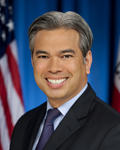
Sponsored bills
This measure would acknowledge the month of April 2018 as Child Abuse Prevention Month and encourage the people of the State of California to work together to support youth-serving child abuse prevention activities in their communities and schools.
This measure would designate May 29, 2018, as 529 College Savings Day, to raise awareness about the importance of saving for college with the help of 529 college savings plans.
(1) The California Financing Law (CFL) provides for the licensure and regulation of finance lenders and brokers by the Commissioner of Business Oversight. The CFL prohibits anyone from engaging in the business of a finance lender or broker without obtaining a license. A willful violation of the CFL is a crime, except as specified. Under existing law, a licensee who lends any sum of money is authorized to contract for and receive charges at a maximum rate that does not exceed specified sums on the unpaid principal balance per month, ranging from 2 12% to 1%, based on the consumer loan amount, as specified. This provision, however, does not apply to any loan of a bona fide principal amount of $2,500 or more, as determined in accordance with a provision governing regulatory ceilings and evasion of the CFL. The CFL also authorizes a licensee, as an alternative to the above-described rate charges for consumer loan amounts, to instead contract for and receive charges at the greater of a rate not exceeding 1.6% per month on the unpaid principal balance or a rate not exceeding 56 of 1% per month, plus a specified percentage per month, as established by the Federal Reserve Bank of San Francisco, on advances to member banks under federal law, or if there is no single determinable rate, the closest counterpart of this rate. Under existing law, these provisions do not apply to a loan of a bona fide principal amount of $2,500 or more, as specified. The CFL authorizes a licensee to contract for and receive an administrative fee of a specified amount that varies with the bona fide principal amount of the loan, including authorizing a licensee to receive an administrative fee of $75 with respect to a loan of a bona fide principal amount in excess of $2,500. This bill would authorize a licensee, with respect to a loan of a bona fide principal amount of $2,500 or more but less than $5,000, to contract for or receive no more than moneys paid for specified insurance and for charges, inclusive of an administrative fee that does not exceed $75, which in the aggregate amount exceed an annual simple interest rate of 36%. The bill would also authorize a licensee, as an alternative to these provisions, to contract for or receive no more than moneys paid for an administrative fee that does not exceed $90 and for charges, which in the aggregate amount do not exceed an annual simple interest rate of 36% or the sum of 30.75% plus the United States Prime Rate. (2) Existing law prohibits licensees subject to the CFL from entering into a contract for a consumer loan that provides for a scheduled repayment of principal over more than the maximum terms set forth in relation to the respective size of the loan. Among other things, this provision prohibits a loan of $3,000 but less than $5,000 from exceeding a maximum term of 60 months and 15 days. This bill would increase the maximum principal loan amount under the above schedule to $10,000. The bill would also prohibit a licensee from entering into a contract for a consumer loan that is in excess of $2,500 but less than $10,000 that provides for a scheduled repayment of principal that is less than 12 months. By expanding the application of the CFL to cover more loans, the bill would expand the scope of an existing crime, thereby imposing a state-mandated local program. (3) The CFL requires a statement showing in clear and distinct terms specified information relating to the loan to be delivered to the buyer when it is made. This bill would also require each licensee, prior to disbursement of loan proceeds in connection with certain loans exceeding $2,500 but less than $10,000, to offer a free credit education program or seminar to each borrower in accordance with certain conditions. (4) The CFL requires a licensed finance lender to permit payment to be made in advance in any amount on any contract of any loan at any time and authorizes the licensee to apply that payment first to any agreed prepayment penalty. This bill would prohibit a licensee from charging, imposing, or receiving any penalty for the prepayment of a loan, except as specified, and would make conforming changes to that effect. The bill would also make certain moneys paid to, and commissions and benefits received by, a licensee in connection with a loan that a buyer separately authorized as optional subject to adjustment and rebate if a loan contract is paid in full, as prescribed. (5) The CFL defines charges for its purposes to include aggregate interest, fees, bonuses, commissions, brokerage, discounts, expenses, and other forms of costs charged, contracted for, or received by a licensee or any other person in connection with the investigating, arranging, negotiating, procuring, guaranteeing, making, servicing, collecting, and enforcing of a loan or forbearance of money, credit, goods, or things in action, or any other service rendered. Existing law also specifies that charges do not include, among other things, fees paid to a licensee for the privilege of participating in an open-end-credit program, which fees are to cover administrative costs and are imposed upon executing the open-end loan agreement and on annual renewal dates or anniversary dates. This bill would delete the above exception for fees paid to a licensee for the privilege of participating in an open-end credit program, as specified. (6) The California Constitution requires the state to reimburse local agencies and school districts for certain costs mandated by the state. Statutory provisions establish procedures for making that reimbursement. This bill would provide that no reimbursement is required by this act for a specified reason.
Existing law provides that an injury to property consists in depriving its owner of the benefit of it, which is done by taking, withholding, deteriorating, or destroying it. Existing law requires an action seeking relief based on an injury to property to be commenced within 3 years after the time that the cause of action has accrued. This bill would provide that the presence of lead paint on the surfaces of a residence or other building constitutes a physical injury to property. The bill would provide that an action to recover damages for that injury would not accrue until three years from the date the aggrieved party has actual knowledge of the presence of lead-based paint in or on that property, as specified. The bill would provide that receipt or knowledge of disclosures that residences built before 1978 are presumed to contain lead-based paint are not alone sufficient to establish that knowledge. The bill would make related findings and declarations. The bill would make these provisions retroactive. The bill would make these provisions severable.
Existing law governs the hiring of residential dwelling units and establishes provisions for the renewal or termination of a hiring of residential real property for an unspecified term. Existing law requires that an owner of a residential dwelling generally give at least 60 days' notice prior to termination or, in the case of a tenant or resident that has resided in the dwelling for less than one year or if certain other conditions apply, 30 days' notice prior to termination. Existing law provides that a tenant of real property is guilty of unlawful detainer in certain circumstances, including that the tenant continues in possession of the property after the expiration of the term for which it is let to him or her, as provided. This bill would prohibit a landlord from terminating a tenancy, or seeking to recover possession from a tenant who continues in possession of property after the expiration of the term for which it is let, as described above, except for cause, as set forth with particularity in the notice. The bill would state the intent of the Legislature to encourage or incentivize cities to enact just cause eviction ordinances in order to prevent unnecessary displacement of tenants. The bill would state that its provisions are in addition to, and do not supersede or preempt, any other state or local law regulating the grounds for eviction or the termination of a tenancy.
This measure would urge lawmakers in Poland to reverse or revise a recent Polish law on speech related to the Holocaust, would call on Congress to join that effort, and would call for a renewed commitment to Holocaust education in California.
This measure would recognize the month of May 2018 as Foster Care Month as an opportunity to raise awareness about the challenges that children, and particularly lesbian, gay, bisexual, transgender, queer, and questioning (LGBTQ) youth, face in the foster care system, as specified.
The Personal Income Tax Law imposes taxes based upon taxable income of individuals, estates, and trusts at specified rates from 1% to 9.3%, as provided. This bill would impose a tax of 17% on that portion of an individual's taxable income derived from an investment management services interest, as defined. The bill would require the Franchise Tax Board to report to the Legislature, no more than 30 days thereafter, if the United States Congress passes and the President of the United States signs legislation having an identical effect as the above-described tax applicable to that income earned in all of the states and territories, and would further require the Legislature to determine whether to repeal, make inoperative, or continue in effect the tax. The bill would also require the revenues derived from this tax to be deposited in the College, Career, and Community Ready Fund, which the bill would establish. The bill would require the moneys deposited in the College, Career, and Community Ready Fund to be continuously appropriated to the State Department of Education for apportionment to local educational agencies for designated categories of programs, thereby making an appropriation. The bill would authorize the department to adopt regulations and procedures to implement these provisions of the bill relating to the distribution of the apportioned funds and to effectuate the intent of the Legislature as to the distribution of these funds among those categories. The bill would also authorize the Franchise Tax Board to prescribe rules, guidelines, or procedures necessary or appropriate to carry out the purposes of the bill, as specified. The funds apportioned to local educational agencies pursuant to this bill for the specified purposes would be applied toward the minimum funding requirements for school districts and community college districts imposed by Section 8 of Article XVI of the California Constitution. This bill would declare that it is to take effect immediately as an urgency statute.