

Relative to the Lunar New Year celebration.
This measure would recognize the Lunar New Year celebration.
Signed into law Feb 22, 2019
1 co-sponsor
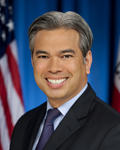
This measure would recognize the Lunar New Year celebration.
This measure would proclaim January 13, 2019, as Korean American Day.
This measure would honor the late Reverend Dr. Martin Luther King, Jr. and commemorate Dr. Martin Luther King, Jr. Day.
Existing law establishes the State Department of Public Health and sets forth its powers and duties, including, but not limited to, the licensing and regulation of health facilities, as defined. Existing law requires that every health facility for which a license or special permit has been issued be periodically inspected by the State Department of Public Health, or by another governmental entity under contract with the department. Existing law requires the department to inspect those facilities for compliance with provisions of state law and regulations during a state periodic inspection, or at the same time as a federal periodic inspection. Existing law requires the department to adopt regulations governing the operation of a health facility, including, but not limited to, regulations that require prescribed health facilities to meet minimum nurse-to-patient ratios, and to assign additional staff according to a documented patient classification system for determining nursing care requirements. Violation of these provisions, or willful or repeated violation of the rules or regulations, is a crime. This bill would require state periodic inspections of health facilities to include reviews of compliance with the nurse-to-patient ratios and staff assignment regulations described above. The bill would require the department to ensure that these inspections are not announced in advance of the date of inspection. Existing law requires the department to promulgate regulations establishing criteria to assess an administrative penalty against a general acute care hospital, acute psychiatric hospital, or special hospital. Until the effective date of specified regulations, existing law authorizes the department to assess the licensee an administrative penalty not to exceed $100,000, as specified, when a licensee of a hospital receives a notice of deficiency constituting an immediate jeopardy to the health or safety of a patient and is required to submit a plan of correction. After the effective date of these specified regulations, existing law authorizes the department to assess administrative penalties not to exceed $125,000, for a deficiency constituting an immediate jeopardy violation, as specified. Existing law requires certain penalties collected by the department to be deposited into the Internal Departmental Quality Improvement Account, to be expended, upon appropriation, for internal quality improvement activities in the Licensing and Certification Program. This bill would require the department to assess specified penalties for a violation of the nurse-to-patient ratios and staff assignment regulations described above. The bill would require those penalty moneys to be deposited into the State Department of Public Health Licensing and Certification Program Fund, to be expended, upon appropriation, for the purpose of enforcing those regulations.
Existing law, the California Fair Employment and Housing Act, makes specified employment and housing practices unlawful, including discrimination against or harassment of employees and tenants, among others. Existing law authorizes a person claiming to be aggrieved by an alleged unlawful practice to file a complaint with the Department of Fair Employment and Housing within one year from the date upon which the unlawful practice occurred, unless otherwise specified. This bill would extend the above-described period to 3 years for complaints alleging employment discrimination, as specified. The bill would make conforming changes in provisions that grant a person allegedly aggrieved by an unlawful practice who first obtains knowledge of the facts of the alleged unlawful practice after the expiration of the limitations period, as specified. This bill would state that its changes shall not be interpreted to revive lapsed claims.
Existing law, the Control, Regulate and Tax Adult Use of Marijuana Act (AUMA) , enacted by the voters at the November 8, 2016, statewide general election, regulates the cultivation, distribution, and use of cannabis for nonmedical purposes by individuals 21 years of age and older. Under AUMA, a person 21 years of age or older may, among other things, possess, process, transport, purchase, obtain, or give away, as specified, up to 28.5 grams of cannabis and up to 8 grams of concentrated cannabis. Existing law authorizes a person to petition for the recall or dismissal of a sentence, dismissal and sealing of a conviction, or redesignation of a conviction of an offense for which a lesser offense or no offense would be imposed under AUMA. This bill would require the Department of Justice, before July 1, 2019, to review the records in the state summary criminal history information database and to identify past convictions that are potentially eligible for recall or dismissal of sentence, dismissal and sealing, or redesignation pursuant to AUMA. The bill would require the department to notify the prosecution of all cases in their jurisdiction that are eligible for recall or dismissal of a sentence, dismissal and sealing, or redesignation. The bill would require the prosecution to, on or before July 1, 2020, review all cases and determine whether to challenge the resentencing, dismissal and sealing, or redesignation. The bill would authorize the prosecution to challenge the resentencing, dismissal and sealing, or redesignation if the person does not meet the eligibility requirements or presents an unreasonable risk to public safety. The bill would require the prosecution to notify the public defender and the court when they are challenging a particular resentencing, dismissal and sealing, or redesignation, and would require the prosecution to notify the court if they are not challenging a particular resentencing, dismissal and sealing, or redesignation. By imposing additional duties on local entities, this bill would create a state-mandated local program. The bill would require the court to automatically reduce or dismiss the conviction pursuant to AUMA if there is no challenge by July 1, 2020. The bill would require the department to modify the state summary criminal history information database in conformance with the recall or dismissal of sentence, dismissal and sealing, or redesignation within 30 days and to post specified information on its Internet Web site. The California Constitution requires the state to reimburse local agencies and school districts for certain costs mandated by the state. Statutory provisions establish procedures for making that reimbursement. This bill would provide that, if the Commission on State Mandates determines that the bill contains costs mandated by the state, reimbursement for those costs shall be made pursuant to the statutory provisions noted above.