

Relative to Secure Your Load Day.
This measure would declare June 6, 2019, as Secure Your Load Day in California.
Signed into law Jul 18, 2019
1 co-sponsor
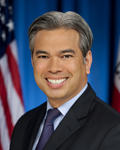
This measure would declare June 6, 2019, as Secure Your Load Day in California.
The federal Nutria Eradication and Control Act of 2003 authorizes the Secretary of the Interior, subject to the availability of appropriations, to provide financial assistance to the State of Maryland and the State of Louisiana for a program to implement measures to eradicate or control nutria and restore marshland damaged by nutria. Under the federal act, the federal share of the costs of the program is prohibited from exceeding 75% of the total costs of the program. This measure would urge the United States Congress to reauthorize and specifically add California to the Nutria Eradication and Control Act of 2003 and to authorize an appropriation of $4,000,000 to help the state implement a nutria eradication program.
This measure would urge the United States Department of Health and Human Services to rescind the new Title X regulations that will impede access to essential, time-sensitive health care for low-income individuals across California and the nation.
(1) Existing law requires a person engaged in a trade or business who negotiates primarily in Spanish, Chinese, Tagalog, Vietnamese, or Korean, before entering into specified contracts or agreements, to deliver to the other party a translation of the contract or agreement in the language in which the contract or agreement was negotiated, including a loan or extension of credit secured other than by real property, or unsecured, for use primarily for personal, family, or household purposes. This bill would specify that "loan or extension of credit" includes a contract or agreement to finance or secure a bail bond or immigration bond for the release of a detained individual. (2) Existing law, the Consumers Legal Remedies Act, makes unlawful certain acts identified as unfair methods of competition and unfair or deceptive acts or practices undertaken by a person in a transaction for the sale or lease of goods or services to a consumer, and defines "services" and "consumer" for purposes of those provisions. This bill would include within the definition of "services" the securing or financing of a bail bond or immigration bond for the release of an individual from detention and would define "consumer" to include an individual who, for the purpose of their release or another person's release from detention, seeks or acquires services to finance or secure a bail bond or immigration bond. (3) Existing law, the Rosenthal Fair Debt Collection Practices Act, prohibits debt collectors from engaging in unfair or deceptive acts or practices in the collection of consumer debts and defines "consumer debt" and "consumer credit" for purposes of that act. This bill would include within the definition of "consumer debt" money owing from a transaction for services to finance or secure a bail bond or immigration bond for the release of a detained individual. (4) Existing law requires a creditor to deliver to a person a specified notice before the person is obligated on a consumer credit contract, and defines "consumer credit contract" for those purposes to include loans or extensions of credit secured by other than real property, or unsecured, for use primarily for personal, family, or household purposes. This bill would specify that "loans or extensions of credit" includes an agreement or contract between an individual and another party to finance or secure a bail bond or immigration bond for the release of an individual from detention. (5) The bill would state that all of the changes specified above are declaratory of existing law, would make a legislative finding and declaration to this effect, and would also make other legislative findings and declarations relating to bail bonds and immigration bonds.
This measure would urge the 116th Congress of the United States to enact House Resolution 1708, which would, among other things, add 191,000 acres of the Rim of the Valley Corridor to the Santa Monica Mountains National Recreation Area.
This measure would designate the portion of Interstate 505 between the Interstate 80 interchange and the Vaca Valley Parkway in the County of Solano as the CHP Officer Kirk Griess Memorial Highway. The measure would request the Department of Transportation to determine the cost of appropriate signs showing this special designation and, upon receiving donations from nonstate sources covering that cost, to erect those signs.
Existing law states the policy of the State of California to afford all persons in public schools, regardless of their disability, gender, gender identity, gender expression, nationality, race or ethnicity, religion, sexual orientation, or any other specified characteristic, equal rights and opportunities in the educational institutions of the state, and states that the purpose of related existing law is to prohibit acts that are contrary to that policy and to provide remedies therefor. Existing law defines race or ethnicity for these purposes. Under the California Fair Employment and Housing Act, it is unlawful to engage in specified discriminatory employment practices, including hiring, promotion, and termination based on certain protected characteristics, including race, unless based on a bona fide occupational qualification or applicable security regulations. The act also prohibits housing discrimination based on specified personal characteristics, including race. The act also prohibits discrimination because of a perception that a person has one of those protected characteristics or is associated with a person who has, or is perceived to have, any of those characteristics. Existing law defines terms such as race, religious beliefs, and sex, among others, for purposes of the act. This bill would provide that the definition of race for these purposes also include traits historically associated with race, including, but not limited to, hair texture and protective hairstyles, and would define protective hairstyles for purposes of these provisions.
Existing law establishes the Medi-Cal program, which is administered by the State Department of Health Care Services and under which qualified low-income individuals receive health care services. The Medi-Cal program is, in part, governed and funded by federal Medicaid program provisions. Federal law prohibits payment to a state for medical assistance furnished to an alien who is not lawfully admitted for permanent residence or otherwise permanently residing in the United States under color of law. Existing law requires individuals under 19 years of age enrolled in restricted-scope Medi-Cal at the time the Director of Health Care Services makes a determination that systems have been programmed for implementation of these provisions to be enrolled in the full scope of Medi-Cal benefits, if otherwise eligible, pursuant to an eligibility and enrollment plan, which includes outreach strategies. Existing law makes the effective date of enrollment for those individuals the same day that systems are operational to begin processing new applications pursuant to the director's determination, and requires the department to seek any necessary federal approvals to obtain federal financial participation for purposes of implementing the requirements. Existing law requires that benefits for services under these provisions be provided with state-only funds only if federal financial participation is not available for those services. Existing law requires the department, until the director makes the above-described determination, to provide monthly updates to specified legislative committees on the status of the implementation of these provisions. This bill would extend eligibility for full-scope Medi-Cal benefits to individuals of all ages, if otherwise eligible for those benefits, but for their immigration status, and would delete provisions delaying eligibility and enrollment until the director makes the determination described above. The bill would require the department to provide, indefinitely, the above-described monthly updates to the legislative committees. The bill would expand the requirements of the eligibility and enrollment plan, such as ensuring that an individual maintains their primary care provider without disruption, as specified. The bill would require the department to collaborate with the counties and designated public hospitals to maximize federal financial participation and to work with designated public hospitals to mitigate any financial losses related to the implementation of these requirements. The bill would condition the implementation of its provisions on an appropriation by the Legislature in the annual Budget Act or other measure for that purpose. Because counties are required to make Medi-Cal eligibility determinations and this bill would expand Medi-Cal eligibility, the bill would impose a state-mandated local program. The California Constitution requires the state to reimburse local agencies and school districts for certain costs mandated by the state. Statutory provisions establish procedures for making that reimbursement. This bill would provide that, if the Commission on State Mandates determines that the bill contains costs mandated by the state, reimbursement for those costs shall be made pursuant to the statutory provisions noted above.
(1) Existing federal law, the Federal Food, Drug, and Cosmetic Act, regulates, among other things, the quality and packaging of foods introduced or delivered for introduction into interstate commerce and generally prohibits the misbranding of food. Existing federal law, the Nutrition Labeling and Education Act of 1990, governs state and local labeling requirements, including those that characterize the relationship of any nutrient specified in the labeling of food to a disease or health-related condition. Existing state law, the Sherman Food, Drug, and Cosmetic Law, generally regulates misbranded food and provides that any food is misbranded if its labeling does not conform with the requirements for nutrient content or health claims as set forth in the Federal Food, Drug, and Cosmetic Act and the regulations adopted pursuant to that federal act. Existing law requires that a food facility, as defined, make prescribed disclosures and warnings to consumers. Existing law makes a violation of these requirements a crime. Existing state law, the Pupil Nutrition, Health, and Achievement Act of 2001, prohibits the sale of specified beverages to pupils at schools, except for vegetable-based drinks, drinking water with no added sweetener, milk, and in high schools, an electrolyte replacement beverage if those beverages meet certain nutritional requirements. This bill would establish the Sugar-Sweetened Beverages Safety Warning Act, which would prohibit a person from distributing, selling, or offering for sale a sugar-sweetened beverage in a sealed beverage container, a multipack of sugar-sweetened beverages, or a concentrate, as those terms are defined, in this state unless the sealed beverage container, multipack, or packaging of the concentrate bears a safety warning. The bill also would require every person who owns, leases, or otherwise legally controls the premises where a vending machine or beverage dispensing machine is located, or where a sugar-sweetened beverage is sold in an unsealed container, to place a specified safety warning in certain locations, including on the exterior of any vending machine that includes a sugar-sweetened beverage for sale. (2) Under existing law, the State Department of Public Health, upon the request of a health officer, as defined, may authorize the local health department of a city, county, city and county, or local health district to enforce the provisions of the Sherman Food, Drug, and Cosmetic Law. Existing law authorizes the State Department of Public Health to assess a civil penalty against any person for a violation of that law in an amount not to exceed $1,000 per day, except as specified. Existing law authorizes the Attorney General or any district attorney, on behalf of the State Department of Public Health, to bring an action in a superior court to grant a temporary or permanent injunction restraining a person from violating the Sherman Food, Drug, and Cosmetic Law. This bill, commencing July 1, 2021, would make the first violation of that law or regulations adopted pursuant to that law result in a notice of violation that would inform the recipient that they have an opportunity to remedy the violation without penalty, and a second or subsequent violation punishable by a civil penalty of not less than $50, but no greater than $500. This bill would also create the Sugar-Sweetened Beverages Safety Warning Fund for the receipt of all moneys collected for violations of those requirements, and would allocate moneys in this fund, upon appropriation by the Legislature, to the department for the purpose of enforcing those provisions. The bill would make legislative findings and declarations relating to the consumption of sugar-sweetened beverages, obesity, and dental disease.
This measure would urge the federal government to stop using ruses against immigrants, revise the tactics used by United States Immigration and Customs Enforcement (ICE) , cease the unjust detention of undocumented immigrants, end blanket raids against individuals thought to be without documents, and adopt a standard uniform for ICE officers that clearly identifies them as ICE when operating in California.