

Existing law, the Child Care and Development Services Act, is enacted for, among other purposes, the purpose of providing a comprehensive, coordinated, and cost-effective system of child care and development services for children from infancy to 13 years of age and their parents, including a full range of supervision, health, and support services through full- and part-time programs. Existing law requires the Superintendent of Public Instruction to administer all California state preschool programs. Existing law requires those programs to include, but not be limited to, part-day age and developmentally appropriate programs designed to facilitate the transition to kindergarten for three- and four-year-old children in educational development, health services, social services, nutritional services, parent education and parent participation, evaluation, and staff development. Existing law requires fees to be assessed and collected for families with children in a part-day preschool program and requires the Superintendent to establish a fee schedule for families using preschool and child care and development services pursuant to the act. This bill would eliminate the requirement for families to be assessed these fees for part-day preschool and for the Superintendent to establish a fee schedule for families using the part-day preschool program.
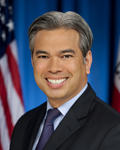
Sponsored bills
Existing law requires the Department of Motor Vehicles (DMV) , upon registering a vehicle, to issue to the owner 2 license plates, as specified. Existing law also requires that the license plates be securely fastened to the vehicle for which they are issued, and makes a violation of this requirement a crime. Existing law requires vehicle dealers and lessor-retailers to attach numbered report-of-sale forms issued by the DMV to a vehicle at the time of sale, and to submit to the DMV an application for registration of the vehicle, and the applicable fees, within a specified period after the date of sale. This bill would require the DMV to contract with a private industry partner for the development of a temporary license plate system to enable vehicle dealers and lessor-retailers to print temporary license plates on weatherproof paper or other media selected by the DMV. The bill would require the DMV to ensure that the system is operational on or before January 1, 2016. This bill would also require, commencing January 1, 2016, a motor vehicle dealer or lessor-retailer to install temporary license plates at the time of sale, and to electronically record and transmit certain information to the temporary license plate system, including the temporary license plates' number and vehicle's make and model. The bill would authorize vehicle dealers and the DMV to impose fees for temporary license plate processing, as specified. The bill would make failure to display temporary license plates an infraction, and would make counterfeiting a temporary license plate a felony, as specified. By creating a new crime and expanding the scope of an existing crime, this bill would impose a state-mandated local program. The bill would also make other related and conforming changes. The California Constitution requires the state to reimburse local agencies and school districts for certain costs mandated by the state. Statutory provisions establish procedures for making that reimbursement. This bill would provide that no reimbursement is required by this act for a specified reason.
Existing law, the California Revised Uniform Limited Liability Company Act, governs the formation and operation of limited liability companies. Existing law authorizes a limited liability company to engage in any lawful business activity, except as specified, but prohibits construing the act to permit a limited liability company to render professional services, as defined. Existing law provides for the filing of specified records and further provides that an individual who signs such a record affirms under penalty of perjury that the information in the record is accurate. Existing law, the Consumer Cooperative Corporation Law, provides for the organization and operation of primarily consumer cooperatives, and is also applicable to other cooperatives. Existing law provides for, among other things, information to be included in a cooperative corporation's by laws, the definition of terms for purposes of that law, and requirements as to voting rights of members and time periods for sending notice of meetings at which members are entitled to vote. Existing law requires a cooperative corporation to include in its name the word "cooperative." This bill would establish the Limited Liability Worker Cooperative Act, which would provide for the organization and operation of worker cooperative companies. The bill would authorize a worker cooperative company to be formed for any lawful purpose provided that it is organized and conducts its business primarily for the mutual benefit of its members as patrons of the worker cooperative company. The bill would authorize a worker cooperative company to engage in any lawful business activity, except as specified, but would prohibit construing the act to permit a worker cooperative company to render professional services, as defined. The bill would provide for, among other things, information to be included in a worker cooperative company's articles of organization and operating agreement, requirements as to voting rights of members, and time periods for sending notice of meetings at which members are entitled to vote and would require an individual who signs specified records to affirm under penalty of perjury that the information in the record is accurate. The bill would authorize certain classes of membership in the worker cooperative company, including a worker-member class. The bill would provide that members of the worker cooperative company have equal votes, but would authorize the worker-member class to have ultimate decisionmaking authority. The bill would authorize members of a class to vote separately on any matter. The bill would authorize a worker cooperative company to include in its name the word "cooperative." The bill would authorize a worker cooperative company to set aside portion of its profits before distribution, as specified. The bill would define certain terms for its purposes. Because this bill would expand the scope of the crime of perjury, the bill would impose a state-mandated local program. Existing law authorizes the majority of the members of a limited liability company to vote to dissolve, merge, or sell the limited liability company, or to convert the limited liability company to another business entity. This bill would require 23 of the worker-members of a worker cooperative company to vote to dissolve, merge, or sell the worker cooperative company, or to convert the worker cooperative company to a business entity other than a worker cooperative company. Existing law, the Corporate Securities Law of 1968, provides for the regulation of the issuance of corporate securities, requires the qualification of an offer or sale of securities, and provides for exemptions from qualification. This bill would exempt the issuance of a membership by a limited liability worker cooperative company, as specified, from certain securities requirements. The California Constitution requires the state to reimburse local agencies and school districts for certain costs mandated by the state. Statutory provisions establish procedures for making that reimbursement. This bill would provide that no reimbursement is required by this act for a specified reason.
The Urban Agriculture Incentive Zones Act authorizes a city, county, or city and county to establish by ordinance an Urban Agriculture Incentive Zone within its boundaries for the purpose of entering into enforceable contracts with landowners, on a voluntary basis, for the use of vacant, unimproved, or blighted lands for small-scale agricultural use. This bill would enact the Healthy Options for Everyone (HOPE) Act of 2014, and authorize a city, county, or city and county, after a public hearing, to establish by ordinance a HOPE Incentive Zone within its boundaries for the purpose of increasing the availability of fresh fruits and vegetables, and other grown foods within the zone. This bill would require a city, county, or city and county to analyze specific factors, including, but not limited to, population density and transportation, when considering whether to establish a HOPE Incentive Zone within an area. This bill would encourage those local entities to issue annual permits at a discounted rate to any farmers' market operating within a HOPE Incentive Zone, and would require those local entities to waive all business license fees for a qualified business within the zone. The Personal Income Tax Law and Corporation Tax Law, in modified conformity with federal law, allow taxpayers to utilize net operating losses and carryovers and carrybacks of those losses for purposes of offsetting their tax liabilities. Existing law allows net operating losses for taxable years beginning on or after January 1, 2008, to be carried over to each of the 20 taxable years following the taxable year of the loss. This bill would allow, under both laws, a qualified business, which is any trade or business that has primarily done business within a HOPE Incentive Zone, for taxable years beginning on or after January 1, 2015, and before January 1, 2022, to carryover a net operating loss to each of the 25 taxable years following the taxable year of the loss. The Personal Income Tax Law and the Corporation Tax Law authorize various credits against the taxes imposed by those laws. This bill would allow, under both laws, a credit in the amount of 20% of the gross sales of a qualified business, as defined, that has primarily done business within a HOPE Incentive Zone during the taxable year for taxable years beginning on or after January 1, 2015, and before January 1, 2022.
The Gambling Control Act provides for the licensure and regulation of various legalized gambling activities and establishments by the California Gambling Control Commission and the investigation and enforcement of those activities and establishments by the Department of Justice. Existing law authorizes a nonprofit organization to conduct fundraisers using controlled games as a funding mechanism to further the purposes and missions of the nonprofit organization. Under existing law, the Legislature finds and declares that nonprofit organizations provide important and necessary services to the people of the State of California, and there is a need to provide methods of fundraising to nonprofit organizations. This bill would make technical, nonsubstantive changes to that provision.
The State Teacher's Retirement Law (STRL) creates the Defined Benefit Program of the State Teachers' Retirement Plan for the provision of benefits to members of the plan, which is administered by the Teachers' Retirement Board (board) . The Defined Benefit Program is funded by employer and employee contributions as well as investment returns and state appropriations. Employee and employer contributions are deposited in the Teachers' Retirement Fund, which is continuously appropriated. The Defined Benefit Program provides for an improvement factor, as defined, to be applied to monthly allowances or benefits of retired members of the system, as specified. STRL specifies that the Legislature reserves the right to adjust the amount of the improvement factor as economic conditions dictate, provided that an adjustment is prohibited from reducing the retirement allowance, annuity, or benefit below that which would have been payable to the recipient. Existing case law holds that the right to a pension is a contractually protected vested right and that the specific provisions of a pension system that a member earns through employment may be modified to the detriment of the member only if a comparable new advantage is provided. This bill, beginning July 1, 2014, would vest the improvement factor, as described above, as a benefit for an active member in any calendar year in which active members paid increased member contributions, pursuant to specified provisions. The bill would condition this vesting on the increased member contributions and if those contributions cease to be required, the Legislature would reserve the right to adjust the improvement factor, as specified. The bill would state that the vesting of the improvement factor is a comparable new advantage provided in exchange for the contribution increases and is contractually enforceable. The bill would also increase employer and state contributions to the Defined Benefit Program according to prescribed schedules, to be operative until July 1, 2046, or until the Director of Finance makes a certain determination of the status of these increases in connection with constitutionally required funding for schools or reimbursable mandates for local entities and provides notice of that determination, as specified. By increasing amounts deposited in a continuously appropriated fund, this bill would make an appropriation. This bill would prescribe requirements for any action or proceeding challenging the validity of any matter authorized by its provisions, including that any challenge be filed within 60 days. The bill would require, until July 1, 2046, that the Teachers' Retirement Board report to the Legislature on or before July 1, 2019, and every 5 years thereafter, on the fiscal health of the Defined Benefit Program and the unfunded actuarial obligation with respect to the service of certain members and funding adjustments needed to eliminate by June 30, 2046, those obligations, among other things. The bill would prescribe how excess contributions to the Defined Benefit Supplement account are to be returned. The bill make certain findings and declarations and conforming changes. The bill would provide that its provisions are not severable. This bill would declare that it is to take effect immediately as a bill providing for appropriations related to the Budget Bill.
This measure would request the Congress of the United States to, among other things, act immediately to avert federal spending cuts known as "sequestration" to protect the California and national economies.
Existing law, the federal Patient Protection and Affordable Care Act (PPACA) , requires each state to establish an American Health Benefit Exchange that facilitates the purchase of qualified health plans by qualified individuals and qualified small employers, and meets certain other requirements. PPACA specifies that an individual who is not a citizen or national of the United States or an alien lawfully present in the United States shall not be treated as a qualified individual and may not be covered under a qualified health plan offered through an exchange. Existing law creates the California Health Benefit Exchange for the purpose of facilitating the enrollment of qualified individual and qualified small employers in qualified health plans as required under PPACA. Existing law governs health care service plans and insurers. A violation of the provisions governing health care service plans is a crime. This bill would create the California Health Exchange Program for All Californians within state government and would require that the program be governed by the executive board that governs the California Health Benefit Exchange. The bill would specify the duties of the board relative to the program and would require the board to, by January 1, 2016, facilitate the enrollment into qualified health plans of individuals who are not eligible for full-scope Medi-Cal coverage and would have been eligible to purchase coverage through the Exchange but for their immigration status. The bill would require the board to provide premium subsidies and cost-sharing reductions to eligible individuals that are the same as the premium assistance and cost-sharing reductions the individuals would have received through the Exchange. The bill would create the California Health Trust Fund For All Californians as a continuously appropriated fund, thereby making an appropriation, would require the board to assess a charge on qualified health plans, and would make the implementation of the program's provisions contingent on a determination by the board that sufficient financial resources exist or will exist in the fund. The bill would enact other related provisions. The bill would require health care services plans and health insurers to fairly and affirmatively offer, market, and sell in the Exchange at least one product within each of 5 levels of coverage, as specified. Because a violation of the requirements imposed on health care service plans would be a crime, the bill would impose a state-mandated local program. Existing law provides for the Medi-Cal program, which is administered by the State Department of Health Care Services, under which qualified low-income individuals receive health care services. The Medi-Cal program is, in part, governed and funded by federal Medicaid Program provisions. The federal Medicaid Program provisions prohibit payment to a state for medical assistance furnished to an alien who is not lawfully admitted for permanent residence or otherwise permanently residing in the United States under color of law. This bill would extend eligibility for full-scope Medi-Cal benefits to individuals who are otherwise eligible for those benefits but for their immigration status. The bill would require that benefits for those services be provided with state-only funds only if federal financial participation is not available. Because counties are required to make Medi-Cal eligibility determinations and this bill would expand Medi-Cal eligibility, the bill would impose a state-mandated local program. The California Constitution requires the state to reimburse local agencies and school districts for certain costs mandated by the state. Statutory provisions establish procedures for making that reimbursement. This bill would provide that with regard to certain mandates no reimbursement is required by this act for a specified reason. With regard to any other mandates, this bill would provide that, if the Commission on State Mandates determines that the bill contains costs so mandated by the state, reimbursement for those costs shall be made pursuant to the statutory provisions noted above.
Existing law authorizes the creation of infrastructure financing districts, as defined, for the sole purpose of financing public facilities, subject to adoption of a resolution by the legislative body and affected taxing entities proposed to be subject to division of taxes and 23 voter approval. Existing law authorizes the legislative body to, by majority vote, initiate proceedings to issue bonds for the financing of district projects by adopting a resolution, subject to specified procedures and 23 voter approval. Existing law requires an infrastructure financing plan to include the date on which an infrastructure financing district will cease to exist, which may not be more than 30 years from the date on which the ordinance forming the district is adopted. Existing law prohibits a district from including any portion of a redevelopment project area. Existing law, the Polanco Redevelopment Act, authorizes a redevelopment agency to take any action that the agency determines is necessary and consistent with state and federal laws to remedy or remove a release of hazardous substances on, under, or from property within a project area, whether the agency owns that property or not, subject to specified conditions. This bill would authorize the creation of an infrastructure and revitalization financing district, as defined, and the issuance of debt with 55% voter approval. The bill would authorize the creation of a district for up to 40 years and the issuance of debt with a final maturity date of up to 30 years, as specified. The bill would authorize a district to finance projects in redevelopment project areas and former redevelopment project areas and former military bases. The bill would authorize the legislative body of a city, as defined, to dedicate any portion of its funds received from the Redevelopment Property Tax Trust Fund to the district, if specified criteria are met. The bill would authorize a city to form a district to finance a project or projects on a former military base, if specified conditions are met. The bill would provide that the formation of the district and the issuance of debt by the district on land of a former military base that is publicly owned is not subject to voter approval, as specified. The bill would authorize a district to fund various projects, including, among others, watershed land used for the collection and treatment of water for urban uses, flood management, levees, bypasses, open space, habitat restoration, brownfields restoration, environmental mitigation, purchase of land and property for development purposes, including commercial property, hazardous cleanup, former military bases, and specified transportation purposes. The bill would authorize a district to implement hazardous cleanup pursuant to the Polanco Redevelopment Act, as specified. The bill would impose a specified reporting requirement on districts. This bill would incorporate additional changes to Section 33459 of the Health and Safety Code proposed by SB 470 that would become operative if this bill and SB 470 are enacted and this bill is enacted last.
Existing federal law provides for the federal Supplemental Nutrition Assistance Program (SNAP) , known in California as CalFresh, formerly the Food Stamp Program, under which supplemental nutrition assistance benefits allocated to the state by the federal government are distributed to eligible individuals by each county. Under existing law, a person convicted of specified drug offenses, including transporting, selling, furnishing, administering, giving away, possessing for sale, purchasing for purpose of sale, or manufacturing a controlled substance, is ineligible to receive CalFresh benefits. Existing law authorizes the payment of CalFresh benefits to other convicted drug felons who have participated in, or are on the waiting list for, a drug treatment program, or who can show other evidence that the illegal use of controlled substances has ceased. This bill would authorize CalFresh benefits to be paid to an individual who is convicted in state or federal court after December 31, 1997, of any offense classified as a felony that has as an element the possession, use, or distribution of a controlled substance, as defined. If the person is on parole or probation or if he or she is a fleeing felon pursuant to federal law and guidance, he or she would be ineligible for CalFresh benefits during any period of revocation of parole or probation or while he or she is a fleeing felon pursuant to federal law and guidance. By requiring local agencies to provide a higher level of service, this bill would impose a state-mandated local program. The California Constitution requires the state to reimburse local agencies and school districts for certain costs mandated by the state. Statutory provisions establish procedures for making that reimbursement. This bill would provide that, if the Commission on State Mandates determines that the bill contains costs mandated by the state, reimbursement for those costs shall be made pursuant to these statutory provisions.