

Passed Mar 2, 2020
1 co-sponsor
Total votes
21,307
all sessions
Attendance
98%
241 missed
Higher than 87% of chamber peers
With party
99%
of cast votes
Higher than 96% of chamber peers
Bipartisan score
0%
crosses aisle rarely
Lower than 97% of chamber peers
Sponsored
1,483
bills & resolutions
Higher than 95% of chamber peers
Committees
0
assignments
1,483 bills and resolutions
Sponsored bills
Total
1,483
Primary
217
Co-sponsor
1,266
This page
1,483
matching current filters
Relative to the Kobe Bryant and Gianna Bryant Helicopter Safety Act.
This measure would urge the Congress of the United States to enact federal legislation to direct the Federal Aviation Administration to adopt new helicopter safety standards in coordination with the National Transportation Safety Board, including the requirement of a terrain awareness and warning system on board all helicopters.
Introduced Feb 25, 2020
1 co-sponsor
Mandatory training: employment laws.
(1) The California Community Care Facilities Act generally requires the State Department of Social Services to license, inspect, and regulate community care facilities, defined to include, among others, any facility that provides nonmedical residential care, day treatment, adult daycare, or foster family agency services for children, adults, or children and adults. A violation of the act or a willful or repeated violation of any rule or regulation promulgated under the act is a crime. The act generally requires licensees and employees of licensees to complete specified education and training requirements, including, among others, training on management and supervision of staff. This bill would require education and training on federal, state, and local jurisdiction employment laws for certain individuals who work in facilities licensed under the act, including, among others, a facility manager and direct childcare workers in a group home and crisis nursery and staff in adults residential care facilities. The bill would require the training to, among other things, be consistent with information in the Division of Labor Standards Enforcement Policies and Interpretations Manual governing residential facilities. (2) The California Residential Care Facilities for the Elderly Act generally requires the State Department of Social Services to license, inspect, and regulate residential care facilities for the elderly and imposes criminal penalties on a person who violates the act or who willfully or repeatedly violates any rule or regulation adopted under the act. The act generally requires licensees and employees of licensees to complete specified education and training requirements, including, among others, training on management and supervision of staff. This bill would require education and training on federal, state, and local jurisdiction employment laws, as described above, for employees that include, among others, an administrator of a facility licensed under the act. (3) The California Child Day Care Facilities Act generally requires the State Department of Social Services to license, inspect, and regulate various types of child day care facilities, defined to include, among others, family daycare homes and day care centers. A person who willfully or repeatedly violates any provision of the act or any rule or regulation promulgated under the act is guilty of a crime. The act generally requires licensees and employees of licensees to complete specified education and training requirements, including, among others, health and safety training and pediatric first aid. This bill would require a facility director and direct care staff to complete education and training on federal, state, and local jurisdiction employment laws, as described above. (4) By expanding the duties under these acts, this bill would expand the crimes applicable to those acts, thereby imposing a state-mandated local program. The California Constitution requires the state to reimburse local agencies and school districts for certain costs mandated by the state. Statutory provisions establish procedures for making that reimbursement. This bill would provide that no reimbursement is required by this act for a specified reason.
In committee Feb 24, 2020
0 co-sponsors
Housing standards.
The State Housing Law establishes statewide construction and occupancy standards for buildings used for human habitation. That law requires the building department of every city or county to enforce within its jurisdiction the provisions of the State Building Standards Code, the provisions of the State Housing Law, and other rules and regulations. This bill would make nonsubstantive changes to the provision naming that law.
In committee Feb 20, 2020
0 co-sponsors
Doula care: Medi-Cal pilot program.
Existing law provides for the Medi-Cal program, which is administered by the State Department of Health Care Services and under which qualified low-income persons receive health care benefits. The Medi-Cal program is, in part, governed and funded by federal Medicaid program provisions. Existing federal law authorizes, at the option of the state, preventive services, as defined, to be provided by practitioners other than physicians or other licensed practitioners. This bill would require the department to establish, commencing July 1, 2021, a full-spectrum doula care pilot program to operate for 3 years for pregnant and postpartum Medi-Cal beneficiaries residing in 14 counties, including the Counties of Alameda, Sacramento, San Diego, and Solano, that experience the highest burden of birth disparities in the state, and would provide that any Medi-Cal beneficiary who is pregnant as of July 1, 2021, and residing in a pilot program county, is entitled to doula care. The bill would require the department to develop multiple payment and billing options for doula care, and to ensure specified payment and billing practices, including that any doula and community-based doula group participating in the pilot program be guaranteed payment within 30 days of submitting any claim for reimbursement. The bill would require the department to establish a centralized registry listing any doula who is available to take on new clients in each county participating in the pilot program, and would provide several requirements for the registry, such as the information on the registry being accessible by various means, including the internet website. The bill would require each Medi-Cal managed care health plan in any county participating in the pilot program to provide information in its materials, and specified notices, on identified topics related to doula care, including reproductive and sexual health, and to inform pregnant and postpartum enrollees at prenatal and postpartum appointments about doula care, such as the availability of doula care and how to obtain a doula. The bill would require the department to convene a doula advisory board that would be responsible for deciding on a list of core competencies, such as the capacity to employ different strategies for providing emotional support, education, and resources during the perinatal period, required for doulas who are authorized by the department to be reimbursed under the Medi-Cal program. The bill would require a doula to provide documentation that they have met the core competencies specified by the board as a prerequisite to be reimbursed under the Medi-Cal program. The bill would require the department to work with outside entities, such as foundations, to make trainings available at no cost that meet the core competencies to people who are from communities experiencing the highest burden of birth disparities in the state. The bill would require the department to allocate funding and resources for data collection, reporting, and analysis for purposes of conducting an evaluation of the pilot program, to ensure that an evaluation of the pilot program begins no later than July 1, 2023, and that it be completed by January 1, 2024, to submit a report to the appropriate policy and fiscal committees of the Legislature, and to include the board and relevant stakeholders, including practicing doulas, in the department's evaluation design. The bill would authorize the department to consider the feasibility of a statewide doula benefit for Medi-Cal beneficiaries during the perinatal period if, after the first 3 years of the pilot program, the pilot program is achieving improved birth outcomes for people using doulas and their babies, and to terminate the pilot program if the pilot program is not achieving those outcomes during that period. The bill would repeal these provisions on January 1, 2026.
In committee Feb 20, 2020
1 co-sponsor
Consumer protections: contracts and agreements to finance or secure a bail bond or immigration bond.
(1) Existing law requires a person engaged in a trade or business who negotiates primarily in Spanish, Chinese, Tagalog, Vietnamese, or Korean, before entering into specified contracts or agreements, to deliver to the other party a translation of the contract or agreement in the language in which the contract or agreement was negotiated, including a loan or extension of credit secured other than by real property, or unsecured, for use primarily for personal, family, or household purposes. This bill would specify that "loan or extension of credit" includes a contract or agreement to finance or secure a bail bond or immigration bond for the release of a detained individual. (2) Existing law, the Consumers Legal Remedies Act, makes unlawful certain acts identified as unfair methods of competition and unfair or deceptive acts or practices undertaken by a person in a transaction for the sale or lease of goods or services to a consumer, and defines "services" and "consumer" for purposes of those provisions. This bill would include within the definition of "services" the securing or financing of a bail bond or immigration bond for the release of an individual from detention and would define "consumer" to include an individual who, for the purpose of their release or another person's release from detention, seeks or acquires services to finance or secure a bail bond or immigration bond. (3) Existing law, the Rosenthal Fair Debt Collection Practices Act, prohibits debt collectors from engaging in unfair or deceptive acts or practices in the collection of consumer debts and defines "consumer debt" and "consumer credit" for purposes of that act. This bill would include within the definition of "consumer debt" money owing from a transaction for services to finance or secure a bail bond or immigration bond for the release of a detained individual. (4) Existing law requires a creditor to deliver to a person a specified notice before the person is obligated on a consumer credit contract, and defines "consumer credit contract" for those purposes to include loans or extensions of credit secured by other than real property, or unsecured, for use primarily for personal, family, or household purposes. This bill would specify that "loans or extensions of credit" includes an agreement or contract between an individual and another party to finance or secure a bail bond or immigration bond for the release of an individual from detention. (5) This bill would declare that the changes are declaratory of existing law and would make a legislative finding to that effect.
In committee Feb 20, 2020
1 co-sponsor
Relative to Maternal Health Awareness Day.
This measure would proclaim January 23, 2020, as Maternal Health Awareness Day, to draw attention to the efforts that have improved maternal health in California and to highlight the need for continued improvement of maternal health for all women.
Signed into law Feb 20, 2020
1 co-sponsor
Passed Feb 20, 2020
1 co-sponsor
Relative to reproductive care and abortion services.
This measure, among other things, would declare that California is a Reproductive Freedom State for All and provide that the Legislature is committed to guaranteeing the constitutionally protected right to an abortion and supporting efforts to increase access to the best available reproductive and pregnancy-related care for women and pregnant individuals.
Passed Feb 12, 2020
1 co-sponsor
Relative to the Reverend Dr. Martin Luther King, Jr.
This measure would honor the late Reverend Dr. Martin Luther King, Jr. and commemorate Dr. Martin Luther King, Jr. Day.
Signed into law Feb 11, 2020
1 co-sponsor
Ask Maddy
·
AI policy assistant
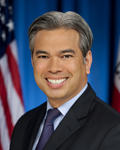
Ask Maddy about Rob Bonta
Scope: california
Hi! I can help you understand Rob Bonta's legislative record. What would you like to know?
Try one of these
i
Maddy answers using official bill text and legislative records. Always verify before sharing.
Sources cited inline