This measure would designate the month of June 2023 as Healthy Homes Awareness Month.
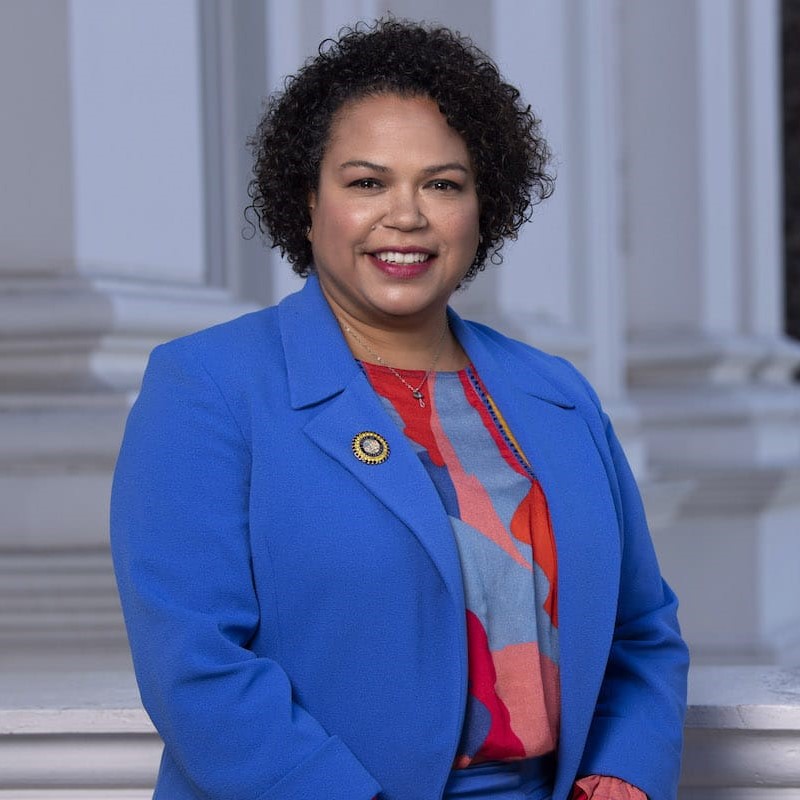
Asm. Mia Bonta
Sponsored bills
This measure would recognize August 15, 2023, as India's Independence Day and urge all Californians to join in celebrating India's independence.
This measure would proclaim August 2023 as Breastfeeding Awareness Month of 2023 in California. The measure would recognize the unique benefits that breastfeeding provides, as specified, and would affirm that Californians should work to ensure that barriers to initiation and continuation of breastfeeding are removed. The measure would encourage Californians to work together to explore ways to, among other things, improve women's access to breastfeeding support services in medical, social, and employment settings.
Existing law establishes the Board of State and Community Corrections, which, among other things, is responsible for providing statewide leadership, coordination, and technical assistance to promote effective state and local efforts and partnerships in California's adult and juvenile criminal justice system. Existing law provides for the confinement of persons in county jails sentenced to imprisonment therein. Existing law authorizes a sheriff or other official in charge of a county correctional facility to provide for the vocational training and rehabilitation of inmates, as specified. This bill would, on or before January 1, 2025, require the sheriff in each county to compile and submit specified data to the Board of State and Community Corrections on their educational opportunities, rehabilitative opportunities, exercise opportunities, the number of participants and the cost of administering those programs, and success rates in reducing recidivism, as defined. The bill would require the board to compile a report based upon those findings and submit the report to the Legislature by a specified date. By imposing new duties on local entities, this bill would create a state-mandated local program. The California Constitution requires the state to reimburse local agencies and school districts for certain costs mandated by the state. Statutory provisions establish procedures for making that reimbursement. This bill would provide that, if the Commission on State Mandates determines that the bill contains costs mandated by the state, reimbursement for those costs shall be made pursuant to the statutory provisions noted above.
Existing law requires the Department of Community Services and Development to, among other things, plan and evaluate strategies for overcoming poverty in the state, mobilize resources in support of antipoverty and community services programs, and administer public and private funds designed to support antipoverty programs that are not currently administered by other departments. Existing law establishes the Cradle-to-Career Data System for the purpose of connecting individuals and organizations to trusted information and resources, as a source for actionable data and research on education, economic, and health outcomes for individuals, families, and communities, and to provide for expanded access to tools and services that support the education-to-employment pipeline, as specified. This bill, the It Takes a Village Act of 2023, subject upon an appropriation in the annual Budget Act or another statute for these purposes, would establish the California Coordinated Neighborhood and Community Services Grant Program to be administered by the State Department of Social Services or another department within the California Health and Human Services Agency. The bill would require the department to grant awards on a competitive basis for the 2025–26 through 2027–28 fiscal years to eligible entities that are Promise Neighborhoods, other community-based networks, or multineighborhood regional cradle-to-career networks, as those terms are defined, to either implement a comprehensive, integrated continuum of cradle-to-career solutions at the neighborhood level or support the civic infrastructure and backbone of cradle-to-career networks that support their network partners to accomplish systems change. The bill would define "cradle-to-career" to mean a system of integrated services that begins before birth and leads to appropriate postsecondary success, including academic, occupational, and independent living, that benefits the individual and community as a whole. The bill would require the department, in consultation with the State Department of Education, to develop an application process and would require the department to establish performance standards to measure progress on indicators and results relevant to the evaluation of the grant program. The bill would require grant recipients to contribute matching funds and prepare and submit an annual report to the department, as specified.
Existing federal law provides for allocation of federal funds through the federal Temporary Assistance for Needy Families (TANF) block grant program to eligible states. Existing law provides for the California Work Opportunity and Responsibility to Kids (CalWORKs) program under which, through a combination of state and county funds and federal funds received through the TANF program, each county provides cash assistance and other benefits, including allowances for other purposes such as pregnancy, homeless assistance, and recurring special needs, to qualified low-income families. This bill would, beginning April 1, 2025, make a menstruating person who is qualified for aid under the CalWORKs program and between 10 and 55 years of age, inclusive, entitled to $20 per month to assist with menstrual product costs. The bill would require the State Department of Social Services to work with the County Welfare Directors Association of California and the California Statewide Automated Welfare System (CalSAWS) to develop and implement the necessary system changes on or before April 1, 2025. By increasing the duties of counties administering the CalWORKs program, the bill would impose a state-mandated local program. Existing law continuously appropriates moneys from the General Fund to defray a portion of county costs under the CalWORKs program. This bill would instead provide that the continuous appropriation would not be made for purposes of implementing the bill. The California Constitution requires the state to reimburse local agencies and school districts for certain costs mandated by the state. Statutory provisions establish procedures for making that reimbursement. This bill would provide that, if the Commission on State Mandates determines that the bill contains costs mandated by the state, reimbursement for those costs shall be made pursuant to the statutory provisions noted above.
(1) Under existing law, a person sentenced to imprisonment in a state prison or in a county jail for a felony offense, as specified, may, during that period of confinement, be deprived of only those rights as is reasonably related to legitimate penological interests. Existing law enumerates certain civil rights of these prisoners, including the right to purchase, receive, and read newspapers, periodicals, and books accepted for distribution by the United States Post Office. This bill would include the right to personal visits by an intimate partner or a family member, as those terms are defined, as a civil right, as specified. The bill would provide that these civil rights may not be infringed, except as necessary and only if narrowly tailored to further a compelling security interest of the government, and would provide that any governmental action related to these civil rights may be reviewed in court for legal or factual error. (2) Existing law authorizes the Secretary of the Department of Corrections and Rehabilitation to prescribe and amend rules and regulations for the administration of prisons and requires regulations, which are adopted by the Department of Corrections and Rehabilitation and may impact the visitation of inmates. Existing law requires these regulations to recognize and consider the value of inmate visitation as a means of increasing safety in prisons, maintaining family and community connections, and preparing inmates for successful release and rehabilitation. Existing regulations create the framework for establishing a visitation process in prisons that is conducted in as accommodating a manner as possible, subject to the need to maintain order, the safety of persons, the security of institutions and facilities, and required prison activities and operations. This bill would additionally require those regulations pertaining to inmate visits to recognize and consider the right to personal visits as a civil right. The bill would prohibit the department from denying or restricting in-person contact visits except as specified, including as a disciplinary sanction against the incarcerated person who has committed a listed offense during a personal visit. The bill would require the department to inform both the visitor and the incarcerated person of the specific reason for any denial of a visit, as specified. The bill would require the department to provide at least 3 days of in-person visiting per week, with a minimum of 7 visiting hours per day.