

Relative to California STEAM Robotics Day.
This measure would proclaim March 23, 2024, as California STEAM Robotics Day.
Signed into law Apr 16, 2024
1 co-sponsor
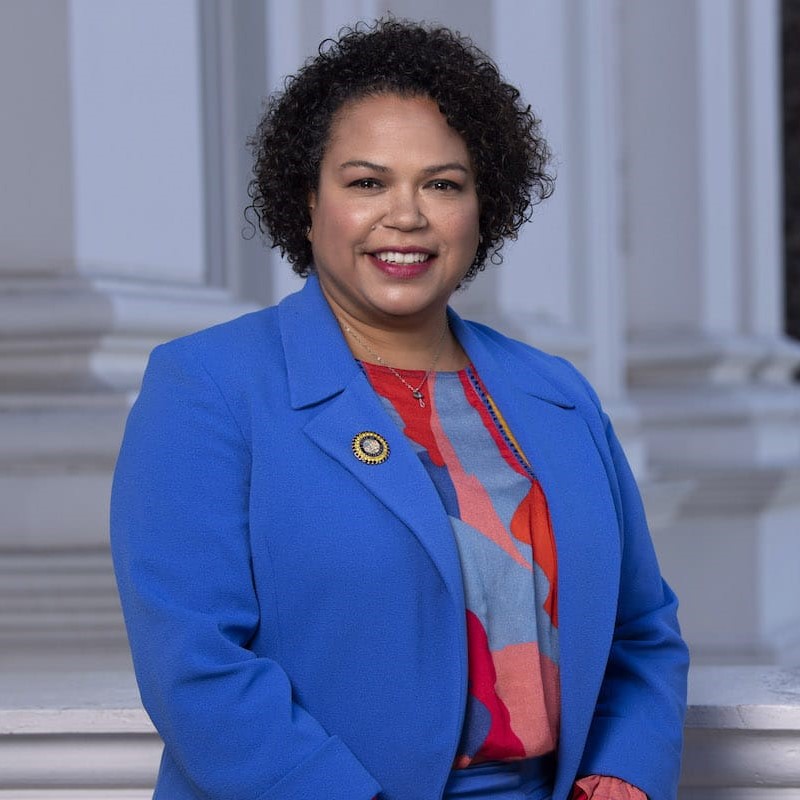
This measure would proclaim March 23, 2024, as California STEAM Robotics Day.
This measure would, among other things, designate March 2024 as Irish American Heritage Month in honor of the 100th anniversary of diplomatic relations between the United States and Ireland and would commemorate the multitude of contributions that Irish Americans have made to this country and state.
This measure would recognize February 2024 as Black History Month, urge all citizens to join in celebrating the accomplishments of African Americans during Black History Month, and encourage the people of California to recognize the many talents of African Americans and the achievements and contributions they make to their communities to create equity and equality for education, economics, and social justice. The measure would also recognize the significance in protecting citizens' right to vote and remedying racial discrimination in voting.
This measure would acknowledge the harms and atrocities committed by representatives of the State of California who promoted, facilitated, enforced, and permitted the institution of chattel slavery and the legacy of ongoing badges and incidents of slavery that form the systemic structures of discrimination. The measure would affirm the State of California's role in protecting the descendants of enslaved people as well as their civil, political, and socio-cultural rights.
This measure would proclaim March 2024 as American Red Cross Month and would dedicate it to all those who continue to advance the noble legacy of the organization's founder. The measure would encourage all Californians to reach out, support the organization's humanitarian mission, and join in their commitment to care for people in need.
This measure would proclaim March 4, 2024, to March 8, 2024, inclusive, as School Breakfast Week.
The Planning and Zoning Law requires each county and city to adopt a comprehensive, long-term general plan for its physical development, and the development of certain lands outside its boundaries, that includes, among other mandatory elements, a housing element. That law deems a housing development project an allowable use on any real property owned by a local educational agency if the housing development satisfies specified conditions, including, among others, consisting of at least 10 housing units, 100% of the units are rented by local educational agency employees, local public employees, and general members of the public pursuant to a specified priority, and a majority of the units are deed restricted for lower income or moderate-income households, as specified. This bill, the Affordable Housing on K–12 Lands Act of 2024, would deem a housing development project a use by right, as defined, if certain criteria are satisfied, including that the development is located on land owned by a local educational agency and the height of the development does not exceed the height limit allowed on the parcel by the city or county or 35 feet, whichever is higher. The bill would require that the units of the housing development be made available to employees of the local educational agency, employees of directly adjacent local educational agencies, local public employees, unhoused students, and members of the general public according to the housing needs of the local educational agency. The bill would require that at least 30% of the units of the development project's total units, exclusive of a manager's unit or units, be for lower income households and 20% for persons and families of low and moderate income, as specified. This bill would require a development proponent to certify to the local government that certain wage and labor standards will be met, including a requirement that all construction workers be paid at least the general prevailing rate of wages, as specified. The bill would require the Labor Commissioner to enforce the obligation to pay prevailing wages. By expanding the crime of perjury, the bill would impose a state-mandated local program. The bill would specify that the requirements to pay prevailing wages, use a workforce participating in an apprenticeship, or provide health care expenditures do not apply to a project that consists of 10 or fewer units and is not otherwise a public work. This bill would require the development to meet objective planning standards, would authorize the development to include specified ancillary uses, and would require the development to provide specified off-street parking, except as specified. This bill would subject the local government to certain requirements, timelines for project approval, and limitations, including that a local government would be prohibited from imposing any requirement that applies to a project solely or partially on the basis that the project is eligible to receive streamlined, ministerial review pursuant to these provisions. The bill, if the local government determines that the proposed development is in conflict with any of the objective planning standards, would require the local government to provide the development proponent written documentation of which standard or standards the development conflicts with, and an explanation for the reason or reasons the development conflicts with that standard or standards, within the specified timeframes based on the number of housing units in the development. The California Environmental Quality Act (CEQA) requires a lead agency, as defined, to prepare, or cause to be prepared, and certify the completion of, an environmental impact report on a project that it proposes to carry out or approve that may have a significant effect on the environment. CEQA does not apply to the approval of ministerial projects. This bill, by establishing the streamlined, ministerial review process described above, would exempt the approval of adaptive reuse projects subject to those processes from CEQA. The bill would include findings that changes proposed by this bill address a matter of statewide concern rather than a municipal affair and, therefore, apply to all cities, including charter cities. Existing law, prior to the sale, lease, or rental of any excess real property, requires the governing board of each school district to appoint a school district advisory committee to advise the governing board of the school district in the development of districtwide policies and procedures governing the use or disposition of school buildings or space in school buildings which is not needed for school purposes. Notwithstanding that law, existing law authorizes the governing board of a school district to elect not to appoint a school district advisory committee in the sale, lease, or rental of excess real property to be used for teacher or school district employee housing. This bill would also authorize the governing board of a school district to elect not to appoint a school district advisory committee in the sale, lease, or rental of excess real property to be used for a housing development subject to the use by right process described above. By requiring a local government to implement the above-described use by right process, the bill would impose a state-mandated local program. The California Constitution requires the state to reimburse local agencies and school districts for certain costs mandated by the state. Statutory provisions establish procedures for making that reimbursement. This bill would provide that no reimbursement is required by this act for specified reasons.
Existing law establishes the State Allocation Board and specifies its membership and duties. Existing law imposes specified duties on the board with respect to the allocation and expenditure of state funds for the construction of public school facilities. Existing law requires the board to obtain construction plans for school buildings appropriate for school districts in various climates and geographical conditions of the state and requires the plans to meet the needs of school districts that require school buildings of various sizes. Existing law authorizes these plans to include designs that promote, among other things, the efficient use of energy and water. This bill would expressly authorize the above-described plans to also include designs that promote the use of materials and strategies to address climate change. The bill also would make nonsubstantive changes.