

This measure would recognize February 2026 as the centennial anniversary of Black History Month, urge all citizens to join in celebrating the accomplishments of African Americans during Black History Month, and encourage the people of California to recognize the many talents of African Americans and the achievements and contributions they make to their communities to create equity and equality for education, economics, and social justice. The measure would recognize the significance in protecting the fundamental human rights enshrined in the United States Constitution and its Amendments, the United States Bill of Rights, and the California Constitution, as specified. The measure would also affirm the commitment of the Legislature that all people are equal and shall be treated with respect and dignity and shall enjoy the equal application of the law for which the Legislature has been entrusted.
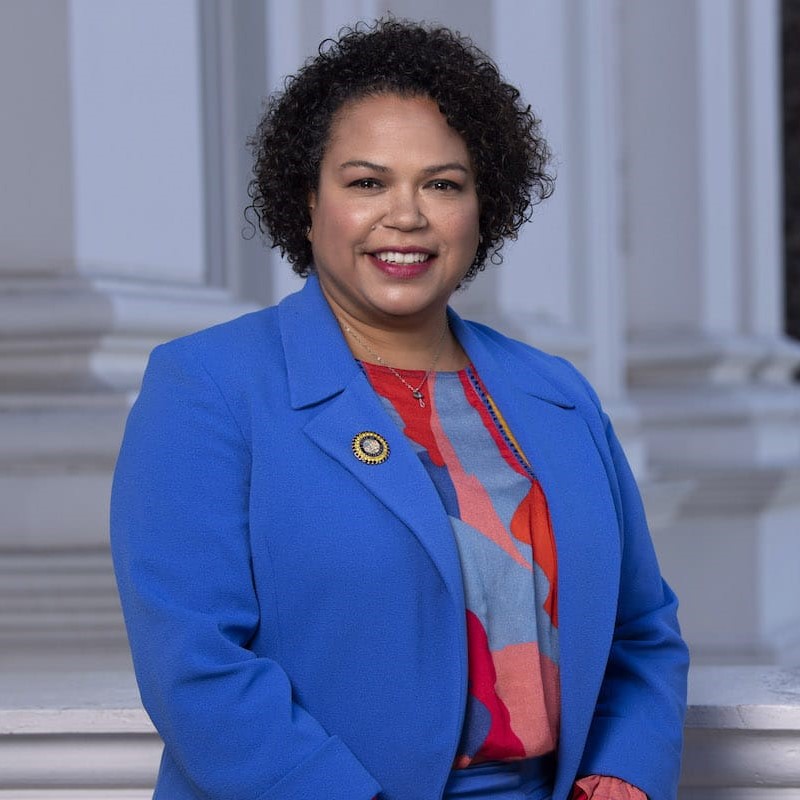
Asm. Mia Bonta
Sponsored bills
Maddy summaryThis bill designates March 2026 as Colorectal Cancer Awareness Month in California to highlight the disease's impact and promote screening efforts. It directly affects all Californians by encouraging early detection through regular check-ups and new testing options, particularly for younger adults and underserved communities facing higher risks. The resolution aims to increase public knowledge about prevention and treatment advancements without mandating specific actions or funding changes.
Existing law, the Knox-Keene Health Care Service Plan Act of 1975, provides for the licensure and regulation of health care service plans by the Department of Managed Health Care and makes a willful violation of the act's requirements a crime. Existing law provides for the regulation of health insurers by the Department of Insurance. Existing law also provides for the Medi-Cal program, which is administered by the State Department of Health Care Services, under which qualified low-income individuals receive health care services pursuant to a schedule of benefits. Existing law sets forth specified coverage requirements for health care service plan contracts and health insurance policies. Existing law generally authorizes a health care service plan or health insurer to use utilization controls to approve, modify, delay, or deny requests for health care services based on medical necessity. Existing law requires health care service plans and health insurers, as specified, within 6 months after the relevant department issues specified guidance, or no later than March 1, 2025, to require all of their staff who are in direct contact with enrollees or insureds in the delivery of care or enrollee or insured services to complete evidence-based cultural competency training for the purpose of providing trans-inclusive health care for individuals who identify as transgender, gender diverse, or intersex. This bill would require a health care service plan contract or health insurance policy issued, amended, renewed, or delivered on or after the bill's operative date that provides outpatient prescription drug benefits to cover up to a 12-month supply of a United States Food and Drug Administration (FDA) -approved prescription hormone therapy, and the necessary supplies for self-administration, that is prescribed by a network provider within their scope of practice and dispensed at one time, as specified. The bill would make the same prescription hormone therapy a covered benefit under the Medi-Cal program, as specified. The bill would prohibit a plan or an insurer from imposing utilization controls or other forms of medical management limiting the supply of this hormone therapy to an amount that is less than a 12-month supply, but would not prohibit a contract, a policy, or the Medi-Cal program from limiting refills that may be obtained in the last quarter of the plan, policy, or coverage year if a 12-month supply of the prescription hormone therapy has already been dispensed during that year. The bill would exclude a Medi-Cal managed care plan contracting with the State Department of Health Care Services from these requirements. The bill would repeal these provisions on January 1, 2035. This bill would prohibit a subscriber, enrollee, policyholder, or insured from being excluded from enrollment or participation in, being denied the benefits of, or being subjected to discrimination by, any health care service plan or health insurer licensed in this state, on the basis of race, color, national origin, age, disability, or sex. The bill would define discrimination on the basis of sex for those purposes to include, among other things, sex characteristics, including intersex traits, pregnancy, and gender identity. The bill would prohibit a health care service plan or health insurer from taking specified actions relating to providing access to health programs and activities, including, but not limited to, denying or limiting health care services to an individual based upon the individual's sex assigned at birth, gender identity, or gender otherwise recorded. The bill would prohibit a health care service plan or health insurer, in specified circumstances, from taking various actions, including, but not limited to, denying, canceling, limiting, or refusing to issue or renew health care service plan enrollment, health insurance coverage, or other health-related coverage, or denying or limiting coverage of a claim, or imposing additional cost sharing or other limitations or restrictions on coverage, on the basis of race, color, national origin, sex, age, or disability, as specified. Because a violation of the bill's requirements by a health care service plan would be a crime, the bill would impose a state-mandated local program. Existing law requires a pharmacist to dispense, at a patient's request, up to a 12-month supply of an FDA-approved, self-administered hormonal contraceptive pursuant to a valid prescription that specifies an initial quantity followed by periodic refills. This bill would additionally require a pharmacist to dispense, at a patient's request, up to a 12-month supply of an FDA-approved, prescription hormone therapy pursuant to a valid prescription that specifies an initial quantity followed by periodic refills, unless an exception is met. The California Constitution requires the state to reimburse local agencies and school districts for certain costs mandated by the state. Statutory provisions establish procedures for making that reimbursement. This bill would provide that no reimbursement is required by this act for a specified reason. This bill would declare that it is to take effect immediately as an urgency statute.
Maddy summaryACR 116 is a ceremonial resolution honoring Reverend Dr. Martin Luther King, Jr. and commemorating Martin Luther King Jr. Day. It does not create new laws or affect specific groups, as it is a symbolic gesture of recognition. The measure was adopted by the Assembly on January 16, 2026, and is now pending in the Senate Committee on Rules and Legislative Services. This type of resolution typically serves to acknowledge historical figures or events without implementing policy changes.
Maddy summaryACR 118 designates January 13, 2026, as Korean American Day in recognition of Korean American contributions. This ceremonial resolution does not create new laws or affect policy; it simply formally proclaims a specific date for observance. The bill directly affects public acknowledgment of Korean American heritage within the state. It has advanced through committee approval and passed the Assembly with unanimous support.
This measure would proclaim the month of January 2026 as National Mentoring Month, and would proudly recognize Big Brothers Big Sisters of Central California for its unwavering commitment to the children and families of our region and its enduring impact on future generations.
Maddy summaryACR 122 designates the week of January 25-31, 2026, as Anesthesiologists Week to honor anesthesiologists for their contributions to patient care. This ceremonial resolution has no binding effect or policy changes - it simply recognizes the profession through a symbolic week-long observance. It directly affects the broader public by raising awareness of anesthesiologists' roles, but does not impose requirements or alter laws. The bill is currently pending in the Senate Committee on Rules and Licensing (RLS).
Maddy summaryThis is a ceremonial resolution (SCR 107) that formally honors Reverend Dr. Martin Luther King, Jr. and commemorates Martin Luther King, Jr. Day within the state. It does not create new laws or affect specific groups; instead, it serves as an official state recognition of Dr. King's legacy and the holiday. The resolution was unanimously adopted by the Senate and referred to the Assembly for further consideration. As a commemorative measure, it has no direct policy impact beyond symbolic acknowledgment.
This measure would designate the portion of State Route 101 in the County of Santa Clara from Story Road to the junction with State Highway Route 280 and State Highway Route 680 as the Little Saigon Freeway. The measure also would request the Department of Transportation to determine the cost of appropriate signs showing that special designation and, upon receiving donations from nonstate sources sufficient to cover the cost, to erect those signs.
Maddy summaryThis bill is a House Resolution that formally recognizes the history of Japanese American incarceration during World War II and honors the service of Japanese American veterans. It details how Executive Order 9066 led to the removal of over 125,000 people of Japanese ancestry from their homes and describes the subsequent military contributions of these individuals, including recipients of the Medal of Honor. The resolution also acknowledges the government's admission that the incarceration was based on racial prejudice rather than military necessity and notes previous state and federal apologies and reparations. By citing these historical facts, the bill serves to educate the public and reaffirm the state's commitment to preventing similar civil rights violations in the future.