

Existing sales and use tax laws impose taxes on retailers measured by the gross receipts from the sale of tangible personal property sold at retail in this state, or on the storage, use, or other consumption in this state of tangible personal property purchased from a retailer for storage, use, or other consumption in this state, and provides various exemptions from the taxes imposed by those laws. This bill would exempt from those taxes, until January 1, 2025, the gross receipts from the sale of, and the storage, use, or other consumption of, COVID-19 prevention and response goods, as defined. Existing law requires a bill that would authorize a new tax expenditure under the Sales and Use Tax Law to identify specific goals, purposes, and objectives that the tax expenditure will achieve, and detailed performance indicators and data collection requirements for determining whether the tax expenditure achieves these goals, purposes, and objectives. This bill would make findings specifying the goal, purpose, and objective of the sales and use tax exemption provided by this bill and the performance indicator to be used, and would require, on or before January 1, 2026, the California Department of Tax and Fee Administration to provide a report to the Assembly Revenue and Taxation Committee and the Senate Governance and Finance Committee on the use of the tax exemption. The Bradley-Burns Uniform Local Sales and Use Tax Law authorizes counties and cities to impose local sales and use taxes in conformity with the Sales and Use Tax Law, and existing laws authorize districts, as specified, to impose transactions and use taxes in accordance with the Transactions and Use Tax Law, which generally conforms to the Sales and Use Tax Law. Amendments to the Sales and Use Tax Law are automatically incorporated into the local tax laws. Existing law requires the state to reimburse counties and cities for revenue losses caused by the enactment of sales and use tax exemptions. This bill would provide that, notwithstanding Section 2230 of the Revenue and Taxation Code, no appropriation is made and the state shall not reimburse any local agencies for sales and use tax revenues lost by them pursuant to this bill. This bill would declare that it is to take effect immediately as an urgency statute.
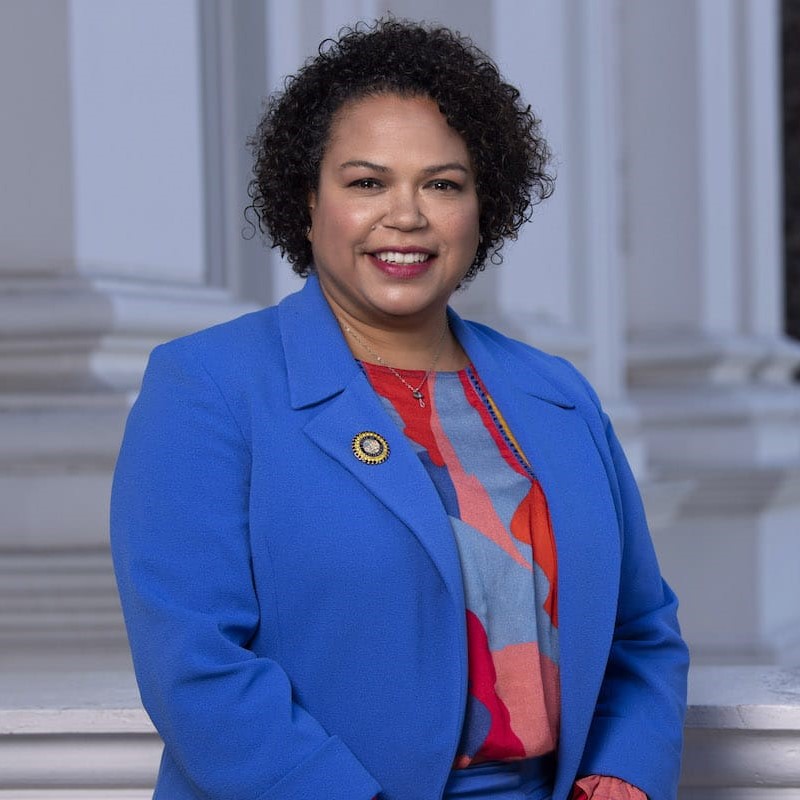
Asm. Mia Bonta
Sponsored bills
Existing law, the Reproductive Privacy Act, prohibits the state from denying or interfering with a person's right to choose or obtain an abortion prior to viability of the fetus, or when the abortion is necessary to protect the life or health of the person. The act defines "abortion" as a medical treatment intended to induce the termination of a pregnancy except for the purpose of producing a live birth. Existing law also establishes the Medi-Cal program, which is administered by the State Department of Health Care Services, under which qualified low-income individuals receive health care services through, among other things, managed care plans licensed under the act that contract with the State Department of Health Care Services. Existing law, the Knox-Keene Health Care Service Plan Act of 1975, requires the Department of Managed Health Care to license and regulate health care service plans and makes a willful violation of the act a crime. Existing law also requires the Department of Insurance to regulate health insurers. Existing law requires group and individual health care service plan contracts and disability insurance policies to cover contraceptives, without cost sharing, as specified. This bill would prohibit a health care service plan or an individual or group policy or certificate of health insurance or student blanket disability insurance that is issued, amended, renewed, or delivered on or after January 1, 2023, from imposing a deductible, coinsurance, copayment, or any other cost-sharing requirement on coverage for all abortion and abortion-related services, as specified. The bill would prohibit a health care service plan and an insurer subject to these requirements from imposing utilization management or utilization review on the coverage for outpatient abortion services. The bill would require that for a contract, certificate, or policy that is a high deductible health plan, the cost-sharing prohibition would apply once the enrollee's or insured's deductible has been satisfied for the benefit year. The bill would not require an individual or group contract or policy to cover an experimental or investigational treatment. The bill's requirements would also apply to Medi-Cal managed care plans and their providers, independent practice associations, preferred provider groups, and all delegated entities that provide physician services, utilization management, or utilization review. The bill would require the Department of Managed Health Care and the Department of Insurance to adopt related regulations on or before January 1, 2026. Because a violation of the bill by a health care service plan would be a crime, the bill would impose a state-mandated local program. The California Constitution requires the state to reimburse local agencies and school districts for certain costs mandated by the state. Statutory provisions establish procedures for making that reimbursement. This bill would provide that no reimbursement is required by this act for a specified reason.
The Control, Regulate and Tax Adult Use of Marijuana Act of 2016 (AUMA) , an initiative measure approved as Proposition 64 at the November 8, 2016, statewide general election, authorizes a person who obtains a state license under AUMA to engage in commercial adult-use cannabis activity pursuant to that license and applicable local ordinances. The Medicinal and Adult-Use Cannabis Regulation and Safety Act (MAUCRSA) , among other things, consolidates the licensure and regulation of commercial medicinal and adult-use cannabis activities and requires the Department of Cannabis Control to administer its provisions. MAUCRSA requires a retailer to have a licensed premises that is a physical location from which commercial cannabis activities are conducted. MAUCRSA authorizes a retailer's premises to be closed to the public and authorizes a retailer to conduct sales exclusively by delivery. This bill would authorize a retailer to conduct sales by curbside pickup, as defined, during permitted hours of operation. The bill would require the area designated by the licensee for curbside pickup to be effectively and clearly monitored and recorded by the retailer's video surveillance system. AUMA authorizes the Legislature to amend its provisions with a 23 vote of both houses to further its purposes and intent. This bill would state that the bill furthers the purposes and intent of AUMA.
This resolution would designate the week beginning on February 21, 2022, as Eating Disorders Awareness Week.
This measure would, among other things, honor the late civil rights pioneer and icon Reverend Dr. Martin Luther King, Jr. and commemorate Dr. Martin Luther King, Jr. Day.
This measure would proclaim January 27, 2022, as Rose Ann Vuich Recognition Day, in recognition of Senator Rose Ann Vuich as the first woman elected to the California State Senate, to honor Senator Vuich's service to the Senate, and to appropriately reflect the Senator's stature and legacy.