This measure would proclaim June 19, 2022, as Veterans of the Republic of Vietnam Armed Forces Day.
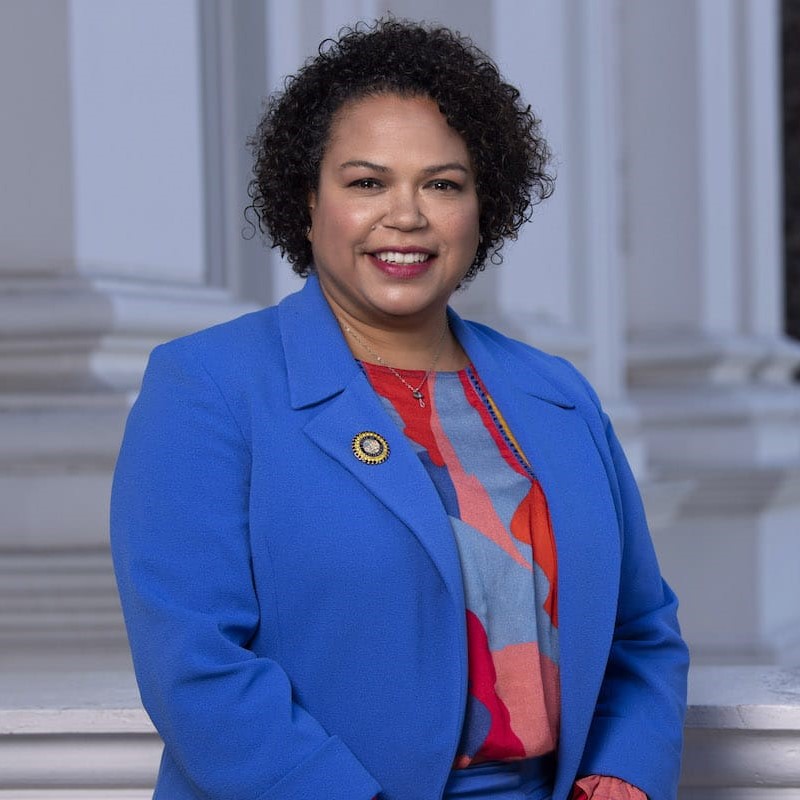
Asm. Mia Bonta
Sponsored bills
This measure would declare the month of May 2022 as Foster Care Month.
This measure would recognize June 21, 2022, as the 2022 International Day of Yoga in California.
Existing law authorizes the governing board of a community college to authorize the students of a college to organize a student body association and requires a student who is elected to serve as an officer in the student government to be enrolled in the community college at the time of election and throughout their term with a minimum of 5 semester units or its equivalent. Existing law establishes the Adult Education Program under the administration of the Chancellor of the California Community Colleges and the Superintendent of Public Instruction. The program requires the chancellor and the Superintendent, with the advice of the executive director of the State Board of Education, to divide the state into adult education regions and approve one adult education consortium in each adult education region, as specified. Existing law authorizes any community college district, school district, or county office of education, or any joint powers authority consisting of community college districts, school districts, county offices of education, or a combination of these, located within the boundaries of the adult education region, to join the consortium as a member. This bill would additionally allow a student to be elected to serve as an officer in the student government if they are enrolled in an adult education program offered by a community college district, or are a disabled student, as defined.
This measure would call upon the Biden Administration to cancel all federal student debt.
Existing law establishes the Department of Housing and Community Development and sets forth its powers and duties. Existing law creates a housing authority in each county or city, which functions upon the adoption of a specified resolution by the relevant governing body. Existing law authorizes these housing authorities, within their jurisdictions, to construct, reconstruct, improve, alter, or repair all or part of any housing project. Existing law establishes various programs that provide housing assistance. This bill would enact the Social Housing Act and would create the California Housing Authority, as an independent state body, the mission of which would be to produce and acquire social housing developments for the purpose of eliminating the gap between housing production and regional housing needs assessment targets, as specified. The bill would prescribe a definition of social housing that would describe, in addition to housing owned by the authority, housing owned by other entities, as specified, provided that all social housing developed by the authority would be owned by the authority. The bill would prescribe the composition of the California Housing Authority Board, which would govern the authority, and would be composed of appointed members and members who are elected by residents of social housing developments, as specified. The bill would prescribe the powers and duties of the authority and the board. The bill would provide that the authority seeks to achieve revenue neutrality, as defined, and would require the authority to seek to recover the cost of development and operations over the life of its properties through the mechanism of rent cross-subsidization, as defined. The bill would require the authority to prioritize the development of specified property, including vacant parcels and parcels near transit, and would prescribe a process for the annual determination of required social housing units. Under the bill, social housing would accommodate a mix of household income ranges and would provide specified protections for residents, who would participate in the operation and management of the units in which they reside. This bill would require the California Housing Authority to employ 2 leasing models in social housing developments, to be referred to as the rental model and the ownership model, and would prescribe the characteristics of both models. Under the ownership model, the authority would extend a 99-year lease, in the form of a limited equity arrangement, as defined, to individuals who commit to a minimum 5-year term of residence, and would authorize the authority to act as a lender to residents who lease under the ownership model, for the purpose of creating leasehold mortgages. The bill would prescribe how the amounts of rents and payments on leasehold mortgages are to be set in relation to household income, and with reference to property subject to the ownership model, how they may be sold and transferred. The bill would establish eligibility requirements for social housing residents and provide for the selection of residents by lottery, as specified, providing that people who may have been displaced from a property as part of its development would be granted a preference for occupancy. This bill, among other things, would require the authority to accept a local jurisdiction's preference for a project parcel if specified conditions are met. The bill would establish various duties for the authority and requirements for contractors and subcontracting in connection with the labor used to produce housing, including provisions relating to the solicitation of bids, the payment of prevailing wages, and the participation of a skilled and trained workforce. The bill would prescribe civil penalties to be imposed by the Labor Commissioner on the authority, contractors, and subcontractors for specified violations of these provisions. The bill would prescribe requirements for the participation of labor in the production, rehabilitation, and maintenance of housing, including requiring the authority to enter into community workforce agreements and to comply with specified requirements for the payment of prevailing wages. The bill would state the intent of the Legislature to enact legislation to provide financing for the activities of the authority through the issuance of general obligations bonds. The bill would authorize the authority to issue revenue bonds, as specified. The bill would require the board to provide for regular audits of the authority's accounts and records, as specified. The bill would also require the authority to prepare and submit specified reporting information on its business plan and progress to the Legislature on an annual basis.

The California Constitution declares that defending life and liberty, acquiring, possessing, and protecting property, and pursuing and obtaining safety, happiness, and privacy are inalienable rights, and that a person may not be deprived of life, liberty, or property without due process of law or equal protection of the laws. Existing law, the Reproductive Privacy Act, declares that every individual possesses a fundamental right of privacy with respect to personal reproductive decisions and prohibits the state from denying or interfering with a person's right to choose or obtain an abortion before viability of the fetus, or when the abortion is necessary to protect the life or health of the person. This measure would amend the California Constitution to prohibit the state from denying or interfering with an individual's reproductive freedom in their most intimate decisions, which includes their fundamental right to choose to have an abortion and their fundamental right to choose or refuse contraceptives.
Existing law, the Early Education Act, requires the Superintendent of Public Instruction, to, among other things, provide an inclusive and cost-effective preschool program. Existing law requires the Superintendent to develop standards for the implementation of high-quality preschool programs. This bill would rename the Early Education Act as the Universal Preschool Act, and would revise and recast the act to, among other things, require the State Department of Education, in consultation with the State Department of Social Services, to administer the universal preschool program. The bill would require the Superintendent and the Director of Social Services to convene a statewide coordination council to develop, among other things, goals, guidelines, and best practices to be used at a local level to implement a universal preschool program, as provided. The bill would require the Superintendent, in consultation with the Director of Social Services, to develop standards for the implementation of high-quality preschool programs in all settings, including, among other settings, transitional kindergarten. The act establishes a standard reimbursement rate for both the part- and full-day preschool programs, as provided. The act defines the term "attendance" for purposes of this reimbursement to include excused absences by children because of illness, quarantine, illness or quarantine of their parent, family emergency, or to spend time with a parent or other relative as required by court of law or that is clearly in the best interest of the child. This bill would require the State Department of Education, in consultation with the State Department of Social Services, to instead ensure the standard reimbursement rate provides at least a living wage for all universal preschool site supervisors, teachers, and staff. The bill would delete the definition of "attendance" for purposes of this reimbursement. The Early Education Act establishes eligibility requirements, including income eligibility requirements, for the part- and full-day preschool programs. The act establishes a fee schedule for families receiving preschool services. This bill would delete the requirements relating to eligibility and the fee schedule, and instead would provide that the universal preschool program shall be free, inclusive, and available to all 3- and 4-year-olds. The Early Education Act provides that the same fee as that prescribed for a credential shall be charged for either the issuance or renewal of each child development permit authorizing service in the supervision and instruction of children in child development programs or authorizing service as a supervisor in a program. This bill would instead provide that no fees shall be charged for either the issuance or renewal of each child development permit authorizing service in the supervision and instruction of children in child development programs or authorizing service as a supervisor in a program. The bill would require the State Department of Education, in consultation with the State Department of Social Services, to offer financial support to current and aspiring universal preschool site supervisors, teachers, and other support staff in obtaining required credentials and degrees to work in the preschool classroom or setting, as provided. This bill would make other related changes to the administration of the newly named Universal Preschool Act. Existing law requires childcare resource and referral programs to provide specified services, including the establishment of a referral process that responds to parental need for information, as provided. This bill would require the Director of Social Services, in partnership with the Superintendent, to expand existing childcare resource and referral services to include navigation, referral, and enrollment services for the universal preschool program, as provided. This bill would provide that the above described changes to law would become operative only upon an appropriation of funds by the Legislature for these purposes in the annual Budget Act or another statute.