

Passed Feb 12, 2024
1 co-sponsor
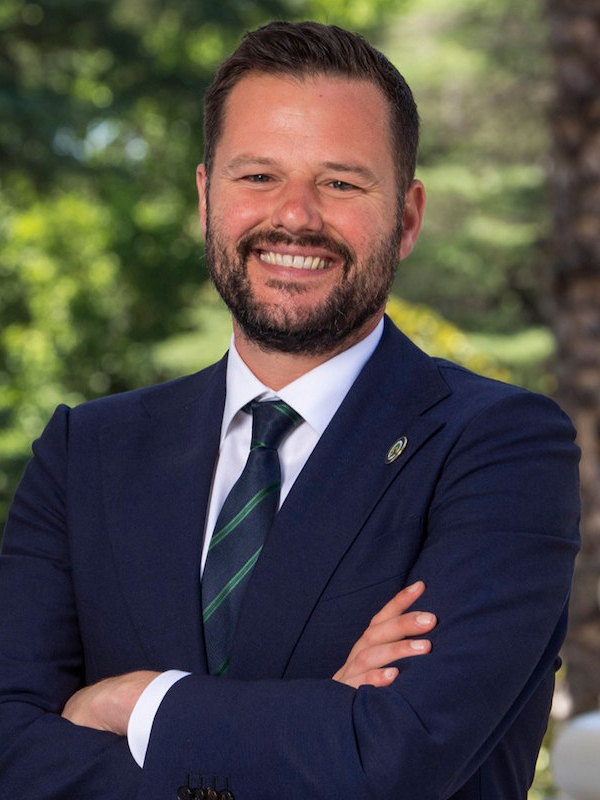
Asm. Matt Haney
Total votes
13,182
all sessions
Attendance
97%
319 missed
Near the chamber average
With party
99%
of cast votes
Near the chamber average
Bipartisan score
0%
crosses aisle rarely
Near the chamber average
Sponsored
958
bills & resolutions
Near the chamber average
Committees
12
assignments
958 bills and resolutions
Sponsored bills
Total
958
Primary
92
Co-sponsor
866
This page
958
matching current filters
Passed Feb 8, 2024
1 co-sponsor
HIV preexposure prophylaxis and postexposure prophylaxis.
Existing law, the Pharmacy Law, provides for the licensure and regulation of pharmacists by the California State Board of Pharmacy. Existing law authorizes a pharmacist to furnish at least a 30-day supply of HIV preexposure prophylaxis, and up to a 60-day supply of those drugs if certain conditions are met. Existing law also authorizes a pharmacist to furnish postexposure prophylaxis to a patient if certain conditions are met. This bill would authorize a pharmacist to furnish up to a 90-day course of preexposure prophylaxis, or preexposure prophylaxis beyond a 90-day course, if specified conditions are met. The bill would require the California State Board of Pharmacy to adopt emergency regulations to implement these provisions by October 31, 2024. Existing law, the Knox-Keene Health Care Service Plan Act of 1975, provides for the licensure and regulation of health care service plans by the Department of Managed Health Care and makes a willful violation of the act a crime. Existing law also provides for the regulation of health insurers by the Department of Insurance. Existing law prohibits a health care service plan or health insurer from covering preexposure prophylaxis that has been furnished by a pharmacist in excess of a 60-day supply once every 2 years, except as specified. Existing law provides for the Medi-Cal program administered by the State Department of Health Care Services and under which qualified low-income individuals receive health care services pursuant to a schedule of benefits. The existing schedule of benefits includes coverage for preexposure prophylaxis as pharmacist services, limited to no more than a 60-day supply furnished by a pharmacist once every 2 years, and includes coverage for postexposure prophylaxis, subject to approval by the federal Centers for Medicare and Medicaid Services. The Medi-Cal program is, in part, governed and funded by federal Medicaid program provisions. This bill would require a health care service plan and health insurer to cover preexposure prophylaxis and postexposure prophylaxis furnished by a pharmacist, including the pharmacist's services and related testing ordered by the pharmacist, and to pay or reimburse for the service performed by a pharmacist at an in-network pharmacy or a pharmacist at an out-of-network pharmacy if the health care service plan or health insurer has an out-of-network pharmacy benefit, except as specified. The bill would include preexposure prophylaxis furnished by a pharmacist as pharmacist services on the Medi-Cal schedule of benefits. Because a willful violation of these provisions by a health care service plan would be a crime, this bill would impose a state-mandated local program. The California Constitution requires the state to reimburse local agencies and school districts for certain costs mandated by the state. Statutory provisions establish procedures for making that reimbursement. This bill would provide that no reimbursement is required by this act for a specified reason. This bill would declare that it is to take effect immediately as an urgency statute.
Signed into law Feb 6, 2024
1 co-sponsor
Coroners and medical examiners: reporting drug overdose deaths.
Existing law requires the coroner to inquire into and determine the manner, circumstances, and cause of all violent, sudden, or unusual deaths. Existing law authorizes a county board of supervisors, by ordinance, to abolish the office of coroner and provide instead for the office of medical examiner, to be appointed by the board and to exercise the powers and perform the duties of the coroner. This bill would require the county coroner or medical examiner to report, in writing on the 15th day of January, April, July, and October, to the State Department of Public Health deaths in the preceding 3-month period that involved, or were caused by, an overdose of a drug or drugs. The bill would require the written report to include the primary substance or substances that caused, or were involved in, each death, as well as the presence, if any, of methamphetamine, opioids, cocaine, or benzodiazepines. By imposing new requirements on county coroners and medical examiners, this bill would impose a state-mandated local program. The California Constitution requires the state to reimburse local agencies and school districts for certain costs mandated by the state. Statutory provisions establish procedures for making that reimbursement. This bill would provide that, if the Commission on State Mandates determines that the bill contains costs mandated by the state, reimbursement for those costs shall be made pursuant to the statutory provisions noted above.
Failed Feb 1, 2024
0 co-sponsors
Historical resources: legacy businesses: registry.
Existing law establishes the State Historical Resources Commission and the California Register of Historical Resources. Existing law authorizes a resource to be nominated for listing as a historical resource in the California Register of Historical Resources in accordance with specified nominating procedures. This bill would require the commission to establish and maintain a registry of legacy businesses, as specified. The bill would require a business be listed in the registry if nominated for listing in the registry by a county board of supervisors or city mayor, and the commission determines the business meets specified criteria, including that the business has operated in California for not less than 50 years. The bill would require the commission to develop and adopt nomination procedures for a county board of supervisors or city mayor to nominate a business for listing as a California legacy business in the registry.
Failed Feb 1, 2024
0 co-sponsors
Workforce training: CaliforniaVolunteers: youth job corps.
Under existing law, by executive order, CaliforniaVolunteers is established in the Office of the Governor and is charged with overseeing programs and initiatives for service and volunteerism. Existing law authorizes CaliforniaVolunteers to form a nonprofit public benefit corporation or other entity exempt from income taxation, as provided, to raise revenues and receive grants or other financial support from private or public sources, for purposes of undertaking or funding any lawful activity authorized to be undertaken by CaliforniaVolunteers. Existing federal law, the National and Community Service Trust Act of 1993, also requires the state to create a commission to carry out specified duties relating to national service programs to be eligible for grants or allotments under certain programs, or to receive distributions of approved national service positions. Existing state law continues into existence the Board of Commissioners under CaliforniaVolunteers for purposes of meeting the requirements of the federal act and the act's implementing rules and regulations. #CaliforniansForAll Youth Jobs Corps is a program of the CaliforniaVolunteers. This bill would establish in statute the #CaliforniansForAll Youth Job Corps Program. The bill would require the CaliforniaVolunteers to expand the program, upon appropriation by the Legislature, which would fund supportive services, as specified, that are necessary for homeless youth and current or former foster youth to enable their participation in the workforce development program, as defined. Under the bill, grants would be awarded on a competitive basis. The bill would require the CaliforniaVolunteers to conduct outreach activities and to provide technical assistance to eligible applicants to ensure that grants are awarded to qualified applicants providing a broad spectrum of supportive services. The bill would prescribe definitions, duties for the CaliforniaVolunteers, and requirements for applications and applicants, including the requirement that applicants agree to provide the office any information that the office deems necessary to meet reporting requirements and other grant requirements. The bill would require the CaliforniaVolunteers to evaluate how grants awarded under the program address the needs of eligible targeted populations and, beginning one year after the initial award of grant funds, to post an annual report on its internet website regarding the progress and success of the program.
Failed Feb 1, 2024
1 co-sponsor
Office conversion projects.
The Planning and Zoning Law requires the legislative body of each county and city to adopt a comprehensive, long-term general plan for the physical development of the county or city that includes, among other mandatory elements, a housing element. Under that law, supportive housing, as defined, is a use by right in zones where multifamily and mixed uses are permitted if the developer provides the planning agency with a plan for providing supportive services and the proposed housing development meets specified criteria. The California Environmental Quality Act (CEQA) requires a lead agency, as defined, to prepare, or cause to be prepared, and certify the completion of, an environmental impact report on a project that it proposes to carry out or approve that may have a significant effect on the environment or to adopt a negative declaration if it finds that the project will not have that effect. CEQA does not apply to the approval of ministerial projects. This bill would make an office conversion project, as defined, that meets certain requirements a use by right in all areas regardless of zoning. The bill would define "office conversion project" to mean the conversion of a building used for office purposes or a vacant office building into residential dwelling units. The bill would define "use by right" to mean that the city or county's review of the office conversion may not require a conditional use permit, planned unit development permit, or other discretionary city or county review or approval that would constitute a "project" for purposes of CEQA, as specified. By requiring the approval of housing crisis projects as a use by right, the bill would expand the exemption for approval of ministerial projects under CEQA. This bill would exempt an office conversion project from impact fees, as defined, that are not directly related to the conversion of an office building into residential dwelling units. The bill would allow the proponent of an office conversion project to pay applicable impact fees over a 10-year period, subject to specified requirements. This bill would authorize a local government to adopt an ordinance to implement these provisions and specify the process and requirements applicable to office conversion projects, provided that the ordinance is consistent with, and does not inhibit the objectives of the bill. By imposing new duties on local governments in reviewing and approving office conversion projects, the bill would impose a state-mandated local program. This bill would, upon appropriation of the Legislature, require the Department of Housing and Community Development to establish a program that awards funding to office conversion projects that are eligible as a use by right, as described above. The bill would establish the Office to Housing Conversion Fund, and provide that the moneys in the fund are to be made available to the department for purposes of the program. The bill would include findings that changes proposed by this bill address a matter of statewide concern rather than a municipal affair and, therefore, apply to all cities, including charter cities. The California Constitution requires the state to reimburse local agencies and school districts for certain costs mandated by the state. Statutory provisions establish procedures for making that reimbursement. This bill would provide that, if the Commission on State Mandates determines that the bill contains costs mandated by the state, reimbursement for those costs shall be made pursuant to the statutory provisions noted above.
Failed Feb 1, 2024
0 co-sponsors
Unincorporated associations: decentralized nonprofit associations.
Existing law sets forth certain requirements and other provisions applicable to unincorporated associations, including nonprofit associations, as those terms are defined. This bill would add provisions governing decentralized nonprofit associations, defined as an unincorporated association consisting of at least 100 members with a primary common purpose other than to operate a business for profit whose governance and operations are reliant, in full or in part, on a blockchain or other distributed ledger technology, as defined. Under the bill, an action against a decentralized nonprofit association may be brought in the county where it has appointed an agent for service of process. The bill would authorize a member of a decentralized nonprofit association to transfer their membership interest or rights. The bill provides that a member, administrator, or agent is not liable for a debt, obligation, or liability of the decentralized nonprofit association, including a contractual liability, unless specified conditions are met.
Failed Feb 1, 2024
0 co-sponsors
Substance use disorder: telephone system.
Existing law requires the State Department of Health Care Services to license and regulate alcoholism or drug abuse recovery or treatment facilities serving adults. Existing law authorizes the department to certify qualified alcoholism or drug abuse recovery or treatment programs, as prescribed. Under existing law, the department regulates the quality of these programs, taking into consideration the significance of community-based programs to alcohol and other drug abuse recovery and the need to encourage opportunities for low-income and special needs populations to receive alcohol and other drug abuse recovery or treatment services. This bill would require the department to establish and maintain a 3-digit, statewide, nonemergency telephone system for substance use disorder treatment referrals.
Failed Feb 1, 2024
0 co-sponsors
Discrimination: housing status.
Existing law prohibits discrimination in any program or activity that is conducted, operated, or administered by the state, or by any state agency, that is funded directly by the state, or that receives any financial assistance from the state, based upon specified personal characteristics. This bill would also prohibit discrimination based upon housing status, as defined.
Failed Feb 1, 2024
1 co-sponsor
Ask Maddy
·
AI policy assistant
Ask Maddy about Matt Haney
Scope: california
Hi! I can help you understand Matt Haney's legislative record. What would you like to know?
Try one of these
i
Maddy answers using official bill text and legislative records. Always verify before sharing.
Sources cited inline