

Existing law establishes the Department of Housing and Community Development in the Business, Consumer Services, and Housing Agency and makes the department responsible for administering various housing programs throughout the state, including, among others, the Multifamily Housing Program and the California Emergency Solutions Grants Program. Existing law, upon appropriation, authorizes the department to make either or both loans and grants to rehabilitate, capitalize operating subsidy reserves for, and extend the long-term affordability of department-funded housing projects that have an affordability restriction that has expired, that have an affordability restriction with a remaining term of less than 10 years, or are otherwise at risk for conversion, as provided. This bill would establish the Community Anti-Displacement and Preservation Program for purposes of funding the acquisition and rehabilitation of unrestricted housing units, as defined, and attaching long-term affordability restrictions on the housing units, while safeguarding against the displacement of current residents. The bill would require the department to issue a request for qualification to select a private sector entity or consortium to manage the program for a period of 5 years. The bill would require the program manager to make loans to eligible borrowers, as defined, based on underwriting guidelines approved by the department. The bill would authorize the department to issue grants or loans from program funds to local public entities upon request for purposes of allowing the local public entity to use the moneys to issue loans to eligible borrowers within its jurisdiction in accordance with the bill's provisions and department regulations. This bill would apply specified tenant protections to projects funded by the program and would require the department to develop technical assistance and capacity building for the development and ongoing operation of projects funded pursuant to the program, as specified. This bill would establish the Community Anti-Displacement and Preservation Fund in the State Treasury. The bill would make moneys available to the department for purposes of the program, upon appropriation by the Legislature. The bill would set forth requirements for the use of moneys in the fund.
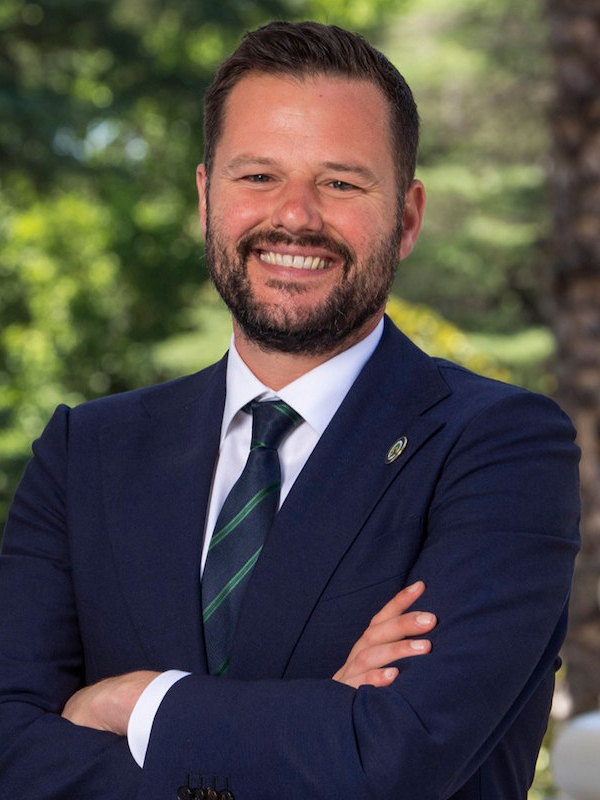
Asm. Matt Haney
Sponsored bills
Maddy summaryThis bill designates specific periods in 2024 as Boat People Awareness Week and Month to honor Vietnamese refugees who fled their country by sea after the Vietnam War. The resolution highlights the historical hardships these individuals faced, including dangerous voyages and high mortality rates, while acknowledging their significant contributions to communities across California. It does not create new laws or funding but serves as a commemorative measure to recognize the resilience and spirit of the Vietnamese refugee community. The text is intended to be shared with the bill's author for public distribution to raise awareness about this historical event.
This measure would declare the month of June 2024 to be Portuguese Heritage Month and would recognize June 10 as the Day of Portugal and May 20 as the Day of the Azores.
Existing law generally requires an online marketplace to require a high-volume third-party seller on the online marketplace to make certain disclosures. Existing law requires an online marketplace to suspend future sales activity of a high-volume third-party seller that is not in compliance with those information sharing requirements, as specified. Existing law imposes certain information retention and security requirements on an online marketplace and prohibits specified uses of that information. Existing law generally defines a "high-volume third-party seller," for purposes of the above-described provisions, as a third-party seller who has entered into a certain number of consumer product sales transactions through an online marketplace for which payment is processed by the online marketplace, as specified. Existing law defines an "online marketplace," for purposes of those provisions, as a consumer-directed, electronically accessed platform that includes features that allow for, facilitate, or enable, and are used by, a third-party seller to engage in the sale, purchase, payment, storage, shipment, or delivery of a consumer product and that has a contractual relationship with consumers governing their use of the platform to purchase consumer products. This bill would revise the types of transactions that qualify a third-party seller as a "high-volume third-party seller," for those purposes. Specifically, the bill would remove the conditions that the transactions be made through an online marketplace and that the online marketplace process the payment and, instead, would add the condition that the transactions were made utilizing an online marketplace. The bill would also revise the definition of "online marketplace" by removing the conditions that the above-described features be used by third-party sellers, and that the platform have the above-described contractual relationship with consumers. Existing law requires a high-volume third-party seller to disclose and certify to the online marketplace certain identification, contact, and payment information of the seller, as specified. This bill would require an online marketplace to establish and maintain a policy prohibiting the sale of stolen goods on the marketplace and to provide a mechanism to notify the marketplace of the sale of stolen goods, as specified. The bill would require an online marketplace to alert local, regional, or state law enforcement agencies in California if it knows or should know that a third-party seller is selling or attempting to sell stolen goods to a California resident, except as specified. Existing law requires a person or entity who violates the above-described provisions to be liable for a civil penalty not to exceed $10,000 for each violation and reasonable attorney's fees and costs and to be subject to preventive relief, as specified. Existing law limits recovery and relief to a civil action brought by the Attorney General, as specified. This bill would expand recovery and relief to a civil action brought by a district attorney in any county, a city attorney in any city or city and county, or a county counsel in any county. The bill would make these changes operative on July 1, 2025.
(1) Existing law divides theft into grand theft and petty theft. Existing law punishes petty theft as a misdemeanor while grand theft is punished as either a misdemeanor or a felony. Existing law lists specific types of theft which are grand theft and all other cases of theft as petty theft. Existing law authorizes a person to be charged with grand theft if the property taken exceeds $950 over the course of distinct but related acts. This bill would clarify that those related acts include acts committed against multiple victims or in counties other than the county of the current offense. The bill would also clarify that evidence that distinct acts are motivated by one intention, one general impulse, and one plan may include, but is not limited to, evidence that the acts involve the same defendant or defendants, are substantially similar in nature, or occur within a 90-day period. (2) Existing law prohibits the possession or receipt of stolen property, as specified. A violation of this prohibition is punishable as either a misdemeanor or a felony, depending on the value of the property and whether the offender has certain prior convictions. This bill would make it a crime for any person to possess property unlawfully that was acquired through one or more acts of shoplifting, theft, or burglary from a retail business, if the property is not possessed for personal use and the person has intent to sell, exchange, or return the merchandise for value, or the intent to act in concert with one or more persons to sell, exchange, or return the merchandise for value, and the value of the possessed property exceeds $950. The bill would, for the purpose of determining the value of the property, aggregate the property with any other property possessed by the person with that intent within the prior 2 years and with any property possessed by another person acting in concert with the first person to sell, exchange, or return the merchandise for value, if that property was also acquired unlawfully. The bill would make this crime punishable as a misdemeanor or a felony. By creating a new crime, this bill would impose a state-mandated local program. (3) Existing law prohibits shoplifting, defined as entering a commercial establishment with intent to commit theft while that establishment is open during regular business hours, where the value of the property that is taken or intended to be taken does not exceed $950. Existing law requires an act that falls within this definition to be charged as shoplifting and not as burglary or theft. Under existing law, shoplifting is punishable as a misdemeanor, except when the defendant has prior convictions, as specified. Existing law authorizes a peace officer to make a warrantless arrest for a misdemeanor when the officer has probable cause to believe the person to be arrested has committed the misdemeanor in the officer's presence. Existing law also authorizes a private person to make an arrest for a misdemeanor committed in their presence, and requires the person to deliver the arrested person to a peace officer or magistrate. Existing law additionally authorizes a merchant to detain a person for a reasonable time and in a reasonable manner to determine if a person has unlawfully taken merchandise. Existing law authorizes a peace officer to make a warrantless arrest for specified misdemeanors relating to domestic violence, violation of a restraining order, and carrying a concealed firearm at an airport that did not occur in the officer's presence. This bill would authorize a peace officer to make a warrantless arrest for a misdemeanor shoplifting offense not committed in the officer's presence if the officer has probable cause to believe that person has committed shoplifting, as specified. The bill would clarify that local law enforcement or a local jurisdiction is prohibited from bringing a nuisance action against a business solely for the act of reporting retail crime, unless the report is knowingly false. (4) Existing law requires a peace officer to release upon a signed promise to appear any person arrested for a misdemeanor, unless the person demands to be taken before a magistrate. Existing law provides certain reasons a person arrested for a misdemeanor shall not be released including that the person is intoxicated or in need of medical attention, the person is unable to provide satisfactory proof of identification, or there are outstanding arrest warrants for the person. Additionally, existing law exempts from this provision persons arrested for specified crimes including domestic violence, stalking, threatening a witness, and, until January 1, 2026, organized retail theft. This bill would extend that exemption for organized retail theft until January 1, 2031. (5) Existing law, until January 1, 2026, authorizes a city or county prosecuting authority or county probation department to create a diversion or deferred entry of judgment program for persons who commit a theft offense or repeat theft offenses, as specified. This bill would extend that authorization until January 1, 2031. (6) Existing law authorizes the court to suspend a criminal sentence and make and enforce terms of probation for a period not to exceed 2 years, and in misdemeanor cases, for a period not to exceed one year. Existing law authorizes the court to make and enforce the terms of probation for specified theft cases for a period not to exceed 3 years. This bill would, for an offense of shoplifting or petty theft, authorize the court to make and enforce the terms of probation for a period not to exceed 2 years. The bill would require a court that imposes a term longer than one year to consider referring the defendant to a collaborative court or rehabilitation program that is relevant to the underlying factor or factors that led to the commission of the offense, as specified. For a defendant under 25 years of age, the bill would require the court, to the extent such a program is available, to refer the defendant to a program modeled on healing-centered, restorative, trauma-informed, and positive youth development approaches that is provided in collaboration with community-based organizations. By increasing the period of probation, this bill would impose a state-mandated local program. (7) The California Constitution requires the state to reimburse local agencies and school districts for certain costs mandated by the state. Statutory provisions establish procedures for making that reimbursement. This bill would provide that, if the Commission on State Mandates determines that the bill contains costs mandated by the state, reimbursement for those costs shall be made pursuant to the statutory provisions noted above.
Under existing law, knowingly buying or receiving stolen property or property that has been obtained in any manner constituting theft or extortion, as specified, is punishable as either a misdemeanor or a felony if the value of the property exceeds $950. Existing law authorizes a local authority to, by ordinance or resolution, adopt requirements regulating the time, place, and manner of sidewalk vending if the requirements are directly related to objective health, safety, or welfare concerns. Existing law prohibits a local authority from regulating sidewalk vendors, except in accordance with certain provisions. This bill, until January 1, 2030, would authorize the City and County of San Francisco to adopt an ordinance prohibiting the sale of specified merchandise on public property without a permit, if the ordinance includes specified written findings, including, among other things, that there has been a significant pattern of merchandise being the subject of retail theft and then appearing for sale on public property within the City and County of San Francisco. The bill would require an ordinance adopted by the City and County of San Francisco to, among other things, identify a local permitting agency that is responsible for administering a permit system. The bill would authorize the ordinance to provide that selling merchandise without a permit is punishable as an infraction, and that subsequent violations after 2 prior convictions is an infraction or a misdemeanor punishable by imprisonment in the county jail not exceeding 6 months. By creating a new crime, the bill would impose a state-mandated local program. This bill would require, if an ordinance is adopted, the City and County of San Francisco to submit a report to the Legislature by January 1, 2029, that includes specified information, including, among other things, the list or lists of merchandise that the City and County of San Francisco determined was a common target of retail theft. The bill would require the City and County of San Francisco to administer a public information campaign for at least 30 calendar days prior to the enactment of the ordinance, including public announcements in major media outlets and press releases. This bill would make legislative findings and declarations as to the necessity of a special statute for the City and County of San Francisco. The California Constitution requires the state to reimburse local agencies and school districts for certain costs mandated by the state. Statutory provisions establish procedures for making that reimbursement. This bill would provide that no reimbursement is required by this act for a specified reason.
Existing law requires the State Energy Resources Conservation and Development Commission, by January 1, 2021, to assess the potential for the state to reduce the emissions of greenhouse gases from the state's residential and commercial building stock by at least 40% below 1990 levels by January 1, 2030. Existing law requires the commission to include in the 2021 edition of the integrated energy policy report and all subsequent integrated energy policy reports a report on the emissions of greenhouse gases associated with the supply of energy to residential and commercial buildings. Existing law requires the commission to establish the Equitable Building Decarbonization Program that includes a direct install program and a statewide incentive program for low-carbon building technologies. Existing law establishes the policy of the state to achieve net zero greenhouse gas emissions as soon as possible, but no later than 2045, and to ensure that, by 2045, statewide anthropogenic greenhouse gas emissions are reduced to at least 85% below the statewide greenhouse gas emissions in 1990. This bill would require the commission, on or before June 1, 2024, to adopt a strategy, with milestones, to reduce emissions of greenhouse gases for the building sector, as provided. The bill would require the commission, in developing the strategy, to consult and collaborate with certain entities, to hold at least 2 public workshops, and to convene stakeholder sessions. The bill would require the commission, on or before September 31, 2024, to submit the adopted strategy to the relevant policy committees of the Legislature.
Existing law requires each state and local agency that employs peace officers to annually report to the Attorney General data on all stops conducted by the agency's peace officers, and requires that data to include specified information, including the time, date, and location of the stop, and the reason given to the person stopped at the time of the stop. Existing law also makes all stop data and reports public records. This bill would revise these provisions to require each state and local agency that employs peace officers to report stop data to the Attorney General, as described above, by March 1, as specified. The bill would require those agencies to report semiannually if reporting issues or unresolved errors are identified in their submissions, as specified. By imposing new duties on local agencies, the bill would impose a state-mandated local program. This bill would specify that any stop data reported by a state or local agency in an open text or narrative field only be made available from the reporting agency and not from the Attorney General. The bill would also require the Attorney General to provide all state and local agency stop data to public or private entities, as specified, for the study of racial and identity profiling by law enforcement. The bill would make related findings and declarations. Existing constitutional provisions require that a statute that limits the right of access to the meetings of public bodies or the writings of public officials and agencies be adopted with findings demonstrating the interest protected by the limitation and the need for protecting that interest. This bill would make legislative findings to that effect. The California Constitution requires the state to reimburse local agencies and school districts for certain costs mandated by the state. Statutory provisions establish procedures for making that reimbursement. This bill would provide that, if the Commission on State Mandates determines that the bill contains costs mandated by the state, reimbursement for those costs shall be made pursuant to the statutory provisions noted above.
(1) Existing law establishes various programs to provide assistance to homeless youth, including, among others, homeless youth emergency service pilot projects and the Runaway Youth and Families in Crisis Project. This bill, subject to an appropriation by the Legislature for this purpose, would require the State Department of Social Services to establish the California Success, Opportunity, and Academic Resilience (SOAR) Guaranteed Income Program. The program would award public school pupils who are in grade 12 and are homeless children or youths, as defined, a guaranteed income of $1,000 each month for 4 months from May 1, 2025, to August 1, 2025, inclusive, as provided. The bill would establish the California SOAR Guaranteed Income Fund as the initial depository of all moneys appropriated, donated, or otherwise received for the program, and upon appropriation by the Legislature, would provide moneys in the fund to counties that opt in to the program for distribution to eligible participants. (2) Existing federal law, the McKinney-Vento Homeless Assistance Act, provides grants to states to carry out activities relating to the education of homeless children and youths, as defined, including, among others, providing services and activities to improve the identification of homeless children and youths and to enable them to enroll in and succeed in school. Existing law requires local educational agency liaisons, as defined, to ensure that homeless children and youths are identified by school personnel through outreach and coordination activities, as specified. This bill would require, in counties participating in the California SOAR Guaranteed Income Program, local educational agency liaisons to provide all known eligible participants with program information and enrollment forms, as specified. (3) Existing law, beginning on or after January 1, 2015, in modified conformity with federal income tax law, allows an earned income tax credit, the California Earned Income Tax Credit, against personal income tax. The Personal Income Tax Law also allows, for each taxable year beginning on or after January 1, 2019, a young child tax credit and, for each taxable year beginning on or after January 1, 2022, a foster youth tax credit against the taxes imposed under that law. This bill, for the taxable years beginning on or after January 1, 2025, and before January 1, 2030, would exclude from gross income, for purposes of the personal income tax, any amount received as an award pursuant to the California SOAR Guaranteed Income Program. The bill, for the taxable years beginning on or after January 1, 2025, and before January 1, 2030, would additionally provide that the amount awarded is not earned income for purposes of eligibility for the California Earned Income Tax Credit, the young child tax credit, or the foster youth tax credit. (4) Existing law establishes various public social services programs to provide eligible recipients with certain benefits, including, but not limited to, cash assistance under the California Work Opportunity and Responsibility to Kids (CalWORKs) program, nutrition assistance under the CalFresh program, and health care services under the Medi-Cal program. Under existing law, those programs, among others, are in part federally funded and governed by federal eligibility criteria, including specified income or resource limits. This bill would prohibit any award received by a student through the California SOAR Guaranteed Income Program from being considered income or resources for purposes of determining the student's, or any member of their household's, eligibility for benefits or assistance, or the amount or extent of benefits or assistance, under any state or local means-tested program, including certain public social services programs. The bill would condition implementation of this provision on not conflicting with federal law, or receipt of any necessary federal waivers or exemptions and the availability of any applicable federal financial participation, as specified. This bill would require the State Department of Social Services, in consultation with stakeholders and the Legislature, to identify the CalWORKs, CalFresh, and Medi-Cal programs and any other state program that implements a federal means-tested program and that would require an exemption or waiver. The bill would require a state department or agency that administers a program identified by the State Department of Social Services or by the department or agency itself, to approve an exemption or waiver or to seek one from the federal government. If the state fails to receive the necessary federal exemption or waiver, the bill would authorize the State Department of Social Services to consider alternatives to prevent adverse consequences for California SOAR Guaranteed Income Program participants. (5) This bill would repeal these provisions on January 1, 2028, except as provided. (6) Existing law requires any bill authorizing a new tax expenditure to contain, among other things, specific goals, purposes, and objectives that the tax expenditure will achieve, detailed performance indicators, and data collection requirements. This bill would include the additional information required for a bill authorizing a new tax expenditure.
Existing law establishes the State Department of Public Health that is led by the State Public Health Officer, who is appointed by the Governor and subject to confirmation by the Senate. The Governor is authorized to appoint, upon the recommendation of the State Public Health Officer, 2 chief deputies, subject to confirmation by the Senate. This bill would establish the Office of Tribal Affairs within the department to be led by a Tribal Health Liaison to assist in addressing the public health disparities impacting tribal communities. The bill would require the office to communicate needs and to propose specific solutions from tribal communities to the department and state entities, as specified. The bill would provide that the Tribal Health Liaison be appointed by and serve at the pleasure of the State Public Health Officer and would require the State Public Health Officer to regularly consult with and consider input and information provided by the Tribal Health Liaison. The bill would require the Tribal Health Liaison, among other duties, to regularly consult with California tribal representatives, as specified, and oversee the department's tribal health equity meetings, advisory groups, and workgroups. The bill would make related findings and declarations.