

Existing law, including, but not limited to, property tax law, the Sales and Use Tax Law, the Personal Income Tax Law, the Corporation Tax Law, the Motor Vehicle Fuel Tax Law, the law governing the taxation of insurers, the Use Fuel Tax Law, and the Diesel Fuel Tax Law, provides for tax expenditures, including exemptions, deductions, exclusions, and credits against the taxes imposed by those laws. The bill would require the Legislative Analyst's Office (LAO) to comprehensively assess the major tax expenditures, as defined, of the state, write and publish a report on each major tax expenditure, and make a recommendation to the Legislature based on each report. In this regard, the bill would require LAO, as part of the comprehensive assessments, to identify any savings that the Legislature can realize by reducing or limiting the major tax expenditures, and require them to consider certain criteria when finalizing each report, including the extent to which the major tax expenditure is a cost-effective use of resources compared to other options to address the same purpose, intent, or goal. The bill would require LAO to complete and publish on its internet website its first report on a major tax expenditure by January 1, 2028, and to complete and publish on its internet website each subsequent report on a major tax expenditure annually in a sequence determined by the office thereafter until the fifth and final report is submitted on January 1, 2032. The bill would require the Senate Committee on Revenue and Taxation and the Assembly Committee on Revenue and Taxation, to hold a joint public hearing on these reports by each August 15 of the second year of the legislative session, as specified. To the extent that LAO needs access to taxpayer data and information, the bill would require the Franchise Tax Board, the California Department of Tax and Fee Administration, and the Employment Development Department to ensure that relevant anonymized taxpayer data is made available and ensure that appropriate levels of data security and privacy protections are in place for transferred or sensitive data. The bill would repeal its provisions on January 1, 2033. The bill would make findings and declarations relating to these provisions.
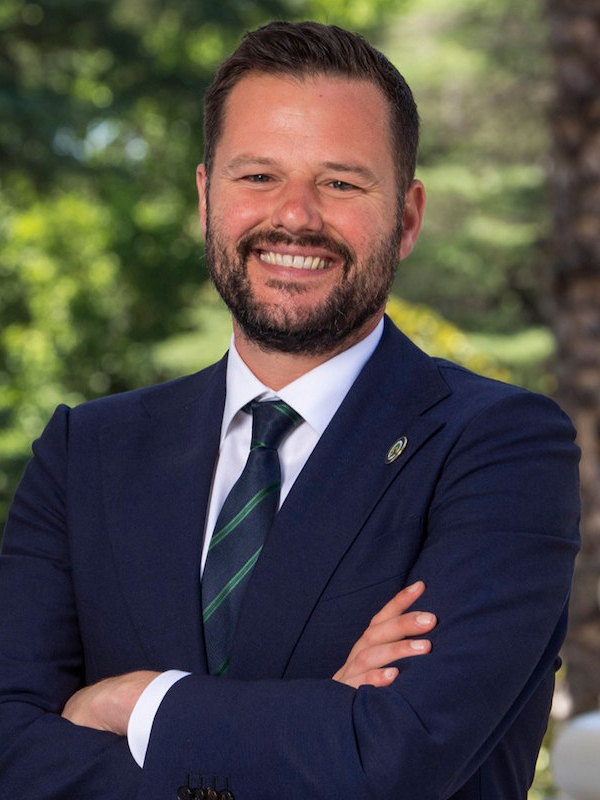
Rep. Matt Haney
Sponsored bills
Existing law establishes the Medi-Cal program, which is administered by the State Department of Health Care Services and under which qualified low-income individuals receive health care services. The Medi-Cal program is in part governed by, and funded pursuant to, federal Medicaid program provisions. Existing law sets forth a schedule of benefits covered under the Medi-Cal program, including acupuncture, but only to the extent that federal matching funds are provided for acupuncture. Under this bill, acupuncture would instead be a covered Medi-Cal benefit subject to utilization controls and the availability of federal financial participation. The bill would, if federal financial participation is not available for coverage of acupuncture services, make acupuncture a covered benefit subject to an appropriation and utilization controls. This bill would incorporate additional changes to Section 14132 of the Welfare and Institutions Code proposed by AB 1949 and AB 350 to be operative only if this bill and either or both AB 1949 and AB 350 are enacted and this bill is enacted last.
Existing law establishes the California Interagency Council on Homelessness to oversee the implementation of Housing First guidelines and regulations, and, among other things, identify resources, benefits, and services that can be accessed to prevent and end homelessness in California. Existing law requires a state agency or department that funds, implements, or administers a state program that provides housing or housing-related services to people experiencing homelessness or who are at risk of homelessness to revise or adopt guidelines and regulations to include enumerated Housing First policies. Existing law specifies the core components of Housing First, including services that are informed by a harm-reduction philosophy that recognizes drug and alcohol use and addiction as a part of tenants' lives and where tenants are engaged in nonjudgmental communication regarding drug and alcohol use. This bill would require applicants for state homelessness funding for recovery housing, as defined, to demonstrate the availability of a range of interventions, as specified. The bill would require a program that provides recovery housing to meet specified requirements in order to be eligible for state funding, including that the program satisfies the core components of Housing First, relapse is not, unless there is another lease violation, grounds for eviction and residents receive relapse support, the program provides emergency preparedness and overdose prevention and response training to staff and residents and makes overdose reversal medication available and readily accessible to staff and residents onsite, and the program adopts and maintains a written return-to-use policy, as specified. The bill would make related findings and declarations.
Existing law imposes taxes upon income and real property, and taxes upon certain transactions and excise taxes. The Fee Collection Procedures Law provides procedures for the collection of certain fees and surcharges and is administered by the California Department of Tax and Fee Administration (CDTFA) . Under existing law, a violation of the Fee Collection Procedures Law is a crime. This bill would, beginning July 1, 2028, establish the Private Detention Facility Tax Law, which would impose an annual tax on each private detention facility operator, as defined, equal to 25% of the operator's gross income, as defined, for the prior fiscal year, as defined. The bill would establish the Due Process for All Fund in the State Treasury, except as provided, and would require all revenues collected, less refunds and reimbursement to the CDTFA, be deposited into the fund. In the event that Assembly Bill 2465 is enacted, the bill would instead require all revenues be deposited into the Due Process for All Fund as established by that bill. The bill would direct moneys in the fund, upon appropriation by the Legislature, be used for immigration-related services. The bill would require the CDTFA to administer and collect the tax pursuant to the Fee Collection Procedures Law. By expanding the application of the crimes associated with the Fee Collection Procedures Law, the bill would impose a state-mandated local program. This bill would include a change in state statute that would result in a taxpayer paying a higher tax within the meaning of Section 3 of Article XIIIA of the California Constitution, and thus would require for passage the approval of 23 of the membership of each house of the Legislature. The California Constitution requires the state to reimburse local agencies and school districts for certain costs mandated by the state. Statutory provisions establish procedures for making that reimbursement. This bill would provide that no reimbursement is required by this act for a specified reason. This bill would take effect immediately as a tax levy.
Existing law establishes the California Housing Finance Agency for the primary purpose of meeting the housing needs of persons and families of low or moderate income, and sets forth various programs administered by the agency to fulfill that purpose. This bill would require the agency to conduct a comprehensive assessment of potential credit enhancement mechanisms designed to reduce borrowing costs for housing projects receiving state financial assistance that includes specified evaluations. The bill would require the agency to submit an interim report by January 1, 2028, and a final report by July 1, 2028, as specified.
Maddy summaryThis bill designates September 2026 as Childhood Cancer Awareness Month. It directly affects state agencies and organizations by encouraging them to recognize this specific month for awareness activities. The measure does not change laws or allocate funding but serves as a formal commemorative resolution.
Existing law establishes the California Interagency Council on Homelessness and requires the council to take various actions to prevent and end homelessness in California. Existing law establishes various programs to prevent homelessness or assist persons experiencing homelessness, including the No Place Like Home Program and the Homeless Housing, Assistance, and Prevention program. This bill would require the council, by July 1, 2028, to develop a statewide homelessness prevention strategy in the council's publicly available Action Plan to Prevent and End Homelessness. The bill would require the strategy to include specified elements, including a homelessness prevention action plan for certain state agencies and evidence-based model homeless prevention practices, as specified. The bill would require the council to review and update the strategy in the Action Plan to Prevent and End Homelessness. The bill would define various terms for these purposes. The bill would limit each state agency's participation to its existing statutory authority, activities, data, and subject-matter responsibilities.
This measure would recognize and affirm the important role of artists, arts organizations, creative arts therapists, and arts for health initiatives in supporting behavioral health, promoting recovery, strengthening community resilience, and contributing to public safety. The measure would encourage and recognize exploration, support, and integration of arts and behavioral health within California's health care, behavioral health, and community-based systems.
Existing law establishes the Department of Housing and Community Development in the Business, Consumer Services, and Housing Agency. Existing law, the Governor's Reorganization Plan No. 1 of 2025 (GRP) , which became effective on July 5, 2025, transfers the Department of Housing and Community Development to the California Housing and Homelessness Agency, which the GRP also establishes, as of July 1, 2026. Existing law makes the department responsible for administering various housing programs throughout the state, including, among others, the Multifamily Housing Program and the California Emergency Solutions Grants Program. Existing law, upon appropriation, authorizes the department to make either or both loans and grants to rehabilitate, capitalize operating subsidy reserves for, and extend the long-term affordability of department-funded housing projects that have an affordability restriction that has expired, that have an affordability restriction with a remaining term of less than 10 years, or are otherwise at risk for conversion, as provided. This bill would establish the Community Anti-Displacement and Preservation Program for purposes of funding the acquisition and rehabilitation of unrestricted housing and attaching long-term affordability restrictions on the housing, while safeguarding against the displacement of current residents. The bill would require the department to issue a request for qualification to select a private sector entity or consortium to manage the program for a period of 5 years. The bill would require the department to grant prescribed funds to the program manager to implement the program and the program manager to make loans or grants to eligible borrowers, as defined, based on underwriting guidelines approved by the department. The bill would authorize the department to issue program funds to regional housing entities, as defined, upon request through a solicitation or other process determined by the department, for purposes of allowing the regional housing entity to use the moneys to issue loans or grants to eligible borrowers within its jurisdiction in accordance with the bill's provisions and department regulations. The bill would require the department to adopt regulations for the operation of the program on or before July 1, 2028, and would exempt the adoption of regulations by the department for these purposes from the Administrative Procedure Act. This bill would apply specified tenant protections to projects funded by the program and would require the department to develop technical assistance and capacity building for the development and ongoing operation of projects funded pursuant to the program, as specified. This bill would establish the Community Anti-Displacement and Preservation Fund in the State Treasury. The bill would make moneys available to the department for purposes of the program, upon appropriation by the Legislature. The bill would set forth requirements for the use of moneys in the fund.
Existing law defines those persons who are peace officers in the state, grants certain authority to those individuals and their employing entities, and places certain requirements on those individuals and their employing entities. Under existing law, federal criminal investigators and law enforcement officers are not California peace officers but are granted specified limited arrest authority in limited circumstances including when violations of state and local laws occur in their presence, when there is an immediate danger to persons or property, when detaining a person for evaluation or treatment who, due to a mental illness, is a danger to themselves or others, and when requested by a California law enforcement agency to be involved in a joint task force or criminal investigation. Existing law additionally grants peace officer status to federal employees who comply with certain training requirements, while they are engaged in enforcing state or local law on and adjacent to property owned or possessed by the United States Government, with the written consent of local law enforcement officials, as specified. This bill would remove certain arrest authority or peace officer status for federal criminal investigators, law enforcement officers, and federal employees, including for the purposes of executing a warrant for the arrest of a person. The bill would authorize deputized tribal law enforcement officers of the federal Bureau of Indian Affairs to exercise the powers of arrest, as specified, if, among other things, they are engaged in the enforcement of federal criminal law and they are exercising arrest powers that are incidental to the performance of those federal duties. The bill would also authorize certain federal employees of, among other agencies, the National Park Service and the Bureau of Land Management, if they are enforcing specified provisions of state law on property owned by the United States government, to exercise peace officer status with the written consent of the sheriff or the chief of police from the respective jurisdiction. The bill would also prohibit a California law enforcement agency, as defined, from entering into an interagency agreement, unless, among other things, the agreement is in writing and expressly provides that the agency shall not engage in racial or identity profiling, as specified. The bill would deem any interagency agreement in existence on January 1, 2027, valid, and would authorize that agreement to remain in effect until July 1, 2027. The bill would require, by no later than July 1, 2027, that the agreement be amended to include the provisions described above, including a prohibition on engaging in certain conduct, including racial or identity profiling. By increasing the duties on local law enforcement, this bill would impose a state-mandated local program. This bill would make these provisions severable. The California Constitution requires the state to reimburse local agencies and school districts for certain costs mandated by the state. Statutory provisions establish procedures for making that reimbursement. This bill would provide that, if the Commission on State Mandates determines that the bill contains costs mandated by the state, reimbursement for those costs shall be made pursuant to the statutory provisions noted above. This bill would make related findings and declarations.