

Passed Jan 15, 2021
1 co-sponsor
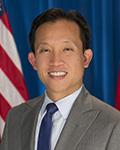
Total votes
14,730
all sessions
Attendance
98%
231 missed
Higher than 94% of chamber peers
With party
99%
of cast votes
Near the chamber average
Bipartisan score
0%
crosses aisle rarely
Near the chamber average
Sponsored
1,576
bills & resolutions
Lower than 86% of chamber peers
Committees
0
assignments
1,576 bills and resolutions
Sponsored bills
Total
1,576
Primary
169
Co-sponsor
1,407
This page
1,576
matching current filters
Passed Jan 11, 2021
1 co-sponsor
Juveniles: costs.
Existing law, since January 1, 2018, prohibits the imposition of financial liability on the parents or guardians of a minor who has been adjudged a ward of the juvenile court for certain county-assessed or court-ordered costs, such as transportation to a juvenile facility, legal assistance, and home supervision. Existing law, since January 1, 2018, does not require minors who are required to submit to drug and substance abuse testing to pay for the costs associated with testing. Finally, existing law, since January 1, 2018, only requires adults over 21 years of age to pay an administrative fee associated with a home detention program. This bill would vacate certain county-assessed or court-ordered costs imposed before January 1, 2018, for the parents or guardians of wards in specified circumstances, minors who were ordered to participate in drug and substance abuse testing, and adults who were 21 years of age and under at the time of their home detention.
Signed into law Sep 30, 2020
1 co-sponsor
Emergency services: community response: grant program.
Existing law creates the Office of Emergency Services within the office of the Governor. The office is responsible for the state's emergency and disaster response services for natural, technological, or man-made disasters and emergencies. Existing law requires the office to establish by rule and regulation various classes of disaster service workers, the scope of the duties of each class, and to adopt rules and regulations for the registration of each class of these workers. Existing law requires the office to work with advocacy groups representing the deaf and hard of hearing for the purpose of improving accessibility to emergency information and services for the populations that they serve. Existing law requires the office to develop a plan for state and local utilization of volunteers during a state of emergency. This bill would, until January 1, 2024, enact the Community Response Initiative to Strengthen Emergency Systems Act or the C.R.I.S.E.S. Act for the purpose of creating, implementing, and evaluating the C.R.I.S.E.S. Act Grant Pilot Program, which the act would establish. The bill would require the Office of Emergency Services to establish rules and regulations for the act with the goal of making grants to community organizations, over 3 years, for the purpose of expanding the participation of community organizations in emergency response for specified vulnerable populations. The bill would require that grantees receive a minimum award of $250,000 per year. The bill would require a community organization receiving funds pursuant to the program to use the grant to stimulate and support involvement in emergency response activities that do not require a law enforcement officer, as specified. The bill would require the director of the office to assemble staff and resources to carry out certain duties in support of the program. The bill would require the office to support an 11-member C.R.I.S.E.S. Advisory Committee, selected by the Governor, the Chair of the Senate Rules Committee, and the Speaker of the Assembly, as specified, to be inclusive of community organizations with a proven history of leadership and partnership on emergency response. The committee would establish grant application criteria and parameters for eligible community organizations, review and decide upon grant proposals, ensure grants are adhering to standards, and make recommendations to the office, among other things. The bill would establish the Community Response Initiative to Strengthen Emergency Systems Act Fund in the State Treasury in support of the program, to be administered by the director. The bill would require that the act be implemented only if appropriate funding is made available to the office, which would make a determination to this effect, to be published on its internet website. The bill would provide that if the appropriation was not made, the office would bear no responsibility for implementing the act. The bill would make findings and declarations in regard to innovative approaches to emergency responses.
Vetoed Sep 30, 2020
1 co-sponsor
Peace officers: use of force.
Existing law authorizes a peace officer to make an arrest pursuant to a warrant or based upon probable cause, as specified. Under existing law, an arrest is made by the actual restraint of the person or by submission to the custody of the arresting officer. Existing law authorizes a peace officer to use reasonable force to effect the arrest, to prevent escape, or to overcome resistance. Existing law requires law enforcement agencies to maintain a policy on the use of force, as specified. Existing law requires the Commission on Peace Officer Standards and Training to implement courses of instruction for the regular and periodic training of law enforcement officers in the use of force. This bill would prohibit a law enforcement agency from authorizing the use of a carotid restraint or a choke hold, as defined. By requiring local agencies to amend use of force policies, this bill would impose a state-mandated local program. The California Constitution requires the state to reimburse local agencies and school districts for certain costs mandated by the state. Statutory provisions establish procedures for making that reimbursement. This bill would provide that, if the Commission on State Mandates determines that the bill contains costs mandated by the state, reimbursement for those costs shall be made pursuant to the statutory provisions noted above.
Signed into law Sep 30, 2020
1 co-sponsor
Death penalty: person with an intellectual disability.
Existing law authorizes a defendant to apply, prior to the commencement of trial, for an order directing that a hearing to determine intellectual disability be conducted when the prosecution in a criminal case seeks the death penalty. Existing law requires the court to order a hearing to determine whether the defendant has an intellectual disability upon the submission of a declaration by a qualified expert stating the expert's opinion that the defendant is a person with an intellectual disability. Existing law defines "intellectual disability" for these purposes as a condition of significantly subaverage general intellectual functioning existing concurrently with deficits in adaptive behavior and manifested before 18 years of age. This bill would change the definition of "intellectual disability" to include conditions that manifest before the end of the developmental period, as defined by clinical standards. The bill would also prohibit the results of a test measuring intellectual functioning to be changed or adjusted based on race, ethnicity, national origin, or socioeconomic status. The bill would require the court to order a hearing to determine whether the defendant is a person with an intellectual disability upon a prima facie showing, as defined, that the defendant is a person with an intellectual disability. The bill would authorize a person in custody pursuant to a judgment of death to apply for an order directing that a hearing to determine intellectual disability be conducted as part of a petition for a writ of habeas corpus and would specify the procedure for making the determination as to whether the defendant is a person with an intellectual disability.
Signed into law Sep 30, 2020
1 co-sponsor
Corporations: boards of directors: underrepresented communities.
Existing law, no later than the close of the 2019 calendar year, requires a publicly held domestic or foreign corporation whose principal executive office is located in California to have a minimum of one female director on its board. Existing law, no later than the close of the 2021 calendar year, additionally requires such a corporation with 5 directors to have a minimum of 2 female directors and such a corporation with 6 or more directors to have a minimum of 3 female directors. Existing law authorizes the Secretary of State to impose fines for violations of these provisions, as specified, and requires the moneys from these fines to be available, upon appropriation, to offset the cost of administering these requirements. This bill would require, no later than the close of the 2021 calendar year, such a corporation to have a minimum of one director from an underrepresented community, as defined. The bill would require, no later than the close of the 2022 calendar year, such a corporation with more than 4 but fewer than 9 directors to have a minimum of 2 directors from underrepresented communities, and such a corporation with 9 or more directors to have a minimum of 3 directors from underrepresented communities. Existing law requires, on or before specified dates, the Secretary of State to publish various reports on its internet website documenting, among other things, the number of corporations in compliance with these provisions. This bill would require, on or before specified dates, the Secretary of State to include in those reports certain information, including, among other things, the number of corporations in compliance with the bill's provisions. The bill would authorize the Secretary of State to impose fines for violations of the bill's provisions, as specified, and would require the moneys from these fines to be available, upon appropriation, to offset the cost of administering these requirements. This bill would make related findings and declarations.
Signed into law Sep 30, 2020
1 co-sponsor
Police use of force.
Existing law requires law enforcement agencies to maintain a policy on the use of force, as specified. Existing law requires the Commission on Peace Officer Standards and Training to implement courses of instruction for the regular and periodic training of law enforcement officers in the use of force. Existing law requires law enforcement agencies to report to the Department of Justice, as specified, any incident in which a peace officer is involved in a shooting or use of force that results in death or serious bodily injury. This bill would create a division within the Department of Justice to, upon the request of a law enforcement agency, review the use-of-force policy of the agency and make recommendations, as specified. This bill would require a state prosecutor to investigate incidents of an officer-involved shooting resulting in the death of an unarmed civilian, as defined. The bill would make the Attorney General the state prosecutor unless otherwise specified or named. The bill would authorize the state prosecutor to prepare a written report, and would require the state prosecutor to post any reports made on a public internet website. The bill would require, commencing July 1, 2023, the Attorney General to operate a Police Practices Division within the department to review, upon the request of a local law enforcement agency, the use of deadly force policies of that law enforcement agency and make recommendations, as specified. The bill would require the department to implement these provisions subject to an appropriation for this purpose.
Signed into law Sep 30, 2020
1 co-sponsor
Juveniles: custodial interrogation.
Existing law authorizes a peace officer to take a minor into temporary custody when that officer has reasonable cause to believe that the minor has committed a crime or violated an order of the juvenile court. In these circumstances, existing law requires the peace officer to advise the minor that anything the minor says can be used against the minor, that the minor has the right to remain silent, that the minor has the right to have counsel present during any interrogation, and that the minor has the right to have counsel appointed if the minor is unable to afford counsel. Existing law requires, until January 1, 2025, that a youth 15 years of age or younger consult with legal counsel in person, by telephone, or by video conference prior to a custodial interrogation and before waiving any of the above-specified rights. Existing law directs a court deciding the admissibility of statements made by a youth 15 years of age or younger during or after a custodial interrogation to consider the effects of failing to provide counsel before the custodial interrogation. Existing law directs the Governor to convene a panel of experts to examine the effects and outcomes of these provisions, including the appropriate age of youth to whom these provisions should apply. This bill would instead apply these provisions to a youth 17 years of age or younger, and would indefinitely extend the operation of these provisions. The bill would direct a court to consider any willful failure of a law enforcement officer to allow a youth 17 years of age or younger to speak with counsel before a custodial interrogation in determining the credibility of that law enforcement officer, and would eliminate the above-specified provisions requiring the Governor to convene a panel of experts.
Signed into law Sep 30, 2020
1 co-sponsor
Unemployment and disability insurance: benefits: in-home supportive services and waiver personal care services.
Existing law provides for the payment of unemployment compensation benefits and extended benefits to eligible individuals who meet specified requirements. Existing law provides definitions for "employment" for purposes of these provisions. Existing federal and state law excludes services performed by a child in the employ of a parent, a parent in the employ of their child, or a person in the employ of their spouse, from the definition of "employment" for purposes of unemployment taxes and unemployment insurance benefit eligibility, as specified. Under existing law, unemployment benefits are generally paid from the Unemployment Compensation Disability Fund, which is continuously appropriated for these purposes. This bill would provide that the definition of "employment" for the purposes of unemployment insurance coverage includes services performed by an individual in the employ of their parent, child, or spouse if that individual is providing services through the In-Home Supportive Services program or the Waiver Personal Care Services program. This bill would, notwithstanding existing law, provide that no money is continuously appropriated for purposes of the provisions of this bill and would make the operation of the bill's provisions contingent upon appropriation by the Legislature. Existing law permits an employing unit for which services are performed that do not constitute employment because they are services performed by a minor child in the employ of parent, or services performed by an individual in the employ of their child or spouse, to elect that the services constitute employment for purposes of disability compensation laws and provides that, upon written approval from the Director of Employment Development, those services are deemed to constitute employment. This bill would require that an individual whose services are deemed to constitute employment pursuant to the above-described provisions be treated as an individual whose services ordinarily constitute employment for purposes of computing disability benefit rights and contributions, if that individual is providing services through the In-Home Supportive Services program or the Waiver Personal Care Services program. Under existing law, disability benefits are generally paid from the Unemployment Compensation Disability Fund, which is continuously appropriated for these purposes. This bill would, notwithstanding existing law, provide that no money is continuously appropriated for purposes of the provisions of this bill and would make the operation of the bill's provisions contingent upon appropriation by the Legislature. The California Constitution requires the state to reimburse local agencies and school districts for certain costs mandated by the state. Statutory provisions establish procedures for making that reimbursement. This bill would provide that, if the Commission on State Mandates determines that the bill contains costs mandated by the state, reimbursement for those costs shall be made pursuant to the statutory provisions noted above. This bill would declare that it is to take effect immediately as an urgency statute.
Vetoed Sep 30, 2020
1 co-sponsor
Ask Maddy
·
AI policy assistant
Ask Maddy about David Chiu
Scope: california
Hi! I can help you understand David Chiu's legislative record. What would you like to know?
Try one of these
i
Maddy answers using official bill text and legislative records. Always verify before sharing.
Sources cited inline