This measure would recognize the 30th anniversary of the Los Angeles Riots on April 29, 2022, as a time of building and reflection for the citizens of Los Angeles and the citizens of California.
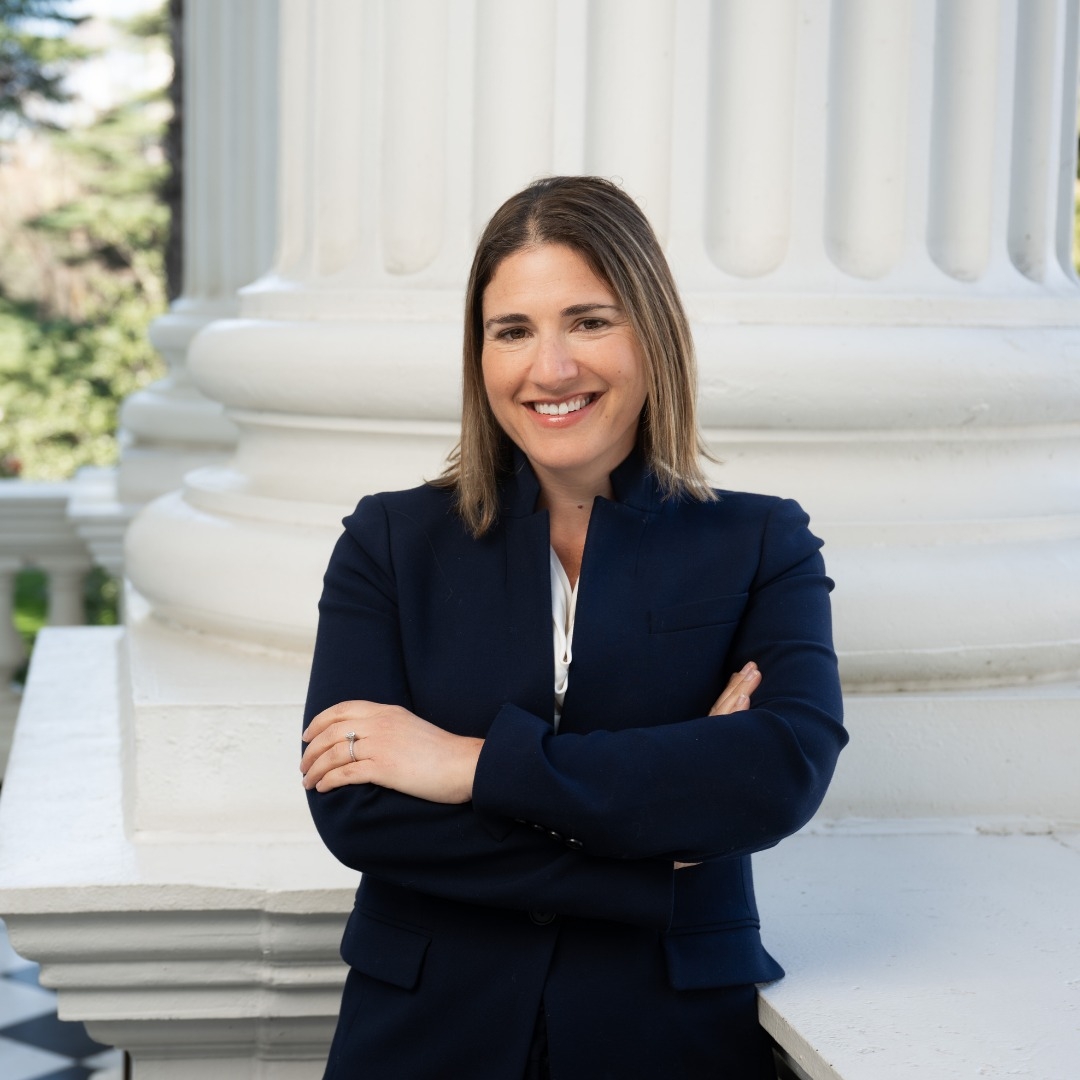
Asm. Rebecca Bauer-Kahan
Sponsored bills
This measure would declare April 28, 2022, as Take Our Daughters and Sons to Work Day, and would recognize the goals of introducing our daughters and sons to the workplace and commend all participants of Take Our Daughters And Sons To Work Day.
This measure would designate the week of May 1, 2022, through May 7, 2022, as Compost Awareness Week.
Existing law, the Warren-911-Emergency Assistance Act, requires every local public agency, as defined, to have an emergency communication system and requires the digits "911" to be the primary emergency telephone number within the system. Existing federal law, the National Suicide Hotline Designation Act of 2020, designates the 3-digit telephone number "988" as the universal number within the United States for the purpose of the national suicide prevention and mental health crisis hotline system operating through the National Suicide Prevention Lifeline maintained by the Assistant Secretary for Mental Health and Substance Abuse and the Veterans Crisis Line maintained by the Secretary of Veterans Affairs. This bill would change the name of the Warren-911-Emergency Assistance Act to the Warren-911-Emergency Assistance Act and Miles Hall-988-Mental Health and Suicide Prevention Lifeline.
This measure would proclaim, in perpetuity, the month of April as California Wines: Down to Earth Month, to celebrate the sustainable leadership of California wineries and winegrape growers throughout the month of April.
Existing law establishes a resource center that operates a statewide, toll-free information service for crime victims, and requires the resource center to distribute information and educational materials on victims' legal rights to specified agencies and organizations, including administrative and law enforcement agencies. This bill would, upon appropriation by the Legislature, create the Crisis Response for Victims and Survivors of Violence Pilot Program to provide support services to the victims and survivors of violence and crime and their loved ones. The program would be piloted in the City and County of San Francisco, the County of Contra Costa, the County of Los Angeles, and the County of San Joaquin. The bill would require each participating district attorney's office to establish a crisis response service team to develop and implement, among other things, a process to connect with victims, survivors, and their loved ones within 2 hours of violence or a crime and a process for responding to incidents of mass casualty, as defined. The bill would require these services to be available to victims and survivors 7 days a week by telephone and text message. The bill would require each participating district attorney's office to provide comprehensive reporting, as specified, on the program's outcomes. The bill would provide that the pilot program will run from January 1, 2023, to December 31, 2026, with an evaluation term beginning July 1, 2023, and ending June 30, 2027. The bill would remain in effect until January 1, 2028. By requiring county district attorney offices to participate in this pilot program, the bill would impose a state-mandated local program. The California Constitution requires the state to reimburse local agencies and school districts for certain costs mandated by the state. Statutory provisions establish procedures for making that reimbursement. This bill would provide that, if the Commission on State Mandates determines that the bill contains costs mandated by the state, reimbursement for those costs shall be made pursuant to the statutory provisions noted above.
The Personal Income Tax Law and the Corporation Tax Law allow various credits against the taxes imposed by those laws. This bill, for taxable years beginning on or after January 1, 2023, and before January 1, 2028, would allow a credit against those taxes to a taxpayer that is transferred, and allocated, credits pursuant to the sale of a specified multifamily rental housing development to a qualified developer, that has received a credit reservation from the California Tax Credit Allocation Committee, in specified amounts. The bill would define a qualified developer for purposes of this bill, in part, as a specified entity that commits, at application to the committee and under penalty of perjury, to employing a tax credit reservation allowed by the bill in the acquisition of a qualified development. By expanding the crime of perjury, this bill would impose a state-mandated local program. The bill would require the credits to be reserved on a first-come-first-served basis. The bill would limit the aggregate amount of credit that may be allocated by the committee, as provided. The bill would also provide that the credit amount shall be $0 for each taxable year beginning on or after January 1, 2023, and before January 1, 2028, unless otherwise specified in a bill providing for appropriations related to the Budget Act. Existing law requires that any bill introduced on or after January 1, 2020, that would authorize certain tax expenditures, as defined, or tax exemptions contain, among other things, specific goals, purposes, and objectives that the tax expenditure or exemption will achieve, detailed performance indicators, and data collection requirements. This bill would include additional information required for any bill authorizing a new tax expenditure. The California Constitution requires the state to reimburse local agencies and school districts for certain costs mandated by the state. Statutory provisions establish procedures for making that reimbursement. This bill would provide that no reimbursement is required by this act for a specified reason. This bill would take effect immediately as a tax levy.
Under existing law, the Stop Tobacco Access to Kids Enforcement Act, an enforcing agency, as defined, may assess civil penalties against any person, firm, or corporation that sells, gives, or furnishes specified tobacco and cigarette related items, including cigarette papers, to a person who is under 21 years of age, except as specified. The existing civil penalties range from $400 to $600 for a first violation, up to $5,000 to $6,000 for a 5th violation within a 5-year period. Existing law prohibits the sale, distribution, or nonsale distribution of tobacco products directly or indirectly to any person under 21 years of age through the United States Postal Service or other public or private postal or package delivery service. Under existing law, a district attorney, city attorney, or the Attorney General may assess civil penalties against a violator of not less than $1,000 or more than $2,000 for the first violation and up to $10,000 for a 5th or subsequent violation within a 5-year period. Under existing law, every person, firm, or corporation that knowingly or under circumstances in which it has knowledge, or should otherwise have grounds for knowledge, sells, gives, or furnishes a cigarette, among other specified items, to another person who is under 21 years of age is, except as specified, subject to either a criminal action for a misdemeanor or to a civil action brought by a city attorney, a county counsel, or a district attorney, punishable by a fine of $200 for the first offense, $500 for the 2nd offense, and $1,000 for the 3rd offense. This bill would prohibit a person or entity from selling, giving, or furnishing to another person of any age in this state a single-use electronic cigarette, as defined, except as specified. The bill would prohibit that selling, giving, or furnishing, whether conducted directly or indirectly through an in-person transaction, or by means of any public or private method of shipment or delivery to an address in this state. This bill would authorize a city attorney, county counsel, or district attorney to assess a $500 civil fine against each person determined to have violated those prohibitions in a proceeding conducted pursuant to the procedures of the enforcing agency, as specified. This bill would make its provisions operative on January 1, 2024.