

Existing law, in a civil action brought by, on behalf of, or for the benefit of a minor, or nonminor dependent, against a person who engaged in an act of commercial sexual exploitation, as defined, of a minor or nonminor dependent, authorizes the trier of fact to either impose a fine, civil penalty, or other penalty, or other remedy in an amount up to 3 times greater than authorized by the statute or to award a civil penalty not exceeding $50,000 and not less than $10,000 for each act of commercial sexual exploitation committed by the defendant if the tier of fact makes an affirmative finding regarding certain factors, including whether the defendant's conduct was directed to more than one minor or nonminor dependent, as prescribed. This bill would, beginning January 1, 2025, prohibit a social media platform, as defined, from knowingly facilitating, aiding, or abetting commercial sexual exploitation, as specified. The bill would require a court to award statutory damages not exceeding $4,000,000 and not less than $1,000,000 for each act of commercial sexual exploitation facilitated, aided, or abetted by the social media platform. The bill would define "facilitate, aid, or abet" to mean to deploy a system, design, feature, or affordance that is a substantial factor in causing minor users to be victims of commercial sexual exploitation. The bill would prohibit a social media platform from being deemed to be in violation of this provision if it demonstrates certain mitigating facts, including that the social media platform instituted and maintained a program of at least biannual audits of its designs, algorithms, practices, affordances, and features to detect designs, algorithms, practices, affordances, or features that have the potential to cause or contribute to violations of that provision, as prescribed. Existing law, the California Consumer Privacy Act of 2018, grants to a consumer various rights with respect to personal information, as defined, that is collected by a business, as defined, including the right to request that a business delete personal information about the consumer that the business has collected from the consumer. This bill would, beginning January 1, 2025, require a social media platform to, among other things, provide, in a mechanism that is reasonably accessible to users, a means for a user who is a California resident to report material to the social media platform that the user reasonably believes meets certain criteria, including that the reported material is child sexual abuse material, as defined, in which the reporting user is an identifiable minor depicted in the reported material. This bill would, beginning January 1, 2025, require the social media platform to permanently block the instance of reported material and make reasonable efforts to remove and block other instances of the same reported material from being viewable on the social media platform, as prescribed, if there is a reasonable basis to believe that the reported material is child sexual abuse material that is displayed, stored, or hosted on the social media platform, and the report contains basic identifying information, as specified, sufficient to permit the social media platform to locate the reported material. The bill would make a violator of those provisions liable to the reporting user, including for statutory damages of no more than $250,000 per violation, $125,000 per violation, or $75,000 per violation, as specified.
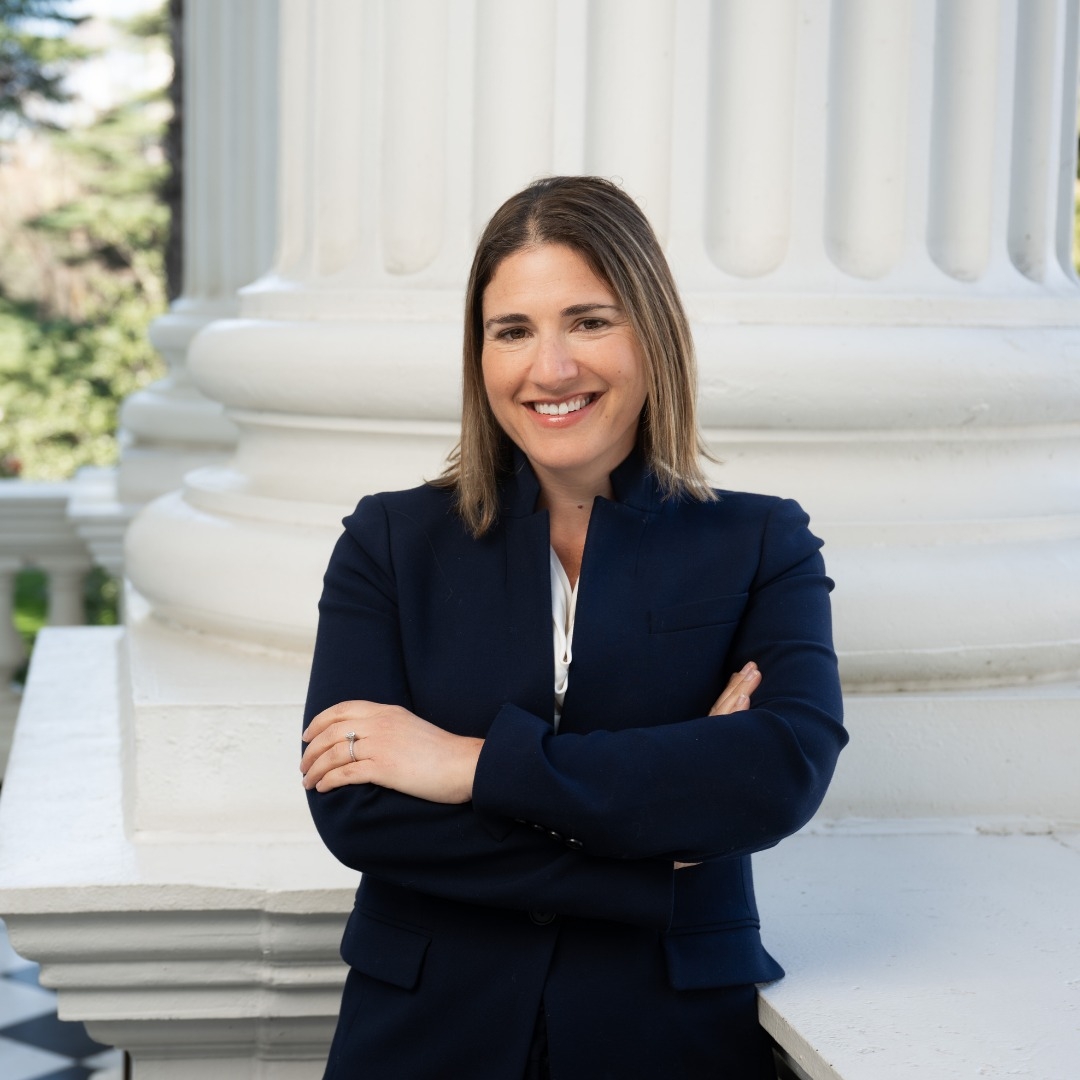
Asm. Rebecca Bauer-Kahan
Sponsored bills
Existing law grants the Division of Occupational Safety and Health, which is within the Department of Industrial Relations, jurisdiction over all employment and places of employment, and the power necessary to enforce and administer all occupational health and safety laws and standards. The Occupational Safety and Health Standards Board, an independent entity within the department, has the exclusive authority to adopt occupational safety and health standards within the state. Existing law, the California Occupational Safety and Health Act of 1973 (OSHA) , requires employers to comply with certain safety and health standards, as specified, and charges the division with enforcement of the act. Existing law requires the division, before December 1, 2025, to submit to the standards board a rulemaking proposal to consider revising the heat illness standard and wildfire smoke standard. Existing law also requires the standards board to review the proposed changes and consider adopting revised standards on or before December 31, 2025. This bill would require the standards board, before December 1, 2025, to draft a rulemaking proposal to consider revising a regulation on construction jobsite toilet facilities to require at least one single-user toilet facility on all construction jobsites, designated for employees who self-identify as female or nonbinary. The bill would require the standards board to consider adopting revised standards for the standards described above on or before December 31, 2025. Existing law further requires all single-user toilet facilities in a business establishment, place of public accommodation, or state or local government agency to be identified as all-gender toilet facilities by specified signage and designated for use by no more than one occupant at a time or for family or assisted use. This bill would provide that this provision does not apply to construction jobsites, as described above. The bill would include related legislative findings.
Existing law establishes the Department of Parks and Recreation and vests the department with control of the state park system. Existing law authorizes the department, whenever significant savings can be achieved, to enter into a contract with any natural person, corporation, partnership, or association for the operation of a reservation system for the state park system and for the collection of state park fees in connection therewith. This bill would require any contract the department enters into, on and after January 1, 2024, for purposes of managing the department's reservation system, to reflect specified rules, authorizations, and requirements, including, among other things, that a reservationholder who cancels a reservation within 2 to 6 calendar days before the reservation start date may forfeit the cost of the reservation for the first night plus any reservation fees. The bill would require the department to, on or before January 1, 2025, implement a reservation drawing for up to 5 of the most popular units of the state park system, as provided. The bill would require the department to report, on or before January 1, 2028, on the outcomes of the reservation drawing to the Legislature. The bill would repeal the above-mentioned provisions regarding the reservation drawing on January 1, 2029.
Existing law, the California Retail Food Code, provides for the regulation of health and sanitation standards for retail food facilities by the State Department of Public Health. Existing law, with specified exceptions, requires a food handler to obtain a food handler card within 30 days of their date of hire and to maintain a valid food handler card for the duration of their employment as a food handler. Under existing law, a food handler card is issued only upon successful completion of a food handler training course and examination that meets certain requirements. Existing law requires that at least one food handler training course and examination cost no more than $15, including a food handler card. A violation of the California Retail Food Code is generally a misdemeanor. This bill would require an employer to consider the time that it takes for the employee to complete the training and the examination as compensable "hours worked," for which the employer would pay, and to pay the employee for any necessary expenditures or losses associated with the employee obtaining a food handler card. The bill would require the employer to relieve an employee of all other work duties while the employee is taking the training course and examination. The bill would prohibit an employer from conditioning employment on the applicant or employee having an existing food handler card. Under existing law, the provisions relating to a food handler card do not apply to a food handler subject to an existing local food handler program that took effect before January 1, 2009. This bill would make the new provisions described above also applicable to a food handler who is subject to one of those existing programs. The bill would require the department, by January 1, 2025, to post on its internet website a link to the internet website of certain accredited food handler training programs. The bill would require a local public health department to provide a link to that web page on its own internet website. By increasing the scope of a crime and creating new duties for local public health departments, the bill would impose a state-mandated local program. The California Constitution requires the state to reimburse local agencies and school districts for certain costs mandated by the state. Statutory provisions establish procedures for making that reimbursement. This bill would provide that with regard to certain mandates no reimbursement is required by this act for a specified reason. With regard to any other mandates, this bill would provide that, if the Commission on State Mandates determines that the bill contains costs so mandated by the state, reimbursement for those costs shall be made pursuant to the statutory provisions noted above.
Under existing law, a public agency, as defined, may enter into specified energy conservation contracts, including into contracts for the sale of electricity, electrical generating capacity, or thermal energy produced by the energy conservation facility, as defined, at such rates and on such terms as are approved by its governing body. Existing law authorizes a public agency to enter into an energy service contract and related facility ground lease if the governing body finds, among other things, that the anticipated cost to the public agency for thermal or electrical energy or conservation services provided by the energy conservation facility under the contract will be less than the anticipated marginal cost to the agency of thermal, electrical, or other energy that would have been consumed by the public agency in the absence of those purchases. Existing law additionally authorizes a public agency to enter into a facility financing contract and a facility ground lease upon meeting certain requirements and finding that funds for the repayment of the financing or other specified contract costs are projected to be available from revenues resulting from sales of electricity or thermal energy from the facility or other sources. Existing law authorizes a public agency to enter into contracts for the sale of electricity, electrical generating capacity, or thermal energy produced by the energy conservation facility at such rates and terms as are approved by its governing body. This bill would authorize the Tri-Valley-San Joaquin Valley Regional Rail Authority, in addition to its authority to enter into contracts described above, to enter into energy service contracts, facility financing contracts, and contracts for the sale of specified energy resources relating to green electrolytic hydrogen, as defined, for use by the authority for purposes of financing the construction and operation of passenger rail service through the Altamont Pass Corridor. This bill would make legislative findings and declarations as to the necessity of a special statute for the Tri-Valley-San Joaquin Valley Regional Rail Authority.
The False Advertising Law makes it a crime for a person or a firm, corporation, or association, or any employee thereof, to engage in specified false or misleading advertising practices. The Unfair Competition Law makes various unfair competition practices unlawful, including any unlawful, unfair, or fraudulent business act or practice and unfair, deceptive, untrue, or misleading advertising. The Consumers Legal Remedies Act makes unlawful certain unfair methods of competition and certain unfair or deceptive acts or practices undertaken by a person in a transaction intended to result or that results in the sale or lease of goods or services to a consumer, including advertising goods or services with intent not to sell them as advertised. Existing law authorizes a consumer who suffers damage as a result of the use or employment by a person of a method, act, or practice declared to be unlawful by that provision to bring an action against that person to recover or obtain certain relief, including actual damages of at least $1,000. This bill would, beginning on July 1, 2024, with specified exceptions, additionally make unlawful advertising, displaying, or offering a price for a good or service that does not include all mandatory fees or charges other than taxes or fees imposed by a government on the transaction, as specified. The bill would provide that assessments made pursuant to the California Tourism Marketing Act and the Parking and Business Improvement Area Law of 1989, and business assessments made pursuant to the Property and Business Improvement District Law of 1994, are fees imposed by a government on the transaction for purposes of these provisions. Existing law authorizes vehicle rental companies, when providing a quote or imposing charges for a rental, to separately state specified rates and charges that a renter must pay to hire or lease the vehicle for the period of time to which the rental rate applies. Existing law prohibits a rental company from imposing charges or fees in addition to the rental rate unless specified conditions are met. Existing law requires the rate advertisements of vehicle rental companies to include a disclaimer providing that additional mandatory charges may be imposed, as specified. This bill would provide that a rental company is not in violation of unlawful advertising, displaying, or offering a price for a good or service for excluding from the advertised, displayed, or offered price of a rental vehicle charges that are disclosed to the consumer in compliance with the above-described provisions. Existing law requires any solicitation to enter into a lease contract that includes the amount of any payment, as specified, to also state, among other things, "Plus tax and license" or a substantially similar statement, if amounts due for use tax, license fees, and registration fees are not included in the payments. This bill would specify that a lessor is not in violation of this prohibition against unlawfully advertising, displaying, or offering a price for a good or service because it excludes from the advertised, displayed, or offered lease payment a fee or charge in accordance with the provision described above. Existing law imposes specified requirements on dealers of motor vehicles and motorcycles sold or leased in this state. Existing law prohibits a holder of a dealer's license from doing specified acts, including advertising the total price of a vehicle without including all costs to the purchaser at time of sale, except taxes, vehicle registration fees, the California tire fee, emission testing charges not exceeding $50, actual fees charged for certificates, finance charges, and any dealer document processing charge or charge to electronically register or transfer the vehicle. This bill would specify that a holder of a dealer's license is not in violation of unlawful advertising, displaying, or offering a price for a good or service for excluding from the advertised, displayed, or offered price of a vehicle a tax, a vehicle registration fee, the California tire fee, an emission testing charge not exceeding $50, an actual fee charged for a certificate, a finance charge, or a dealer document processing charge or charge to electronically register or transfer the vehicle. Existing law imposes specified requirements on manufacturers of motor vehicles and motorcycles and prohibits a person from acting as a motor vehicle manufacturer without having first been issued a license by the Department of Motor Vehicles, as specified. This bill would specify that a motor vehicle manufacturer, or any other person, that advertises a motor vehicle manufacturer's suggested retail price (MSRP) set by an automobile manufacturer, or lease payments based upon an MSRP, does not, by doing so, violate the prohibition described above relating to unlawful advertising, displaying, or offering a price for a good or service.
Existing law establishes the Medi-Cal program, which is administered by the State Department of Health Care Services, under which qualified low-income individuals receive health care services. The Medi-Cal program is, in part, governed and funded by federal Medicaid Program provisions. Existing federal law, as a condition of receiving federal Medicaid funds, requires states to provide health care services to specified individuals. Existing federal law authorizes states to provide presumptive eligibility to pregnant women or children, and existing state law requires the department to provide presumptive eligibility to pregnant women and children, as specified. This bill would expand the presumptive eligibility for pregnant women to all pregnant people, renaming the program "Presumptive Eligibility for Pregnant People" (PE4PP) . For a pregnant person covered under PE4PP who applies for full-scope Medi-Cal benefits, if the application is submitted at any time from the date of their presumptive eligibility determination through the last day of the subsequent calendar month, the bill would require the department to ensure the pregnant person is covered under PE4PP until their full-scope Medi-Cal application is approved or denied, as specified. The bill would require the department to require providers participating in the PE4PP program to provide information to pregnant persons enrolled in PE4PP on how to contact the person's county to expedite the county's determination of a Medi-Cal application. The bill would make conforming changes to related provisions. Because counties are required to make eligibility determinations, and this bill would expand Medi-Cal eligibility, the bill would impose a state-mandated local program. The California Constitution requires the state to reimburse local agencies and school districts for certain costs mandated by the state. Statutory provisions establish procedures for making that reimbursement. This bill would provide that, if the Commission on State Mandates determines that the bill contains costs mandated by the state, reimbursement for those costs shall be made pursuant to the statutory provisions noted above.
Existing law declares another state's law authorizing a civil action against a person or entity that receives or seeks, performs or induces, or aids or abets the performance of an abortion, or who attempts or intends to engage in those actions, to be contrary to the public policy of this state, and prohibits the application of that law to a controversy in state court and the enforcement or satisfaction of a civil judgment received under that law. This bill would specifically include within these provisions, in addition to abortion performers, abortion providers. Existing law, the Knox-Keene Health Care Service Plan Act of 1975, provides for the licensure and regulation of health care service plans by the Department of Managed Health Care and makes a willful violation of the act a crime. Existing law also provides for the regulation of health insurers by the Department of Insurance. The bill would also prohibit a contract issued, amended, or renewed on or after January 1, 2024, between a health care service plan or health insurer and a health care services provider from containing any term that would result in termination or nonrenewal of the contract or otherwise penalize the provider based on a civil judgment, criminal conviction, or another professional disciplinary action in another state if the judgment, conviction, or professional disciplinary action is solely based on the application of another state's law that interferes with a person's right to receive care that would be lawful if provided in California. The bill would also prohibit a health care service plan or health insurer from discriminating against a licensed provider solely on the basis of a civil judgment, criminal conviction, or another professional disciplinary action in another state if the judgment, conviction, or professional disciplinary action is solely based on the application of another state's law that interferes with a person's right to receive care that would be lawful if provided in California. Because a willful violation of these provisions by a health care service plan would be a crime, the bill would impose a state-mandated local program. Existing law requires that the State Department of Public Health automatically suspend as a Medi-Cal provider any individual or entity that has a license, certificate, or other approval to provide health care that is revoked or suspended by a federal, California, or another state's licensing, certification, or approval authority, has otherwise lost that license, certificate, or approval, or has surrendered that license, certificate, or approval while a disciplinary hearing was pending. The bill would also authorize the department, subject to obtaining necessary federal approvals and the availability of federal financial participation under Medi-Cal, to elect to not suspend an individual or entity as a provider in the Medi-Cal program if the revocation, suspension, or loss of the individual or entity's license, certification, or approval authority in another state or the pending disciplinary hearing during which the individual or entity surrendered the license, certification, or approval authority in another state is based solely on conduct that is not deemed to be unprofessional conduct under California law. The bill would also require the department to seek any necessary federal approvals to implement these provisions. Under existing law, the Director of Health Care Services is authorized, for purposes of administering the Medi-Cal program, to suspend a provider of service from further participation under the program for specified reasons, including conviction of any felony or any misdemeanor involving fraud, abuse of the Medi-Cal program or any patient, or otherwise substantially related to the qualifications, functions, or duties of a provider of service. Existing law requires the director, upon receipt of written notification from the Secretary of the United States Department of Health and Human Services that a physician or other individual practitioner has been suspended from participation in the Medicare or Medicaid programs, to promptly suspend the practitioner from participation in the Medi-Cal program. Existing law also requires the Director of Health Care Services to notify the administrative director of a suspension of a physician from participation in the Medi-Cal program imposed pursuant to provisions authorizing the director to suspend a provider of service from participation. This bill would authorize the director, subject to obtaining necessary federal approvals and the availability of federal financial participation under Medi-Cal, to request a waiver under federal law, as permitted, if the provider's suspension from participating in the Medicare or Medicaid program was based solely on conduct that is not deemed to be unprofessional conduct under California law. The bill would also require the department to seek any necessary federal approvals to implement these provisions. The California Constitution requires the state to reimburse local agencies and school districts for certain costs mandated by the state. Statutory provisions establish procedures for making that reimbursement. This bill would provide that no reimbursement is required by this act for a specified reason.
Existing law requires the State Department of Public Health to license and regulate clinics and health facilities. Existing law generally makes a violation of those licensing provisions a crime. Existing law requires a person or facility that offers a fetal ultrasound, or a similar procedure, for keepsake or entertainment purposes, to disclose to a client prior to performing the procedure, in writing, a specified statement. This bill would specify the settings in which an ultrasound or similar medical imaging device procedure may be offered. The bill would exempt a practice of a licensed midwife, or a practice of a certified nurse-midwife. The bill would impose a civil penalty for the violation of this provision in the amount of $2,500 for a first offense and $5,000 for each subsequent offense, defined as each ultrasound conducted outside of the specified settings. The bill would authorize the Attorney General, a district attorney, a city attorney, or a county counsel to bring an action to impose the civil penalty. The bill would specify how the civil penalty funds and related costs are to be paid.
The Confidentiality of Medical Information Act (CMIA) prohibits a provider of health care, a health care service plan, a contractor, or a corporation and its subsidiaries and affiliates from intentionally sharing, selling, using for marketing, or otherwise using any medical information, as defined, for any purpose not necessary to provide health care services to a patient, except as provided. The CMIA makes a business that offers software or hardware to consumers, including a mobile application or other related device that is designed to maintain medical information in order to make the information available to an individual or a provider of health care at the request of the individual or a provider of health care, for purposes of allowing the individual to manage the individual's information or for the diagnosis, treatment, or management of a medical condition of the individual, a provider of health care subject to the requirements of the CMIA. Existing law makes a violation of these provisions that results in economic loss or personal injury to a patient punishable as a misdemeanor. This bill would revise the definition of "medical information" to include reproductive or sexual health application information, which the bill would define to mean information about a consumer's reproductive or sexual health collected by a reproductive or sexual health digital service, as specified. The bill would make a business that offers a reproductive or sexual health digital service to a consumer for the purpose of allowing the individual to manage the individual's information, or for the diagnosis, treatment, or management of a medical condition of the individual, a provider of health care subject to the requirements of the CMIA. Because the bill would expand the scope of a crime, it would impose a state-mandated local program. This bill would incorporate additional changes to Section 56.05 of the Civil Code proposed by AB 1697 to be operative only if this bill and AB 1697 are enacted and this bill is enacted last. The California Constitution requires the state to reimburse local agencies and school districts for certain costs mandated by the state. Statutory provisions establish procedures for making that reimbursement. This bill would provide that no reimbursement is required by this act for a specified reason.