

Existing law requires the State Air Resources Board to complete, approve, and implement a comprehensive strategy to reduce emissions of short-lived climate pollutants in the state to reduce the statewide methane emissions by 40% below 2013 levels by 2030. Existing law requires methane emissions reduction goals to include specified targets to reduce the landfill disposal of organics. Existing law requires the Department of Resources Recycling and Recovery, in consultation with the state board, to adopt regulations that achieve those targets for reducing organic waste in landfills, and include in those regulations, among other things, requirements intended to meet the goal that not less than 20% of edible food that is currently disposed of is recovered for human consumption by 2025. This bill would require the department to include in those recovered edible food requirements, product labeling requirements that reduce food waste.
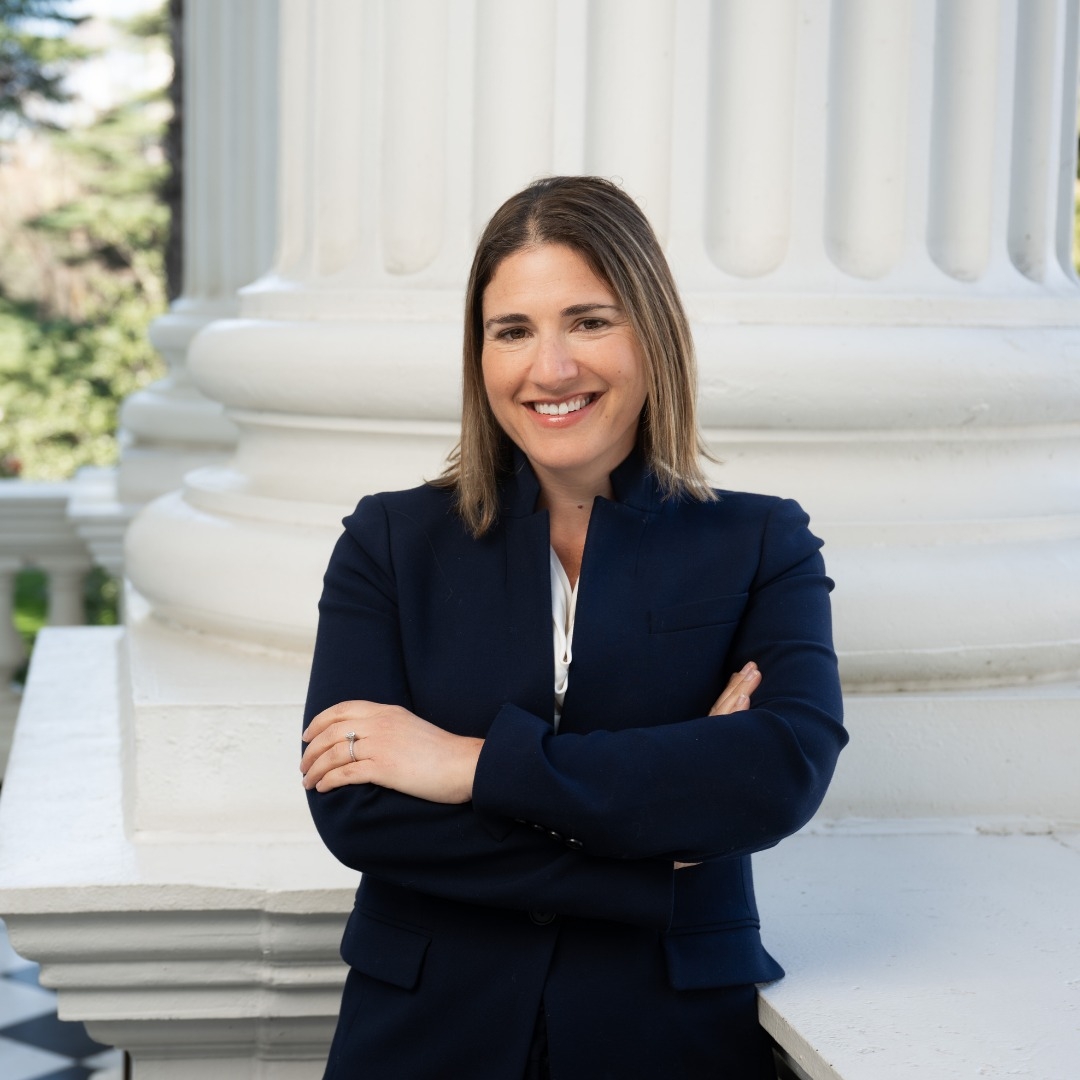
Asm. Rebecca Bauer-Kahan
Sponsored bills
Existing law vests the Public Utilities Commission with regulatory authority over public utilities, including electrical corporations. Existing law authorizes the commission to adopt new, or expand existing, fixed charges, as defined, for the purpose of collecting a reasonable portion of the fixed costs of providing electrical service to residential customers. Under existing law, the commission may authorize fixed charges for any rate schedule applicable to a residential customer account. Existing law requires the commission, no later than July 1, 2024, to authorize a fixed charge for default residential rates. Existing law requires these fixed charges to be established on an income-graduated basis, with no fewer than 3 income thresholds, so that low-income ratepayers in each baseline territory would realize a lower average monthly bill without making any changes in usage. This bill would prohibit modifications to the amount of the income-graduated fixed charge from exceeding changes in inflation, as provided. The bill would make the provisions authorizing the income-graduated fixed charge inoperative on July 1, 2028. The bill, commencing July 1, 2028, would instead permit the commission to authorize fixed charges that, as of January 1, 2015, do not exceed $5 per residential customer account per month for low-income customers enrolled in the California Alternate Rates for Energy (CARE) program and that do not exceed $10 per residential customer account per month for customers not enrolled in the CARE program. The bill would authorize these maximum allowable fixed charges to be adjusted by no more than the annual percentage increase in the Consumer Price Index for the prior calendar year, beginning January 1, 2016. The bill would require the commission to adopt any modification to an existing fixed charge for the collection of a reasonable portion of the fixed costs of providing electrical service to residential customers in a stand-alone proceeding. The bill would prohibit a fixed charge from resulting in an increase to an electrical corporation's revenue requirement. The bill would require the commission, on or before July 1, 2027, but no sooner than 2 years after the adoption of the income-graduated fixed charge, to submit a public report to the relevant policy committees of both houses of the Legislature on the electrical corporations' implementation of the income-graduated fixed charge and other cost-saving options, as specified. Under existing law, a violation of the Public Utilities Act or any order, decision, rule, direction, demand, or requirement of the commission is a crime. Because the provisions of this bill would be a part of the act and therefore a violation of the bill's requirements or of a commission action implementing its requirements would be a crime, the bill would impose a state-mandated local program. The California Constitution requires the state to reimburse local agencies and school districts for certain costs mandated by the state. Statutory provisions establish procedures for making that reimbursement. This bill would provide that no reimbursement is required by this act for a specified reason.
Existing law, until January 1, 2026, requires a person, upon a criminal conviction for driving under the influence (DUI) with a prior conviction for DUI, to install a functioning, certified ignition interlock device (IID) for a specified period of time. Existing law also authorizes a court, upon the first criminal conviction of a person for DUI, to order installation of an IID for a specified period of time, or, if the court does not order the installation of the device, authorizes the person to apply for a restricted license, as specified. This bill would establish a pilot program under the Department of Motor Vehicles that would, between July 1, 2025, and July 1, 2030, require the courts in the Counties of Los Angeles, Orange, Sacramento, San Bernardino, and San Diego, to order the installation of an IID for any DUI conviction, as specified. The bill would require the department to prepare and submit a report to the Legislature, after the conclusion of the program, summarizing the effect of the program on reducing first-time and repeat DUI offenses.
Maddy summaryThis bill designates October 2024 as Menopause Awareness Month in California to highlight the health and societal impacts of menopause on women. It acknowledges that millions of women face symptoms that can affect their daily lives and work, noting that women of color are at higher risk for complications like premature menopause and heart disease. The resolution encourages the state to provide better health information and services to support women's well-being before, during, and after this transition. While the text outlines these goals, the bill itself is a formal recognition rather than a law that creates new funding or mandates specific programs.
The Personal Income Tax Law, in modified conformity with federal income tax law, generally defines "gross income" as income from whatever source derived, except as specifically excluded, including an exclusion for the amount of student loan indebtedness repaid or canceled pursuant to a specified federal law. This bill, for taxable years beginning on or after January 1, 2024, and before January 1, 2029, would exclude qualified discharge of indebtedness income from gross income. The bill would define "qualified discharge of indebtedness income" for this purpose to mean income that would otherwise be realized from the discharge of student loan debt, as defined, or medical debt that is discharged by a qualifying nonprofit organization. Existing law requires a bill authorizing a new tax expenditure to contain, among other things, specific goals, purposes, and objectives the tax expenditure will achieve, detailed performance indicators, and data collection requirements. This bill would include additional information required for any bill authorizing a new tax expenditure. This bill would take effect immediately as a tax levy.
This measure would proclaim the week of April 14, 2024 to April 20, 2024, to be Cities Week, and would encourage all Californians to be involved in their communities and be civically engaged with their local government.
This measure would join Asian and Pacific Islander communities throughout the state, nation, and world in celebrating April 13, 2024, to April 15, 2024, as the Songkran New Year Festival.
This measure would designate the week of April 14, 2024, to April 20, 2024, inclusive, as Family Physician Week.