

Existing law, the California Seed Law, regulates seed sold in California. The California Seed Law prohibits any person from shipping, delivering, transporting, or selling agricultural or vegetable seed that is treated after harvest with any substance that is likely to be poisonous or toxic to human beings or animals unless it is labeled with specified information, including the chemical or generic name of the treatment material, as provided. The California Seed Law requires, when more than one substance is applied to the seed, each substance applied to the seed to be noted on the label and the seed to be labeled for the substance with the higher level of toxicity. This bill would additionally require, when more than one substance is applied to the seed, that the seed be labeled for each substance applied with the signal word for the substance with the highest level of toxicity. The bill would, beginning January 1, 2027, require that the label for seeds treated with certain substances and packaged on or after January 1, 2027, include each pesticide's registration number from the United States Environmental Protection Agency, if applicable, and the quantity applied by weight or amount per seed.
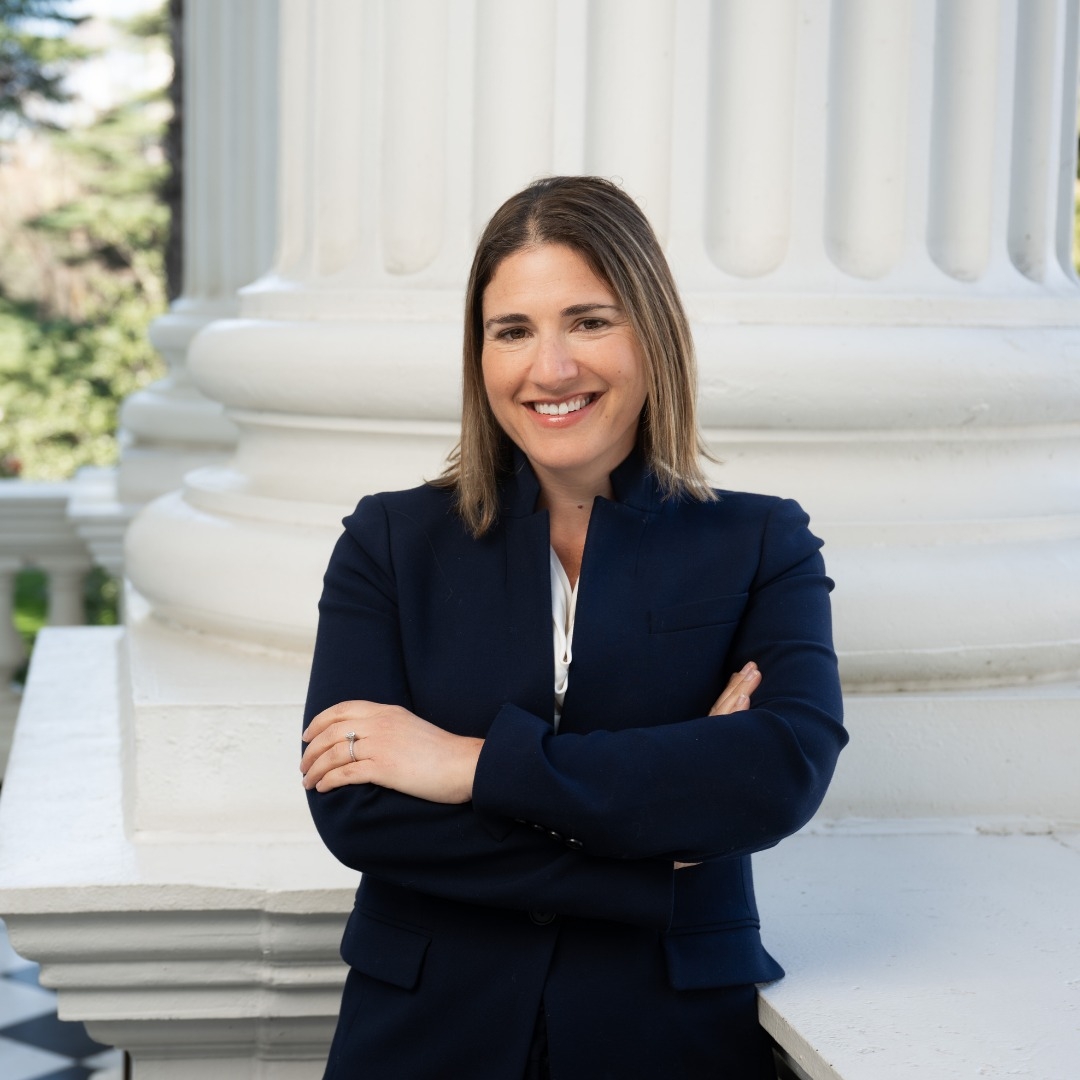
Asm. Rebecca Bauer-Kahan
Sponsored bills
Existing law prohibits a store, as defined, from providing a single-use carryout bag to a customer at the point of sale, with specified exceptions, including an exemption for bags used to contain unwrapped food. Existing law defines a "single-use carryout bag" as a bag made of plastic, paper, or other material that is provided by a store to a customer at the point of sale and that is not a recycled paper bag or a reusable grocery bag that meets specified requirements, including that the bag be made by a certified reusable grocery bag producer and meets specified requirements with regard to the bag's durability, material, labeling, heavy metal content, and, with regard to reusable grocery bags made from plastic film, recycled material content. Existing law prohibits a producer of reusable grocery bags made from plastic film from selling or distributing those bags unless the producer is certified by a third-party certification entity, and provides proof of that certification and a certification fee to the Department of Resources Recycling and Recovery, as specified. Existing law also prohibits a store from selling or distributing a recycled paper bag at the point of sale unless the store makes that bag available for purchase for not less than $0.10. Existing law defines "recycled paper bag," in part, as a paper carryout bag that contains a minimum of 40% postconsumer recycled materials, except as provided, and meets other requirements. Existing law allows a retail establishment to voluntarily comply with these requirements, if the retail establishment provides the department with irrevocable notice. This bill would, commencing January 1, 2026, revise and recast those provisions to, among other things, recast the definition of a "single-use carryout bag" to a "carryout bag," and would revise the definition to mean a bag made of plastic, paper, or other material that is provided by a store to a customer at the point of sale for the purpose of carrying purchased goods and that is not a recycled paper bag. The bill would create a carryout bag exception to include a bag provided to a customer before the customer reaches the point of sale, that is designed to protect a purchased item from damaging or contaminating other purchased items in a checkout bag, or to contain an unwrapped food item, as specified. The bill would revise the definition of "recycled paper bag" to require it be made from a minimum of 50% postconsumer recycled materials on and after January 1, 2028, without exception. The bill would also prohibit a store from providing, distributing, or selling a carryout bag to a customer at the point of sale, except as provided. The bill would also repeal the provisions relating to standards for and the certification of reusable grocery bags, and would repeal a provision relating to certain obsolete at-store recycling program requirements. The bill would make related legislative findings and declarations and would make related conforming changes.
Existing law prohibits the sale or furnishing of tobacco or tobacco products or paraphernalia, as specified, to a person who is under 21 years of age. Under existing law, a violation of this prohibition is punishable by a fine of $200 for the first offense, $500 for the 2nd offense, and $1,000 for the 3rd offense, either as a misdemeanor or by a civil action, as specified. This bill would create a separate fine of $500 for the first offense, $1,000 for the 2nd offense, and $5,000 for any subsequent offense for firms, corporations, businesses, retailers, or wholesalers, who violate this prohibition.
Existing law, the California Ocean Protection Act, establishes the Ocean Protection Council in state government to coordinate activities of state agencies that are related to the protection and conservation of coastal waters and ocean ecosystems to improve the effectiveness of state efforts to protect ocean resources within existing fiscal limitations, among other duties. Existing law requires, to the extent that funds are available from bonds or other sources, including from federal, state, academic, or other public or private entities, on or before December 31, 2024, the council to adopt and implement a Statewide Microplastics Strategy related to microplastic materials that pose an emerging concern for ocean health. This bill would require, on or before March 1, 2025, the council to establish and lead an interagency coordination group, and would require the council, in coordination with the interagency coordination group, to identify and recommend to the Legislature, on or before December 31, 2025, statutory changes that are needed to implement the recommendations described in the Statewide Microplastics Strategy, as specified. The bill would require the council, in coordination with the interagency coordination group, to adopt a workplan, on or before December 31, 2025, outlining which participating agencies within the interagency coordination group will implement the recommendations. The bill would require the workplan to be provided to the Legislature on or before December 31, 2025. The bill would repeal these provisions on January 1, 2029.
Existing law establishes the family conciliation court, which may be implemented by the superior court in each county, to provide means for the reconciliation of spouses and the amicable settlement of domestic and family controversies. In each county in which a family conciliation court is established, the superior court may appoint one supervising counselor of conciliation and one secretary to assist the family conciliation court in disposing of its business and carrying out its functions. Existing law defines an "evaluator" for purposes of family reconciliation court proceedings to include a supervising or associate counselor, a mediator, a court-connected or private child custody evaluator, or a court-appointed investigator or evaluator, as described. Existing law requires an evaluator to participate in specified training requirements, including 16 hours of advanced training within a 12-month period. Existing law requires 12 hours of that advanced training to include, among other topics, the unique issues in a family and psychological assessment in a domestic violence case, such as the nature and extent of domestic violence, and the relationship of gender, class, race, culture, and sexual orientation to domestic violence, and the influence of alcohol and drug use and abuse on the incidence of domestic violence. This bill would require the risks associated with access to firearms and ways to reduce those risks to be included on the list of issues in a family and psychological assessment in a domestic violence case for purposes of the advanced training.
Existing law, the California Age-Appropriate Design Code Act, requires, beginning July 1, 2024, a business that provides an online service, product, or feature likely to be accessed by children to comply with certain requirements. The act requires the business to complete a data protection impact assessment addressing, among other things, whether the design could harm children and whether and how the online product, service, or feature uses system design features to increase, sustain, or extend use of the online product, service, or feature by children, including the automatic playing of media, rewards for time spent, and notifications. Existing law prohibits the business from using the personal information of any child in a way that the business knows, or has reason to know, is materially detrimental to the physical health, mental health, or well-being of a child. Existing law, the Privacy Rights for California Minors in the Digital World, prohibits an operator of an internet website, online service, online application, or mobile application from specified conduct when minors are involved, including the marketing or advertising of alcoholic beverages, firearms, or certain other products or services. Existing law sets forth other related protections for minors, including under the California Consumer Privacy Act of 2018 and the California Privacy Rights Act of 2020. This bill, the Protecting Our Kids from Social Media Addiction Act, would make it unlawful for the operator of an addictive internet-based service or application, as defined, to provide an addictive feed to a user, unless the operator does not have actual knowledge that the user is a minor; commencing January 1, 2027, has reasonably determined that the user is not a minor; or has obtained verifiable parental consent to provide an addictive feed to the user who is a minor. The bill would define "addictive feed" as an internet website, online service, online application, or mobile application, in which multiple pieces of media generated or shared by users are recommended, selected, or prioritized for display to a user based on information provided by the user, or otherwise associated with the user or the user's device, as specified, unless any of certain conditions are met. The bill would make it unlawful for the operator of an addictive internet-based service or application, between the hours of 12 a.m. and 6 a.m., in the user's local time zone, and between the hours of 8 a.m. and 3 p.m., Monday through Friday from September through May in the user's local time zone, to send notifications to a user if the operator has actual knowledge that the user is a minor or, commencing January 1, 2027, has not reasonably determined that the user is not a minor, unless the operator has obtained verifiable parental consent to send those notifications, as specified. The bill would set forth related provisions for certain access controls determined by the verified parent through a mechanism provided by the operator. Under the bill, a parent's provision of consent or use of a mechanism, as described above, would not waive, release, otherwise limit, or serve as a defense to, any claim that the parent, or that the user who is a minor or was a minor at the time of using the internet-based service or application, might have against the operator regarding any harm to the mental health or well-being of the user. The bill would require an operator to annually disclose the number of minor users of its addictive internet-based service or application, and of that total the number for whom the operator has received verifiable parental consent to provide an addictive feed, and the number of minor users as to whom the access controls are or are not enabled. Under the bill, these provisions would only be enforced in a civil action brought in the name of the people of the State of California by the Attorney General. The bill would require the Attorney General to adopt regulations to further the purposes of these provisions, including regulations regarding age assurance and parental consent by January 1, 2027. The bill would authorize the Attorney General to adopt regulations that provide for exceptions to these provisions, but only if those exceptions further the purpose of protecting minors. The bill would require the Attorney General, in promulgating regulations, to solicit public comment regarding the impact that any regulation might have based on certain nondiscrimination characteristics set forth in existing law. The bill would make these provisions severable.
Existing law establishes a cause of action for damages on behalf of specified injured parties for the unauthorized use of a deceased personality's name, voice, signature, photograph, or likeness in any manner, on or in products, merchandise, or goods, or for purposes of advertising or selling, or soliciting purchases of, products, merchandise, goods, or services within 70 years of the personality's death, except as specified. Existing law specifies that for the above-described provision, a play, book, magazine, newspaper, musical composition, audiovisual work, radio or television program, single and original work of art, work of political or newsworthy value, or an advertisement or commercial announcement for any of these works, shall not be considered a product, article of merchandise, good, or service if it is fictional or nonfictional entertainment, or a dramatic, literary, or musical work. This bill would make a person who produces, distributes, or makes available the digital replica of a deceased personality's voice or likeness in an expressive audiovisual work or sound recording without specified prior consent liable to any injured party in an amount equal to the greater of $10,000 or the actual damages suffered by a person controlling the rights to the deceased personality's likeness, except as prescribed. The bill would define "digital replica" to mean a computer-generated, highly realistic electronic representation that is readily identifiable as the voice or visual likeness of an individual that is embodied in a sound recording, image, audiovisual work, or transmission in which the actual individual either did not actually perform or appear, or the actual individual did perform or appear, but the fundamental character of the performance or appearance has been materially altered.
Existing law provides that in the case of a theft of any article of historical, interpretive, scientific, cultural, or artistic significance, a cause of action is not deemed to have accrued until the discovery of the whereabouts of the article by the aggrieved party, the aggrieved party's agent, or a law enforcement agency. Existing law requires a civil action against a museum, gallery, auctioneer, or dealer for the recovery of works of fine art that were unlawfully taken or stolen, including a taking or theft by means of fraud or duress, to be commenced within 6 years of the actual discovery by the claimant or their agent of the identity and whereabouts of the work of fine art and information or facts that are sufficient to indicate that the claimant has a claim for a possessory interest in the work of fine art. Existing federal law, the Holocaust Expropriated Art Recovery Act of 2016, establishes a statute of limitation for claims to recover artwork and other property, as defined, stolen or misappropriated by the Nazis between 1933 and 1945. This bill would provide that California substantive law shall apply in actions to recover fine art or an item of historical, interpretive, scientific, or artistic significance, including those covered by the Holocaust Expropriated Art Recovery Act of 2016, brought by a California resident or their heirs, as specified. This bill would also permit a California resident or a representative of the estate of a California resident, as specified, to bring an action for damages or to recover artwork or personal property, as defined, that was stolen or otherwise lost as the result of political persecution. The bill would permit such actions to be brought within six years of the discovery of relevant facts, as provided. This bill would also permit those who discovered relevant facts prior to the effective date of this bill, to bring such actions within 6 years of the discovery of the relevant facts or within 2 years of the effective date of this bill, whichever is later. The bill would permit a cause of action previously dismissed on specified grounds to be brought again under these provisions within 2 years of either the effective date of the bill or the entry of final judgment and the termination of all appeals, whichever is later. This bill would declare that it is to take effect immediately as an urgency statute.
This measure would, among other things, urge the United States Congress and President Joseph R. Biden to fully fund the United States Environmental Protection Agency's Comprehensive Infrastructure Solution for the Tijuana River due to the ongoing impacts to public health, the environment, and the local economy caused by cross-border pollution and would urge President Joseph R. Biden to declare a national emergency due to those ongoing impacts.
This measure would urge the Congress of the United States to repeal the state and local tax deduction limitation so that residents of California and married taxpayers are no longer penalized by the federal tax code.