

Existing law makes it a misdemeanor to, by force or threat of force, willfully injure, intimidate, interfere with, oppress, or threaten another person in the free exercise or enjoyment of a right or privilege secured by the Constitution or laws of this state or by the Constitution or laws of the United States in whole or in part because of one or more of specified actual or perceived characteristics of the victim, including disability, gender, religion, race, or sexual orientation. Existing law also makes it a misdemeanor to knowingly deface, damage, or destroy the real or personal property of another person for the purpose of intimidating or interfering with the free exercise or enjoyment of a right or privilege secured by the Constitution or laws of this state or by the Constitution or laws of the United States, in whole or in part because of one or more of the same actual or perceived characteristics of the victim. This bill would make the above crimes punishable either as a misdemeanor or as a felony, to be served in county jail for 18 months, or 2 or 3 years. By increasing the punishment for a crime, this bill would impose a state-mandated local program. The California Constitution requires the state to reimburse local agencies and school districts for certain costs mandated by the state. Statutory provisions establish procedures for making that reimbursement. This bill would provide that no reimbursement is required by this act for a specified reason.
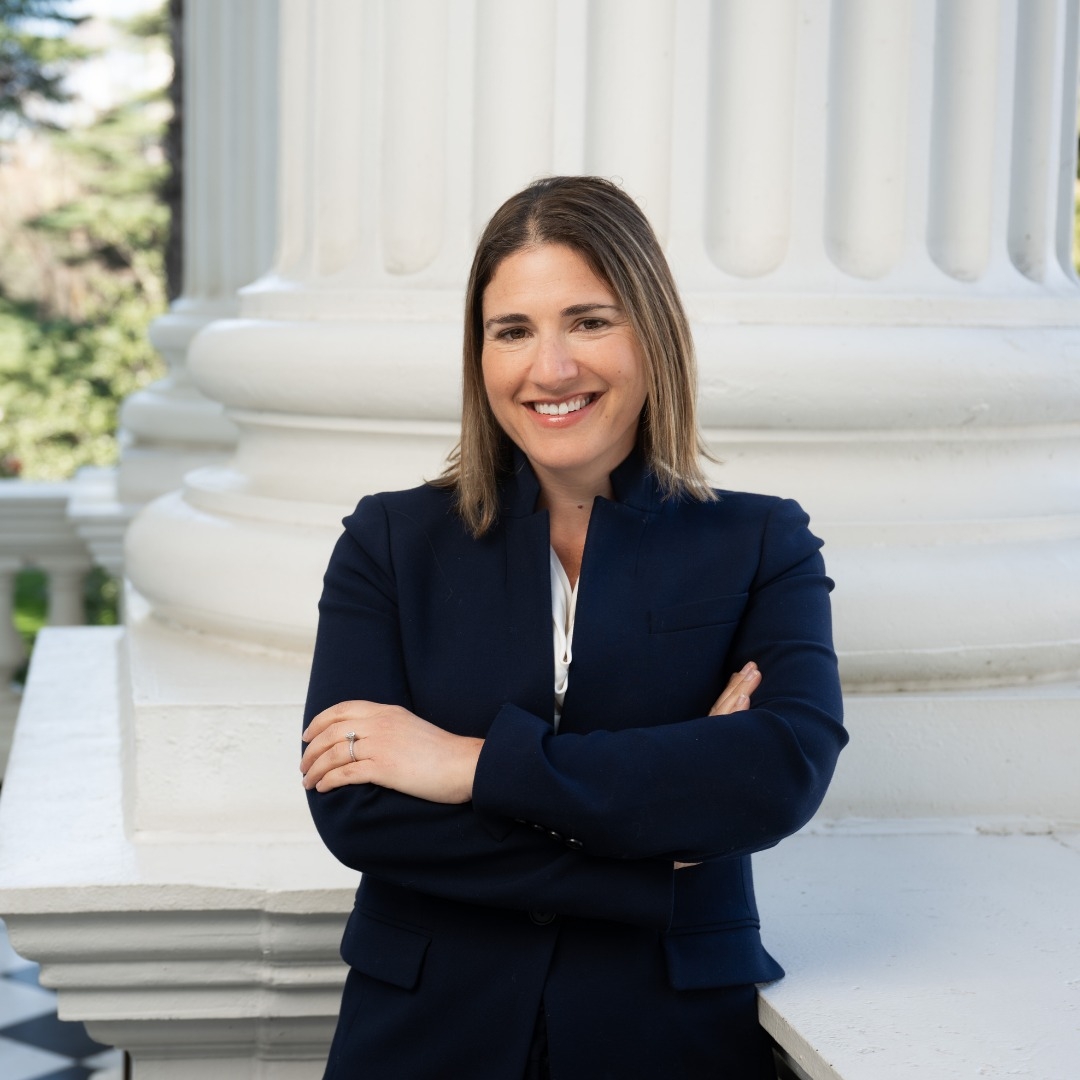
Asm. Rebecca Bauer-Kahan
Sponsored bills
This measure would memorialize the achievements of Rosa Parks in the Civil Rights Movement and would commemorate the 20th Anniversary of Rosa Parks Day in California on February 4, 2020.
Existing law provides for the Medi-Cal program, which is administered by the State Department of Health Care Services, under which qualified low-income individuals receive health care services. The Medi-Cal program is, in part, governed and funded by federal Medicaid Program provisions. Existing federal law, as a condition of receiving federal Medicaid funds, requires states to provide health care services to specified individuals. Existing federal law authorizes states to provide presumptive eligibility to pregnant women or children, and existing state law requires the department to provide presumptive eligibility to pregnant women and children, as specified. Under existing law, a minor may consent to pregnancy prevention or treatment services without parental consent. Under existing law, an individual under 21 years of age who qualifies for presumptive eligibility is required to go to a county welfare department office to obtain approval for presumptive eligibility. This bill would expand the presumptive eligibility for pregnant women to all pregnant people, renaming the program "Presumptive Eligibility for Pregnant People" (PE4PP) . The bill would make a presumptively eligible pregnant person eligible for coverage of all medical care, services, prescriptions, and supplies available under the Medi-Cal program, except for inpatient services and institutional long-term care. The bill would also require the department to ensure that a pregnant person receiving coverage under PE4PP who applies for full-scope Medi-Cal benefits within 60 days receives coverage under PE4PP until their full-scope Medi-Cal application is approved or denied, as specified. The bill would allow a pregnant individual under 26 years of age who can consent to services without parental approval to receive presumptive eligibility by a qualified hospital. The bill would also make conforming changes. Because counties are required to make eligibility determinations, and this bill would expand Medicaid eligibility, the bill would impose a state-mandated local program. The California Constitution requires the state to reimburse local agencies and school districts for certain costs mandated by the state. Statutory provisions establish procedures for making that reimbursement. This bill would provide that, if the Commission on State Mandates determines that the bill contains costs mandated by the state, reimbursement for those costs shall be made pursuant to the statutory provisions noted above.
(1) Existing law, the Alcoholic Beverage Control Act, which is administered by the Department of Alcoholic Beverage Control, regulates the application, issuance, and suspension of alcoholic beverage licenses. Existing law defines a licensed branch office with reference to certain winegrower and brandy manufacturer facilities for which a duplicate license has been issued. Existing law prohibits a winegrower or brandy manufacturer from selling wine or brandy to consumers, or engaging in winetasting activities, at more than one licensed branch premises. Existing law limits the effect of this prohibition in connection with other premises, as specified. Existing law generally provides that a violation of the Alcoholic Beverage Control Act is a misdemeanor. This bill would revise the prohibition described above to allow a winegrower or brandy manufacturer to sell wine or brandy to consumers, or to engage in winetasting activities, at up to 2 licensed branch premises. By broadening the definition of a crime, this bill would impose a state-mandated local program. (2) The California Constitution requires the state to reimburse local agencies and school districts for certain costs mandated by the state. Statutory provisions establish procedures for making that reimbursement. This bill would provide that no reimbursement is required by this act for a specified reason.
Existing law provides for the Medi-Cal program, which is administered by the State Department of Health Care Services and under which qualified low-income persons receive health care benefits. The Medi-Cal program is, in part, governed and funded by federal Medicaid program provisions. Existing federal law authorizes, at the option of the state, preventive services, as defined, to be provided by practitioners other than physicians or other licensed practitioners. This bill would require the department to establish, commencing July 1, 2021, a full-spectrum doula care pilot program to operate for 3 years for pregnant and postpartum Medi-Cal beneficiaries residing in 14 counties, including the Counties of Alameda, Sacramento, San Diego, and Solano, that experience the highest burden of birth disparities in the state, and would provide that any Medi-Cal beneficiary who is pregnant as of July 1, 2021, and residing in a pilot program county, is entitled to doula care. The bill would require the department to develop multiple payment and billing options for doula care, and to ensure specified payment and billing practices, including that any doula and community-based doula group participating in the pilot program be guaranteed payment within 30 days of submitting any claim for reimbursement. The bill would require the department to establish a centralized registry listing any doula who is available to take on new clients in each county participating in the pilot program, and would provide several requirements for the registry, such as the information on the registry being accessible by various means, including the internet website. The bill would require each Medi-Cal managed care health plan in any county participating in the pilot program to provide information in its materials, and specified notices, on identified topics related to doula care, including reproductive and sexual health, and to inform pregnant and postpartum enrollees at prenatal and postpartum appointments about doula care, such as the availability of doula care and how to obtain a doula. The bill would require the department to convene a doula advisory board that would be responsible for deciding on a list of core competencies, such as the capacity to employ different strategies for providing emotional support, education, and resources during the perinatal period, required for doulas who are authorized by the department to be reimbursed under the Medi-Cal program. The bill would require a doula to provide documentation that they have met the core competencies specified by the board as a prerequisite to be reimbursed under the Medi-Cal program. The bill would require the department to work with outside entities, such as foundations, to make trainings available at no cost that meet the core competencies to people who are from communities experiencing the highest burden of birth disparities in the state. The bill would require the department to allocate funding and resources for data collection, reporting, and analysis for purposes of conducting an evaluation of the pilot program, to ensure that an evaluation of the pilot program begins no later than July 1, 2023, and that it be completed by January 1, 2024, to submit a report to the appropriate policy and fiscal committees of the Legislature, and to include the board and relevant stakeholders, including practicing doulas, in the department's evaluation design. The bill would authorize the department to consider the feasibility of a statewide doula benefit for Medi-Cal beneficiaries during the perinatal period if, after the first 3 years of the pilot program, the pilot program is achieving improved birth outcomes for people using doulas and their babies, and to terminate the pilot program if the pilot program is not achieving those outcomes during that period. The bill would repeal these provisions on January 1, 2026.
This measure would proclaim January 23, 2020, as Maternal Health Awareness Day, to draw attention to the efforts that have improved maternal health in California and to highlight the need for continued improvement of maternal health for all women.
This measure would proclaim January 26, 2020, as India Republic Day, and would urge all Californians to join in celebrating India Republic Day.