

Existing law generally regulates classes of insurance, including residential fire and property insurance. Existing law defines the measure of indemnity for a loss under a property insurance policy. Existing law requires a person who controls a building or structure in, upon, or adjoining a specified wildfire-prone area to, among other things, maintain 100 feet of defensible space around the structure. This bill would create the Wildfire Resilience Task Force, which would include the Insurance Commissioner, the Director of the Office of Emergency Services, and the State Fire Marshal, or their designees. The bill would require the task force to establish minimum standards for fire-hardened homes and communities, and would authorize the commissioner to promulgate regulations to implement specified exceptions to those standards. The bill would require an admitted insurer that offers or sells residential property insurance to, at a minimum, offer or sell the existing residential property insurance coverage it most commonly offers or sells to an applicant or insured who owns a residence that has an estimated replacement cost consistent with the insurer's underwriting guidelines, meets the minimum standards established by the task force, and exists in a development that was established before those standards were established, including a residence rebuilt after being destroyed by wildfire.
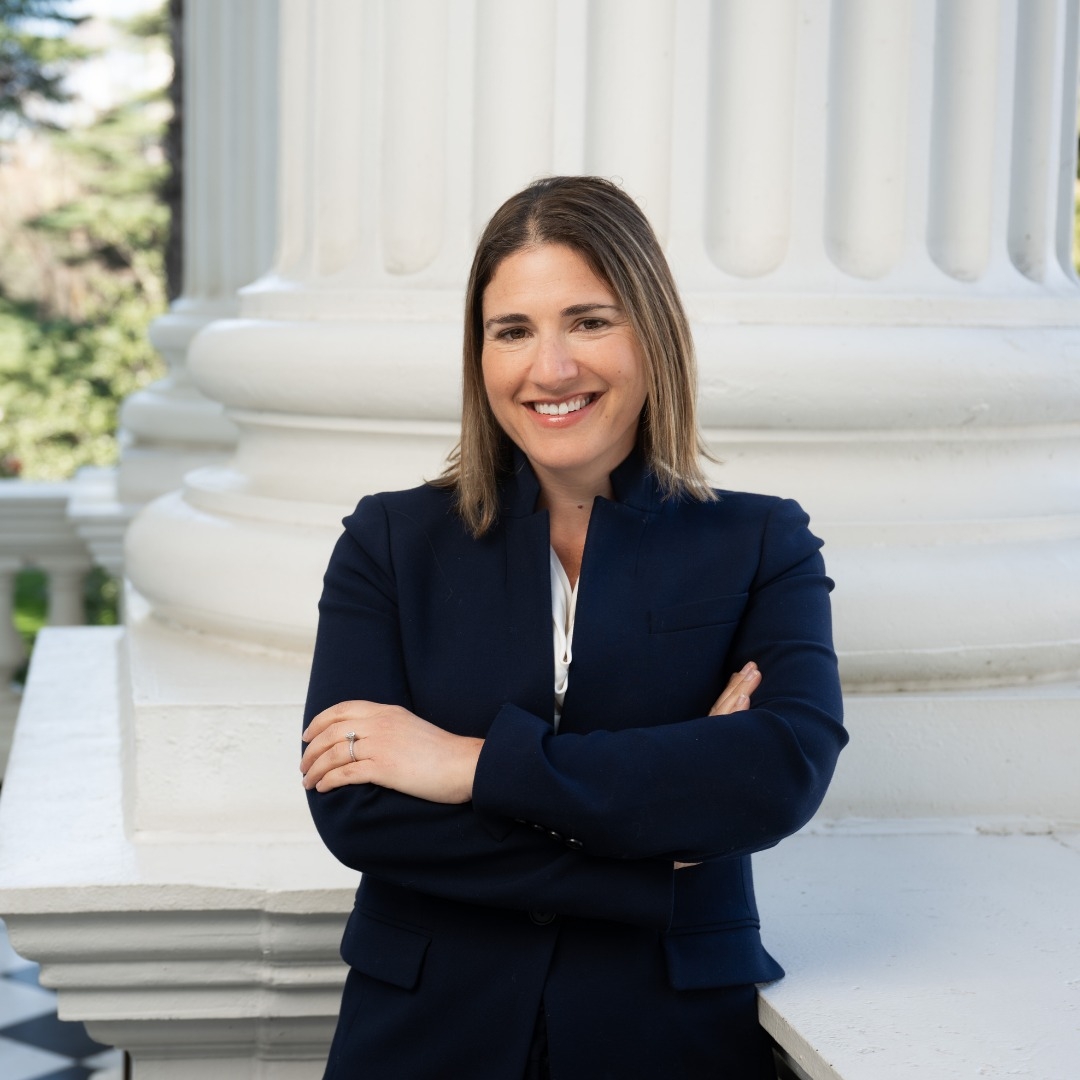
Asm. Rebecca Bauer-Kahan
Sponsored bills
Existing law requires the Natural Resources Agency, in collaboration with the Ocean Protection Council, to create, and update biannually, a Planning for Sea Level Rise Database describing steps being taken throughout the state to prepare for, and adapt to, sea level rise. This bill would establish the Climate Adaptation Center and Regional Support Network in the Ocean Protection Council to provide local governments facing sea level rise challenges with information and scientific expertise necessary to proceed with sea level rise mitigation.
Existing law establishes that, for purposes of the Labor Code, the Unemployment Insurance Code, and the wage orders of the Industrial Welfare Commission, a person providing labor or services for remuneration is considered an employee rather than an independent contractor unless the hiring entity demonstrates that the person is free from the control and direction of the hiring entity in connection with the performance of the work, the person performs work that is outside the usual course of the hiring entity's business, and the person is customarily engaged in an independently established trade, occupation, or business. This test is commonly known as the "ABC" test. Existing law charges the Labor Commissioner with the enforcement of labor laws, including worker classification. Existing law exempts specified occupations and business relationships from the application of these provisions. Existing law instead provides that these exempt relationships are governed by the test adopted in S. G. Borello & Sons, Inc. v. Department of Industrial Relations (1989) 48 Cal.3d 341. Exempt business relationships include the relationship between a referral agency and a service provider that provides one of certain listed services, under specified conditions. This bill would expand that exception to include nonprofit youth sports coaching, as prescribed, and define "nonprofit youth sports coach" for that purpose.
Under existing law, the Public Utilities Commission has regulatory authority over public utilities, including electrical corporations. Existing law authorizes the commission to establish rules for all public utilities, subject to control by the Legislature. Existing law authorizes the commission, after a hearing, to require every public utility to construct, maintain, and operate its line, plant, system, equipment, apparatus, tracks, and premises in a manner so as to promote and safeguard the health and safety of its employees, passengers, customers, and the public. The Public Utilities Act provides that any public utility that violates any provision of the California Constitution or the act, or that fails or neglects to comply with any order, decision, decree, rule, direction, demand, or requirement of the commission, where a penalty has not otherwise been provided, is subject to a penalty of not less than $500 and not more than $100,000 for each offense. This bill would authorize the Attorney General or the district attorney of a proper county or city and county, as specified, to bring an action in the name of the people, pursuant to the above-described civil penalty provision, against an electrical corporation involving a failure to comply with safety standards or requirements. The bill would provide that when the conduct that constitutes the violation or failure to comply is of a continuing nature, each day of that violation or failure to comply is subject to a separate and distinct civil penalty. The bill would require that an action seeking these civil penalties be commenced within 4 years after the cause of action accrues. The Public Utilities Act provides that every public utility and every officer, agent, or employee of a public utility, who violates or fails to comply with, or who procures, aids, or abets any violation by any public utility of any provision of the California Constitution or of the act, or who fails to comply with any part of any order, decision, rule, direction, demand, or requirement of the commission, or who procures, aids, or abets any public utility in a violation or noncompliance, in a case in which a penalty has not otherwise been provided, is guilty of a misdemeanor and is punishable by a fine not exceeding $5,000, or by imprisonment in a county jail not exceeding one year, or by both fine and imprisonment. This bill would authorize the Attorney General or the district attorney of a proper county or city and county, as specified, to bring an action in the name of the people, pursuant to the above-described criminal provision, against an electrical corporation involving a failure to comply with safety standards or requirements. The bill would provide that when the conduct that constitutes the violation or failure to comply is of a continuing nature, each day of that violation or failure to comply is a separate and distinct offense subject to a fine or imprisonment, or both a fine and imprisonment. The bill would require that an action seeking a fine or imprisonment pursuant to the above-described criminal provision be commenced within 4 years after the commission discovers the violation or failure to comply, or within 4 years after completion of the violation or failure to comply, whichever is later. The Public Utilities Act provides that all penalties accruing under the act are cumulative, and a suit for the recovery of one penalty does not bar or affect the recovery of any other penalty or forfeiture or serve as a bar to any criminal prosecution against any public utility, or any officer, director, agent, or employee of the public utility, or any other corporation or person. This bill would expressly provide that the above-described civil penalty and criminal sanction provisions are in addition to other fines or penalties imposed by other law. The Public Utilities Act requires the commission to ensure that where enforcement of provisions affecting public utilities is not specifically vested in some other officer or tribunal, that those provisions are enforced and obeyed and that violations are promptly prosecuted and penalties are recovered and collected. To accomplish this requirement, the commission is authorized to sue in the name of the people and to request the Attorney General or a district attorney to aid in any investigation, hearing, or trial and to institute and prosecute actions or proceedings. This bill would provide that the bill does not diminish the duty of the commission to be the primary entity responsible to ensure that the laws pertaining to public utilities are enforced and obeyed and does not diminish the authority of the commission to request the Attorney General or the district attorney of a proper county or city and county to aid in any investigation, hearing, or trial pursuant to the act.
Existing law, the Cannella Environmental Farming Act of 1995, requires the Department of Food and Agriculture to establish and oversee an environmental farming program that provides incentives to farmers whose practices promote the well-being of ecosystems, air quality, and wildlife and their habitat. The act requires the Secretary of Food and Agriculture to convene the Scientific Advisory Panel on Environmental Farming (panel) , as prescribed, to advise the secretary on the implementation of the Healthy Soils Program and the State Water Efficiency and Enhancement Program, as described, and to assist federal, state, and local government agencies, as appropriate or necessary, on issues relating to the impact of agricultural practices on air, water, and wildlife habitat, as specified. Existing law requires the department to establish a technical assistance grant program to provide funds to technical assistance providers, as defined, to provide technical assistance to applicants of the Healthy Soils Program, alternative manure management practices programs, and the State Water Efficiency and Enhancement Program. Existing law requires the secretary to make available to the grant program not less than 5% of the funds appropriated to the department for those programs, but not more than $5,000,000, for providing technical assistance to farmers and ranchers who apply for grants from those programs, with priority given to farms and ranches that are 500 acres or less, and supporting annual information sharing among technical assistance providers, the department, and other relevant stakeholders for the continuous improvement of programmatic guidelines, application processes, and relevant climate change and agricultural research. Existing law requires the department to ensure that at least 25% of the grant program funds are used to provide technical assistance to socially disadvantaged farmers or ranchers, as defined. This bill would require the department, upon appropriation by the Legislature of additional funds, to administer the State Water Efficiency and Enhancement Program (grant program) to provide grants to agricultural operations to implement irrigation systems that reduce greenhouse gases and energy use and increase water use efficiency, as prescribed. The bill would also require the department to fund culturally competent training on irrigation and nutrient management, authorize the department to contract with qualified third parties to measure grant program outcomes, and require the department to adopt guidelines for the grant program. The bill would require the secretary to convene, by April 1, 2021, an ad hoc technical advisory committee of the panel and require the committee to make, by July 1, 2022, recommendations to the panel and secretary regarding certain aspects of the grant program, as specified. The bill prohibits members of the committee from applying for grants from the grant program while they serve on the committee. The bill would revise the definition of "technical assistance," for purposes of the technical assistance grant program, to specifically include training. The bill would also make a conforming change.
The Off-Highway Motor Vehicle Recreation Act of 2003 creates the Division of Off-Highway Motor Vehicle Recreation within the Department of Parks and Recreation. The act gives the division certain duties and responsibilities, including the planning, acquisition, development, conservation, and restoration of lands in state vehicular recreation areas. Existing law creates the Off-Highway Vehicle Trust Fund to be the repository of certain moneys, including certain fees received by the department for the use of state vehicular recreation areas. Existing law requires the revenues in the fund to be available, upon appropriation, for grants and cooperative agreements, as specified, the support of the division, and the planning, acquisition, development, mitigation, construction, maintenance, administration, operation, restoration, and conservation of lands in state vehicular recreation areas and certain other areas. This bill would authorize the department to dispose of the portion of the Carnegie State Vehicular Recreation Area known as the "Alameda-Tesla Expansion Area" to permanently preserve that land for conservation purposes, as specified, if the department determines that disposing of the land is in the public interest. The bill would require that the land only be sold to a local agency or nonprofit organization for use as a park or other open-space purpose, as specified. The bill would require any revenue from the disposition of the land to, upon appropriation by the Legislature, first be used to reimburse the Department of General Services for any cost or expense incurred in the disposition of the land, and then would require any remaining revenue to be deposited in the Off-Highway Vehicle Trust Fund.
Existing law prohibits the use of tobacco and nicotine products in a county office of education, charter school, or school district-owned or leased building, on school or school district property, and in a school or school district vehicle. Existing law requires school districts, charter schools, and county offices of education to prominently display signs at all entrances to school property stating "Tobacco use is prohibited." Existing law prohibits a school from permitting the smoking or use of a tobacco product by pupils of the school while the pupils are on campus, attending school-sponsored activities, or under the supervision and control of school district employees. This bill would authorize a school of a school district or county office of education or a charter school to permanently confiscate and immediately dispose of a tobacco product, as defined, or cannabis product, as defined, taken from a pupil while the pupil is on campus, attending a school-sponsored activity, or under the supervision and control of a school employee.
Under existing law, a person is guilty of disorderly conduct, a misdemeanor, if they intentionally distribute an image that was intended to remain private of the intimate body parts of another or of the person depicted engaged in a sex act, as specified. Existing law requires prosecution for this offense to be commenced within one year after commission of the offense. This bill would instead allow prosecution for this offense to commence within one year of the discovery of the commission of the offense.
Existing law defines the crime of burglary to include entering a vehicle when the doors are locked with the intent to commit grand or petit larceny or a felony. Existing law makes the burglary of a vehicle punishable as a misdemeanor or a felony. This bill would make forcibly entering a vehicle, as defined, with the intent to commit a theft therein a crime punishable by imprisonment in a county jail for a period not to exceed one year or imprisonment in a county jail for 16 months, or 2 or 3 years. By creating a new crime, this bill would impose a state-mandated local program. The California Constitution requires the state to reimburse local agencies and school districts for certain costs mandated by the state. Statutory provisions establish procedures for making that reimbursement. This bill would provide that no reimbursement is required by this act for a specified reason.
Existing law provides for the Medi-Cal program, which is administered by the State Department of Health Care Services and under which qualified low-income persons receive health care benefits. The Medi-Cal program is, in part, governed and funded by federal Medicaid program provisions. Existing law also establishes the Family Planning, Access, Care, and Treatment (Family PACT) Program, administered by the Office of Family Planning within the department, under which comprehensive clinical family planning services are provided to a person who has a family income at or below 200% of the federal poverty level, and who is eligible to receive these services. Existing law provides that comprehensive clinical family planning services under the program includes preconception counseling, maternal and fetal health counseling, and general reproductive health care, among other things. This bill would expand comprehensive clinical family planning services under the program to include the human papillomavirus (HPV) vaccine for persons of reproductive age.