

Passed Sep 1, 2021
1 co-sponsor
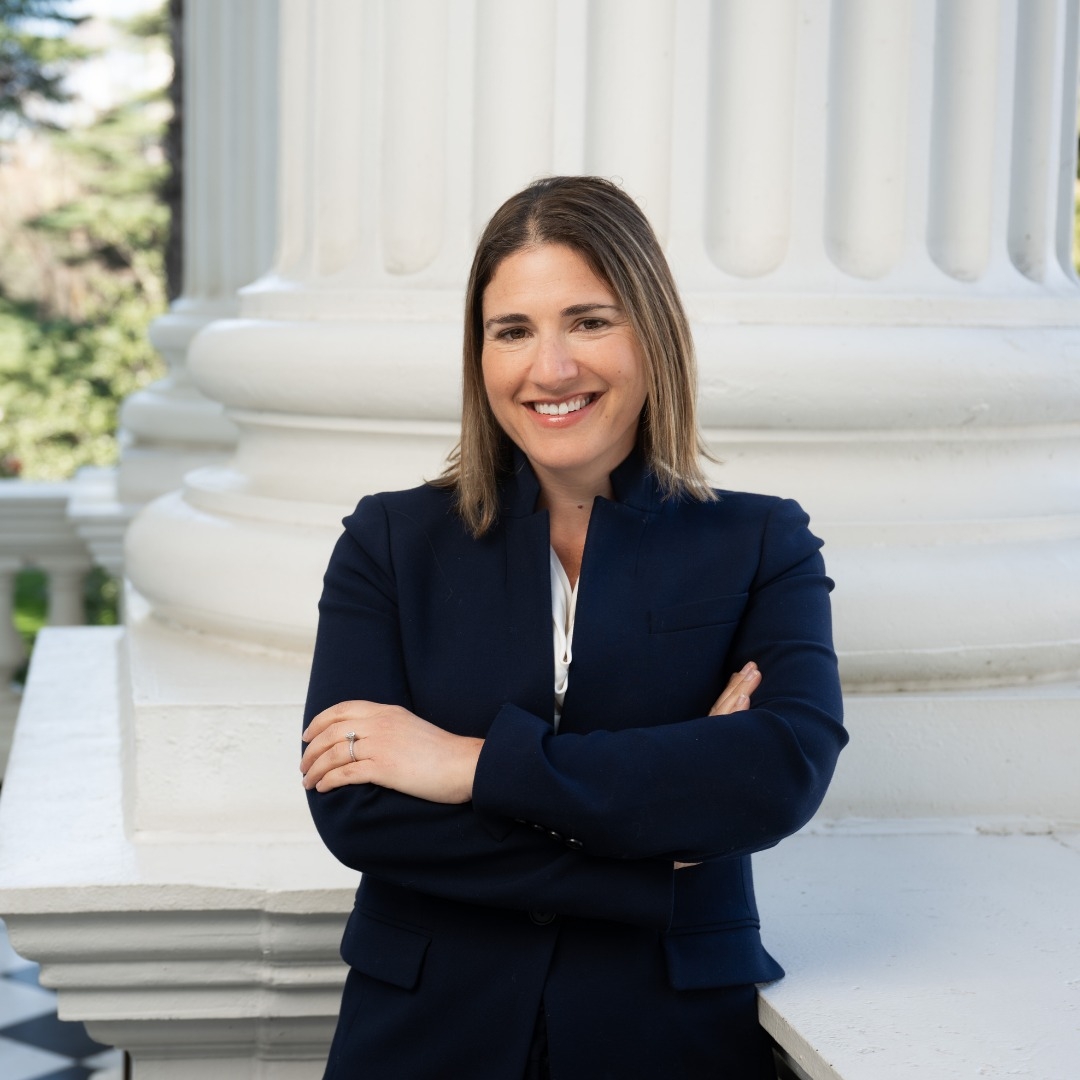
Asm. Rebecca Bauer-Kahan
Total votes
17,853
all sessions
Attendance
94%
974 missed
Near the chamber average
With party
99%
of cast votes
Near the chamber average
Bipartisan score
0%
crosses aisle rarely
Near the chamber average
Sponsored
1,561
bills & resolutions
Near the chamber average
Committees
8
assignments
1,561 bills and resolutions
Sponsored bills
Total
1,561
Primary
161
Co-sponsor
1,400
This page
1,561
matching current filters
Passed Sep 1, 2021
1 co-sponsor
Passed Sep 1, 2021
1 co-sponsor
Comprehensive Statewide Domestic Violence Program.
Existing law establishes the Comprehensive Statewide Domestic Violence Program in the Office of Emergency Services to, among other things, provide local assistance to existing service providers and to establish a targeted or directed program for the development and establishment of domestic violence services in currently unserved and underserved areas. Existing law requires the office to provide financial and technical assistance to local domestic violence centers in implementing specified services, including 24-hour crisis hotlines. This bill would require the office to provide financial and technical assistance to local domestic violence centers in implementing 24-hour crisis communication systems that, in addition to 24-hour telephone services, may also include other communication methods offered on a 24-hour or intermittent basis, such as text messaging, computer chat, or any other technology approved by the office. This bill would incorporate additional changes to Section 13823.15 of the Penal Code proposed by AB 673 to be operative only if this bill and AB 673 are enacted and this bill is enacted last.
Signed into law Aug 31, 2021
1 co-sponsor
Title IX: 49th anniversary.
This measure would, on June 23, 2021, commemorate the 49th anniversary of the enactment of Title IX, and would urge Californians to continue to work together to achieve the goals set by Title IX, as specified.
Signed into law Aug 27, 2021
1 co-sponsor
Relative to Healthy Homes Awareness Month.
This measure would designate the month of June 2021 as Healthy Homes Awareness Month.
Signed into law Aug 27, 2021
1 co-sponsor
Pupil instruction: genocide education: the Holocaust.
Existing law requires the State Department of Education to incorporate age-appropriate materials relating to, among other things, genocide and the Holocaust into publications that provide examples of curriculum resources for teacher use, consistent with the subject frameworks on history and social science. Under existing law, the Legislature encourages the incorporation of survivor, rescuer, liberator, and witness oral testimony into the teaching of genocide and the Holocaust. This bill would establish a 15-member Governor's Council on Genocide and Holocaust Education to, among other things, establish best practices for, and promote implementation of, education on genocide, including the Holocaust, and submit an annual report to the Legislature, as specified. The bill would provide that the Governor, the Speaker of the Assembly, and the Senate Committee on Rules would each appoint 5 members of the council, who would be required to be individuals with particular interest in, or expertise on, genocide, including the Holocaust. The bill would make an appropriation by authorizing the department to use funds donated by private individuals or entities for the purpose of reimbursing members of the council for their actual and necessary expenses incurred in the performance of their official duties as members of the council. The bill would strongly encourage local educational agencies, as defined to include school districts, county offices of education, and charter schools, with pupils in grades 4 to 12, inclusive, to integrate the best practices into instruction on genocide, including the Holocaust, that meets existing academic content standards and the history-social science curriculum framework for these pupils. The bill would authorize the department to issue grants to local educational agencies for professional development, and would specify that the grant funds would either be appropriated through the annual Budget Act or another statute, or provided through donations to the department from private individuals or entities. To the extent that the bill would authorize the department to make grants with these donated funds, it would make an appropriation. The bill would require the department to conduct a study on the manner in which the instruction is offered to assess the impact of the instruction.
Passed Aug 26, 2021
1 co-sponsor
Sentencing: consideration of costs.
Existing law, generally, provides for the punishment of persons guilty of a criminal offense, as specified, including incarceration in the state prison or a county jail. Existing law requires the court in a criminal case to appoint a time for pronouncing judgment within 20 days after a plea, finding, or verdict of guilty. This bill would require a prosecuting attorney, at sentencing, to state on the record the estimated cost of incarceration or supervision for any proposed sentence. This bill would also require a county probation department, if preparing a presentence report, to provide the court with specified information regarding the estimated and projected cost of incarceration or other supervision of the defendant as has been proposed in the recommended sentence. The bill would require the court, during sentencing, to state on the record, the estimated cost of the sentence imposed. This bill would require the Legislative Analyst's Office (LAO) to annually compile the average annual costs of incarceration and postincarceration supervision for an inmate under the supervision of the Department of Corrections and Rehabilitation, and to provide that information to prosecutor's officers and the chief probation officer of each county. The bill would also require the LAO to provide this information to the public on the LAO's internet website. This bill would require the Board of State and Community Corrections to annually compile the annual costs of incarceration and noncustodial supervision for a person under the supervision of each county sheriff or probation department, and to provide the information to prosecutor's officers and the chief probation officer of each county. The bill would also require the board to provide this information to the public on the board's internet website. By requiring additional duties of prosecutors and probation departments, this bill would impose a state-mandated local program. The California Constitution requires the state to reimburse local agencies and school districts for certain costs mandated by the state. Statutory provisions establish procedures for making that reimbursement. This bill would provide that, if the Commission on State Mandates determines that the bill contains costs mandated by the state, reimbursement for those costs shall be made pursuant to the statutory provisions noted above.
Passed Aug 26, 2021
1 co-sponsor
Hazardous emissions and substances: schoolsites: private and charter schools.
(1) The California Environmental Quality Act (CEQA) requires a lead agency to prepare, or cause to be prepared by contract, and certify the completion of, an environmental impact report on a project, as defined, that it proposes to carry out or approve that may have a significant effect on the environment, or to adopt a negative declaration if it finds that the project will not have that effect. CEQA prohibits an environmental impact report or negative declaration from being approved for any project involving the purchase of a schoolsite or the construction of a new elementary or secondary school by a school district unless specified conditions are met, relating to, among other things, whether the property is located on a current or former hazardous waste disposal site or solid waste disposal site, a hazardous substance release site, or a site that contains a pipeline that carries specified substances, and the property's proximity to facilities that might reasonably be anticipated to emit hazardous emissions or handle hazardous or extremely hazardous substances or waste, as provided. This bill would prohibit a lead agency from certifying an environmental impact report or approving a negative declaration for a project involving the purchase of a schoolsite or the construction of a new elementary or secondary school by a charter school or a private school, unless those specified conditions are met. By imposing new requirements on school districts, charter schools, lead agencies, cities, and counties, the bill would impose a state-mandated local program. (2) Existing law prohibits the governing board of a school district from approving a project for the acquisition of a schoolsite unless specified conditions are met, including, among others, that the school district, as the lead agency, determines that the property to be purchased or built upon is not the site of a current or former hazardous waste disposal site or solid waste disposal site, a hazardous substance release site, or a site that contains a pipeline that carries specified substances, and that the school district, as the lead agency, has not identified specified facilities within 14 of one mile of the proposed schoolsite that might reasonably be anticipated to emit hazardous air emissions or handle hazardous or extremely hazardous materials, substances, or waste, as provided. This bill would impose that prohibition, and related requirements, on the governing body of a charter school and the governing board of a private school, and would require the determination and identification described above to be made by the city or county. By imposing new requirements on charter schools, cities, and counties, the bill would impose a state-mandated local program. (3) Existing law requires the State Department of Education, upon the request of the governing board of a school district, to advise the governing board on the acquisition of new schoolsites, as specified. This bill would require the department to additionally advise the governing body of a charter school, upon the request of the governing body, on the acquisition of new schoolsites, as specified. (4) The California Constitution requires the state to reimburse local agencies and school districts for certain costs mandated by the state. Statutory provisions establish procedures for making that reimbursement. This bill would provide that with regard to certain mandates no reimbursement is required by this act for a specified reason. With regard to any other mandates, this bill would provide that, if the Commission on State Mandates determines that the bill contains costs so mandated by the state, reimbursement for those costs shall be made pursuant to the statutory provisions noted above.
Passed Aug 26, 2021
1 co-sponsor
Social services for persons granted asylum.
Existing law requires the State Department of Social Services, after setting aside state administrative funds, to allocate federal funds for refugee social services programs to eligible counties and, in certain circumstances, to nonprofit organizations. Existing law requires a county administering refugee social services to designate an agency that is responsible for developing and implementing a plan for the refugee social services. Existing law requires the plan to provide services to refugees that lead to their successful self-sufficiency and social integration. This bill would establish the Enhanced Services Program for Asylees to provide resettlement services for persons granted political asylum to live in the state by the United States Attorney General. The bill would authorize an agency that has been designated by a county to implement social services for refugees, as described above, to provide social services for persons granted asylum. The bill would require the program to provide culturally specific and responsive case management services, as specified, for persons newly granted asylum for up to 90 days. The bill would require the program to aim to have similar reintegration success rates for persons granted asylum as for refugees receiving social services. The bill would require an agency providing services under the program to notify the department each time a person applies for services and would require the department to provide funding to the agency for services for that person at the time the person is admitted to the program. Under the bill, the program would be implemented only to the extent that funds are appropriated for the program in the Budget Act of 2021.
Passed Aug 26, 2021
1 co-sponsor
Ask Maddy
·
AI policy assistant
Ask Maddy about Rebecca Bauer-Kahan
Scope: CA
Hi! I can help you understand Rebecca Bauer-Kahan's legislative record. What would you like to know?
Try one of these
i
Maddy answers using official bill text and legislative records. Always verify before sharing.
Sources cited inline