

Passed Feb 3, 2022
1 co-sponsor
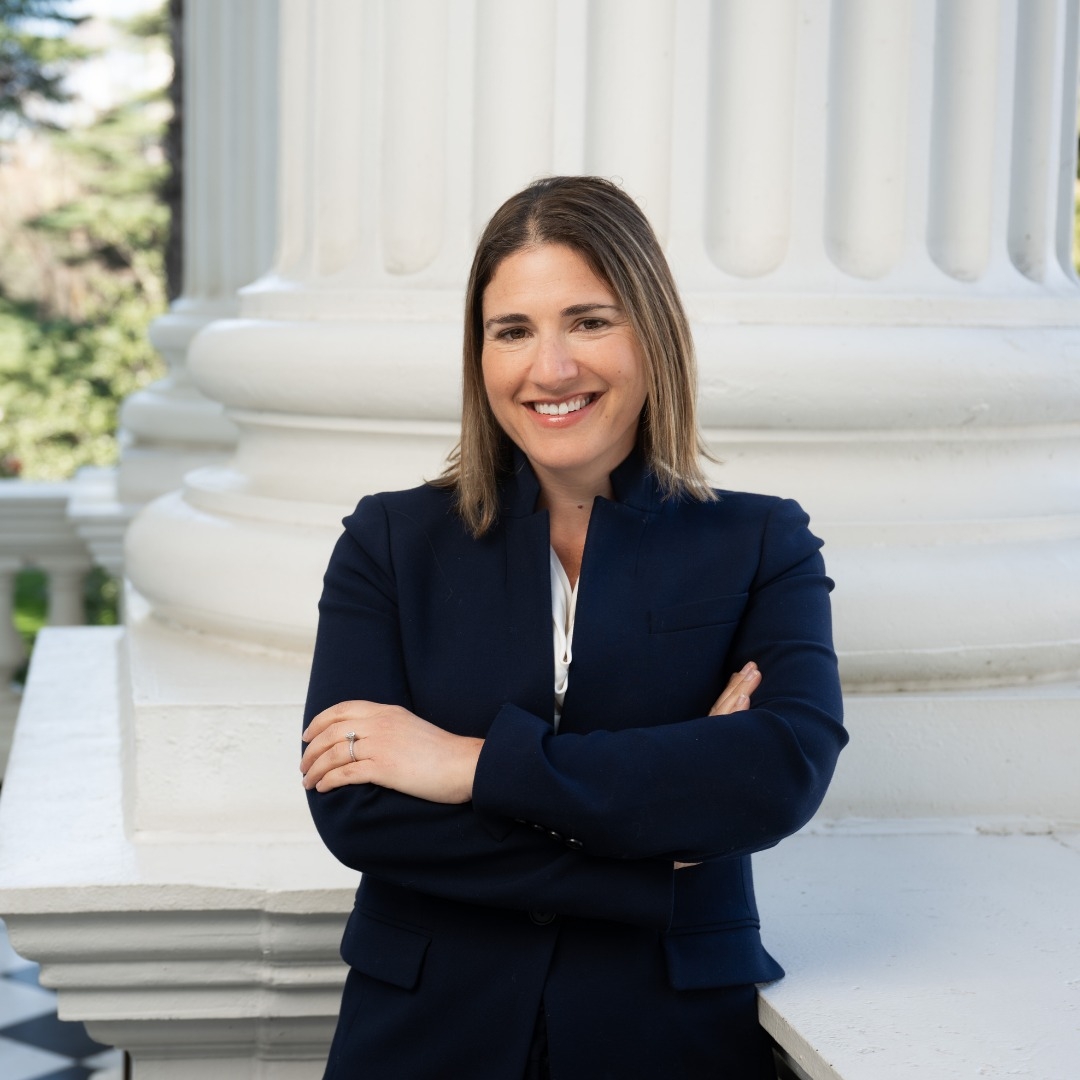
Asm. Rebecca Bauer-Kahan
Total votes
17,853
all sessions
Attendance
94%
974 missed
Near the chamber average
With party
99%
of cast votes
Near the chamber average
Bipartisan score
0%
crosses aisle rarely
Near the chamber average
Sponsored
1,561
bills & resolutions
Near the chamber average
Committees
8
assignments
1,561 bills and resolutions
Sponsored bills
Total
1,561
Primary
161
Co-sponsor
1,400
This page
1,561
matching current filters
Passed Feb 3, 2022
1 co-sponsor
Collective bargaining: Legislature.
Existing law, the Ralph C. Dills Act (Dills Act) , governs collective bargaining between the state and recognized state public employee organizations. Existing law excludes certain employees from coverage under the Dills Act, including, among others, managerial employees, supervisory employees, and confidential employees, as defined. Existing law creates the Public Employment Relations Board and authorizes it, among other things, to determine appropriate state employee bargaining units, as specified. This bill would enact the Legislature Employer-Employee Relations Act, to provide employees of the Legislature, including some supervisory and managerial employees, the right to form, join, and participate in the activities of employee organizations of their own choosing for the purpose of representation on all matters of employer-employee relations. The bill would prescribe rights, duties, and prohibitions in this context that parallel those in the Dills Act. The bill would prohibit the Public Employment Relations Board from including employees of the Legislature in a bargaining unit that includes employees other than those of the Legislature. The bill would make it a misdemeanor for any person to willfully resist, prevent, impede, or interfere with any member of the board, or any of its agents, in the performance of duties pursuant to its provisions. By expanding the definition of a crime, this bill would impose a state-mandated local program. The bill would provide that the provisions of the Legislature Employer-Employee Relations Act are severable. The California Constitution requires the state to reimburse local agencies and school districts for certain costs mandated by the state. Statutory provisions establish procedures for making that reimbursement. This bill would provide that no reimbursement is required by this act for a specified reason.
died Feb 1, 2022
1 co-sponsor
Off-highway vehicular recreation: Carnegie State Vehicular Recreation Area: Alameda-Tesla Expansion Area.
The Off-Highway Motor Vehicle Recreation Act of 2003 creates the Division of Off-Highway Motor Vehicle Recreation within the Department of Parks and Recreation. The act gives the division certain duties and responsibilities, including the planning, acquisition, development, conservation, and restoration of lands in state vehicular recreation areas. Existing law creates the Off-Highway Vehicle Trust Fund to be the repository of certain moneys, including certain fees received by the department for the use of state vehicular recreation areas. Existing law requires the revenues in the fund to be available, upon appropriation, for grants and cooperative agreements, as specified, the support of the division, and the planning, acquisition, development, mitigation, construction, maintenance, administration, operation, restoration, and conservation of lands in state vehicular recreation areas and certain other areas. This bill would require the Department of Parks and Recreation to preserve the portion of the Carnegie State Vehicular Recreation Area known as the "Alameda-Tesla Expansion Area" for conservation purposes, as specified. The bill would make implementation of this provision contingent upon at least $9,000,000 being appropriated by the Legislature in the annual Budget Act or another statute, transferred, or donated to the Off-Highway Vehicle Trust Fund for its purposes.
died Feb 1, 2022
1 co-sponsor
Income taxes: credits: low-income housing.
The Personal Income Tax Law and the Corporation Tax Law allow various credits against the taxes imposed by those laws. This bill, for taxable years beginning on or after January 1, 2022, and before January 1, 2027, would allow a credit against those taxes to a taxpayer that is transferred, and allocated, credits pursuant to the sale of a multifamily rental housing development or mobilehome park to a qualified developer, as defined, that has received a credit reservation from the California Tax Credit Allocation Committee, in specified amounts. The bill would require the credits to be reserved on a first-come-first-served basis. The bill would limit the aggregate amount of credit that may be allocated by the committee, as provided. The bill would also provide that the credit amount shall be $0 for each taxable year beginning on or after January 1, 2022, and before January 1, 2027, unless otherwise specified in a bill providing for appropriations related to the Budget Act. Existing law requires that any bill introduced on or after January 1, 2020, that would authorize certain tax expenditures, as defined, or tax exemptions contain, among other things, specific goals, purposes, and objectives that the tax expenditure or exemption will achieve, detailed performance indicators, and data collection requirements. This bill would include additional information required for any bill authorizing a new tax expenditure. This bill would take effect immediately as a tax levy.
Failed Feb 1, 2022
1 co-sponsor
Pupil nutrition: reduced-price meals.
Existing law requires a school district or county superintendent of schools maintaining a kindergarten or any of grades 1 to 12, inclusive, to provide a needy pupil with one nutritionally adequate free or reduced-price meal during each schoolday, and authorizes the school district or county superintendent of schools to use funds available from any federal or state program to comply with that requirement, as provided. Existing law generally requires a school district or a county superintendent of schools to provide breakfast and lunch free of charge to all pupils at a very high poverty school, as defined. This bill would require a school district or county superintendent of schools maintaining a kindergarten or any of grades 1 to 12, inclusive, to provide a pupil, eligible to receive a reduced-priced meal, that meal free of charge. By creating a new duty on a school district or a county superintendent of schools, the bill would create a state-mandated program. The bill would require the state to provide sufficient funding to school districts and county offices of education to cover the cost of providing meals free of charge to pupils from households that would otherwise be required to provide a copayment for these meals. To comply with the above, the bill would authorize a school district or county office of education to use funds made available through any federal, to the extent allowed, or state program relating to the provision of meals to pupils, as provided. The California Constitution requires the state to reimburse local agencies and school districts for certain costs mandated by the state. Statutory provisions establish procedures for making that reimbursement. This bill would provide that, if the Commission on State Mandates determines that the bill contains costs mandated by the state, reimbursement for those costs shall be made pursuant to the statutory provisions noted above.
Failed Feb 1, 2022
1 co-sponsor
Forestry: electrical transmission and distribution lines: clearance: penalties.
Existing law requires a person that owns, controls, operates, or maintains any electrical transmission or distribution line upon any mountainous land or forest-covered land, brush-covered land, or grass-covered land to maintain around and adjacent to any pole or tower that supports a switch, fuse, transformer, lightning arrester, line junction, or dead-end or corner pole a firebreak, as specified. Existing law requires a person that owns, controls, operates, or maintains any electrical transmission or distribution line upon any mountainous land or in forest-covered land, brush-covered land, or grass-covered land to maintain a clearance between all vegetation and all conductors that are carrying electric current, as specified. This bill would impose a civil penalty of up to $100,000 for each violation of the above-described provisions after the person that owns, controls, operates, or maintains any electrical transmission or distribution line is offered a reasonable opportunity to cure. The bill would impose an additional civil penalty of up to $1,000 for each acre burned by a fire resulting from a violation of the above-described provisions after the person that owns, controls, operates, or maintains any electrical transmission or distribution line is offered a reasonable opportunity to cure. The bill would require 50% of the penalties collected to be deposited into the Utility Accountability and Wildfire Prevention Fund, which the bill would establish in the State Treasury, and would distributed the remaining 50%, as provided. The bill would provide that the moneys in the Utility Accountability and Wildfire Prevention Fund, upon appropriation by the Legislature, are available for purposes of enhancing forest management, fire planning, wildfire prevention and suppression, and fire-related enforcement activities. The bill would require the Department of Forestry and Fire Protection to develop regulations to define what a reasonable opportunity to cure means for the above-described purposes.
Failed Feb 1, 2022
0 co-sponsors
Mobile fueling on-demand tank vehicles: performance standards.
(1) Existing law generally designates the State Air Resources Board as the state agency with the primary responsibility for the control of vehicular air pollution and air pollution control and air quality management districts with the primary responsibility for the control of air pollution from all sources other than vehicular sources. Existing law makes a violation of a rule or regulation of the state board a misdemeanor. This bill would require the state board to regulate a mobile fueling on-demand tank vehicle, as defined, as a mobile source, and, contingent upon an appropriation by the Legislature for this purpose, to adopt regulations on or before a specified date to control emissions attributable to mobile fueling on-demand tank vehicles and to certify equipment for those vehicles, as provided. The bill would authorize the state board to allow the use of onboard refueling vapor recovery (ORVR) systems to achieve or maintain the standards and procedures adopted in those regulations for the control of gasoline vapors resulting from the motor vehicle fueling operations of a mobile fueling on-demand tank vehicle. As part of those regulations, the bill would require the state board, in consultation with air pollution control and air quality management districts, to adopt regulations to govern the motor vehicle fueling operations of a mobile fueling on-demand tank vehicle to ensure the protection of public health and safety and the environment. The bill would authorize a district to enter into a memorandum of understanding to enforce the regulations applicable to the motor vehicle fueling operations of a mobile fueling on-demand tank vehicle. Because a violation of those regulations would be a crime, the bill would impose a state-mandated local program. The bill would prohibit a person from operating, or allowing the operation of, a mobile fueling on-demand tank vehicle, unless it is equipped with a vapor recovery system that is certified by the state board, or that meets permeation and spillage performance standards determined by the state board, and is installed, operated, and maintained in compliance with the state board's requirements for certification. The bill would require the state board to assess a fee on mobile fueling on-demand tank vehicles to recover the reasonable costs of implementing these provisions, and would require the fee to be deposited in the Air Pollution Control Fund and to be available for expenditure upon appropriation by the Legislature. The bill would require that the fee be adjusted annually based on the California Consumer Price Index as compiled and reported by the Department of Industrial Relations. The bill would require the state board to transfer, upon appropriation by the Legislature, the amount of revenues generated by these fees necessary to reimburse a district for the costs of enforcing any regulation pursuant to a memorandum of understanding described above. (2) Existing law prohibits a person from installing or maintaining a stationary gasoline tank with a capacity of 250 gallons or more that is not equipped for loading through a permanent submerged fill pipe, unless the tank is a pressure tank, as specified, or is equipped with a vapor recovery system, as specified, or with a floating roof, as specified, or unless the tank is equipped with other apparatus of equal efficiency that has been approved by the air pollution control officer in whose district the tank is located. This bill would allow a person to install or maintain a mobile fueling on-demand tank vehicle, or a system on that vehicle, that is certified by the state board and meets certain requirements and that is not equipped for loading through a permanent submerged fill pipe, even if the tank is a pressure tank, as specified, or is not equipped with a vapor recovery system, as specified, or does not have a floating roof, as specified, or if the tank is not equipped with other apparatus of equal efficiency that has been approved by the air pollution control officer in whose district the tank is located. The bill would require that a mobile fueling on-demand tank vehicle be loaded exclusively through bottom loading equipment certified by the state board, unless the vehicle includes a vapor recovery system that is certified by the state board. (3) Existing law requires the state board to adopt performance standards to ensure that systems for the control of gasoline vapors resulting from motor vehicle fueling operations do not cause excessive gasoline liquid spillage when used in a proper manner. Existing law requires the state board to adopt test procedures to determine the compliance with vapor emission standards of vapor recovery systems of cargo tanks on tank vehicles used to transport gasoline, as provided. Existing law prohibits an air district from adopting test procedures for, or requiring certification of, cargo tank vapor recovery systems and from imposing fees on, or requiring a permit of, tank vehicles with vapor recovery systems, but provides that an air district is not prohibited from inspecting and testing cargo tank vapor recovery systems on tank vehicles for specified purposes. This bill would provide that an air district is additionally not prohibited from inspecting and testing emissions control systems on mobile fueling on-demand tank vehicles for those same purposes. (4) The California Constitution requires the state to reimburse local agencies and school districts for certain costs mandated by the state. Statutory provisions establish procedures for making that reimbursement. This bill would provide that no reimbursement is required by this act for a specified reason.
Failed Feb 1, 2022
1 co-sponsor
Toxic air contaminants.
Existing law authorizes local air pollution control districts and air quality management districts, in carrying out their responsibilities with respect to the attainment of state ambient air quality standards, to adopt and implement regulations that accomplish certain objectives. This bill would additionally authorize the districts to adopt and implement regulations to require data regarding air pollution within the district's jurisdiction from indirect and areawide sources of air pollution, including mobile sources drawn by those sources, to enable the calculation of health risks from toxic air contaminants. This bill would additionally authorize the districts to adopt and implement regulations to accomplish these objectives in carrying out their responsibilities with respect to the reduction of health risks from toxic air contaminants.
Failed Feb 1, 2022
0 co-sponsors
Firearms: Armed Prohibited Persons System.
Existing law creates the Prohibited Armed Persons File, sometimes called the Armed Prohibited Persons System, for the purpose of cross-referencing persons who have ownership or possession of a firearm, as indicated by a record in the Consolidated Firearms Information System, with a list of persons who are prohibited from owning or possessing a firearm. Existing law requires the Department of Justice, upon the entry of specified information into the Automated Criminal History System, including, among other things, any conviction for a felony, determine if the person has an entry in the Consolidated Firearms Information System indicating possession or ownership of a firearm, as specified. Existing law requires the department, if the person has an entry in the Consolidated Firearms Information System, to then add specified information about the person to the Prohibited Armed Persons File. This bill would rename the Prohibited Armed Persons File as the Armed Prohibited Persons System. The bill would additionally require the department to add a person's information to the Armed Prohibited Persons System if they are the subject of specified gun violence restraining orders and possess a firearm. Existing law requires the Attorney General to provide investigative assistance to local law enforcement agencies to better ensure the investigation of individuals who are armed and prohibited from possessing a firearm. This bill would require the Department of Justice to provide all investigative notes, reports, and related materials on individuals listed in the Armed Prohibited Persons System to local law enforcement agencies, and to develop and implement, by January 1, 2023, an electronic database system that enables local law enforcement real-time access to that information. Existing law requires any purchase or transfer of ammunition through a vendor and, commencing July 1, 2022, any purchase or transfer of a precursor part through a vendor, to be approved by the Department of Justice, and requires the department to deny approval if the purchaser or transferee is prohibited from owning or possessing a firearm. This bill would require the department to immediately notify the sheriff of the county in which the purchase or transfer was attempted, when a purchase or transfer is denied for that reason. Existing law requires the Department of Justice, no later than April 1 each year, to send a report to the Joint Legislative Budget Committee and the fiscal committees of each house of the Legislature containing specified information including, among other things, the total number of individuals in the Armed Prohibited Persons System, the number of cases which are active and pending, and information regarding task forces or collaboration with local law enforcement on reducing the file. This bill would, instead of requiring information regarding task forces or collaboration with local law enforcement, require that report to include a summary of efforts of local law enforcement on reducing the file or backlog, with a comparison of statistics between department, local law enforcement, and joint task force efforts. The bill would require, no later than February 1 each year, specified local law enforcement agencies to report specified information to the department, including, among other things, the total number of individuals within their jurisdiction in the Armed Prohibited Persons System and the number of cases which are active and pending. This bill would additionally make conforming changes and delete obsolete provisions.
Failed Feb 1, 2022
1 co-sponsor
Ask Maddy
·
AI policy assistant
Ask Maddy about Rebecca Bauer-Kahan
Scope: CA
Hi! I can help you understand Rebecca Bauer-Kahan's legislative record. What would you like to know?
Try one of these
i
Maddy answers using official bill text and legislative records. Always verify before sharing.
Sources cited inline