

Existing law establishes a California Building Standards Commission in the Government Operations Agency. Existing law requires only those building standards approved by the commission, and that are effective at the local level at the time an application for a building permit is submitted, to apply to the plans and specifications for, and to the construction performed under, that building permit, except as provided, including for a city or county that has been subject to an emergency proclaimed pursuant to the California Emergency Services Act (CESA) . Existing law, the CESA, among other things, authorizes the Governor to proclaim a state of emergency in an area affected or likely to be affected thereby if specified conditions exist and either (1) specified local officials request the Governor to so declare or (2) the Governor determines that local authority is inadequate to cope with the emergency. This bill would, until January 1, 2029, and notwithstanding any subsequent updates to building standards approved by the commission, permit an individual submitting a proposed development plan for a residential development to utilize, and require a local agency to allow the utilization of, a template floor plan if certain conditions are met, including that the proposed new development is located on the same parcel that contained a residential building that was damaged or destroyed, prior to January 1, 2020, as a result of a disaster in an area for which a state of emergency was proclaimed by the Governor pursuant to the CESA. By imposing additional duties on local agencies, the bill would impose a state-mandated local program. The California Constitution requires the state to reimburse local agencies and school districts for certain costs mandated by the state. Statutory provisions establish procedures for making that reimbursement. This bill would provide that no reimbursement is required by this act for a specified reason.
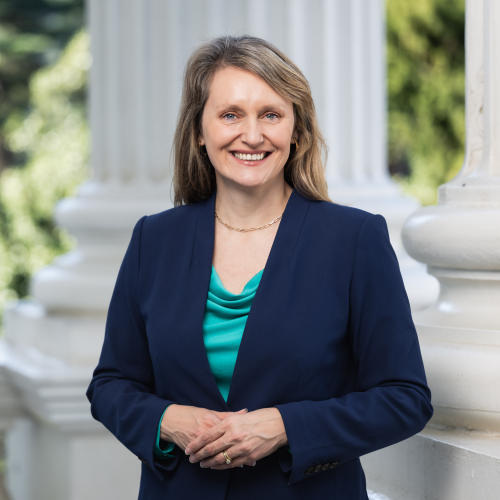
Asm. Buffy Wicks
Sponsored bills
Existing law categorizes certain drugs and other substances as controlled substances and prohibits various actions related to those substances, including their manufacture, transportation, sale, possession, and ingestion. Existing law creates a Research Advisory Panel, as specified, to conduct hearings on, and in other ways study, research projects concerning cannabis or hallucinogenic drugs. This bill would require the State Department of Public Health to convene a working group, as specified, to research and make recommendations to the Legislature regarding, among other things, the regulation and use of psilocybin, psilocyn, dimethyltryptamine (DMT) , ibogaine, mescaline, lysergic acid diethylamide (LSD) , and 3,4-methylenedioxymethamphetamine (MDMA) .
This measure would reaffirm the Legislature's commitment to upholding the human rights of immigrants, commend the courage and determination of immigrant community leaders, and celebrate the 26th annual Immigrant Day of Action.
Existing law requires the California Law Revision Commission to study, and limits the commission to studying, topics approved by resolution of the Legislature or by statute. This measure would grant approval to the commission to study new prescribed topics relating to antitrust law and its enforcement. The measure would require the commission, before commencing work on this project, to submit a detailed description of the scope of work to specified policy committees of the Legislature, and, if during the course of the project there is a major change to the scope of work, to submit a description of the change.
This measure would request the Congress of the United States to pass legislation and the President of the United States to sign into law a statute providing for, and the United States Department of Transportation and all federal agencies implementing any federal statute or regulation providing federal funding for ports or multimodal freight transportation to provide, a fair allocation of federal transportation funding for freight projects in California, specifically, and on the Pacific Coast of the United States, generally, based on the volume of containerized freight moved.