

Existing law subjects a minor between 12 and 17 years of age, inclusive, who violates any federal, state, or local law or ordinance, who persistently or habitually refuses to obey the reasonable and proper orders or directions of the minor's parents, guardian, or custodian, or who is beyond the control of that person, who violates an ordinance establishing a curfew or is truant, and a minor under 12 years of age who is alleged to have committed specified serious offenses, to the jurisdiction of the juvenile court, which may adjudge the minor to be a ward of the court. When a minor is adjudged to be a ward of the court, as previously described, and is placed under the supervision of the probation officer or committed to the care, custody, and control of the probation officer, existing law authorizes the court to make any and all reasonable orders for the conduct of the ward, and to impose and require any and all reasonable conditions that it may determine fitting and proper to the end that justice may be done and the reformation and rehabilitation of the ward enhanced. This bill would limit to 6 months the period of time a ward may remain on probation, except that a court may extend the probation period for a period not to exceed increments of 6 months after a noticed hearing and upon proof by a preponderance of the evidence that it is in the ward's best interest. The bill would require the probation agency to submit a report to the court detailing the basis for any request to extend probation at the noticed hearing. The bill would require the court to provide the ward and the prosecuting attorney with the opportunity to present relevant evidence, as specified. The bill would require the court to hold a noticed hearing for the ward not less frequently than every 6 months for the remainder of the wardship period if the court extends probation. The bill would additionally require, among other things, that conditions of probation for a ward be individually tailored, developmentally appropriate, and reasonable. Existing law authorizes the court, as part of the order adjudging the minor to be a ward of the court, to order the ward to pay restitution, to pay a fine up to $250 for deposit in the county treasury if the court finds the minor has the financial ability to pay, or to participate in an uncompensated work program. This bill would remove the authority of the court to order the minor to pay the $250 fine or participate in an uncompensated work program in lieu of restitution. Existing law requires the court, for specified offenses, to order certain actions as a condition of a minor's probation including attending counseling, repairing property, repaying the cost of apprehension to the city or county, and performing community service. This bill would, in specified instances, no longer require the court to order certain actions as a condition of a minor's probation. The bill would instead impose requirements on the conditions of a minor's probation ordered by the court. Existing law requires a court to order a minor who is subject to the jurisdiction of the juvenile court to pay restitution to the victim and a restitution fine that is deposited in the Restitution Fund, as specified. Under existing law, the board of supervisors of a county may, at its discretion, impose a fee to cover the actual administrative cost of collecting the restitution fine, as specified, with the proceeds deposited in the general fund of the county. This bill would remove the authority of the board of supervisors of a county to impose this fee.
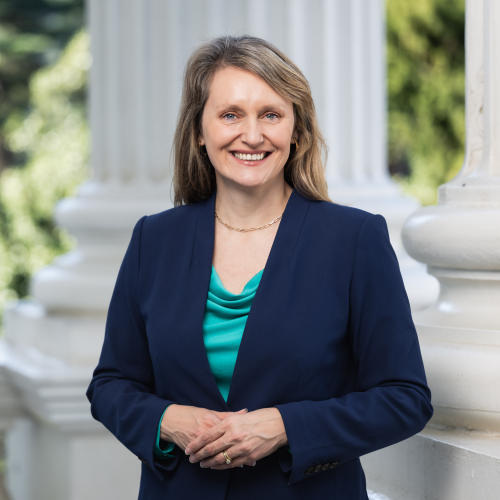
Asm. Buffy Wicks
Sponsored bills
Existing law appropriates funds to the State Department of Public Health for various programs related to the safe reopening of schools during the COVID-19 pandemic, including funds to support COVID-19 testing in schools allocated from the federal American Rescue Plan Act of 2021 and funds from the General Fund for the Safe Schools For All Team to coordinate technical assistance, community engagement, increased transparency, and enforcement by the appropriate entity for public school health and safety during the COVID-19 pandemic. Existing law authorizes certain school apportionments to be used for any purpose consistent with providing in-person instruction for any pupil participating in in-person instruction, including, but not limited to, COVID-19 testing, as provided. Existing law prescribes public health reporting requirements related to COVID-19 for local educational agencies, including the development of a COVID-19 safety plan, as provided. This bill would require the State Department of Public Health to coordinate specified school district, county office of education, and charter school COVID-19 testing programs that are currently federally funded or organized under the California COVID-19 Testing Task Force, as provided. The bill would authorize the department to provide supportive services, including technical assistance, vendor support, guidance, monitoring, and testing education, related to testing programs for teachers, staff, and pupils to help schools reopen and keep schools operating safely for in-person learning. The bill would also encourage the department to expand its contagious, infectious, or communicable disease testing guidance and other public health mitigation efforts to include prekindergarten and childcare centers, as provided. This bill would require each local educational agency, defined to mean a school district, county office of education, or charter school, after consulting with its local health department, as defined, to create a COVID-19 testing plan, or adopt the State Department of Public Health's framework, as defined, that is consistent with guidance from the department, as provided. The bill would require each local educational agency to publish the testing plan on its internet website. The bill would authorize each local educational agency to designate one staff member to report information on its COVID-19 testing program to the department, as provided. The bill would require that all COVID-19 testing data be in a format that facilitates a simple process by which parents and local educational agencies may report data to the department or a local health department, as provided. By imposing new obligations on local educational agencies, and to the extent new duties are imposed on local health departments, the bill would impose a state-mandated local program. The bill would require the department to determine which COVID-19 tests are appropriate for the testing program. The bill would make the implementation of these provisions contingent upon an appropriation by the Legislature, and would repeal these provisions on January 1, 2026. The California Constitution requires the state to reimburse local agencies and school districts for certain costs mandated by the state. Statutory provisions establish procedures for making that reimbursement. This bill would provide that, if the Commission on State Mandates determines that the bill contains costs mandated by the state, reimbursement for those costs shall be made pursuant to the statutory provisions noted above.
Existing law requires a shared mobility service provider, as defined, to enter into an agreement with, or obtain a permit from, the city or county with jurisdiction over the area of use. Existing law defines shared mobility device to mean an electrically motorized board, motorized scooter, electric bicycle, bicycle, or other similar personal transportation device, except as provided. Existing law requires a city or county that authorizes a shared mobility device provider to operate within its jurisdiction to adopt operation, parking, and maintenance rules, as provided, regarding the use of the shared mobility devices in its jurisdiction before the provider may offer shared mobility devices for rent or use. This bill would require a shared mobility service provider to affix to each shared mobility device a tactile sign containing raised characters and accompanying Braille, as specified, to identify the device for the purpose of reporting illegal or negligent activity. Existing law requires that the shared mobility provider maintain a specified amount of commercial general liability insurance that, among other things, must be with a carrier doing business in California, in a user agreement before distributing a shared mobility device within that jurisdiction. This bill, rather than require the shared mobility service provider to maintain commercial general liability insurance with a carrier doing business in California, would require the coverage to be with an admitted insurer or a nonadmitted insurer, as specified. Starting July 1, 2023, this bill would require a shared mobility service provider or user of a shared mobility device to offer or make available, or to confirm a user of a shared mobility device maintains, $10,000 of coverage for any bodily injury or death suffered by a pedestrian in any one accident when the injury or death involves, in whole or in part, the negligent conduct of the shared mobility device user, and $1,000 of coverage for any property damage to an assistive technology device, as defined. The bill would prohibit a shared mobility service provider from allowing a user or individual to operate or utilize a shared mobility device without the coverage, and would exempt bicycles propelled exclusively by human power and specified electric bicycles from these requirements. The bill would authorize a provider to partner with an insurer to provide coverage that meets or exceeds those requirements to its users via its digital application or other electronic or digital platform, and fund the cost of providing coverage in its standard fee or through a separate charge to users. The bill would require the shared mobility service provider to maintain coverage if a user does not maintain the required insurance coverage. The bill would authorize a provider to enter into agreements with users that maintain their own coverage that meets or exceeds the above requirements to exclude the user from the provider's coverage. The bill would also require a provider to keep an up-to-date list of its users that maintain their own coverage and transmit annually, to the Department of Insurance, information on the percentage of total users in the state that maintain their own coverage and the total number of users, as specified. The bill would specify that it does not prohibit a provider from requiring a user to enter into an indemnity contract, and would specify certain requirements that the indemnity contract would be required to meet. The bill would prohibit parties from waiving or modifying any of its provisions by contractual agreement, act, or omission. The bill would require a shared mobility service provider to disclose, in a specified manner, prior to allowing the user to initiate their first use of a device, that the customer's existing homeowner's, renter's, or automobile insurance policies might not provide coverage for liability resulting from the use of shared mobility devices and that the customer should contact their insurance company or insurance agent to determine if coverage is provided. This bill would require, no later than December 31, 2026, the Department of Insurance to submit to the Legislature and insurance committees, as specified, a study that includes, among other things, recommendations to update shared mobility device insurance coverage requirements, how to strengthen the market for individual mobility device liability coverage, and whether there is a need for insurance coverage for injuries involving bicycles propelled exclusively by human power and specified electric bicycles.
(1) Existing law, commonly known as the California Family Rights Act, makes it an unlawful employment practice for a California public employer or an employer with 5 or more employees to refuse to grant a request from an employee who meets specified requirements to take up to a total of 12 workweeks in any 12-month period for family care and medical leave, as defined. This bill would expand the class of people for whom an employee may take leave to care for to include a designated person. The bill would define "designated person" to mean any individual related by blood or whose association with the employee is the equivalent of a family relationship. The bill would authorize a designated person to be identified at the time the employee requests the leave. The bill would authorize an employer to limit an employee to one designated person per 12-month period. (2) Existing law, the Healthy Workplaces, Healthy Families Act of 2014, generally entitles an employee who works in California for the same employer for 30 or more days within a year to paid sick days, as specified, including the use of paid sick days for diagnosis, care, or treatment of an existing health condition of, or preventive care for, an employee or an employee's family member. Existing law defines "family member" for this purpose to include individuals who share a prescribed relationship with the employee. This bill would expand the definition of the term "family member" to include a designated person, which, for purposes of these provisions, would mean a person identified by the employee at the time the employee requests paid sick days, subject to limitation by the employer, as prescribed.
Existing law prohibits a person or entity from providing the operation of a voice recognition feature of a connected television within the state without prominently informing the specified user of the connected television during the initial setup or installation. Existing law prohibits any actual recordings of spoken word collected for a specified purpose through the operation of a voice recognition feature by the manufacturer of a connected television, or a contracting third party, from being sold or used for any advertising purpose. Existing law prohibits a person or entity from compelling a manufacturer or other entity providing the operation of a voice recognition feature to build specific features for the purpose of allowing an investigative or law enforcement officer to monitor communications through that feature. Existing law limits the liability of a manufacturer to functionality provided at the time of the original sale of a connected television and specifically excludes liability for functionality provided by applications the user chooses to use in the cloud or that are downloaded and installed by a user. Existing law prohibits a waiver of these prohibitions and authorizes their enforcement by injunction or civil penalty in a court of competent jurisdiction by the Attorney General or a district attorney. Existing law defines terms for these purposes. This bill, beginning on January 1, 2024, would include smart speaker devices, as defined, within the scope of those provisions. The bill would prohibit any actual recordings or transcriptions collected or retained through the operation of a voice recognition feature by the manufacturer of a smart speaker device, that qualify as personal information or that are not deidentified, from being retained electronically or shared with, or sold to, a third party, unless the user has provided affirmative consent, as defined and specified, or the information is shared or retained for certain limited purposes. The bill would also prohibit the use of recordings made from an incorrect activation of the device, except as specified. The bill would also prohibit the manufacturer of a smart speaker device from retaining the recordings or transcripts, as specified, unless the user opts in. The bill would provide certain exemptions and would define related terms. Existing law, an initiative measure that will take effect January 1, 2023, includes a definition of "consent" pertaining to consumer privacy. This bill would expressly incorporate the initiative measure's definition of consent into the definition of affirmative consent for the purposes of these provisions.
(1) Existing law, the Warren-911-Emergency Assistance Act, requires every local public agency, as defined, to have an emergency communication system and requires the digits "911" to be the primary emergency telephone number within the system. Existing law specifies provisions governing the operation and financing of community mental health services for the mentally disordered in every county through locally administered and locally controlled community mental health programs. Existing law specifies that county mental health services should be organized to provide immediate response to individuals in precrisis and crisis and to members of the individual's support system on a 24-hour, 7-day-per-week basis and authorizes provision of crisis services offsite as mobile services. Existing federal law, the National Suicide Hotline Designation Act, designates the 3-digit telephone number "988" as the universal number within the United States for the purpose of the national suicide prevention and mental health crisis hotline system operating through the 988 Suicide and Crisis Lifeline maintained by the Assistant Secretary for Mental Health and Substance Abuse and the Veterans Crisis Line maintained by the Secretary of Veterans Affairs. This bill would enact the Miles Hall Lifeline and Suicide Prevention Act. The bill would require the Office of Emergency Services to verify, no later than July 16, 2022, that technology that allows for transfers between 988 centers as well as between 988 centers and 911 public safety answering points, is available to 988 centers and 911 public safety answering points throughout the state. The bill would require, no later than 90 days after passage of the act, the office to appoint a 988 system director, among other things. The bill would require, no later than July 1, 2024, the office to verify interoperability between and across 911 and 988. The bill would require the office to consult with specified entities on any technology requirements for 988 centers. This bill would require the California Health and Human Services Agency to create, no later than December 31, 2023, a set of recommendations to support a 5-year implementation plan for a comprehensive 988 system. The bill would require that agency to convene a state 988 advisory group, as described, for purposes of advising the agency on the set of recommendations. The bill would require the agency to report annually, on or before December 31, beginning December 31, 2024, and until December 31, 2029, to the Legislature on the status of 988 implementation in the state, as described. The Administrative Procedure Act generally governs the procedure for the adoption, amendment, or repeal of regulations by state agencies and for the review of those regulatory actions by the Office of Administrative Law. The bill would provide that regulations and other similar instruments made pursuant to these provisions by the Office of Emergency Services and the California Health and Human Services Agency are not subject to the rulemaking provisions of the Administrative Procedure Act. (2) Existing law, the Knox-Keene Health Care Service Plan Act of 1975, provides for the licensure and regulation of health care service plans by the Department of Managed Health Care and makes a willful violation of the act a crime. Existing law also provides for the regulation of health insurers by the Department of Insurance. Existing law requires a health care service plan contract or disability insurance policy issued, amended, or renewed on or after January 1, 2021, to provide coverage for medically necessary treatment of mental health and substance use disorders, as defined, under the same terms and conditions applied to other medical conditions. This bill would require health care service plans and insurers to cover medically necessary treatment of a mental health or substance use disorder, including behavioral health crisis services, provided by a 988 center or mobile crisis team, regardless of whether the service is provided by an in-network or out-of-network provider, at the in-network cost-sharing amount, as defined. By creating a new crime under the Knox-Keene Act, this bill would impose a state-mandated local program. (3) Existing law, the Emergency Telephone Users Surcharges Act, generally imposes a surcharge on each access line for each month or part thereof for which a service user subscribes with a service supplier, at an amount no greater than $0.80, based on the Office of Emergency Services' estimate of the number of access lines to which the surcharge will be applied per month for a calendar year period that it estimates, pursuant to a specified formula, will produce sufficient revenue to fund the current fiscal year's 911 costs. Existing law imposes a surcharge on the purchase of prepaid mobile telephony services at the time of each retail transaction in this state, at the rate equal to the monthly surcharge amount per access line, to be paid by prepaid consumers and collected by sellers, as defined. Existing law exempts certain lines from the surcharge, including lines supplying lifeline service. Existing law requires the surcharge to be remitted to, and administered by, the California Department of Tax and Fee Administration, in accordance with specified provisions. Existing law makes certain violations of the Emergency Telephone Users Surcharge Act a crime. Existing law requires amounts to be paid to the state pursuant to the Emergency Telephone Users Surcharge Act to be deposited into the State Emergency Telephone Number Account and that the amounts deposited, upon appropriation by the Legislature, be spent solely for specified purposes, including payment for the installation of, and ongoing expenses for, a basic system. This bill would create a separate surcharge, beginning January 1, 2023, on each access line for each month or part thereof for which a service user subscribes with a service supplier. The bill would set the 988 surcharge for the 2023 and 2024 calendar years at $0.08 per access line per month and, for years beginning January 1, 2025, at an amount based on a specified formula, but no greater than $0.30 per access line per month. This bill would make applicable relevant provisions of the Emergency Telephone Users Surcharge Act to the 988 surcharge, as provided, including existing surcharge exemptions. The bill would authorize the 911 and 988 surcharges to be combined into a single-line item, as described. The bill would provide for specified costs to be paid by the fees prior to distribution to the Office of Emergency Services. The bill would make conforming changes in regard to the 988 surcharge. This bill would create the 988 State Suicide and Behavioral Health Crisis Services Fund and would require the fees to be deposited along with other specified moneys into the fund. The bill would provide that the funds be used, upon appropriation by the Legislature, for specified purposes and in accordance with specified priorities. The bill would require the Office of Emergency Services to require an entity seeking moneys available through the fund to annually file an expenditure and outcomes report containing specified information. (4) This bill would appropriate $300,000 from the General Fund to the 988 State Suicide and Behavioral Health Crisis Services Fund for expenditure by the California Department of Tax and Fee Administration in the 2022–23 fiscal year for purposes of implementing the amendments to the Emergency Telephone Users Surcharge Act. (5) This bill would incorporate additional changes to Section 41100 of the Revenue and Taxation Code proposed by SB 1496 to be operative only if this bill and SB 1496 are enacted and this bill is enacted last. (6) By expanding the scope of crimes imposed by the Emergency Telephone Users Surcharge Act, this bill would impose a state-mandated local program. The California Constitution requires the state to reimburse local agencies and school districts for certain costs mandated by the state. Statutory provisions establish procedures for making that reimbursement. This bill would provide that no reimbursement is required by this act for a specified reason. (7) This bill would declare that it is to take effect immediately as an urgency statute.
Existing law designates specific days as holidays in this state. Existing law requires the Governor annually to proclaim the date corresponding with the second new moon following the winter solstice, or the third new moon following the winter solstice should an intercalary month intervene, as the "Lunar New Year." Existing law entitles state employees, with specified exceptions, to elect to receive 8 hours of holiday credit for "Native American Day," in lieu of receiving 8 hours of personal holiday credit, and to elect to use 8 hours of vacation, annual leave, or compensating time off, consistent with departmental operational needs and collective bargaining agreements, for "Native American Day," as specified. This bill would repeal provisions requiring the Governor to annually proclaim the "Lunar New Year," and would instead recognize the "Lunar New Year" as a state holiday. The bill would authorize state employees, with specified exceptions, to elect to receive 8 hours of holiday credit for the "Lunar New Year" in lieu of receiving 8 hours of personal holiday credit, and to elect to use 8 hours of vacation, annual leave, or compensating time off, consistent with departmental operational needs and collective bargaining agreements, for "Lunar New Year," as specified. Existing law designates specific days designated as holidays in this state, every Saturday and the day after Thanksgiving Day as judicial holidays, except "Admission Day," "Columbus Day," and any other day appointed by the President, but not by the Governor, for a public fast, thanksgiving, or holiday. This bill would additionally exclude "Lunar New Year" from designation as a judicial holiday. This bill would incorporate additional changes to Section 135 of the Code of Civil Procedure proposed by AB 1801 to be operative only if this bill and AB 1801 are enacted and this bill is enacted last. This bill would incorporate additional changes to Sections 6700, 19853, and 19853.1 of the Government Code proposed by AB 1655 and AB 1801 to be operative only if this bill and AB 1655, AB 1801, or both are enacted and this bill is enacted last.
Existing law, the Alatorre-Zenovich-Dunlap-Berman Agricultural Labor Relations Act of 1975, grants agricultural employees the right to form and join labor organizations and engage in collective bargaining with respect to wages, terms of employment, and other employment conditions, and authorizes employees to elect exclusive bargaining representatives for these purposes. Existing law creates the Agricultural Labor Relations Board and prescribes its composition, duties, and powers. Existing law authorizes the board to hold hearings and conduct investigations and requires that certain procedures be the exclusive method of redressing unfair labor practices. Under existing law, any person who willfully resists, prevents, or interferes with a member of the board or its agents or agencies in the performance of their duties is guilty of a misdemeanor. Existing law requires the board to certify the results of an election conducted by secret ballot of employees in a collective bargaining unit to designate a collective bargaining representative, unless the board determines there are sufficient grounds to refuse to do so. Existing law further provides that if the board refuses to certify an election because of employer misconduct that would render slight the chances of a new election reflecting the free and fair choice of employees, the labor organization shall be certified as the bargaining representative for the bargaining unit. This bill would refer to the election by secret ballot process as a polling place election. The bill would establish alternative procedures to the polling place election and authorize a labor organization to be certified as the exclusive bargaining representative of a bargaining unit through either a labor peace election or a non-labor peace election, as prescribed, dependent on whether an employer enrolls and agrees to a labor peace election for labor organization representation campaigns. The bill would provide that a labor peace election or a non-labor peace election permits a bargaining unit to summarily select a labor organization as its representative for collective bargaining purposes without using the existing polling place process. Under the bill, a labor peace election would be a mail ballot election and a non-labor peace election would establish a process for the submission of a petition with proof of majority support, subject to certification by the board. Among other provisions, the bill would require for both alternative procedures that an employer respond to the board with regard to a petition, including providing a specified list of employees to the board. By expanding the definition of a crime, this bill would impose a state-mandated local program. This bill would establish a schedule for agricultural employers to indicate to the board whether they agree to a labor peace compact, defined to mean an agreement by the employer to, among other things, make no statements for or against union representation to its employees or publicly, in any written or oral form, at any time during employee hire, rehire, or orientation, or after certain documents regarding organization are filed with the board. The bill would prohibit a labor peace compact from prohibiting an employer from communicating truthful statements to employees regarding workplace policies or benefits, as specified. The bill would require the board to develop an online web-based labor peace election process that will allow employers to indicate their labor peace choice online, and that will allow labor organizations to see whether a specific agricultural employer has agreed to a labor peace election campaign. This bill would repeal the above provisions on January 1, 2028. This bill would prescribe civil penalties to be imposed upon an agricultural employer who commits an unfair labor practice in an amount not to exceed $10,000 for each violation, and would increase that sum to an amount not to exceed $25,000 for specified violations. The bill would require the board to consider specified factors in determining the amount of a civil penalty pursuant to these provisions. The bill would also authorize the board to impose personal liability for these penalties upon a director or officer of an employer in certain circumstances. Existing law authorizes a person aggrieved by the final order of the board granting or denying in whole or in part the relief sought for an unfair labor practice, to obtain a review of the order in a specified court of appeal by filing in the court a written petition requesting that the order of the board be modified or set aside. This bill would require an employer who appeals or petitions for a writ of review of any order of the board involving make-whole, backpay, or other monetary awards to employees, to post an appeal bond in the amount of the entire economic value of the order, as specified, and would provide for the bond to be forfeited under specified conditions. This bill would state that its provisions are severable. The California Constitution requires the state to reimburse local agencies and school districts for certain costs mandated by the state. Statutory provisions establish procedures for making that reimbursement. This bill would provide that no reimbursement is required by this act for a specified reason.
Existing law establishes the Department of Housing and Community Development and requires it to administer various programs intended to promote the development of housing, including the Multifamily Housing Program, pursuant to which the department provides financial assistance in the form of deferred payment loans to pay for the eligible costs of development of specified types of housing projects. This bill would require the department, by December 31, 2023, to award incentives, as specified, to Multifamily Housing Program project applicants that agree to set aside at least 20% of the project's units, or no more than 50% of the projects units if the project includes more than 100 units, for individuals that are either experiencing homelessness, as defined, or eligible to receive specified services, including, among others, those received under the Program of All-Inclusive Care for the Elderly. The bill would also require the department to partner with the State Department of Health Care Services to determine the most effective way to align qualifying services in housing projects funded by the Multifamily Housing Program. The bill would require the department to assess tenant outcomes and engage with an evaluator to identify specified information with respect to projects receiving incentives under these provisions, including the number and demographics, including age, race, or ethnicity, and presubsidy housing status, of people being served. Existing law, the California Community Care Facilities Act, provides for the licensure and regulation of community care and residential facilities by the State Department of Social Services. Existing law authorizes counties to contract with agencies or individuals to assist persons with disabilities in securing their own homes and to provide persons with disabilities with the supports needed to live in their own homes, including supportive housing. Existing law defines "community living support services" to include, among others, supports that are designed to develop and improve independent living and problem solving skills and assistance with arrangements to meet the individual's basic needs, such as financial benefits, food, and housing. This bill would authorize the state to contract with agencies or individuals to assist persons with disabilities in securing their own homes and to provide persons with disabilities with the supports needed to live in their own homes, including supportive housing. This bill would additionally include assistance with independent activities of daily living or personal care, when needed, in the definition of "community living support services."
Existing law, the Child Care and Development Services Act, administered by the State Department of Social Services, establishes a system of childcare and development services for children up to 13 years of age. Under existing law, the State Department of Education identifies, develops, validates, and disseminates effective educational programs and practices operated by state and local educational entities, in order to improve the educational services provided through public elementary and secondary schools. This bill would require the State Department of Social Services, in consultation with the State Department of Education, and with input from early childhood stakeholders, to develop the Whole Child Equity Framework (the Framework) and Whole Child Community Equity Screening Tool (the Equity Tool) to provide the data needed to support the equitable distribution of resources and monitor progress on addressing racial and economic inequities. The bill would require the State Department of Social Services, in consultation with the State Department of Education, to convene a workgroup to provide recommendations to the State Department of Social Services for the development of the Framework, the Equity Tool, and recommended uses of the Equity Tool for early childhood investments and whole child resources. The bill would require the workgroup to include parents and families from historically underserved communities and other stakeholders that bring insight to support the whole child. The bill would require the State Department of Social Services, on or before January 1, 2025, to finalize and present the Framework, the Equity Tool, and recommended uses of the Equity Tool to the Legislature. The bill would also require the State Department of Social Services to publish the tool for public use, including the data and methodology, on the department's internet website.