This measure, among other things, would declare that California is a Reproductive Freedom State for All and provide that the Legislature is committed to guaranteeing the constitutionally protected right to an abortion and supporting efforts to increase access to the best available reproductive and pregnancy-related care for women and pregnant individuals.
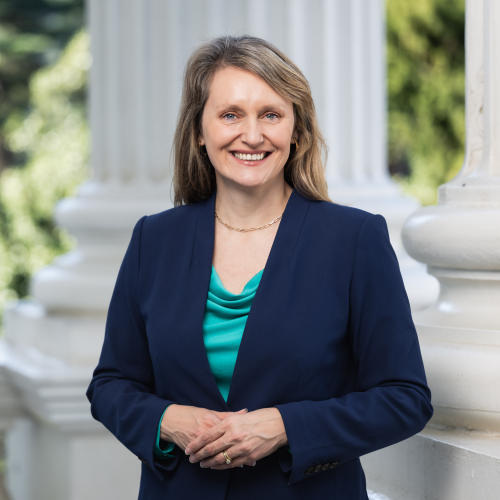
Asm. Buffy Wicks
Sponsored bills
This measure would proclaim January 13, 2020, as Korean American Day.
This measure would honor the late Reverend Dr. Martin Luther King, Jr. and commemorate Dr. Martin Luther King, Jr. Day.
Under existing law, there are programs providing assistance for, among other things, emergency housing, multifamily housing, farmworker housing, homeownership for very low and low-income households, and downpayment assistance for first-time homebuyers. This bill would express the intent of the Legislature to enact legislation that would create a pilot program to provide downpayment assistance to persons who are purchasing their rental residence pursuant to a rent-to-own contract.
The Bergeson-Peace Infrastructure and Economic Development Bank Act establishes the Infrastructure and Economic Development Bank within the Governor's Office of Business and Economic Development. The act authorizes the bank to provide financial assistance for various types of projects that qualify as public development or economic development facilities and to finance transition costs of an electrical corporation, as provided. This bill would state the intent of the Legislature to establish and provide initial funding for the Resilient Activities and Development Agency and the California Resourcient Infrastructure Corporation, as provided.
Existing law regulates the performance of abortions. Existing law, the Reproductive Privacy Act, provides that the state may not deny or interfere with a person's right to choose or obtain an abortion prior to viability of the fetus, or when the abortion is necessary to protect the life or health of the pregnant person. The act defines "abortion" as a medical treatment intended to induce the termination of a pregnancy except for the purpose of producing a live birth. Under existing law, the Legislature finds and declares that every individual possesses a fundamental right of privacy with respect to personal reproductive decisions, as specified. Under existing law, the State Department of Public Health is responsible for, among other things, the statewide administration of various programs and policies relating to personal health. This bill would require the State Department of Public Health to develop and make available to the public informational materials that identify a person's privacy rights with respect to abortion, and the prohibition against state denial or interference with the right to choose or obtain an abortion, as specified.
(1) Existing law regulates the terms and conditions of residential tenancies. Existing law creates various programs for the creation of housing. Existing law requires the Department of Housing and Community Development to develop specifications for the structure, functions, and organization of a housing and community development information system for this state, as specified. This bill would require the Department of Housing and Community Development to create a rental registry online portal, which would be designed to receive specified information from landlords regarding their residential tenancies and to disseminate this information to the general public. The bill would require the department to complete the rental registry online portal, the form necessary to support it, by January 1, 2021, and would require landlords who own or operate property that includes more than 15 dwelling units to register within 90 days and annually thereafter. The bill would require landlords to provide a variety of information regarding the location of rental property, its ownership, and its occupancy, among other things. The bill would require the rental registry online portal to comply with all relevant state and federal laws regarding privacy and personally identifying information. The bill would require a landlord who completes a rental registry form to receive an Annual Statement of Registration certificate within a reasonable time after completing registration and would impose a civil penalty of $50 per rental unit on a landlord who is subject to the bill's requirements and fails to register, as provided. The bill would require a code enforcement officer, as defined, to report a residential property owned or operated by a landlord who is subject to its provisions to the department and would require the department to require the landlord to register that property if specified contingencies are satisfied. By requiring local officials to perform new duties, this bill would impose a state-mandated local program. (2) The California Constitution requires the state to reimburse local agencies and school districts for certain costs mandated by the state. Statutory provisions establish procedures for making that reimbursement. This bill would provide that, if the Commission on State Mandates determines that the bill contains costs mandated by the state, reimbursement for those costs shall be made pursuant to the statutory provisions noted above.
Existing law states the intent of the Legislature to encourage the establishment in each county of a system of community vocational rehabilitation and employment services for persons with serious psychiatric disabilities and authorizes counties to implement the community vocational rehabilitation system with existing county allocations and funds available from the Department of Rehabilitation and other state and federal agencies. Existing law sets forth the principles that should guide the development of community vocational rehabilitation systems, including that staffing patterns at all levels should reflect the cultural, linguistic, ethnic, racial, disability, sexual, and other social characteristics of the community the program serves. This bill would revise the principles regarding staffing patterns to also state that they should reflect the age and other demographic or social characteristics of the community the program serves.
Existing law, the Sherman Food, Drug, and Cosmetic Law, prohibits the manufacture, sale, delivery, holding, or offer for sale of adulterated cosmetics, and prescribes when a cosmetic is adulterated, including when it bears or contains a poisonous or deleterious substance that may render it injurious to users when used as directed in the cosmetic's labeling or advertising or under customary or usual conditions. Provisions of this law are enforced by the State Department of Public Health. A violation of these provisions is a crime. This bill would additionally prescribe that a cosmetic is adulterated if it contains asbestos, lead, any of several specified intentionally added ingredients, or another chemical or contaminant identified by the department, except under specified circumstances. By expanding the scope of a crime, this bill would impose a state-mandated local program. Existing law, the California Safe Cosmetics Act of 2005, authorizes the Division of Environmental and Occupational Disease Control within the State Department of Public Health to investigate cosmetic products that contain certain chemicals. A violation of these provisions is a crime. This bill would specify that it is a violation of the Sherman Food, Drug, and Cosmetic Law to fail to comply with guidelines or instructions issued by the division to implement the act. By expanding the scope of a crime, this bill would impose a state-mandated local program. The California Constitution requires the state to reimburse local agencies and school districts for certain costs mandated by the state. Statutory provisions establish procedures for making that reimbursement. This bill would provide that no reimbursement is required by this act for a specified reason.

Existing law states the intent of the Legislature that local childcare and development planning councils provide a forum for the identification of local priorities for childcare and the development of policies to meet the needs identified within those priorities. Existing law requires the county board of supervisors and the county superintendent of schools to select members for the local planning council for that county. Existing law requires local planning councils, upon approval by the county board of supervisors and the county superintendent of schools, to submit to the State Department of Education the local priorities it has identified that reflect all childcare needs in the county, as provided. This bill would require local planning councils to provide information to cities and counties regarding facility needs for early childhood education, including, but not limited to, childcare and preschool, in their jurisdictions. By imposing new duties on local planning councils, the bill would impose a state-mandated local program. The California Constitution requires the state to reimburse local agencies and school districts for certain costs mandated by the state. Statutory provisions establish procedures for making that reimbursement. This bill would provide that, if the Commission on State Mandates determines that the bill contains costs mandated by the state, reimbursement for those costs shall be made pursuant to the statutory provisions noted above.