

Existing law prohibits a jury or judge from convicting a defendant, finding a special circumstance true, or using a fact in aggravation based on the uncorroborated testimony of an in-custody informant. Existing law defines "in-custody informant" for these purposes as a person, other than a codefendant, percipient witness, accomplice, or coconspirator, whose testimony is based on statements allegedly made by the defendant while both the defendant and the informant were held within a city or county jail, state penal institution, or correctional institution. Existing law provides that, except as otherwise provided by statute, all relevant evidence is admissible. The California Constitution provides for the Right to Truth-In-Evidence, which requires a 23 vote of the Legislature to exclude any relevant evidence from any criminal proceeding, as specified. This bill would instead make testimony by, or information obtained by, an in-custody informant, as defined, regarding statements made by the defendant while the defendant was in custody, inadmissible, as specified. The bill would provide an exemption for such testimony relating to a crime or incident occurring within a correctional facility and testimony obtained pursuant to a law enforcement operation, as described, that meets specified criteria.
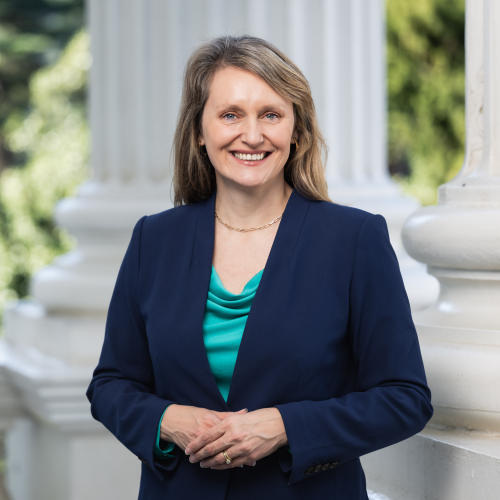
Asm. Buffy Wicks
Sponsored bills
Existing law establishes a basic speed law that prohibits a person from driving a vehicle upon a highway at a speed greater than is reasonable or prudent given the weather, visibility, traffic, and highway conditions, and in no event at a speed that endangers the safety of persons or property. This bill would authorize, until January 1, 2027, the Cities of Los Angeles, Oakland, San Jose, one city in southern California, and the City and County of San Francisco to establish the Speed Safety System Pilot Program for speed limit enforcement in certain areas, if the system meets specified requirements, including that the presence of a fixed or mobile system is clearly identified. The bill would require the participating cities or city and county to adopt a Speed Safety System Use Policy and a Speed Safety System Impact Report before implementing the program, and would require the city or city and county to engage in a public information campaign at least 30 days before implementation of the program, including information relating to when the systems would begin detecting violations and where the systems would be utilized. The bill would require the participating cities or city and county to issue warning notices rather than notices of violations for violations detected within the first 30 calendar days of the program. The bill would require the participating cities or city and county to develop uniform guidelines for, among other things, the processing and storage of confidential information. The bill would designate all photographic, video, or other visual or administrative records made by a system as confidential, and would only authorize public agencies to use and allow access to these records for specified purposes. This bill would specify that any violation of a speed law recorded by a speed safety system authorized by these provisions would be subject only to the provided civil penalties. The bill would, among other things, provide for the issuance of a notice of violation, an initial review, an administrative hearing, and an appeals process, as specified, for a violation under this program. The bill would require any program created pursuant to these provisions to offer a diversion program for indigent speed safety system violation recipients, as specified. The bill would require a city or city and county participating in the pilot program to submit reports to the Legislature, as specified, to evaluate the speed safety system to determine the system's impact on street safety and economic impact on the communities where the system is utilized. Existing law establishes a $25 filing fee for specified appeals and petitions. This bill would require a $25 filing fee for an appeal challenging a notice of violation issued as a result of a speed safety system until January 1, 2027. This bill would make legislative findings and declarations as to the necessity of a special statute for the Cities of Los Angeles, Oakland, San Jose, and the City and County of San Francisco. Existing constitutional provisions require that a statute that limits the right of access to the meetings of public bodies or the writings of public officials and agencies be adopted with findings demonstrating the interest protected by the limitation and the need for protecting that interest. This bill would make legislative findings to that effect.
The California Drought, Water, Parks, Climate, Coastal Protection, and Outdoor Access For All Act of 2018, approved by the voters as Proposition 68 at the June 5, 2018, statewide primary direct election, authorizes the issuance of bonds in the amount of $4,100,000,000 pursuant to the State General Obligation Bond Law to finance a drought, water, parks, climate, coastal protection, and outdoor access for all program. Article XVI of the California Constitution requires measures authorizing general obligation bonds to specify the single object or work to be funded by the bonds and further requires a bond act to be approved by a 23 vote of each house of the Legislature and a majority of the voters. This bill would enact the Safe Drinking Water, Wildfire Prevention, Drought Preparation, Flood Protection, Extreme Heat Mitigation, and Workforce Development Bond Act of 2022, which, if approved by the voters, would authorize the issuance of bonds in the amount of $7,080,000,000 pursuant to the State General Obligation Bond Law to finance projects for safe drinking water, wildfire prevention, drought preparation, flood protection, extreme heat mitigation, and workforce development programs. This bill would provide for the submission of these provisions to the voters at the June 7, 2022, statewide primary election. This bill would declare that it is to take effect immediately as an urgency statute.
Existing law establishes the Office of Small Business Advocate within the Governor's Office of Business and Economic Development for the purpose of advocating for the causes of small business and to provide small businesses with the information they need to survive in the marketplace. This bill, the Keep California Working Act, would establish the Keep California Working Grant Program. The act would require the Small Business Advocate to administer the program and award grants, as specified, to small businesses and nonprofit entities that meet specified criteria, including that the entity has experienced economic hardship resulting from the COVID-19 pandemic. The act would specify that grant money awarded pursuant to the program may be used only for specified purposes, including payroll costs, health care benefits, paid sick, medical, or family leave, and insurance premiums. The act would appropriate $2.6 billion dollars to the Office of Small Business Advocate for those purposes. The Personal Income Tax Law and the Corporation Tax Law, in conformity with federal income tax law, generally define "gross income" as income from whatever source derived, except as specifically excluded, and provide various exclusions from gross income. This bill would exclude from gross income, for state income tax purposes, the amount of a grant awarded pursuant to the Keep California Working Grant Program. Existing law requires a bill authorizing a new tax expenditure to contain, among other things, specific goals, purposes, and objectives that the tax expenditure will achieve, detailed performance indicators, and data collection requirements. The bill also would include additional information required for a bill authorizing a new tax expenditure. This bill would declare that it is to take effect immediately as an urgency statute.
Existing law, the Planning and Zoning Law, requires a city or county to adopt a general plan for land use development within its boundaries that includes, among other things, a housing element. That law requires the planning agency of a city or county to provide, by April 1 of each year, an annual report to, among other entities, the Department of Housing and Community Development that includes, among other specified information, the number of applications submitted, the location and total number of developments approved, the number of building permits issued, and the number of units constructed pursuant to a specific streamlined, ministerial approval process. This bill would, commencing January 1, 2024, require a planning agency to include in that annual report specified information on costs, standards, and applications for proposed housing development projects and specified information on housing development projects within the jurisdiction. Existing law requires an applicant for a housing development project, as defined, to be deemed to have submitted a preliminary application upon providing all of specified information about the proposed project to the city, county, or city and county from which approval for the project is being sought and upon payment of the permit processing fee. This bill would, commencing January 1, 2024, require a planning agency to include in the annual report described above the number of times in which a preliminary application for a housing development project expired pursuant to specified procedures. Existing law, known as the Density Bonus Law, requires a city or county to provide a developer that proposes a housing development in the city or county with a density bonus and other incentives or concessions for the production of lower income housing units, or for the donation of land within the development, if the developer agrees to, among other things, construct a specified percentage of units for very low, low-, or moderate-income households or qualifying residents, including lower income students. This bill would require the planning agency to include in the annual report described above the number of units in a student housing development for lower income students for which the developer was granted a density bonus. By adding to the duties of local planning officials with respect to preparing and submitting the above-described annual report to the Department of Housing and Community Development, this bill would impose a state-mandated local program. The California Constitution requires the state to reimburse local agencies and school districts for certain costs mandated by the state. Statutory provisions establish procedures for making that reimbursement. This bill would provide that no reimbursement is required by this act for a specified reason.
Existing law establishes the California Conservation Corps in the Natural Resources Agency and requires the corps to implement and administer the conservation corps program. Existing law authorizes the Director of the California Conservation Corps to establish the Education and Employment Reentry Program within the corps to develop, partner with, and create opportunities for certain forestry corps program objectives, collaborate with the Employment Development Department to provide access to workforce services, collaborate with nongovernmental organizations dedicated to providing access to counseling, mentorship, supportive housing, health care, and educational opportunities, and employ collaborations and partnerships available to the corps, as specified. This bill would require the director, upon appropriation and on or before December 31, 2023, upon appropriation and on or before December 31, 2023, in partnership with the Department of Forestry and Fire Protection and the Department of Corrections and Rehabilitation, to establish a forestry training center in northern California to provide enhanced training, education, work experience, and job readiness for entry-level forestry and vegetation management jobs. The bill would require the training center to include counseling, mentorship, supportive housing, health care, and educational services and authorize the training center to provide training modules on specified activities. The bill would require the director to enroll at the training center formerly incarcerated individuals and to prioritize enrollment for those formerly incarcerated individuals who have either successfully served on a California Conservation Camp program crew and were recommended by the Director of Forestry and Fire Protection and the Secretary of the Department of Corrections and Rehabilitation, as provided, or successfully served on a hand crew at the county level and were recommended for participation by county probation and county fire departments. The bill would provide that successful completion of a training program at the training center constitutes qualifying experience for an entry-level forestry or vegetation management position at a state agency. Existing law requires the corps to report by December 31 of each year the total number of corpsmembers in the cohort who permanently separated from the corps, as provided. Existing law requires the report to include specified information. This bill would require the report, commencing December 31, 2023, and annually thereafter, to contain specified information regarding formerly incarcerated individuals enrolled in corps programs or centers, as provided. This bill would make legislative findings and declarations as to the necessity of a special statute for northern California.
(1) Existing law requires the Secretary of the Department of Corrections and Rehabilitation to implement literacy programs in the state prison. Existing law requires the department to offer college programs through voluntary education programs or their equivalent. This bill would instead require the department to make college programs available for the benefit of inmates with a general education development certificate or equivalent or a high school diploma and would require those college programs to only be provided by the California Community Colleges, the California State University, the University of California, or other regionally accredited, nonprofit colleges or universities. The bill would provide a set of criteria to prioritize various college programs, including face-to-face instruction, comprehensive in-person support, and coordination with nonprofit postsecondary programs serving formerly incarcerated students. The bill would require the education providers to be responsible for determining and developing their curricula and degree pathways, determining certificate pathways, providing instructional staff, and determining what services will be offered to ensure incarcerated students can successfully complete the course of study. (2) Existing law allows the department to create regulations for the administration of the state prison. Existing regulations authorize an inmate enrolled in a full-time college program, as defined, to combine that program with a half-time work or career program to equate to a full-time work assignment. This bill would require an inmate enrolled in a full-time college program, as specified, to be deemed by the department to be assigned to a full-time work or training assignment.
Existing law makes every person who willfully resists, delays, or obstructs any public officer, peace officer, or an emergency medical technician, as defined, in the discharge or attempt to discharge any duty of the office or employment, when no other punishment is prescribed, guilty of a misdemeanor. Existing law also authorizes specified peace officers to close an area where a menace to the public health or safety is created by a calamity and to close the immediate area surrounding any emergency field command post or other command post activated for the purpose of abating a calamity, riot, or other civil disturbance, as specified. Existing law makes any unauthorized person who willfully and knowingly enters those areas and who remains in the area after receiving notice to evacuate or leave guilty of a misdemeanor. Existing law exempts a duly authorized representative of any news service, newspaper, or radio or television station or network from the provisions prohibiting entry into the closed areas, as specified. This bill would, if peace officers close the immediate area surrounding any emergency field command post or any other command post, or establish a police line, or rolling closure at a demonstration, march, protest, or rally where individuals are engaged primarily in constitutionally protected activity, as described, require that a duly authorized representative of any news service, online news service, newspaper, or radio or television station or network, as described, be allowed to enter those closed areas and would prohibit a peace officer or other law enforcement officer from intentionally assaulting, interfering with, or obstructing a duly authorized representative who is gathering, receiving, or processing information for communication to the public. The bill would also prohibit a duly authorized representative who is in a closed area and gathering, receiving, or processing information from being cited for the failure to disperse, a violation of a curfew, or a violation of other, specified law. The bill would require that if a representative is detained by a peace officer or other law enforcement officer, the representative be permitted to contact a supervisory officer immediately for the purpose of challenging the detention. The bill would not impose criminal liability. The bill would state the Legislature's intention to achieve parity in the access and protections in these circumstances as those established pursuant to a specified law.
Existing law establishes the Department of Health Care Access and Information to oversee various aspects of the health care market, including oversight of hospital facilities and community benefit plans. Existing law requires a private, not-for-profit hospital to adopt and update a community benefits plan that describes the activities the hospital has undertaken to address identified community needs within its mission and financial capacity, including health care services rendered to vulnerable populations. Existing law defines "vulnerable populations" for these purposes to mean a population that is exposed to medical or financial risk by virtue of being uninsured, underinsured, or eligible for Medi-Cal, Medicare, California Children's Services Program, or county indigent programs. Existing law requires a hospital to annually submit its community benefits plan to the department not later than 150 days after the hospital's fiscal year ends. This bill would add racial and ethnic groups experiencing disparate health outcomes and socially disadvantaged groups to the definition of "vulnerable populations" for community benefits reporting purposes. This bill would require a hospital to prepare and annually submit an equity report to the department according to a reporting schedule established by the department. The bill would require an equity report to include, among other things, an analysis of health status and access to care disparities on the basis of specified categories, including age, sex, and race, and a health equity plan to reduce disparities. The bill would authorize the department to impose a fine not to exceed $5,000 against a hospital that fails to adopt, update, or submit an equity report, and would require the department to list those that failed to submit an equity report on its internet website. The bill would require the department to convene a Health Care Equity Measures Advisory Committee with specified membership to assist and advise the director relative to equity reports.