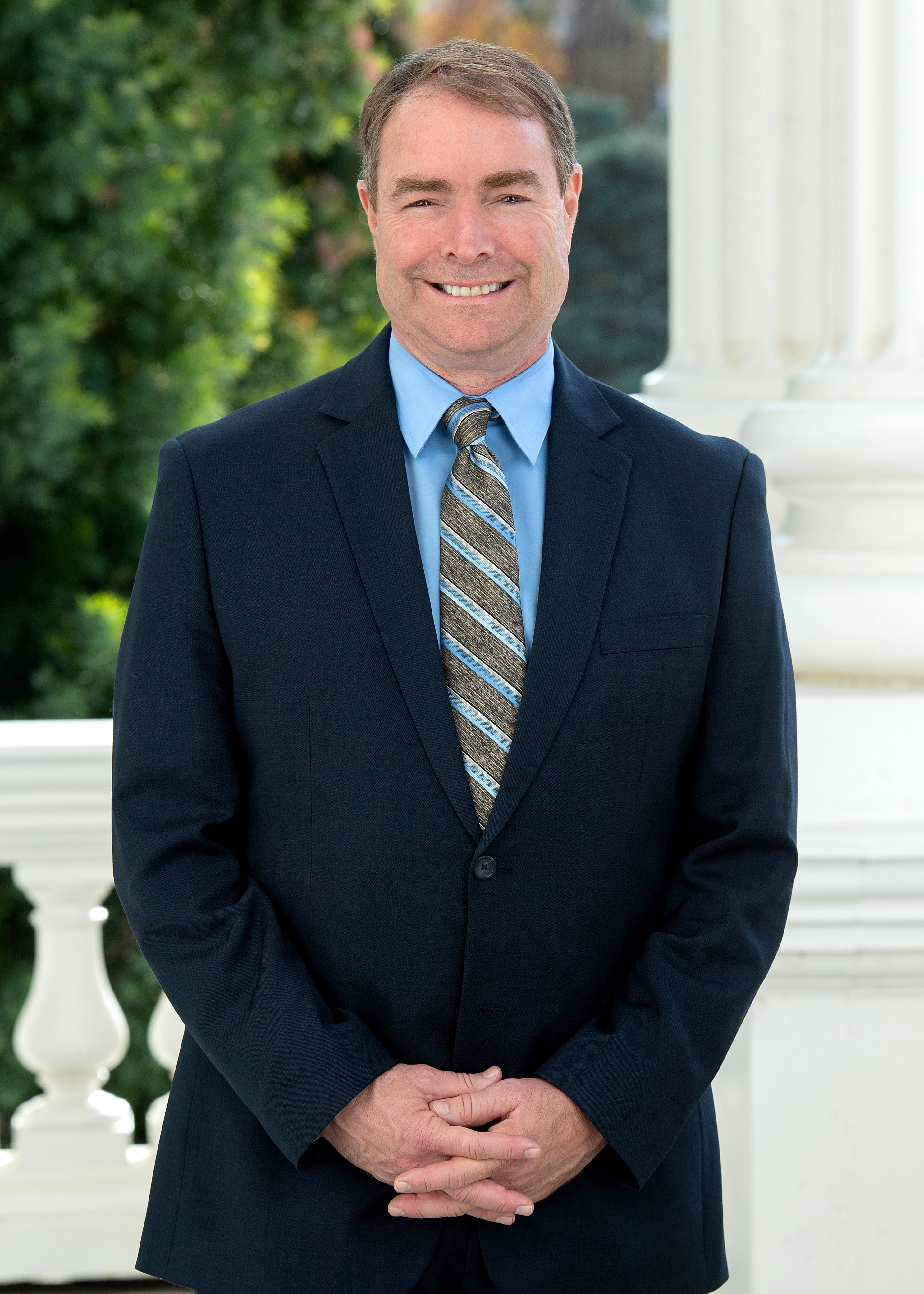
Photo of Damon Connolly
D California Assembly · District 12

Asm. Damon Connolly

Compare
Total votes
9,809
all sessions
Attendance
99%
108 missed
Near the chamber average
With party
99%
of cast votes
Near the chamber average
Bipartisan score
0%
crosses aisle rarely
Near the chamber average
Sponsored
959
bills & resolutions
Near the chamber average
Committees
11
assignments
959 bills and resolutions

Sponsored bills

Total
959
Primary
80
Co-sponsor
879
This page
959
matching current filters
Co-sponsor HR 111
Passed · California Assembly · Co-sponsor
Relative to International Day Against Homophobia, Biphobia, Interphobia, and Transphobia.

Maddy summaryThis House Resolution recognizes May 17, 2026, as the International Day Against Homophobia, Biphobia, Interphobia, and Transphobia within the California Legislature. The measure formally acknowledges the ongoing discrimination faced by LGBTQ+ individuals globally and reaffirms the state's commitment to equality and civil rights. By adopting this resolution, the Assembly encourages all Californians to support inclusive practices and stand against hate toward the LGBTQ+ community.

Passed May 18, 2026 1 co-sponsor
Primary AB 2457
In committee · California Assembly · Lead sponsor
Health care provider credentialing.

Existing law, the Knox-Keene Health Care Service Plan Act of 1975, provides for the licensure and regulation of health care service plans by the Department of Managed Health Care, and makes a willful violation of the act a crime. Existing law requires a full service health care service plan, excluding a Medi-Cal managed care plan, or its delegate, to subscribe to and use the Council for Affordable Quality Healthcare credentialing form on and after January 1, 2028. On and after January 1, 2027, existing law requires a health care service plan, excluding a Medi-Cal managed care plan, or its delegate, that credentials health care providers for its networks to make a determination regarding the credentials of a provider within 90 days after receiving a completed provider credentialing application. This bill would extend the application of the above-described requirements to Medi-Cal managed care plans. Because a willful violation of these requirements by a Medi-Cal managed care plan would be a crime, the bill would impose a state-mandated local program. The California Constitution requires the state to reimburse local agencies and school districts for certain costs mandated by the state. Statutory provisions establish procedures for making that reimbursement. This bill would provide that no reimbursement is required by this act for a specified reason.

In committee May 14, 2026 0 co-sponsors
Primary AB 1790
In committee · California Assembly · Lead sponsor
Corporations Tax Law: water's-edge election: global intangible low-taxed income.

The Corporation Tax Law imposes on every corporation doing business in the state, as defined, a tax according to or measured by net income and, in the case of a corporation with income derived from or attributable to sources both within and without this state, apportions the income between this state and other states and foreign countries in accordance with a single sales formula based on the sales within and without this state, except that in the case of an apportioning trade or business that derives more than 50% of its gross business receipts from conducting one or more qualified business activities, as defined, business income is apportioned in accordance with a specified 3-factor formula. Existing federal law, for purposes of determining a taxpayer's gross income for federal income tax purposes, requires that a person who is a United States shareholder of any controlled foreign corporation, as defined, to include in their gross income the net CFC tested income, as provided. The Corporation Tax Law, for taxable years beginning on or after January 1, 2003, for purposes of determining income derived from or attributable to sources within this state, allows corporations to make a statutory election as to whether their income is determined on a "water's-edge" basis or on a worldwide unitary basis. Under existing law, the election to report income on a water's-edge basis remains in effect until terminated, and provides conditions for the termination of the election. This bill, for taxable years beginning on or after January 1, 2026, would require a taxpayer that files on a water's-edge basis to account for net CFC tested income within the water's-edge group, as provided. The bill would require a taxpayer that files on a water's-edge basis to include all income and apportionment factors of any corporation, other than a bank, whose sales factor, instead of the average of 3 factors, in the United States is at least 20%. The bill would also terminate all water's-edge elections for the first taxable year beginning on or after January 1, 2028, and would not allow a taxpayer to make a water's-edge election, or file on a water's-edge basis, for taxable years beginning on or after January 1, 2028. The bill would authorize any taxpayer that has made a water's-edge election to terminate that election without the consent of the Franchise Tax Board for taxable years beginning on or after January 1, 2026, and before January 1, 2028. This bill would include a change in state statute that would result in a taxpayer paying a higher tax within the meaning of Section 3 of Article XIIIA of the California Constitution, and thus would require for passage the approval of 23 of the membership of each house of the Legislature. This bill would take effect immediately as a tax levy.

In committee May 14, 2026 0 co-sponsors
Primary AB 2068
In committee · California Assembly · Lead sponsor
California State University: campus presidents: hiring process.

Existing law establishes the California State University, under the administration of the Trustees of the California State University, with campuses throughout the state. Existing law requires the trustees to provide by rule for the government of their appointees and employees. This bill would prohibit the president of a campus of the California State University from resigning or vacating their position without notifying in writing the trustees and the Chancellor of the California State University of their intention to resign or vacate. The bill would require the trustees, within 30 days of receiving the written notice, and before any recruitment for the position of campus president by any employee, to establish a 9-member Presidential Search Committee, as provided. The bill would require the Presidential Search Committee, with assistance from the office of the Chancellor of the California State University, to establish the desired qualities of the campus president and develop a job description, establish a scoring and ranking standard, conduct a recruitment effort and an initial screening of candidates, conduct interviews, and determine and recommend the final 3 candidates to the trustees and chancellor, as provided. The bill would require the chancellor, in collaboration with the Presidential Search Committee, to host a recorded public forum for the final 3 candidates. The bill would require the chancellor to share the recorded public forum in a closed session of the trustees and would require the trustees to make an offer of employment and appoint a campus president from the final 3 candidates. The bill would prohibit an offer of employment from being made to a final candidate until the candidate participates in a public forum.

In committee May 14, 2026 0 co-sponsors
Co-sponsor AB 2069
In committee · California Assembly · Co-sponsor
Sales and Use Tax Law: exemption: fairgrounds.

Existing state sales and use tax laws impose a tax on retailers measured by the gross receipts from the sale of tangible personal property sold at retail in this state, or on the storage, use, or other consumption in this state of tangible personal property purchased from a retailer for storage, use, or other consumption in this state. The Sales and Use Tax Law provides various exemptions from those taxes. This bill, the Fairground Act for Investment and Revitalization, on and after January 1, 2027, and before January 1, 2032, would exempt the gross receipts from the sale in this state of, and the storage, use, or other consumption in this state of, tangible personal property for use in the construction, development, or ongoing operation of a qualified project, defined to mean a new development project, or new phase of an existing project, that is located on the land of a fairground, undertaken pursuant to a written agreement and approved by a governing body of a fairground, as provided. The bill would require a governing body of a fairground to approve a project. By requiring additional duties be performed by the governing body of a fairground, this bill would impose a state-mandated local program. Existing law requires any bill authorizing a new tax expenditure to contain, among other things, specific goals, purposes, and objectives that the tax expenditure will achieve, detailed performance indicators, and data collection requirements. This bill also would include additional information required for any bill authorizing a new tax expenditure. The Bradley-Burns Uniform Local Sales and Use Tax Law authorizes counties and cities to impose local sales and use taxes in conformity with the Sales and Use Tax Law, and existing laws authorize districts, as specified, to impose transactions and use taxes in accordance with the Transactions and Use Tax Law, which generally conforms to the Sales and Use Tax Law. Amendments to the Sales and Use Tax Law are automatically incorporated into the local tax laws. This bill would provide that the exemption created by the bill does not apply to local sales and use taxes or transactions and use taxes. Existing law imposes or dedicates certain state sales and use tax rates for local funding, including through the Local Revenue Fund 2011. This bill would provide that the exemption created by the bill does not apply to those state sales and use tax rates imposed or dedicated for local government funding, including those rates for which revenues are deposited into the Local Revenue Fund 2011. The California Constitution requires the state to reimburse local agencies and school districts for certain costs mandated by the state. Statutory provisions establish procedures for making that reimbursement. This bill would provide that, if the Commission on State Mandates determines that the bill contains costs mandated by the state, reimbursement for those costs shall be made pursuant to the statutory provisions noted above. This bill would take effect immediately as a tax levy.


In committee May 14, 2026 1 co-sponsor
Co-sponsor AB 1971
In committee · California Assembly · Co-sponsor
Property tax: exclusion from reassessment: home hardening retrofitting improvements.

The California Constitution generally limits ad valorem taxes on real property to 1% of the full cash value of that property. For purposes of this limitation, "full cash value" is defined as the assessor's valuation of real property as shown on the 1975–76 tax bill under "full cash value" or, thereafter, the appraised value of that real property when purchased, newly constructed, or a change in ownership has occurred. The California Constitution specifies that "newly constructed" does not include the construction or reconstruction of seismic retrofitting components, as defined by the Legislature. Existing law, pursuant to that constitutional authorization, defines seismic retrofitting components to mean seismic retrofitting improvements and improvements utilizing earthquake hazard mitigation technologies. Existing law, pursuant to constitutional authorization, also excludes from the definition of "newly constructed" the construction or installation of certain fire sprinkler systems, or other fire extinguishing systems, fire detection systems, or fire-related egress improvements. This bill would require the State Board of Equalization to clarify that a home hardening retrofitting improvement, as defined, to an existing structure is considered nonassessable repair and maintenance, provided that the improvement does not add square footage, change the property's use, include structural reconfigurations, or include substantial rehabilitation.

In committee May 14, 2026 1 co-sponsor
Primary AB 2100
In committee · California Assembly · Lead sponsor
Organic waste: manure management: interagency task force: project approval.

(1) The California Global Warming Solutions Act of 2006 establishes the State Air Resources Board as the state agency responsible for monitoring and regulating sources emitting greenhouse gases. The act requires the state board to adopt rules and regulations to achieve the maximum technologically feasible and cost-effective greenhouse gas emissions reductions to ensure that the statewide greenhouse gas emissions are reduced to at least 40% below the statewide greenhouse gas emissions limit, as defined, no later than December 31, 2030. Existing law requires the state board to prepare and approve a scoping plan for achieving the maximum technologically feasible and cost-effective reductions in greenhouse gas emissions, as provided, and to update the scoping plan at least once every 5 years. Existing law requires the state board to develop a comprehensive strategy to reduce emissions of short-lived climate pollutants in the state. Existing law requires the state board, in consultation with the Department of Food and Agriculture, to adopt regulations to reduce methane emissions from livestock manure management operations and dairy manure management operations by up to 40% below the dairy sector's and livestock sector's 2013 levels by 2030. This bill would require the Department of Food and Agriculture to convene an interagency task force to evaluate the role of alternative manure management practices in achieving certain goals and to make specified findings and recommendations based on its evaluation. The bill would require the task force to include representatives from specified state agencies, external scientific and technical experts, and other stakeholders, as provided. The bill would require the task force to coordinate scenario modeling of alternative manure management practices adoption within the dairy and livestock industry under different policy and funding conditions, assess how alternative manure management practices can help the state meet groundwater sustainability plans, water quality plans, and nature-based climate solutions, and facilitate interagency data sharing, technical consultation, and identification of research needs, as provided. The bill would authorize the state board to incorporate the task force's findings and recommendations into updates to the above-described comprehensive strategy, the 2027 update to the scoping plan, and other planning documents as appropriate. (2) Existing law requires the Department of Resources Recycling and Recovery, in partnership with various government agencies, to identify and recommend actions to address, with regard to both state agencies and the federal government, the permitting and siting challenges associated with composting and anaerobic digestion, and to encourage the continued viability of the state's organic waste processing and recycling infrastructure. This bill would require the Department of Food and Agriculture to convene relevant government agencies, with input from the regulated community, to create an efficient and effective process for approving new projects that manage livestock and dairy manure through on-farm composting or by selling or transferring manure to offsite users.

In committee May 14, 2026 0 co-sponsors
Co-sponsor HR 95
Passed · California Assembly · Co-sponsor
Relative to National Public Works Week.

Maddy summaryThis bill designates the week of May 17 to May 24, 2026, as National Public Works Week throughout California to honor the contributions of public works professionals. It directly affects engineers, managers, and employees in government and the private sector who maintain essential infrastructure like transportation systems, water supplies, and public buildings. The resolution requests that the Governor issue a proclamation encouraging the public to observe the week with educational programs and activities that highlight the importance of these workers.

Passed May 14, 2026 1 co-sponsor
Co-sponsor AB 2027
In committee · California Assembly · Co-sponsor
Worker data: prohibitions: artificial intelligence.

Existing law establishes the Division of Labor Standards Enforcement within the Department of Industrial Relations. Existing law authorizes the division, which is headed by the Labor Commissioner, to enforce the Labor Code and all labor laws of the state, the enforcement of which is not specifically vested in any other officer, board, or commission. This bill would prohibit an employer from using a worker's personal information, as defined, to train an artificial intelligence system to replicate, automate, or replace a worker's job, and would prohibit an employer from selling, disclosing, or otherwise providing access to a worker's personal information to a third party for the purpose of training an artificial intelligence system to replicate, automate, or replace a worker's job. The bill would prohibit a vendor providing services to an employer under a contract from providing access to the personal information of an employer's worker to a third party or using the personal information of an employer's worker to train artificial intelligence, as specified. The bill would require a contract between an employer and vendor to include a requirement that the vendor implement and maintain reasonable security procedures to protect the worker's personal information from, among other things, unauthorized or illegal access. The bill would define terms for these provisions, including "employer" and "personal information." The bill would require the Labor Commissioner and authorize a public prosecutor to enforce these provisions. The bill would authorize a worker, or their exclusive representative, who suffered a violation of these provisions to bring a civil action for damages, injunctive relief, punitive damages, and attorney's fees and costs. The bill would establish a statutory penalty for a violation of these provisions of up to $500 for each violation. The bill would include findings that changes proposed by this bill address a matter of statewide concern rather than a municipal affair and, therefore, apply to all cities, including charter cities.

In committee May 14, 2026 1 co-sponsor
Co-sponsor SB 978
In committee · California Senate · Co-sponsor
Data centers: labor: electricity rates.

Existing law vests the Public Utilities Commission (PUC) with regulatory authority over public utilities, including electrical corporations. Existing law authorizes the PUC to fix the rates and charges for every public utility and requires that those rates and charges be just and reasonable. This bill would require the PUC to establish a special rate structure for data centers, as defined, taking transmission level electrical service with an estimated peak demand of at least 75 megawatts of electricity to, among other things, protect other customers of electrical corporations, prohibit cost shifts to those other customers, and require data centers to pay for the electrical corporations' upfront costs of transmission or distribution infrastructure upgrades necessary for the provision of electrical service to the data centers. The bill would require the construction of data centers subject to the special rate structure to comply with certain labor requirements. Existing law establishes the policy of the state that eligible renewable energy resources and zero-carbon resources supply 90% of all retail sales of electricity to California end-use customers by December 31, 2035, 95% by December 31, 2040, and 100% by December 31, 2045. Existing law requires the PUC, the State Energy Resources Conservation and Development Commission, and the State Air Resources Board, in consultation with all California balancing authorities, to annually issue a joint report related to meeting that state policy. This bill would require that the joint report also includes the impacts of data centers subject to the special rate structure on the state's ability to achieve the above-described state policy. Under existing law, a violation of the Public Utilities Act or an order, decision, rule, direction, demand, or requirement of the PUC is a crime. Because the provisions of the bill would be part of the act and a violation of a PUC action implementing the bill's requirements would be a crime, this bill would impose a state-mandated local program. The California Constitution requires the state to reimburse local agencies and school districts for certain costs mandated by the state. Statutory provisions establish procedures for making that reimbursement. This bill would provide that no reimbursement is required by this act for a specified reason.

In committee May 14, 2026 1 co-sponsor
Showing 171 to 180 of 959 bills
Previous 1 … 17 18 19 … 96 Next