

Existing law establishes the Medi-Cal program, which is administered by the State Department of Health Care Services, under which qualified low-income individuals receive health care services. The Medi-Cal program is, in part, governed and funded by federal Medicaid program provisions. Existing law provides that abortion is a covered benefit under Medi-Cal. Existing regulation authorizes reimbursement for specified medications used to terminate a pregnancy through the 70th day from the first day of the recipient's last menstrual period. This bill would require the department, by March 1, 2024, to review and update Medi-Cal coverage policies for medication abortion to align with current evidence-based clinical guidelines. After the initial review, the bill would require the department to update its Medi-Cal coverage policies for medication abortion as needed to align with evidence-based clinical guidelines. The bill would require the department to allow flexibility for providers to exercise their clinical judgment when services are performed in a manner that aligns with one or more evidence-based clinical guidelines.
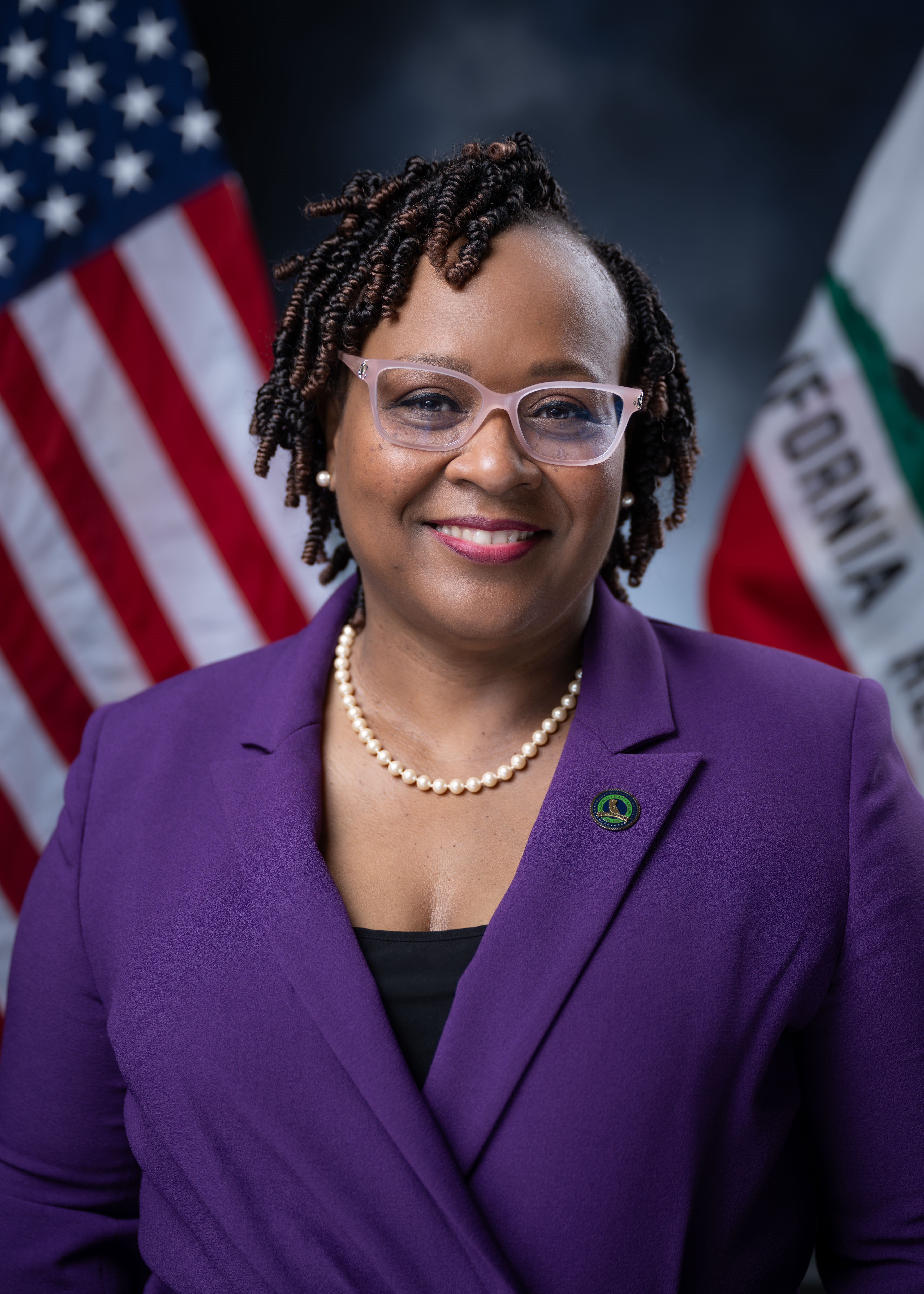
Asm. Lori Wilson
Sponsored bills
Existing law prescribes the duties of the State Registrar of Vital Statistics (State Registrar) and local registrars of births and deaths with respect to the registration of certificates of live birth, fetal death, or death, and marriage licenses. Existing law requires the State Registrar to prescribe and furnish all record forms for use in carrying out the provisions governing vital records and prohibits the use of any record form or format other than those prescribed by the State Registrar. Existing law requires every live birth, fetal death, death, and marriage that occurs in the state to be registered with the local registrar. Existing law requires certificates of live birth, fetal death, or death, and a marriage license to include specified information, such as the full name of the child on a certificate of live birth and the full names of the parties to be married on a marriage license. Existing law also requires the county clerk to issue a confidential marriage license, as specified, on a form prescribed by the State Registrar. This bill would require the State Registrar to require the use of a diacritical mark on an English letter to be properly recorded, when applicable, on a certificate of live birth, fetal death, death, marriage license and certificate, or confidential marriage license and certificate, and would require the use of a diacritical mark to be deemed an acceptable entry by the State Registrar. The bill would provide that the absence of a diacritical mark on a certificate of live birth, fetal death, or death, or a marriage license does not render the document invalid nor affect any constructive notice imparted by proper recordation of the document. The bill would authorize, if a name is not accurately recorded because of the absence of a diacritical mark on an English letter in any certificate of live birth, fetal death, death, or marriage already registered, the person asserting the omission, or the person's conservator, or if a minor, the person's parent or guardian, to submit a written request to the State Registrar for the issuance of a new certificate of birth, fetal death, death, or marriage stating the changes necessary to make the name correct. The bill would require the State Registrar to review the request and, if the request is accompanied with the payment of a specified fee, to issue a new certificate of live birth, fetal death, death, or marriage with the accurate name identified in the request. The bill would also authorize, if a name is not accurately recorded because of the absence of a diacritical mark on an English letter on any confidential license and certificate of marriage already registered, the party asserting the omission to make an affidavit, under oath, stating the changes necessary to make the record correct and file it with the county clerk. The bill would require the county clerk to review the amendment for acceptance for filing, and if accepted, file the amendment and note the fact of the amendment, with its date, on the otherwise unaltered original confidential license and certificate of marriage. By requiring the affidavit to be under oath, the bill would expand the crime of perjury, thereby imposing a state-mandated local program. By increasing duties on county clerks, the bill would impose a state-mandated local program. The California Constitution requires the state to reimburse local agencies and school districts for certain costs mandated by the state. Statutory provisions establish procedures for making that reimbursement. This bill would provide that with regard to certain mandates no reimbursement is required by this act for a specified reason. With regard to any other mandates, this bill would provide that, if the Commission on State Mandates determines that the bill contains costs so mandated by the state, reimbursement for those costs shall be made pursuant to the statutory provisions noted above.
Existing law establishes the State Department of Public Health to implement various programs throughout the state relating to public health. This bill would require the State Department of Public Health and the Office of Emergency Services, in coordination with other state agencies as appropriate, to, upon appropriation and as necessary, establish an infant formula stockpile. The bill would require the department to establish guidelines for the procurement, management, and distribution of infant formula, taking into account, among other things, the amount of each type of infant formula that would be required to meet shortages, as specified. The bill would also establish the Infant Formula Advisory Committee to, among other things, make recommendations for the development of guidelines for the procurement, management, and distribution of infant formula, as specified, and advise the development and implementation of the program. The bill would require the committee to provide an annual report to the Legislature with feedback regarding the implementation of the program and updates regarding policy changes and public comments.
Existing law establishes the Department of Forestry and Fire Protection within the Natural Resources Agency. Existing law vests the department with specified responsibilities, including providing fire protection, fire prevention, pest control, and forest and range protection and enhancement implements and apparatus as necessary. Existing law, the California Urban Forestry Act of 1978, has as a stated purpose the promotion of the use of urban forest resources for purposes of increasing integrated projects with multiple benefits in urban communities. This bill would establish the California Pocket Forest Initiative in the department and would authorize the department to coordinate implementation of the initiative in conjunction with the act. The bill would authorize the department to offer grants to cities, counties, districts, nonprofit organizations, the California Conservation Corps or certified community conservation corps, public universities, public community colleges, and public schools to establish pocket forests on public lands, as provided. The bill would require the department to prioritize disadvantaged communities and communities that lack publicly accessible green space for these grants. The bill would require the department to partner with one or more academic institutions to test, and submit a report on or before January 1, 2030, to the Legislature that evaluates, the applicability and effectiveness of the Miyawaki method, as defined, to restore degraded lands and reforest urban areas in multiple regions throughout California. The bill would repeal these provisions on January 1, 2031.
Existing law governs the determination of child custody and visitation in contested proceedings and requires the court, for purposes of deciding custody, to determine the best interests of the child based on certain factors, including, among other things, the health, safety, and welfare of the child. This bill, for purposes of this provision, would include a parent's affirmation of the child's gender identity or gender expression as part of the health, safety, and welfare of the child. This bill would incorporate additional changes to Section 3011 of the Family Code proposed by SB 599 to be operative only if this bill and SB 599 are enacted and this bill is enacted last.
(1) Existing law, the California Healthy Youth Act, requires school districts, defined to include county boards of education, county superintendents of schools, the California School for the Deaf, the California School for the Blind, and charter schools, to ensure that all pupils in grades 7 to 12, inclusive, receive comprehensive sexual health education and human immunodeficiency virus (HIV) prevention education, as specified. This bill would, in order to prevent and reduce unintended pregnancies and sexually transmitted infections, on or before the start of the 2024–25 school year, require each public school, including schools operated by a school district or county office of education, charter schools, and state special schools, to make internal and external condoms available to all pupils in grades 9 to 12, inclusive, free of charge, as provided. The bill would require these public schools to, at the beginning of each school year, inform pupils through existing school communication channels that free condoms are available and where the condoms can be obtained on school grounds. The bill would require a public school to post at least one notice regarding these requirements, as specified. The bill would require this notice to include certain information, including, among other information, information about how to use condoms properly. The bill would require each public school serving any of grades 7 to 12, inclusive, to allow condoms to be made available during the course of, or in connection with, educational or public health programs and initiatives, as provided. The bill would authorize a state agency, the State Department of Education, or a public school to accept gifts, grants, and donations from any source for the support of a public school carrying out these provisions, including, but not limited to, the acceptance of condoms from a manufacturer or wholesaler. The bill would, in order to comply with these provisions, encourage public schools to explore partnerships, including, but not limited to, partnerships with local health jurisdictions, as defined, community health centers, nonprofit organizations, and the State Department of Public Health. By imposing additional duties on public schools, the bill would impose a state-mandated local program. The bill would additionally prohibit a public school, as defined, maintaining any combination of classrooms from grades 7 to 12, inclusive, a school district, the State Department of Education, or a county office of education from prohibiting certain school-based health centers, as defined, from making internal and external condoms available and easily accessible to pupils at the school-based health center site. (2) Under existing law, the Sherman Food, Drug, and Cosmetic Law, the State Department of Public Health generally regulates the packaging, labeling, advertising, and sale of food, drugs, devices, and cosmetics, in accordance with the Federal Food, Drug, and Cosmetic Act. A violation of those provisions is generally a crime. Existing law sets forth various other provisions relating to the furnishing and health care coverage of certain types of contraception. This bill would, with certain exceptions, prohibit a retail establishment, as defined, from refusing to furnish nonprescription contraception to a person solely on the basis of age by means of any conduct, including, but not limited to, requiring the customer to present identification for purposes of demonstrating their age. Under the bill, a violation of that prohibition would be exempt from the above-described criminal penalty. (3) The California Constitution requires the state to reimburse local agencies and school districts for certain costs mandated by the state. Statutory provisions establish procedures for making that reimbursement. This bill would provide that, if the Commission on State Mandates determines that the bill contains costs mandated by the state, reimbursement for those costs shall be made pursuant to the statutory provisions noted above.
(1) Existing law categorizes certain drugs and other substances as controlled substances and prohibits various actions related to those substances, including their manufacture, transportation, sale, possession, and ingestion. This bill would, on and after January 1, 2025, make lawful the possession, preparation, obtaining, or transportation of, specified quantities of psilocybin, psilocyn, dimethyltryptamine (DMT) , and mescaline, for personal use, as defined, by and with persons 21 years of age or older. The bill would provide penalties for possession of these substances on school grounds, or possession by, or transferring to, persons under 21 years of age. The bill would require the California Health and Human Services Agency to convene a workgroup to study and make recommendations on the establishment of a framework governing the therapeutic use, including facilitated or supported use, of those substances. The bill would require that workgroup to send a report to the Legislature containing those recommendations on or before January 1, 2025. (2) Existing law prohibits the cultivation, transfer, or transportation, as specified, of any spores or mycelium capable of producing mushrooms or other materials that contain psilocybin or psilocyn. This bill would, on and after January 1, 2025, make lawful the cultivation or transportation of specified quantities of spores or mycelium capable of producing mushrooms or other materials that contain psilocybin or psilocyn for personal use, as defined, by and with persons 21 years of age or older. (3) Existing law prohibits the possession of drug paraphernalia, as defined. This bill would exempt from this prohibition, paraphernalia related, as specified, to these specific substances. The bill would also exempt from the prohibition items used for the testing and analysis of controlled substances. (4) Existing law states the intent of the Legislature that the messages and information provided by various state drug and alcohol programs promote no unlawful use of any drugs or alcohol. This bill would repeal those provisions. (5) By eliminating and changing the elements of existing crimes and creating new offenses, and by requiring new duties of local prosecutors, this bill would impose a state-mandated local program. The California Constitution requires the state to reimburse local agencies and school districts for certain costs mandated by the state. Statutory provisions establish procedures for making that reimbursement. This bill would provide that with regard to certain mandates no reimbursement is required by this act for a specified reason. With regard to any other mandates, this bill would provide that, if the Commission on State Mandates determines that the bill contains costs so mandated by the state, reimbursement for those costs shall be made pursuant to the statutory provisions noted above. (6) This bill would state that its provisions are severable.
Existing law, the Knox-Keene Health Care Service Plan Act of 1975, provides for the licensure and regulation of health care service plans by the Department of Managed Health Care and makes a willful violation of the act a crime. Existing law also provides for the regulation of health insurers by the Department of Insurance. Existing law sets forth specified coverage requirements for health care service plan contracts and health insurance policies. This bill, the Let California Kids Hear Act, would require a health care service plan contract or health insurance policy issued, amended, or renewed on or after January 1, 2025, to include coverage for hearing aids for enrollees and insureds under 21 years of age, if medically necessary. The bill would limit the maximum required coverage amount to $3,000 per individual hearing aid, as specified. Because a willful violation of the bill's requirements relative to a health care service plan would be a crime, the bill would impose a state-mandated local program. The California Constitution requires the state to reimburse local agencies and school districts for certain costs mandated by the state. Statutory provisions establish procedures for making that reimbursement. This bill would provide that no reimbursement is required by this act for a specified reason.
Existing law requires the Governor to appoint every office whose mode of appointment is not prescribed by law. Existing law also prescribes the manner of the Governor's appointment of those officers. This bill would require the office of the Governor, commencing January 1, 2025, to maintain on its internet website a list of every state board and commission that includes, for each state board or commission, the membership list, stated purpose, duties, meeting frequency, internet website, and vacancies in the membership. The bill would require the office of the Governor, on or before January 1, 2026, and annually thereafter, to create and publish on its internet website a report containing aggregate demographic information of appointments made by the office during the prior calendar year, as specified.