

Passed Mar 15, 2021
1 co-sponsor
Total votes
17,605
all sessions
Attendance
89%
1,801 missed
Lower than 93% of chamber peers
With party
97%
of cast votes
Lower than 94% of chamber peers
Bipartisan score
1%
crosses aisle rarely
Higher than 85% of chamber peers
Sponsored
1,359
bills & resolutions
Lower than 92% of chamber peers
Committees
0
assignments
1,359 bills and resolutions
Sponsored bills
Total
1,359
Primary
212
Co-sponsor
1,147
This page
1,359
matching current filters
Newspapers: state agency advertising: worker status: independent contractors.
(1) Existing law sets out the various responsibilities of the Department of General Services and state agencies in overseeing and implementing state contracting procedures and policies. Existing law also provides that whenever any official advertising, notice, resolution, order, or other matter of any nature whatsoever is required by law to be published in a newspaper, the publication is required to be made only in a newspaper of general circulation, as specified. This bill would require the department to publish, on the department's internet website, an annual report by July 1 of each year containing specified information relating to payments for placement of marketing or outreach advertising material by each state agency. The bill would provide that these provisions are not intended to amend any of the above-described provisions relating to required publications of official advertising, notices, resolutions, orders, or other matters. The bill would make these provisions inoperative on July 1, 2023. (2) Existing law, as established in the case of Dynamex Operations W. v. Superior Court (2018) 4 Cal.5th 903 (Dynamex) , creates a presumption that a worker who performs services for a hirer is an employee for purposes of claims for wages and benefits arising under wage orders issued by the Industrial Welfare Commission. Existing law requires a 3-part test, commonly known as the "ABC" test, to determine if workers are employees or independent contractors for those purposes. Existing law establishes that, for purposes of the Labor Code, the Unemployment Insurance Code, and the wage orders of the Industrial Welfare Commission, a person providing labor or services for remuneration is considered an employee rather than an independent contractor unless the hiring entity demonstrates that the person is free from the control and direction of the hiring entity in connection with the performance of the work, the person performs work that is outside the usual course of the hiring entity's business, and the person is customarily engaged in an independently established trade, occupation, or business. This test is commonly known as the "ABC" test, as described above. Existing law charges the Labor Commissioner with the enforcement of labor laws, including worker classification. Existing law exempts specified occupations and business relationships from the application of Dynamex and the provisions described above. These exemptions include a temporary exemption for newspaper distributors working under contract with a newspaper publisher, and newspaper carriers working under contract either with a newspaper publisher or newspaper distributor, as those terms are defined, until January 1, 2021. This bill would expand the exemption applicable to newspaper carriers by deleting the condition that a newspaper carrier work under contract either with a newspaper publisher or newspaper distributor. The bill would extend the exemption period to January 1, 2022. (3) This bill would incorporate the changes to Section 2750.3 of the Labor Code proposed by this bill to Section 2783 of the Labor Code, as proposed to be added by AB 2257, to be operative only if this bill and AB 2257 are enacted and this bill is enacted last.
Signed into law Sep 30, 2020
1 co-sponsor
Transportation improvement fee: revenue bonds.
Existing law creates the Road Maintenance and Rehabilitation Program to address deferred maintenance on the state highway system and the local street and road system. Existing law provides for the deposit of various revenues for the program in the Road Maintenance and Rehabilitation Account, including specified portions of revenues from certain fuel excise taxes, a road improvement fee imposed on certain zero-emission vehicles, and the transportation improvement fee. Existing law imposes the transportation improvement fee under the Vehicle License Fee Law with a varying fee between $25 and $175 based on vehicle value and an inflation adjustment, and requires the fee to be collected at the same time and in the same manner as the vehicle registration fee. Existing law requires revenues in the Road Maintenance and Rehabilitation Account to be annually allocated by first making specified deductions for various specified purposes and then continuously appropriating the remaining revenues in the account 50% for allocation to the Department of Transportation for maintenance of the state highway system or for the State Highway Operation and Protection Program and 50% for apportionment to cities and counties by the Controller pursuant to a specified formula. This bill would create the Transportation Improvement Fee Subaccount in the Road Maintenance and Rehabilitation Account and would transfer the revenues from the transportation improvement fee that are deposited in the Road Maintenance and Rehabilitation Account to the subaccount. The bill would continuously appropriate the revenues in the subaccount to the department and cities and counties as part of the same appropriation made to those entities from the Road Maintenance and Rehabilitation Account. The bill would prohibit the revenues in the subaccount from being used to satisfy the above-described deductions from the Road Maintenance and Rehabilitation Account, except under specified circumstances. The bill would require the revenues in the subaccount to be used first to satisfy the 50% allocation to the department and would require those revenues to be deposited in the State Highway and SHOPP TIF Account, which the bill would create in the State Transportation Fund. This bill would continuously appropriate the amounts deposited in the State Highway and SHOPP TIF Account and pledged by the Transportation Improvement Fee Finance Committee, as specified below, to the Treasurer for the purposes of issuing revenue bonds, as specified, and the amounts that have not been pledged by the committee would be continuously appropriated to the department for the purposes of the maintenance of the state highway system or the State Highway Operation and Protection Program, subject to the terms of the issuing instrument for any outstanding revenue bonds. This bill would create the Transportation Improvement Fee Finance Committee, consisting of specified state officers, solely for the purpose of authorizing the issuance and sale of the above-described revenue bonds and the execution and delivery of ancillary obligations, and executing and entering into an issuing instrument. The bill would authorize the committee, in order to provide security for the revenue bonds and ancillary obligations, to include provisions in an issuing instrument pledging the interests of the state in the State Highway and SHOPP TIF Account to the payment of the revenue bonds and the payment of ancillary obligations. This bill would authorize the department to designate projects to be funded from the proceeds of revenue bonds that are included in the State Highway Operation and Protection Program adopted by the California Transportation Commission on May 13, 2020, and that have completed environmental clearance and project design. The bill would authorize the department to request the committee to authorize the issuance of revenue bonds to provide funds for the designated projects. This bill would permit the committee to authorize the Treasurer to sell the revenue bonds at public or private sale and to do all things necessary or convenient to carry out the powers and purposes of these provisions. The bill would authorize revenue bonds to be issued on a tax-exempt or taxable basis in a principal amount not to exceed $5,000,000,000, excluding refunding bonds and excluding any net original issuance premium derived from the sale of the bonds. The bill would create the State TIF Revenue Bond Fund in the State Treasury and would require the net proceeds derived from the issuance of revenue bonds to be deposited in the fund. The bill would continuously appropriate the moneys in the fund to the department and the Treasurer to finance or refinance projects designated by the department and to fund necessary reserves for principal and interest, capitalized interest, credit enhancement or liquidity costs, costs of issuance, and administrative expenses associated with the revenue bonds. This bill would provide that the revenue bonds may not be deemed to constitute a debt or liability of the state or any political subdivision of the state, or a pledge of the full faith and credit of the state or any political subdivision of the state, but shall be paid solely from the funds and revenues pledged for that purpose. This bill would provide that the state covenants with the holders of these revenue bonds, and with those parties who may enter into ancillary obligations, that it will not alter, amend, or restrict the specified provisions of law, including provisions creating the transportation improvement fee, in any manner that would materially adversely impair the interests of those bondholders or parties.
Vetoed Sep 28, 2020
1 co-sponsor
Emergency services: first responders.
Under existing law, the California Emergency Services Act, the Governor is authorized to proclaim a state of emergency, as defined, under specified circumstances. The California Emergency Services Act also authorizes the governing body of a city, county, city and county, or an official designated by ordinance adopted by that governing body, to proclaim a local emergency, as defined. Under existing law, the Office of Emergency Services within the Governor's office is required to, among other things, develop curriculum for first responder training, and to adopt standards and procedures for training first responder instructors. A person who violates any provision of the act is guilty of a misdemeanor. This bill would, for purposes of the California Emergency Services Act, define "first responder" as an employee of the state or a local public agency who provides emergency response services, including a peace officer, firefighter, paramedic, emergency medical technician, public safety dispatcher, or public safety telecommunicator. The bill would provide that the definition of first responder described above does not confer a right to, or entitlement upon, an employee or prospective employee to obtain a retirement benefit formula for an employment classification that is not included in, or is expressly excluded from, that formula, as specified. The bill would prohibit an employer from offering, or indicating an ability to offer to an employee or prospective employee a retirement benefit formula for an employment classification that is not included in, or is expressly excluded from, that formula because of the definition of "first responder." The California Constitution requires the state to reimburse local agencies and school districts for certain costs mandated by the state. Statutory provisions establish procedures for making that reimbursement. This bill would provide that no reimbursement is required by this act for a specified reason.
Signed into law Sep 11, 2020
1 co-sponsor
Vehicles: disabled veterans.
Existing law authorizes the Department of Motor Vehicles to issue special license plates or distinguishing placards to disabled veterans for purposes of certain parking privileges. In issuing a special license plate or placard to a disabled veteran, existing law requires the Department of Motor Vehicles to accept as proof of disability a certificate from the United States Department of Veterans Affairs certifying that the applicant is a disabled veteran. This bill would additionally require the Department of Motor Vehicles to accept a certificate from a county veterans service officer or the Department of Veterans Affairs that certifies that the applicant for a special license plate or placard is a disabled veteran.
Signed into law Sep 9, 2020
0 co-sponsors
Flavored tobacco products.
Existing law, the Stop Tobacco Access to Kids Enforcement (STAKE) Act, prohibits a person from selling or otherwise furnishing tobacco products, as defined, to a person under 21 years of age. Existing law also prohibits the use of tobacco products in county offices of education, on charter school or school district property, or near a playground or youth sports event, as specified. This bill would prohibit a tobacco retailer, or any of the tobacco retailer's agents or employees, from selling, offering for sale, or possessing with the intent to sell or offer for sale, a flavored tobacco product or a tobacco product flavor enhancer, as those terms are defined, except as specified. The bill would make a violation of this prohibition an infraction punishable by a fine of $250 for each violation. The bill would state the intent of the Legislature that these provisions do not preempt or prohibit the adoption and implementation of local ordinances that impose greater restrictions on the access to tobacco products than the restrictions imposed by the bill, as specified. The bill would state that its provisions are severable. By creating a new crime, the bill would impose a state-mandated local program. The California Constitution requires the state to reimburse local agencies and school districts for certain costs mandated by the state. Statutory provisions establish procedures for making that reimbursement. This bill would provide that no reimbursement is required by this act for a specified reason.
Signed into law Aug 28, 2020
1 co-sponsor
Housing development: permits and other entitlements: extension.
The Planning and Zoning Law requires each county and each city to adopt a comprehensive, long-term general plan for its physical development, and the development of specified land outside its boundaries, that includes, among other mandatory elements, a housing element. Existing law, the Permit Streamlining Act, among other things, requires a public agency that is the lead agency for a development project to approve or disapprove that project within specified time periods. This bill would extend by 18 months the period for the expiration, effectuation, or utilization of a housing entitlement, as defined, that was issued before, and was in effect on, March 4, 2020, and that will expire before December 31, 2021, except as specified. The bill would toll this 18-month extension during any time that the housing entitlement is the subject of a legal challenge. The bill would also provide that if the state or a local agency extends, on or after March 4, 2020, but before the effective date of the bill, the otherwise applicable time for the expiration, effectuation, or utilization of a housing entitlement for not less than 18 months and pursuant to the same conditions provided by this bill, that housing entitlement shall not be extended an additional 18 months pursuant to this bill. The bill would include findings that changes proposed by this bill address a matter of statewide concern rather than a municipal affair and, therefore, apply to all cities, including charter cities. By adding to the duties of local officials with respect to housing entitlements, this bill would impose a state-mandated local program. The California Constitution requires the state to reimburse local agencies and school districts for certain costs mandated by the state. Statutory provisions establish procedures for making that reimbursement. This bill would provide that no reimbursement is required by this act for a specified reason.
Passed Jul 30, 2020
1 co-sponsor
Relative to Women in Construction Week.
This measure would proclaim the week of March 1, 2020, to March 7, 2020, inclusive, as Women in Construction Week.
Signed into law Jun 25, 2020
1 co-sponsor
Special education: nonpublic, nonsectarian schools or agencies.
Existing law sets forth a method for providing special education and related services to pupils with exceptional needs. Existing law permits, under certain circumstances, contracts to be entered into for the provision of those services by nonpublic, nonsectarian schools or agencies, as defined. Existing law authorizes a master contract for special education and related services provided by a nonpublic, nonsectarian school or agency only if the school or agency has been certified as meeting specified standards. Commencing with the 2020–21 school year, existing law requires a local educational agency that enters into a master contract with a nonpublic, nonsectarian school to conduct at least one onsite monitoring visit during each school year to the nonpublic, nonsectarian school at which the local educational agency has a pupil attending and with which it maintains a master contract. Commencing with the 2020–21 school year, this bill would authorize a local educational agency that enters into such a master contract to conduct a single onsite monitoring visit to monitor multiple pupils that the local educational agency has placed in a nonpublic, nonsecretarian school. Existing law requires a nonpublic, nonsectarian school or agency to notify the State Department of Education and the local educational agency with which it has a master contract of any pupil-involved incident at the school or agency in which law enforcement was contacted. This bill would no longer require the nonpublic, nonsectarian school or agency to notify the department of any pupil-involved incident at the school or agency in which law enforcement was contacted.
Passed Jun 23, 2020
0 co-sponsors
High-Speed Rail Authority: Senate confirmation.
Existing law creates the High-Speed Rail Authority with specified powers and duties relative to development and implementation of a high-speed train system. The authority is composed of 11 members, including 5 voting members appointed by the Governor, 4 voting members appointed by the Legislature, and 2 nonvoting legislative members. This bill would provide that the members of the authority appointed by the Governor are subject to appointment with the advice and consent of the Senate.
Passed Jun 23, 2020
0 co-sponsors
Ask Maddy
·
AI policy assistant
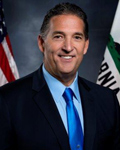
Ask Maddy about Jim Frazier
Scope: california
Hi! I can help you understand Jim Frazier's legislative record. What would you like to know?
Try one of these
i
Maddy answers using official bill text and legislative records. Always verify before sharing.
Sources cited inline