This measure would call on the state's Representatives in Congress to support legislation to repeal all of the provisions of the federal One Big Beautiful Bill Act that adversely affect Social Security, Medicare, and Medicaid programs, to oppose privatization of these programs, and to protect and improve these programs, and would call on the President of the United States to immediately restore program staffing levels, to work with Congress to protect and improve these programs, and to disavow any efforts to privatize Social Security.
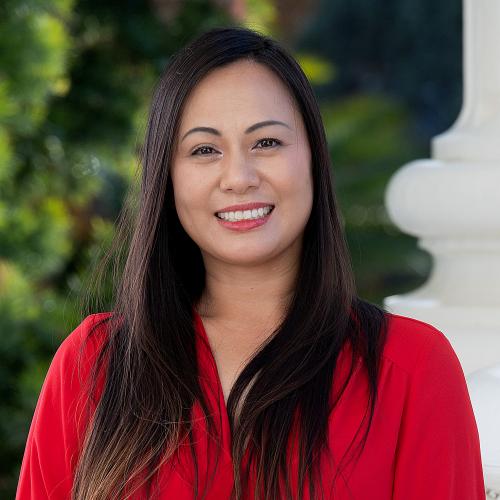
Asm. Stephanie Nguyen
Sponsored bills
Maddy summaryACR 103 designates the week of July 14-18, 2025, as "California Western Monarch Protection Week." The bill is purely ceremonial, recognizing efforts to protect monarch butterflies in California. It does not create new laws, funding, or obligations. The measure serves to raise public awareness about monarch conservation during that specific week.
Maddy summaryHR 67 designates November 9 as "All California Day" to celebrate California's shared history and cultural ties with Baja California and Baja California Sur. The resolution encourages community events and cultural celebrations across the state to honor this interconnected heritage, including contributions from Indigenous peoples and Mexican heritage communities. As a ceremonial resolution (not a binding law), it has no direct regulatory or financial impact on any specific group or policy. The measure was adopted by the California Assembly on September 4, 2025.
Maddy summaryThis House Resolution (HR 58) declares October 2025 as "California Promotoras Month" to formally recognize the work of promotoras - community health workers who serve as cultural brokers and connect underserved communities (particularly Latino populations) to essential services like health, housing, and disaster response. It acknowledges their role in improving community resilience and access to resources, while highlighting the need for better support, training, and equitable compensation for this workforce. The resolution is symbolic and does not create new laws, funding, or programs; it solely aims to raise awareness and honor promotoras' contributions through a designated month of recognition.
Maddy summaryThis is a symbolic resolution, not a substantive bill. It designates September 7-13, 2025, as "Direct Support Professional Recognition Week" in California. The resolution acknowledges direct support professionals who assist Californians with intellectual and developmental disabilities (IDD) through the state's Lanterman Act system, which serves over 450,000 residents. It formally recognizes their role in enabling community inclusion and independence but does not create new policies, funding, or legal obligations.
Maddy summaryThis symbolic resolution recognizes September 20, 2025, as National Fried Rice Day in California, highlighting the dish's cultural significance to Asian American communities and its connection to California's rice-growing economy (noting the state's status as the second-largest rice producer). It has no legal effect or policy changes - it serves solely to celebrate culinary traditions and community diversity. The resolution was adopted by the California Assembly with no opposing votes.
Maddy summaryThis House Resolution designates a month as Filipino American History Month in California. It recognizes the historical contributions of Filipino Americans to the state, including early settlement (dating to 1587), agricultural labor, community building (such as "Little Manila" in Stockton), and military service during World War II. As a symbolic resolution, it does not create new laws, policies, or direct effects on any specific group.
Existing law establishes the Office of Small Business Advocate within the Governor's Office of Business and Economic Development, led by the Small Business Advocate, and sets forth its powers and duties relating to advocacy on behalf of small business and providing small businesses with the information they need to survive in the marketplace. Existing law requires the advocate to, among other duties, collaborate with the Office of Small Business and Disabled Veteran Business Enterprise Services in their activities under the Small Business Procurement and Contract Act, including promoting small business certification. This bill would require the advocate to also collaborate with local agencies on the development and implementation of local strategies to increase small business participation in local procurement opportunities, as specified. In this connection, the bill would authorize a local agency, as defined, to establish a Small Business Utilization Program (SBUP) to increase small businesses' participation in local agency procurement opportunities. This bill would require an SBUP, to facilitate the participation of small businesses in the provision of goods, information technology, and services to the local agency, to establish a small business certification process. As part of this process, the bill would require the SBUP, to the extent feasible, to include all of specified criteria, including, among other things, a minimum goal of 25% procurement participation for small businesses certification. The bill would authorize a local agency that establishes an SBUP to engage in specified activities to facilitate contract awards to small businesses. This bill would authorize a local agency to submit information on its small business procurement participation to the Office of Small Business Advocate, including progress toward meeting utilization goals. The bill would require the Office of Small Business Advocate, subject to funding being available, and upon appropriation by the Legislature for these purposes, to issue its first data call to local agencies by November 15, 2027, and every year thereafter, as specified. The bill would require the Office of Small Business Advocate to prepare an annual report that may contain, among other things, information received from the data call and to post the report on its internet website within 6 months after each data call. The bill would include related legislative findings. Existing law creates the California Small Business Technical Assistance Program within the California Office of the Small Business Advocate, under the direct authority of the Small Business Advocate. Existing law requires the office to administer the program to provide grants to expand the capacity of small business development technical assistance centers in California that are administered by and primarily funded by federal agencies and other nonprofit small business technical assistance centers, as specified. Existing law sets forth the criteria that an applicant must meet to be eligible to participate in the program. Existing law authorizes specified state funding provided pursuant to these provisions to be used for outreach efforts. This bill would remove provisions that require an applicant to provide a plan of action and commitment to fully draw down all specified federal funds available to it, that authorize the office to require an applicant to provide details relating to the source and amount of nonstate funds, and that require an applicant to demonstrate the ability to fully draw down substantially all federal and private funds available to it in order to be eligible to participate in the program. The bill would authorize an applicant to utilize federal and private funding contracts, as specified. The bill would authorize up to 25% of specified state funding awarded pursuant to these provisions to be used for outreach and limit the awarded funds that may be used for direct program administration expenses to 15%.

Existing law provides for the county-administered In-Home Supportive Services (IHSS) program, under which qualified aged, blind, and disabled persons are provided with specified services in order to permit them to remain in their own homes and avoid institutionalization. Existing law defines supportive services for purposes of the IHSS program to include those necessary paramedical services that are ordered by a licensed health care professional, which persons could provide for themselves, but for their functional limitations. Existing law requires an applicant for, or recipient of, in-home supportive services, as a condition of receiving these services, to obtain a certification from a licensed health care professional declaring that the applicant or recipient is unable to perform some activities of daily living independently, and that without services to assist the applicant or recipient with activities of daily living, the applicant or recipient is at risk of placement in out-of-home care, and defines a licensed health care professional for this purpose to mean an individual licensed in California by the appropriate California regulatory agency, acting within the scope of their license or certificate as defined in the Business and Professions Code. This bill would use the above-described definition of "licensed health care professional" for purposes of the provisions relating to paramedical services, and would, for purposes of the certification requirement, add to the above-described definition of "licensed health care professional" that the licensed individual has primary responsibilities to diagnose or provide treatment and care for physical or mental impairments that cause or contribute to an individual's functional limitations.
This measure would recognize February 2025 as Black History Month, urge all citizens to join in celebrating the accomplishments of African Americans during Black History Month, and encourage the people of California to recognize the many talents of African Americans and the achievements and contributions they make to their communities to create equity and equality for education, economics, and social justice. The measure would also recognize the significance in protecting citizens' right to vote and remedying racial discrimination in voting.