Issue · Immigration

Immigration (Sanctuary Policies)

Every immigration bill, vote, and legislator stance in California, automatically classified by Maddy, our AI policy reader.

Total bills
19
2025-2026 Regular Session
Top supporter
Juan Alanis
89% support rate
Top opponent
James Gallagher
25% support rate
Ranked legislators
10
5 support · 5 oppose
Key legislators

Who's moving sanctuary policies in California

Legislators moving sanctuary policies in California
Legislator Party Stance Support rate Votes
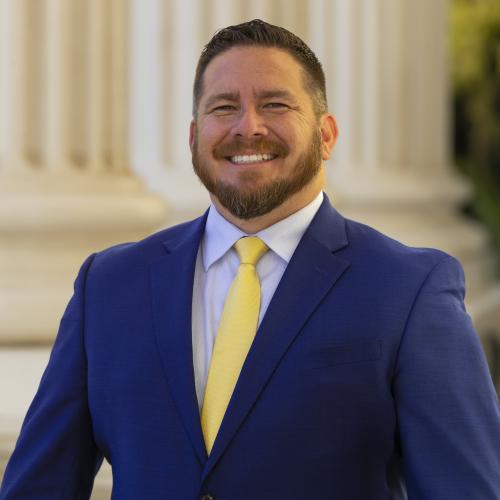
Juan Alanis
Juan Alanis House · District 22
R
Strong +
89% 19
Laurie Davies
Laurie Davies House · District 74
R
Strong +
85% 13
Greg Wallis
Greg Wallis House · District 47
R
Strong +
83% 18
Melissa Hurtado
Melissa Hurtado Senate · District 16
D
Support
75% 16
Jesse Gabriel
Jesse Gabriel House · District 46
D
Support
73% 22
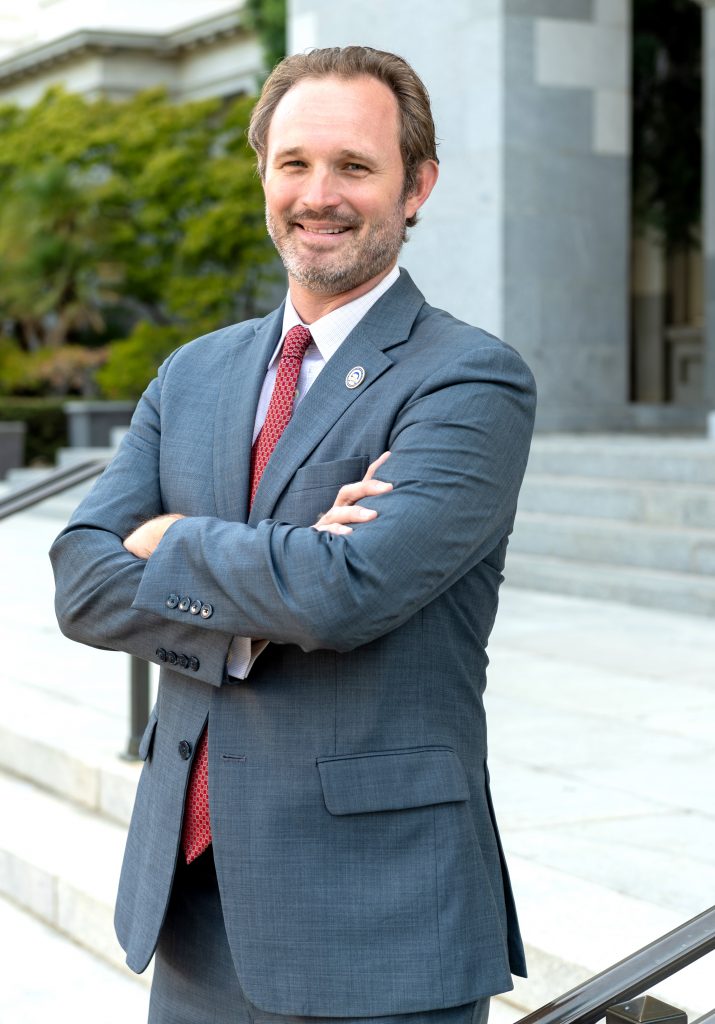
James Gallagher
James Gallagher House · District 3
R
Oppose
25% 12
Kate Sanchez
Kate Sanchez House · District 71
R
Oppose
32% 41
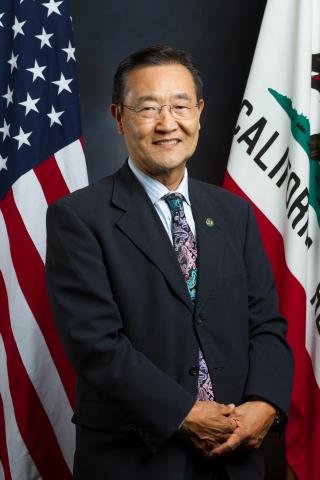
Steve Choi
Steve Choi Senate · District 37
R
Oppose
33% 21
Diane Dixon
Diane Dixon House · District 72
R
Oppose
34% 44
Heather Hadwick
Heather Hadwick House · District 1
R
Oppose
35% 23
Showing 11–19 of 19 bills

All immigration bills

failed · California · Assembly Feb 2, 2026

AB 85: Law enforcement: cooperation with immigration authorities.

Under existing law, a law enforcement official has limited discretion to cooperate with immigration authorities, and may only provide information regarding a person's release date or transfer an individual to immigration authorities without a judicial warrant or probable cause determination if the individual has been convicted of specified crimes, including, but not limited to, serious and violent felonies, as specified, and only if doing so would not violate any federal, state, or local law, or local policy. Notwithstanding those provisions, this bill would instead require law enforcement officials to cooperate with immigration authorities by detaining and transferring an individual and providing release information if a person has been convicted of a felony. By requiring local law enforcement to comply with requests from immigration authorities, this bill would impose a state-mandated local program. The California Constitution requires the state to reimburse local agencies and school districts for certain costs mandated by the state. Statutory provisions establish procedures for making that reimbursement. This bill would provide that, if the Commission on State Mandates determines that the bill contains costs mandated by the state, reimbursement for those costs shall be made pursuant to the statutory provisions noted above.
failed · California · Assembly Feb 2, 2026

AB 1300: State and local government: data protection and privacy: immigration.

Existing law requires the Attorney General to publish model policies limiting assistance with immigration enforcement to the fullest extent possible consistent with federal and state law at public schools, public libraries, health facilities operated by the state or a political subdivision of the state, courthouses, Division of Labor Standards Enforcement facilities, the Agricultural Labor Relations Board, the Division of Workers Compensation, and shelters, and ensuring that they remain safe and accessible to all California residents, regardless of immigration status. Existing law requires the Attorney General to publish guidance, audit criteria, and training recommendations aimed at ensuring that any databases operated by state and local law enforcement agencies, including databases maintained for the agency by private vendors, are governed in a manner that limits the availability of information therein to the fullest extent practicable and consistent with federal and state law, to anyone or any entity for the purpose of immigration enforcement. Existing law, the California Values Act, prohibits California law enforcement agencies from using agency or department moneys or personnel to investigate, interrogate, detain, detect, or arrest persons for immigration enforcement purposes, including, among other things, providing personal information about an individual, making or intentionally participating in arrests based on civil immigration warrants, or performing the functions of an immigration officer, as specified. This bill would prohibit a state or local government agency from collecting immigration-related personally identifiable information unless it is explicitly required by law to do so and the collection is justified by a legitimate government purpose. The bill would prohibit a state or local government agency from sharing personally identifiable information with federal immigration enforcement agencies without a judicial warrant or court order. The bill would require any contract, agreement, or memorandum of understanding that facilitate data sharing between a state or local government agency and federal immigration enforcement authorities to comply with oversight mechanisms to ensure compliance with civil rights and privacy protections and be subject to review by the State Auditor, as described below. Because the bill would require local agencies to perform additional duties, it would impose a state-mandated local program. The bill would make these provisions enforceable by administrative action or by imposition of a civil penalty recovered by an action brought by the Attorney General. This bill would require the State Auditor to conduct audits of all state and local government agency data-sharing agreements at least every 2 years to ensure compliance with existing laws protecting privacy and civil rights. The bill would require the Office of the Attorney General to establish an oversight task force to review complaints and violations related to unauthorized data collection and sharing that would report to the Legislature annually on data privacy trends, risks, and policy recommendations. The California Constitution requires the state to reimburse local agencies and school districts for certain costs mandated by the state. Statutory provisions establish procedures for making that reimbursement. This bill would provide that, if the Commission on State Mandates determines that the bill contains costs mandated by the state, reimbursement for those costs shall be made pursuant to the statutory provisions noted above.
failed · California · Senate Feb 2, 2026

SB 554: Law enforcement: immigration enforcement.

Existing law, the California Values Act, generally prohibits California law enforcement agencies from investigating, interrogating, detaining, detecting, or arresting persons for immigration enforcement purposes, including providing information regarding a person's release date or responding to requests for notification by providing release dates or other information, as specified. Existing law provides that responses are never required, but are permitted, provided that they do not violate any local law or policy. Existing law provides the above-described prohibition does not prevent a California law enforcement agency from performing certain limited exceptions to this prohibition that do not violate any policy of the law enforcement agency or any local law or policy of the jurisdiction in which the agency is operating. Existing law provides a law enforcement official with discretion to cooperate with immigration authorities only if doing so would not violate any federal, state, or local law, or local policy, and where permitted by the California Values Act. This bill would instead provide that responses relating to a person's release date, as described above, are required. The bill would instead require a California law enforcement agency to perform certain limited exceptions to the prohibition, as specified. The bill would instead require a law enforcement official to cooperate with immigration authorities only if doing so would not violate any federal or state law or policy, and where permitted by the California Values Act. By imposing new duties on local agencies, this bill would impose a state-mandated local program. The California Constitution requires the state to reimburse local agencies and school districts for certain costs mandated by the state. Statutory provisions establish procedures for making that reimbursement. This bill would provide that, if the Commission on State Mandates determines that the bill contains costs mandated by the state, reimbursement for those costs shall be made pursuant to the statutory provisions noted above.
passed · California · Assembly Feb 11, 2026

AJR 8: Immigration: Temporary Protected Status.

This measure would condemn decisions by the administrations of President Donald J. Trump to terminate or curtail Temporary Protected Status designations for people from specified nations, denounce federal policies that strip lawful status from long-residing individuals, as specified, and urge Congress to enact bipartisan legislation that provides a path to permanent residency and citizenship for individuals with Temporary Protected Status.
signed · California · Senate Jan 28, 2026

SJR 9: Immigrants in California: mass immigration raids.

This measure would strongly condemn and denounce mass immigration raids that target immigrant workers and families in California and the engagement of the military in immigration enforcement operations and in response to community protests. This measure would affirm support for safeguarding the rights and safety of all Californians, regardless of immigration status, and support, among other things, the expansion of legal services and emergency response resources to protect workers, children, and families affected by immigration enforcement.
signed · California · Assembly Sep 20, 2025

AB 49: Schoolsites: immigration enforcement.

(1) Existing law prohibits, except as required by state or federal law or as required to administer a state or federally supported educational program, school officials and employees of a school district, county office of education, or charter school from collecting information or documents regarding citizenship or immigration status of pupils or their family members. Existing law requires the superintendent of a school district, the superintendent of a county office of education, and the principal of a charter school, as applicable, to report to the respective governing board or body of the local educational agency in a timely manner any requests for information or access to a schoolsite by an officer or employee of a law enforcement agency for the purpose of enforcing the immigration laws in a manner that ensures the confidentiality and privacy of any potentially identifying information. This bill would prohibit school officials and employees of a local educational agency from allowing an officer or employee of an agency conducting immigration enforcement to enter a nonpublic area of a schoolsite, as defined, for any purpose without being presented with a valid judicial warrant, judicial subpoena, or a court order. The bill would require school officials and employees of a local educational agency, to the extent practicable, to request valid identification of any officer or employee of an agency conducting immigration enforcement seeking to enter a nonpublic area of a schoolsite. The bill would also prohibit a local educational agency and its personnel from disclosing or providing, in writing, verbally, or in any other manner, the education records of or any information about a pupil or a pupil's family and household without the pupil's parents' or guardians' written consent, a school employee, or a teacher to an officer or employee of an agency conducting immigration enforcement without a valid judicial warrant or judicial subpoena, or court order directing the local educational agency or its personnel to do so. By imposing additional duties on local educational agencies, the bill would impose a state-mandated local program. (2) Existing law requires the Attorney General, by April 1, 2018, in consultation with the appropriate stakeholders, to publish model policies limiting assistance with immigration enforcement at public schools, to the fullest extent possible consistent with federal and state law, and ensuring that public schools remain safe and accessible to all California residents, regardless of immigration status, as provided. Existing law requires local educational agencies, by July 1, 2018, to adopt those model policies developed by the Attorney General or equivalent policies. This bill would require the Attorney General, by December 1, 2025, to update those model policies to ensure that the policies align with the above-described prohibitions on school officials and employees of local educational agencies allowing an officer or employee of an agency conducting immigration enforcement to enter a nonpublic area of a schoolsite without a valid judicial warrant or judicial subpoena, or a court order and from disclosing or providing certain information to those officers or employees, as provided. The bill also would require a local educational agency to update its model policy by March 1, 2026, and to make the policy available to the State Department of Education upon request. By imposing additional duties on local educational agencies, the bill would impose a state-mandated local program. (3) This bill would make these provisions severable. (4) The California Constitution requires the state to reimburse local agencies and school districts for certain costs mandated by the state. Statutory provisions establish procedures for making that reimbursement. This bill would provide that, if the Commission on State Mandates determines that the bill contains costs mandated by the state, reimbursement for those costs shall be made pursuant to the statutory provisions noted above. (5) This bill would declare that it is to take effect immediately as an urgency statute.
signed · California · Senate Oct 12, 2025

SB 580: Attorney General: immigration enforcement policies.

Existing law requires the Attorney General to develop model policies limiting assistance with immigration enforcement to the fullest extent possible consistent with federal and state law at public schools, public libraries, courthouses, specified health facilities, shelters, and other specified state agencies. This bill would similarly require the Attorney General, on or before July 1, 2026, and in consultation with appropriate stakeholders, to publish model policies relating to interaction with immigration enforcement, consistent with federal and state law, and to publish guidance and recommendations for databases operated by state and local agencies to limit the availability of information in those databases for the purposes of immigration enforcement, consistent with federal and state law. The bill would require state and local agencies to implement the model policies on or before January 1, 2027, as specified. By imposing new duties on local agencies, this bill would impose a state-mandated local program. The bill would include findings that changes proposed by this bill address a matter of statewide concern rather than a municipal affair and, therefore, apply to all cities, including charter cities. The California Constitution requires the state to reimburse local agencies and school districts for certain costs mandated by the state. Statutory provisions establish procedures for making that reimbursement. This bill would provide that, if the Commission on State Mandates determines that the bill contains costs mandated by the state, reimbursement for those costs shall be made pursuant to the statutory provisions noted above.
signed · California · Senate Oct 12, 2025

SB 307: Public postsecondary education: immigration enforcement.

Existing law requires the Trustees of the California State University, the governing boards of community college districts, and independent institutions of higher education that are qualifying institutions for purposes of the Cal Grant Program, and requests the Regents of the University of California, to the fullest extent consistent with state and federal law, to implement various precautionary measures when federal immigration enforcement activities are undertaken on campuses of those segments, as specified. Existing law requires those precautionary measures to include, among other measures, that in the event that an undocumented student is detained, deported, or is unable to attend to their academic requirements due to the action of an immigration officer in relation to a federal immigration order, as specified, a requirement that the college or university make all reasonable efforts to assist the student in retaining any eligibility for financial aid, fellowship stipends, and exemptions from nonresident tuition fees, among other benefits the student has been awarded or received, and a requirement that the student be permitted to reenroll if and when the student is able to return to the college or university. This bill would require the Trustees of the California State University, and would request the Regents of the University of California, to implement additional precautionary measures, including, among others, requiring adoption of a systemwide policy addressing course grades, administrative withdrawal, and reenrollment for undocumented students who are unable to attend their courses by the final drop date due to immigration enforcement activity, as specified.
signed · California · Assembly Oct 12, 2025

AB 419: Educational equity: immigration enforcement.

Existing law prohibits, except as required by state or federal law or as required to administer a state or federally supported educational program, school officials and employees of a local educational agency from collecting information or documents regarding citizenship or immigration status of pupils or their family members. Existing law requires the governing board or body of a school district, county office of education, or charter school to perform specified actions relating to pupils and immigration status, including, among others, providing information to parents and guardians, as appropriate, regarding their children's right to a free public education, regardless of immigration status or religious beliefs. This bill would require the governing board or body of a local educational agency to post specified information related to immigration enforcement in the administrative buildings and on the internet websites of the local educational agency and each of its schoolsites, as provided. To the extent the bill imposes additional duties on local educational agencies, the bill would impose a state-mandated local program. This bill would incorporate additional changes to Section 234.7 of the Education Code proposed by AB 49 to be operative only if this bill and AB 49 are enacted and this bill is enacted last. The California Constitution requires the state to reimburse local agencies and school districts for certain costs mandated by the state. Statutory provisions establish procedures for making that reimbursement. This bill would provide that, if the Commission on State Mandates determines that the bill contains costs mandated by the state, reimbursement for those costs shall be made pursuant to the statutory provisions noted above.
Showing 11 to 19 of 19 bills