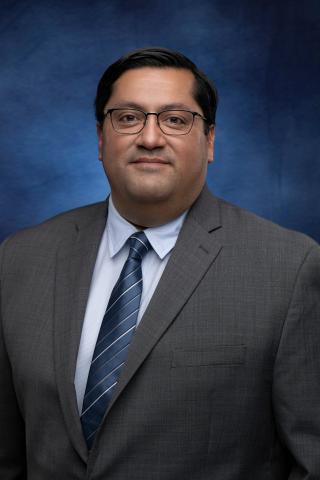
Existing law, the Community Assistance, Recovery, and Empowerment (CARE) Act, authorizes specified adult persons to petition a civil court to create a voluntary CARE agreement or a court-ordered CARE plan and implement services, to be provided by county behavioral health agencies, to provide behavioral health care, including stabilization medication, housing, and other enumerated services, to adults who are currently experiencing a severe mental illness and have a diagnosis identified in the disorder class schizophrenia and other psychotic disorders, and who meet other specified criteria. This bill would include bipolar I disorder in the criteria for a person to receive services under the CARE Act. By increasing the duties on the county behavioral health agencies, this bill would impose a state-mandated local program. The California Constitution requires the state to reimburse local agencies and school districts for certain costs mandated by the state. Statutory provisions establish procedures for making that reimbursement. This bill would provide that, if the Commission on State Mandates determines that the bill contains costs mandated by the state, reimbursement for those costs shall be made pursuant to the statutory provisions noted above.
(1) Existing law, the Lanterman-Petris-Short (LPS) Act, authorizes the involuntary commitment and treatment of persons with specified mental disorders. Under the act, when a person, as a result of a mental health disorder, is a danger to themselves or others, or is gravely disabled, the person may, upon probable cause, be taken into custody by specified individuals, including, among others, a peace officer and a designated member of a mobile crisis team, and placed in a facility designated by the county and approved by the State Department of Health Care Services for up to 72 hours for evaluation and treatment. Existing law defines "assessment" for those purposes to mean the determination of whether a person shall be evaluated and treated. This bill would require an assessment to consider reasonably available, relevant information as specified. The bill would also authorize an assessment to be used to assist specified individuals in developing an aftercare plan for an individual, if that individual has agreed to an aftercare plan and can be properly served without being detained. (2) Existing law provides a procedure for the appointment of a conservator for a person who is determined to be gravely disabled as a result of a mental disorder or an impairment by chronic alcoholism (hereafter LPS conservatorship) . Under existing law, a professional person in charge of an agency providing comprehensive evaluation or a facility providing intensive treatment may recommend a LPS conservatorship for a gravely disabled person in their care if the professional person determines that the person is unwilling to accept, or is incapable of accepting, treatment voluntarily. Under existing law, a professional person in charge of an agency providing comprehensive evaluation or a facility providing intensive treatment or a professional person in charge of providing mental health treatment at a county jail, or their designee, may recommend a conservatorship for a gravely disabled person without that person being an inpatient in a facility providing comprehensive evaluation or intensive treatment if specified conditions are met. This bill would additionally authorize recommendations for an LPS conservatorship if a determination is made that the gravely disabled person has demonstrated an inability to accept voluntary treatment due to apparent incapacity. The bill would expand the list of individuals or entities that may recommend a conservatorship for a gravely disabled person without that person being an inpatient in a facility providing comprehensive evaluation or intensive treatment to include, among others, the county agency providing investigations for conservatorships of the person. (3) Existing law separately provides for the establishment of a conservatorship for a person who is unable to properly provide for their personal needs or is substantially unable to manage their finances (hereafter probate conservatorship) . Existing law requires the officer providing conservatorship investigation, if they concur with the recommendation of the professional person or facility, to petition the superior court in the patient's county of residence to establish a conservatorship. Existing law requires the officer providing conservator investigation to investigate all available alternatives to conservatorship, including, among other things, assisted outpatient treatment, as specified, and the Community Assistance, Recovery, and Empowerment Act program. Existing law requires the officer to recommended conservatorship to the court only if no suitable alternatives are available. Existing law requires the officer to render to the court a comprehensive written report of investigation prior to the hearing and to set forth all alternatives available if the officer recommends either for or against conservatorship. This bill would specify probate conservatorships with or without major neurocognitive disorder powers in the list of available alternatives that the officer providing conservatorship investigation is required to investigate. In a county where probate conservatorship and LPS conservatorship duties are split between separate agencies, the bill would require LPS conservatorship referrals that include the presence of a major neurocognitive disorder to be reviewed by both agencies to ensure the continuity of evaluations. The bill would additionally require an officer providing conservatorship investigation to include a recommended individualized plan for treatment and care drawn from the documented list of less-restrictive alternatives in the written report described above if the officer recommends against an LPS conservatorship. The bill would also make various clarifying changes. By expanding the duties of county agencies that provide services related to probate conservatorships and LPS conservatorships, and by expanding the duties of the county officer providing conservatorship investigation, this bill would impose a state-mandated local program. (4) Existing law authorizes a conservator of the person, the estate, or the person and the estate to be appointed for a person who is gravely disabled as a result of a mental health disorder or impairment by chronic alcoholism for the purpose of providing individualized treatment, supervision, and placement. Existing law requires the creation of an individualized treatment plan within 10 days of the establishment of a conservatorship, as specified. Existing law requires the treatment plan to specify goals for the conservatee's treatment, the criteria by which the accomplishment of those goals can be adjudged, and a plan for reviewing the progress of the treatment. If a treatment plan is not developed or if the conservator fails to report to the court that the conservatee is no longer gravely disabled, existing law requires specified individuals, including a person designated by the county, to refer the matter to the court. Existing law requires the court, upon report by a person designated by the county that the goals have been reached and the person is no longer gravely disabled, to terminate the conservatorship. This bill would require an individualized treatment plan to specify goals for stabilization, the individual's evidenced-based treatment, and movement to a less-restrictive setting. The bill would require those goals to include the criteria by which accomplishment can be judged. The bill would require the treatment plan to be filed with the court, as specified, after it is developed. The bill would require the court to order the treating agency to remedy any perceived defects in a treatment plan if the plan does not meet the specified goals and criteria and would create procedures for remedying those defects and terminating the conservatorship. The bill would authorize the court, upon termination of the conservatorship, to refer the individual to assisted outpatient treatment or CARE court, as specified. This bill would prohibit the court from terminating the conservatorship prior to the end of the conservator's one-year mark if the conservatee cannot be located at any point during that one-year period, except as specified. The bill would require, when a county is filing a petition and the county is aware that the subject of the petition was, within the prior 6 months, a conservatee whose conservatorship was terminated before the one-year termination date, to include in its petition the circumstances that gave rise to the termination. Because this bill would increase the duties on county personnel, this bill would impose a state-mandated local program. (5) Existing law, the Community Assistance, Recovery, and Empowerment (CARE) Act, authorizes specified people to petition a civil court to create a CARE plan to provide an individualized, appropriate range of community-based services and supports to an eligible individual. Under the CARE Act, all reports, evaluations, diagnoses, and other information filed with the court that are related to the respondent are confidential, except as specified. This bill would authorize that information to be shared only by a court order or as approved by the respondent. If the information is used outside of the above-described proceedings, the bill requires a court order for that information to be shared. This bill would authorize a court, at any point after entry of a CARE agreement or adoption of a CARE plan, to order the respondent to an evaluation under the LPS without a petition from the county if the court believes the respondent has become gravely disabled. The bill would establish the procedures required before a court could issue an order pursuant to these provisions. (6) The California Constitution requires the state to reimburse local agencies and school districts for certain costs mandated by the state. Statutory provisions establish procedures for making that reimbursement. This bill would provide that, if the Commission on State Mandates determines that the bill contains costs mandated by the state, reimbursement for those costs shall be made pursuant to the statutory provisions noted above.
Existing law makes it a crime to possess, cultivate, and administer specified controlled substances, including psilocybin and psilocyn. Existing law makes it a crime for a person to rent, lease, or make available for use any building or room for the purpose of storing or distributing any controlled substance. This bill would, until January 1, 2031, request the University of California to establish local pilots in up to 5 counties to allow for the research and development of psilocybin services for veterans and former first responders as part of the Veterans and Former First Responders Research Pilot Program ("Pilot Program") . The bill would require these university partners, overseeing each Pilot Program to be responsible for protocol design, institutional review board approvals, training of psilocybin facilitators, data collection, and reporting. The bill would require each local pilot to partner with licensed health care and licensed community-based providers that provide services and care to the target population. The bill would require psilocybin to be provided by or under the supervision of a practitioner who has experience in providing or overseeing psilocybin or other psychedelic therapy services. The bill would require that each person being considered for the Pilot Program meet specified criteria, including that they are 21 years of age or older and have been given specified assessments. This bill would request the University of California to report specified information about the Pilot Program to the Legislature, the Secretary of California Health and Human Services, and the Governor by January 15, 2030. The bill would establish the Veterans and Former First Responders Research Pilot Special Fund and would continuously appropriate the fund to the University of California for the purposes of these provisions. The bill would request the University of California to apply for and accept grants, donations, and federal funding for the purposes of the Pilot Program, and would require those moneys to be deposited in the fund.
Existing law establishes the California Health and Human Services Agency, which includes departments charged with the administration of health, social, and other human services. Under existing law, the Legislature finds that state government has an affirmative role in alleviating problems related to the inappropriate use of alcoholic beverages and other drug use and that its major objective is protection of the public health and safety, particularly where problems related to inappropriate alcohol use and other drug use are likely to cause harm to individuals, families, and the community. The agency convened the Behavioral Health Task Force to inform its work on behavioral health issues across the state. This bill, the California Overdose Death and Addiction Reduction Act of 2025, would require the California Health and Human Services Agency, on or before January 1, 2028, to direct the task force, or a successor group, to create a set of recommendations to support an implementation plan for reducing alcohol- and drug-related addiction deaths by 50% on or before 5 years from the date the task force provides the recommendations to the agency, but no later than January 1, 2033. The bill would authorize the task force to include additional members as deemed appropriate by the agency, including representatives from specified entities, experts, and providers, among others. The bill would require the agency to adopt the recommendations provided by the task force and require the agency to consider specified information, including quality and performance measures to establish minimum standards for effective delivery of services. The bill would require the agency, on or before July 1, 2033, to provide the Governor and the Legislature a report of the findings and recommendations related to the extent that the 2033 goal was met and how effective the recommendations of the task force were, and recommendations for beyond 2033 that will continue to reduce overdose deaths and addiction. The bill would also make related findings and declarations.
Existing law authorizes a county to establish a homeless adult and family multidisciplinary personnel team, as defined, with the goal of facilitating the expedited identification, assessment, and linkage of homeless individuals to housing and supportive services within that county and to allow provider agencies to share confidential information for the purpose of coordinating housing and supportive services to ensure continuity of care. This bill would authorize a county to also establish a behavioral health multidisciplinary personnel team, as defined, with the goal of facilitating the expedited identification, assessment, and linkage of a justice-involved person, as defined, diagnosed with a mental illness to supportive services within that county while incarcerated and upon release from county jail and to allow provider agencies and members of the personnel team to share confidential information, as specified, for the purpose of coordinating supportive services to ensure continuity of care. The bill would require the sharing of information permitted under these provisions to be governed by protocols developed in each county, as specified. This bill would authorize a behavioral health multidisciplinary personnel team to designate a qualified person to be a member of the team for a particular case and would require a member who receives information or records regarding a justice-involved person in their capacity as a member of the team to be under the same privacy and confidentiality obligations and subject to the same confidentiality penalties as the person disclosing or providing the information or records. The bill would also require the information or records to be maintained in a manner that ensures the maximum protection of privacy and confidentiality rights.
Existing law, the Knox-Keene Health Care Service Plan Act of 1975, provides for the licensure and regulation of health care service plans by the Department of Managed Health Care, and makes a willful violation of the act a crime. Existing law provides for the regulation of health insurers by the Department of Insurance. Existing law sets forth specified prior authorization limitations for health care service plans and health insurers. This bill would prohibit a health care service plan contract or health insurance policy issued, amended, or renewed on or after January 1, 2027, that provides coverage for physical therapy from imposing prior authorization for the initial 12 physical therapy treatment visits for a new condition. The bill would authorize prior authorization for physical therapy for a recurring condition, as specified. The bill would require a physical therapy provider to verify an enrollee's or an insured's coverage and disclose their share of the cost of care, as specified. The bill would require a physical therapy provider to obtain separate written consent for costs that may not be covered by the enrollee's or insured's plan contract or policy, that includes a written estimate of the cost of care for which the enrollee or insured is responsible if coverage is denied or otherwise not applicable. With respect to health care service plans, the bill would specify that its provisions do not apply to Medi-Cal managed care plan contracts. Because a willful violation of this provision by a health care service plan would be a crime, the bill would impose a state-mandated local program. The California Constitution requires the state to reimburse local agencies and school districts for certain costs mandated by the state. Statutory provisions establish procedures for making that reimbursement. This bill would provide that no reimbursement is required by this act for a specified reason.
Existing law establishes the Department of Veterans Affairs. The department, among other services, provides veterans and their dependents and survivors with assistance in processing service-related disability claims, assistance in obtaining affordable housing, and information about health ailments associated with military service. This bill would require the department to establish a program to fund, upon appropriation by the Legislature, an academic study of mental health among women veterans in California, as specified. The bill would require the department to submit a report that summarizes the findings and recommendations of the study to the Legislature no later than June 30, 2029. The bill would repeal these provisions on January 1, 2030.
Existing law establishes the California Interagency Council on Homelessness to oversee the implementation of Housing First guidelines and regulations, and, among other things, identify resources, benefits, and services that can be accessed to prevent and end homelessness in California. Existing law requires a state agency or department that funds, implements, or administers a state program that provides housing or housing-related services to people experiencing homelessness or who are at risk of homelessness to revise or adopt guidelines and regulations to include enumerated Housing First policies. Existing law specifies the core components of Housing First, including services that are informed by a harm-reduction philosophy that recognizes drug and alcohol use and addiction as a part of tenants' lives and where tenants are engaged in nonjudgmental communication regarding drug and alcohol use. This bill would authorize state programs to fund supportive-recovery residences, as defined, that emphasize abstinence under these provisions as long as the state program meets specified criteria, including that at least 90% of program funds awarded to each jurisdiction is used for housing or housing-based services using a harm-reduction model. This bill would specify requirements for applicants seeking funds under these programs and would require the state to perform periodic monitoring of select supportive-recovery residence programs to ensure that the supportive-recovery residences meet certain requirements, including that core outcomes of the supportive-recovery housing emphasize long-term housing stability and minimize returns to homelessness. The bill would also prohibit eviction on the basis of relapse, as specified. The bill would require, if a tenant is no longer interested in living in a supportive-recovery residence with an abstinence focus, is at risk of eviction, or is discharged from the program, the tenant to reside in the supportive recovery residence until the operator secures the tenant a new permanent housing placement option operated with harm-reduction principles that is also permanent housing. The bill would require supportive housing and services to support residents' access to and use of medications to treat behavioral and physical health conditions, as specified, and to provide overdose prevention training and overdose reversal medication to staff and residents, as specified. Existing law establishes the Department of Housing and Community Development and requires it to administer various programs that provide services to homeless individuals. This bill would require the department to adopt the most recent standards approved by the National Alliance for Recovery Residences or other national standards as the minimum standard for supportive-recovery residences that receive public funds under these provisions. The bill would require the department to establish a separate process for determining if the supportive-recovery residence complies with the core components of Housing First. The bill would require the department to verify compliance with the core components of Housing First for residences seeking Housing First certification, as specified. The bill would authorize the department to charge an annual fee to verify that supportive-recovery residences comply with the core components of Housing First in an amount not to exceed the reasonable cost of administering the program, not to exceed $100, and would establish the Supportive-Recovery Residence Program Fund for collection of the fee, to be available upon appropriation by the Legislature.
Existing law, the Knox-Keene Health Care Service Plan Act of 1975, provides for the licensure and regulation of health care service plans by the Department of Managed Health Care, and makes a willful violation of the act a crime. Existing law provides for the regulation of health insurers by the Department of Insurance. Existing law requires a health care service plan contract or health insurance policy issued, amended, or renewed on or after January 1, 2021, to provide coverage for medically necessary treatment of mental health and substance use disorders, as defined, under the same terms and conditions applied to other medical conditions. This bill would generally require a large group health care service plan contract or health insurance policy issued, amended, or renewed on or after January 1, 2026, to reimburse an eligible enrollee or insured for up to 12 visits with a behavioral health provider if the enrollee or insured lives in a county where a local or state emergency has been declared due to wildfires and the enrollee or insured has experienced a loss, trauma, or displacement because of the fire. The bill would prohibit these benefits from being subject to utilization review. The bill would require a health care service plan contract or health insurer to provide notice to all affected enrollees of these provisions, as specified. Because a willful violation of these provisions by a health care service plan would be a crime, the bill would impose a state-mandated local program. The California Constitution requires the state to reimburse local agencies and school districts for certain costs mandated by the state. Statutory provisions establish procedures for making that reimbursement. This bill would provide that no reimbursement is required by this act for a specified reason. This bill would declare that it is to take effect immediately as an urgency statute.
Existing law, the Compassionate Use Act of 1996, an initiative measure enacted by Proposition 215 at the November 6, 1996, statewide general election, declares that its purpose is, among other things, to ensure that seriously ill Californians have the right to obtain and use marijuana for medical purposes, as specified, and exempts from state criminal liability certain patients and their primary caregivers who possess or cultivate marijuana for the personal medical purposes of the patient. The Control, Regulate and Tax Adult-Use of Marijuana Act of 2016 (AUMA) , an initiative measure approved as Proposition 64 at the November 8, 2016, statewide general election, established a comprehensive system to legalize, control, and regulate the cultivation, processing, manufacture, distribution, testing, and sale of nonmedical marijuana. Existing law, the Medicinal and Adult-Use Cannabis Regulation and Safety Act (MAUCRSA) , among other things, consolidates the licensure and regulation of commercial medicinal and adult-use cannabis activities, including the retail sale of medicinal cannabis. MAUCRSA also authorizes specified licensees to provide free medicinal cannabis or medicinal cannabis products to medicinal cannabis patients if specified criteria are met. Existing law, the Medicinal Cannabis Patients' Right of Access Act, prohibits a local jurisdiction from adopting or enforcing any regulation that prohibits the retail sale by delivery within the local jurisdiction of medicinal cannabis to medicinal cannabis patients or their primary caregivers by medicinal cannabis businesses, as defined, or that has the effect of prohibiting the retail sale by delivery within the local jurisdiction of medicinal cannabis to medicinal cannabis patients or their primary caregivers, as specified. This bill, until January 1, 2029, would authorize a licensed microbusiness with an M-license, as defined, whose licensed activities include retail sale, manufacturing, distribution, and outdoor cultivation to directly ship certain medicinal cannabis or medicinal cannabis products to a medicinal cannabis patient in the state, if the licensed microbusiness complies with specified requirements, including that the medicinal cannabis is shipped by a common carrier, as described, the amount shipped to a medicinal cannabis patient in a single day does not exceed specified possession limits, and the package is received and signed for by someone 21 years of age or older. The bill would require the shipment to comply with specified laws and regulations governing cannabis and cannabis products sold by licensed retailers, as provided. If the medicinal cannabis patient is a qualified patient that possesses a valid physician's recommendation, the bill would require the licensed microbusiness to certify in writing that they verified the recommendation and would require the retailer to keep a copy of that certification for no less than 7 years. The bill would amend the Medicinal Cannabis Patients' Right of Access Act to, among other things, prohibit a local jurisdiction from adopting or enforcing any regulation that prohibits the retail sale by delivery within or shipment into the local jurisdiction of medicinal cannabis to medicinal cannabis patients or their primary caregivers by a licensed microbusiness, as specified. The bill would also authorize free medicinal cannabis or medicinal cannabis products provided to medicinal cannabis patients in compliance with MAUCRSA to be shipped to those patients by a licensed microbusiness with an M-license, as provided. To the extent this bill would impose additional duties on local jurisdictions, and to the extent the bill would expand the crime of perjury by requiring the licensed microbusiness to certify verification of physician recommendations, the bill would impose a state-mandated local program. The California Constitution requires the state to reimburse local agencies and school districts for certain costs mandated by the state. Statutory provisions establish procedures for making that reimbursement. This bill would provide that with regard to certain mandates no reimbursement is required by this act for a specified reason. With regard to any other mandates, this bill would provide that, if the Commission on State Mandates determines that the bill contains costs so mandated by the state, reimbursement for those costs shall be made pursuant to the statutory provisions noted above.