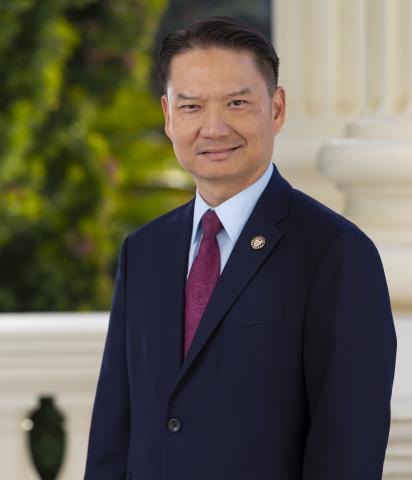
This bill designates May 2026 as Behavioral Health Awareness Month in California. It requires state agencies and public entities to acknowledge this month, likely through proclamations or public communications. The measure does not alter funding, laws, or services but serves to highlight the importance of mental and behavioral health awareness.
This bill designates the week of May 25 to May 29 as Firefighter Mental Health Awareness Week. It directly affects the state by officially recognizing this specific time period to highlight the importance of mental health support for firefighters. The measure does not create new laws or funding but serves as a formal proclamation to raise awareness about the topic. Once enacted, it becomes part of the state statutes as a commemorative resolution.
This measure would recognize May 4, 2026, to May 8, 2026, inclusive, and every first full week of May thereafter, as Black Health Equity Advocacy Week and commend the California Black Health Network and other organizations throughout the state for their efforts to improve the health, well-being, and life expectancy of Black Californians.
This bill designates May 2026 as Maternal Mental Health Awareness Month to highlight the importance of mental health support for mothers. It serves as a symbolic proclamation rather than a law that changes regulations or imposes new requirements. The measure directly affects state officials who will recognize the month and may encourage public awareness campaigns during that time.
Existing law, the Song-Brown Health Care Workforce Training Act, declares the intent of the Legislature to increase the number of students and residents receiving quality education and training in specified primary care specialties and as primary care physician's assistants, primary care nurse practitioners, and registered nurses. This bill would require the Department of Health Care Access and Information to maintain a New Nursing Graduate Support and Placement Program to award program grants to community college associate degree of nursing programs, through which support grants would be awarded to recent graduates for loan repayment assistance, relocation, transportation, housing assistance, childcare, and other financial support. The bill would specify grant eligibility criteria for community colleges and recent graduates. The bill would require the department to consider labor standards of hospital sites that employ support grant applicants when determining grant distribution. Implementation of these provisions would be contingent upon appropriation by the Legislature. This bill would also express the intent of the Legislature to support and strengthen existing programs that train registered nurses under the Song-Brown Health Care Workforce Training Act.
This bill designates April 2026 as Parkinson's Disease Awareness Month in California. It directly affects state officials and the public by formally recognizing the importance of raising awareness for this specific health condition. The primary mechanism is a legislative proclamation that appears in the state statutes to mark the month. This action serves as an official acknowledgment of the disease without changing laws or funding.
This bill designates the month of March 2026 as Kidney Month in California to raise awareness about chronic kidney disease. It highlights the importance of early detection and screening, noting that many people with the condition are unaware they have it. The resolution aims to educate the public on prevention and the risks associated with kidney failure, particularly among marginalized communities.
Existing law establishes the California Community Colleges, under the administration of the Board of Governors of the California Community Colleges, the California State University, under the administration of the Trustees of the California State University, and the University of California, under the administration of the Regents of the University of California, as the 3 segments of public postsecondary education in the state. Existing law grants the University of California exclusive jurisdiction in public higher education over, among other things, graduate instruction in the profession of medicine. Existing law establishes the University of California Kern County Medical Education Endowment Fund in the State Treasury. Upon appropriation by the Legislature, existing law requires moneys in the endowment fund to be allocated to the University of California to support the annual operating costs for the development, operation, and maintenance of a branch campus of an existing University of California School of Medicine in the County of Kern, to conduct a feasibility study related to that campus, and to generate funding through investment earnings for the support of medical education in the San Joaquin Valley. Existing law also requires moneys in the endowment fund to be used, upon appropriation by the Legislature and a determination by the Controller of sufficient funds in the endowment fund, to cover the University of California's estimated costs of applying for and obtaining approval and accreditation from the Liaison Committee on Medical Education, as provided. This bill would, if the office of the President of the University of California has not taken formal, verifiable steps to establish a school of medicine in the County of Kern by July 1, 2027, additionally authorize the Trustees of the California State University, acting through California State University, Bakersfield, and the Board of Trustees of the Kern Community College District to establish a school of medicine in the County of Kern, as provided. The bill would authorize the establishment of a unit of local government, known as the Kern Medical Education Authority, to facilitate the establishment of this medical school in the County of Kern. The bill would require the authority to governed by a Board of Governors of unspecified size, and require the California State University, Bakersfield, and the Kern Community College District to each appoint an unspecified number of members to the board. The bill would, among other things, grant the authority specified powers and duties of a local unit of government within the state, as provided. The bill would authorize the authority to hire employees, as provided, and would require the authority to establish salary schedules, health benefits, and retirement plans that are no less favorable than those offered to comparable employees within the California State University system. The bill would authorize employees of the authority to form, join, and participate in the activities of employee organizations of their own choosing for the purpose of representation on all matters of employer-employee relations, as provided, and subject the authority to the jurisdiction of the Public Employment Relations Board. The bill would, among other employment rules, extend due process protections to authority employees. The bill would make employees of the authority eligible to participate in the California Public Employees' Retirement System (CalPERS) or the California State Teachers' Retirement System (CalSTRS) , as applicable to their classification. The bill would authorize the authority to incur indebtedness and to borrow money and issue notes and revenue bonds in principal amounts that the authority determines to be necessary to provide sufficient funds for achieving any of its purposes, as provided. The bill would establish that an obligation of the authority is not an obligation of the California State University or the Kern Community College District, unless otherwise agreed to by the authority and the California State University or the Kern Community College District. The bill would authorize the authority, upon obtaining accreditation form the Liaison Committee on Medical Education, to develop curricula and grant the degree of Doctor of Medicine. Existing law, the Ralph M. Brown Act, generally requires that all meetings of a legislative body of a local agency be open and public and that all persons be permitted to attend and participate. The California Public Records Act requires state and local agencies to make their records available for public inspection, unless an exemption from disclosure applies. The bill would subject the authority to the Ralph M. Brown Act and the California Public Records Act, with specified exemptions related to trade secrets. Existing constitutional provisions require that a statute that limits the right of access to the meetings of public bodies or the writings of public officials and agencies be adopted with findings demonstrating the interest protected by the limitation and the need for protecting that interest. This bill would make legislative findings to that effect. This bill would make legislative findings and declarations as to the necessity of a special statute for the County of Kern.
The Personal Income Tax Law allows various credits against the tax imposed by that law. This bill, for taxable years beginning on or after January 1, 2026, and before January 1, 2031, would allow a credit against those taxes in an amount equal to 50% of unreimbursed costs paid or incurred by a taxpayer for the purchase of durable medical equipment, as defined, for use by a qualifying dependent, as defined, during the taxable year. The bill would limit the credit to $5,000 per taxable year for each qualifying dependent. Existing law requires any bill authorizing a new tax expenditure to contain, among other things, specific goals that the tax expenditure will achieve, detailed performance indicators, and data collection requirements. This bill also would include additional information required for any bill authorizing a new tax expenditure. This bill would take effect immediately as a tax levy.
Existing law, the Knox-Keene Health Care Service Plan Act of 1975, provides for the licensure and regulation of health care service plans by the Department of Managed Health Care and makes a willful violation of the act a crime. Existing law provides for the regulation of disability insurers by the Department of Insurance. Existing law requires a health care service plan or disability insurer to allow an individual to enroll in or change their health benefit plan as a result of a specified triggering event. This bill, the PARENT Act, would make pregnancy a triggering event for purposes of enrollment or changing a health benefit plan. Because a willful violation of this provision by a health care service plan would be a crime, the bill would impose a state-mandated local program. The California Constitution requires the state to reimburse local agencies and school districts for certain costs mandated by the state. Statutory provisions establish procedures for making that reimbursement. This bill would provide that no reimbursement is required by this act for a specified reason.