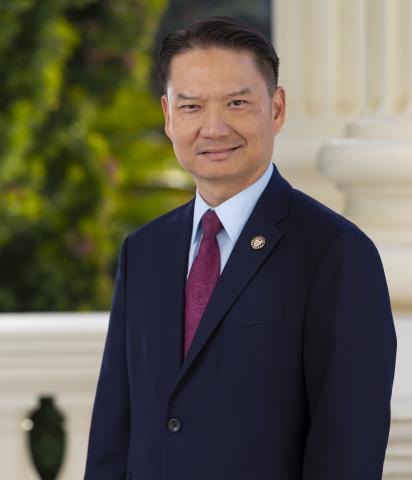
Existing law, the Pharmacy Law, provides for the licensure and regulation of pharmacies by the California State Board of Pharmacy, and makes a violation of the Pharmacy Law a misdemeanor. This bill would prohibit a pharmacy from engaging in the retail sale of cigarettes or tobacco products. Because a violation of this provision would be a crime, the bill would impose a state-mandated local program. Existing law, the Cigarette and Tobacco Products Licensing Act of 2023, requires a retailer to hold a license from the California Department of Tax and Fee Administration to engage in the sale of cigarettes or tobacco products for each retail location. Existing law requires the department to issue a license to a retailer upon receipt of a completed application and payment of required fees, unless certain circumstances apply. This bill would prohibit the department from issuing a license to a retailer if the retailer is a pharmacy or the application is for a retail location that contains a pharmacy. The California Constitution requires the state to reimburse local agencies and school districts for certain costs mandated by the state. Statutory provisions establish procedures for making that reimbursement. This bill would provide that no reimbursement is required by this act for a specified reason.
This bill designates the week of May 11 to May 15, 2026, as Student Mental Health Awareness Week throughout California. The measure requires state agencies and institutions to acknowledge this specific timeframe to highlight the importance of student mental well-being. By officially recognizing these dates, the legislation aims to encourage public focus on mental health resources for students during that period. It does not allocate funding or mandate specific programs, but rather serves to raise awareness through formal designation.
This bill designates May 2026 as Maternal Mental Health Awareness Month to highlight the importance of mental health support for mothers. It is a non-binding resolution that does not change laws or allocate funding but serves to raise public awareness through official proclamation. The measure affects the state by encouraging community focus on this topic during the designated month without imposing new requirements on individuals or organizations.
This measure would, among other things, recognize antimicrobial resistance as a public health crisis requiring urgent and sustained action and urge specified state agencies to explore available funding mechanisms to support research and development initiatives addressing antimicrobial resistance, particularly in underserved and high-risk communities.
This bill designates June 9, 2026, as FSGS Awareness Day to highlight focal segmental glomerulosclerosis, a rare kidney disease that causes scarring and can lead to kidney failure. The resolution aims to increase public understanding of the condition, which disproportionately affects African American communities and often requires dialysis or transplants. By establishing an official awareness day, the bill seeks to support patients and families while encouraging efforts to improve early diagnosis and access to specialized care.
This bill designates the week of May 25 to May 29 as Firefighter Mental Health Awareness Week. It directly affects the state by officially recognizing this specific time period to highlight the importance of mental health support for firefighters. The measure does not create new laws or funding but serves as a formal proclamation to raise awareness about the topic. Once enacted, it becomes part of the state statutes as a commemorative resolution.
This bill designates May 2026 as Maternal Mental Health Awareness Month to highlight the importance of mental health support for mothers. It serves as a symbolic proclamation rather than a law that changes regulations or imposes new requirements. The measure directly affects state officials who will recognize the month and may encourage public awareness campaigns during that time.
Existing law authorizes the Secretary of the Department of Corrections and Rehabilitation to establish and maintain classes for incarcerated persons utilizing institutional personnel or entering into an agreement with the governing board of a school district or private school. Existing law requires the department to develop and implement a plan to obtain additional rehabilitation and treatment services for incarcerated persons and parolees. Existing law requires that plan to include, among other things, filling vacant state staff positions that provide direct and indirect rehabilitation services, or obtaining services from local governments and contractors to assist with treatment for parolees and incarcerated persons. This bill would require the department to establish a 3-year pilot program at 2 institutions that would provide access to specified mental health therapy for certain incarcerated persons not classified by the department to receive mental health treatment from the institution. The bill would require communications during therapy sessions, as specified, between the incarcerated person and assigned therapist to be confidential. The bill would require the California Correctional Health Care Services to be the custodian of records for treatment records generated under this pilot program. The bill would require the department to report certain information to the fiscal and appropriate policy committees of the Legislature, from March 1, 2028, to March 1, 2031. The bill would make related findings and declarations.
Existing law generally provides for the compensation of victims and derivative victims of specified types of crimes by the California Victim Compensation Board from the Restitution Fund, which is continuously appropriated to the board. Existing law authorizes the board to grant for pecuniary loss, when the board determines that it will best aid the person seeking compensation, as specified. Existing law authorizes the board to reimburse, among other things, the amount of medical or medical-related expenses and outpatient psychiatric, psychological, or other mental health counseling-related expenses incurred by the victim or derivative victim, as specified. This bill would also authorize the board to reimburse the expense of tuition at an educational institution, not to exceed $10,000, to a full- or part-time student who is a victim of sexual assault or violence if the victim is unable to continue attendance or suffers an academic setback, as described. The bill would authorize the board to limit compensation to the term the crime occurred and the immediately following term, and would require the calculation of an award based on certain factors, as specified. By expanding the board's authorization for use of moneys in the Restitution Fund, a continuously appropriated fund, this bill would make an appropriation.
Existing law, the Song-Brown Health Care Workforce Training Act, declares the intent of the Legislature to increase the number of students and residents receiving quality education and training in specified primary care specialties and as primary care physician's assistants, primary care nurse practitioners, and registered nurses. This bill would require the Department of Health Care Access and Information to maintain a New Nursing Graduate Support and Placement Program to award program grants to community college associate degree of nursing programs, through which support grants would be awarded to recent graduates for loan repayment assistance, relocation, transportation, housing assistance, childcare, and other financial support. The bill would specify grant eligibility criteria for community colleges and recent graduates. The bill would require the department to consider labor standards of hospital sites that employ support grant applicants when determining grant distribution. Implementation of these provisions would be contingent upon appropriation by the Legislature. This bill would also express the intent of the Legislature to support and strengthen existing programs that train registered nurses under the Song-Brown Health Care Workforce Training Act.