Issue · Criminal Justice

Criminal Justice (Violent Crime)

Every criminal justice bill, vote, and legislator stance in California, automatically classified by Maddy, our AI policy reader.

Total bills
13
2025-2026 Regular Session
Top supporter
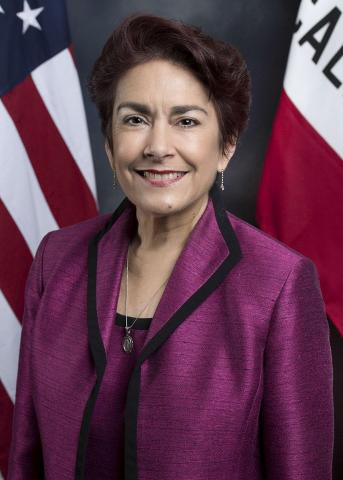
Anna Caballero
100% support rate
Top opponent
Kelly Seyarto
0% support rate
Ranked legislators
10
5 support · 5 oppose
Key legislators

Who's moving violent crime in California

Legislators moving violent crime in California
Legislator Party Stance Support rate Votes
Anna Caballero
Anna Caballero Senate · District 14
D
Strong +
100% 8
Blanca Pacheco
Blanca Pacheco House · District 64
D
Strong +
100% 7
Aisha Wahab
Aisha Wahab Senate · District 10
D
Strong +
100% 6
JA
Jesse Arreguín Senate · District 7
D
Strong +
100% 6
MG
Mark González House · District 54
D
Strong +
100% 6
Kelly Seyarto
Kelly Seyarto Senate · District 32
R
Strong −
0% 9
Diane Dixon
Diane Dixon House · District 72
R
Strong −
0% 7
David Tangipa
David Tangipa House · District 8
R
Strong −
0% 5
Megan Dahle
Megan Dahle Senate · District 1
R
Strong −
0% 5
Ali Macedo
Ali Macedo House · District 33
R
Strong −
0% 4
Showing 11–13 of 13 bills

All criminal justice bills

passed both · California · Assembly Aug 27, 2026

AB 464: Sexual assault in prison.

(1) Existing law tolls the periods of limitation to bring specific civil actions for up to 2 years, if during that time that the claimant is imprisoned on a criminal charge, as specified. However, under existing law these tolling provisions do not apply to an action brought against a public entity or public employee, as specified. This bill would, notwithstanding any other law, provide that the period for bringing an action for sexual assault against a public entity or public employee that is alleged to have occurred while the claimant was imprisoned on a criminal charge, or in execution under the sentence of a criminal court, is tolled during the entire period of the claimant's imprisonment or sentence. Under the bill, any claim for sexual assault against a public entity or public employee subject to that provision is exempt from all state and local government claim presentation requirements. (2) Existing law establishes the Office of the Sexual Abuse in Detention Elimination Ombudsperson with the authority to inspect all of the Department of Corrections and Rehabilitation institutions and to interview all inmates and wards. Under existing law, if an investigation confirms that any employee of the department has sexually abused an inmate or ward, that employee is required to be terminated. Existing law prohibits retaliation against an inmate or ward for making an allegation of sexual abuse. Existing law requires the department to keep statistics on the sexual abuse of inmates and wards and make that data available to the Office of the Sexual Abuse in Detention Elimination Ombudsperson. This bill would prohibit an employee who has been terminated after an investigation confirms that the employee has sexually abused an incarcerated person or ward from future employment with the department. This bill would require the department to monitor for 90 days an incarcerated person who reports sexual assault, and the incarcerated person reported to have suffered the sexual assault, by a staff member for possible retaliation. The bill would require the department to make specific notifications and reporting after an incarcerated person is reported to have suffered a sexual assault. The bill would require the department, on or before January 1, 2028, to develop and implement procedures for notifications of an incarcerated person's contact person, as defined. The bill would require the department to minimize the transfer of an incarcerated person who is reported to have suffered a sexual assault by a staff member for 90 days following the report, unless there is an operational need to do so or there are safety, security, or health concerns. The bill would define terms for its purposes and declare these provisions are severable.
Sub-Topics Violent Crime
passed · California · Senate Aug 29, 2025

SB 431: Assault and battery: utility workers.

Existing law defines an assault as an unlawful attempt, coupled with present ability, to commit a violent injury upon the person of another. Existing law defines a battery as any willful and unlawful use of force or violence upon the person of another. Under existing law, an assault or battery committed against specified professionals engaged in the performance of their duties, including peace officers, firefighters, and emergency medical personnel, is punishable by imprisonment in a county jail not exceeding one year, by a fine not exceeding $2,000, or by both that fine and imprisonment. This bill would make an assault or battery committed against a utility worker, as defined, who is engaged in the performance of their duties punishable by imprisonment in a county jail not exceeding one year, by a fine not exceeding $2,000, or by both that fine and imprisonment. By expanding the scope of these crimes, this bill would impose a state-mandated local program. The California Constitution requires the state to reimburse local agencies and school districts for certain costs mandated by the state. Statutory provisions establish procedures for making that reimbursement. This bill would provide that no reimbursement is required by this act for a specified reason.
Sub-Topics Violent Crime
signed · California · Senate Oct 13, 2025

SB 733: Sexual assault forensic evidence: testing.

Existing law, the Sexual Assault Victims' DNA Bill of Rights, requires law enforcement agencies, for sexual assault forensic evidence received on or after January 1, 2016, to either submit the evidence to a crime lab within 20 days after it is booked into evidence or ensure that a rapid turnaround deoxyribonucleic acid program is in place, as specified. However, existing law authorizes a sexual assault victim to request that a kit collected from them not be tested and prohibits a kit for which this request had been made from being tested. This bill would instead authorize a sexual assault survivor who is 18 years of age or older and who is undecided whether to report to law enforcement at the time of an examination to request that all medical evidence collected from them not be tested. If the request is made at the time of the examination, the bill would prohibit the medical facility from submitting the kit to a crime laboratory and would require the investigating agency to retain the kit until the sexual assault survivor requests testing. If the request is made after the examination, the bill would either require the investigating agency to retain the kit or would require the crime laboratory to return the kit to the investigating agency to be retained. The bill would also authorize a sexual assault survivor who has requested that their kit not be tested to later request that it be tested. By creating a new duty for local investigating agencies, this bill would impose a state-mandated local program. The California Constitution requires the state to reimburse local agencies and school districts for certain costs mandated by the state. Statutory provisions establish procedures for making that reimbursement. This bill would provide that, if the Commission on State Mandates determines that the bill contains costs mandated by the state, reimbursement for those costs shall be made pursuant to the statutory provisions noted above.
Showing 11 to 13 of 13 bills