Issue · Budget & Taxes

Budget & Taxes

Every budget & taxes bill, vote, and legislator stance in California, automatically classified by Maddy, our AI policy reader.

Total bills
402
2025-2026 Regular Session
Top supporter
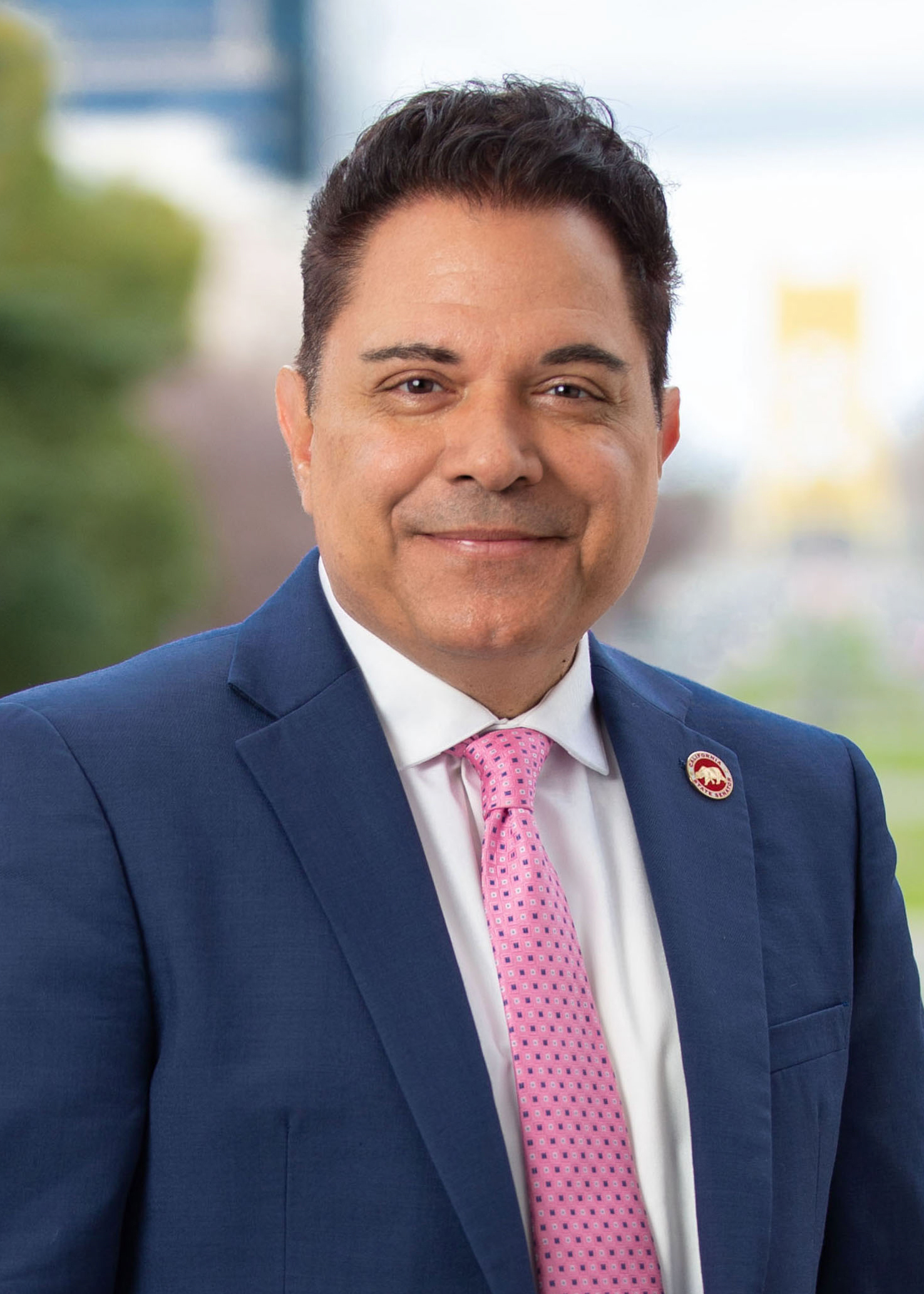
Steve Padilla
97% support rate
Top opponent
Natasha Johnson
4% support rate
Ranked legislators
10
5 support · 5 oppose
Key legislators

Who's moving budget & taxes in California

Legislators moving budget & taxes in California
Legislator Party Stance Support rate Votes
Steve Padilla
Steve Padilla Senate · District 18
D
Strong +
97% 408
JA
Jesse Arreguín Senate · District 7
D
Strong +
97% 509
Susan Rubio
Susan Rubio Senate · District 22
D
Strong +
97% 390
Esmeralda Soria
Esmeralda Soria House · District 27
D
Strong +
97% 342
Darsh Patel
Darsh Patel House · District 76
D
Strong +
97% 368
Natasha Johnson
Natasha Johnson House · District 63
R
Strong −
4% 215
Kelly Seyarto
Kelly Seyarto Senate · District 32
R
Strong −
4% 633
Brian Jones
Brian Jones Senate · District 40
R
Strong −
5% 346
Stan Ellis
Stan Ellis House · District 32
R
Strong −
5% 410
Ali Macedo
Ali Macedo House · District 33
R
Strong −
6% 447
Showing 311–320 of 402 bills

All budget & taxes bills

passed · California · Senate Jul 14, 2025

SB 723: Property taxation: exemption: low-value properties.

The California Constitution authorizes the Legislature, with the approval of 23 of the membership of each legislative house, to allow a county board of supervisors to exempt from property taxation those properties having a full value too low to justify the costs of assessment and collection. Existing property tax law implementing this authority generally limits any exemption granted under this constitutional provision by a county board of supervisors to real property with a total base year value, as adjusted annually for inflation as provided, or personal property with a full value, not exceeding $10,000. Existing property tax law also limits any exemption for new construction to situations where the new total base year value of the property, as adjusted for inflation, including the new construction, is $10,000 or less. This bill would raise these maximum exemption amounts from $10,000 to $20,000 for lien dates occurring on or after January 1, 2026, and before January 1, 2031. Existing law requires any bill authorizing a new tax expenditure to contain, among other things, specific goals, purposes, and objectives that the tax exemption will achieve, detailed performance indicators, and data collection requirements. This bill would make specified findings detailing the goal, purpose, and objective of the above-described expansion of a tax exemption, performance indicators for determining whether the expanded exemption meets that goal, purpose, and objective, and data collection requirements. Existing law requires the state to reimburse local agencies annually for certain property tax revenues lost as a result of any exemption or classification of property for purposes of ad valorem property taxation. This bill would provide that, notwithstanding those provisions, no appropriation is made and the state shall not reimburse local agencies for property tax revenues lost by them pursuant to the bill. This bill would take effect immediately as a tax levy.
passed · California · Senate Aug 29, 2025

SB 743: Education finance: Education Equalization Act: Equalization Reserve Account.

Existing law establishes a public school financing system that requires state funding for county superintendents of schools, school districts, and charter schools to be calculated pursuant to a local control funding formula (LCFF) , as specified. Under existing law, school districts that receive local revenues that exceed the LCFF amount do not receive a specified apportionment of LCFF funds, as provided, and are known as "basic aid school districts" or "excess tax entities." The Classroom Instructional Improvement and Accountability Act, an initiative approved by the voters as Proposition 98 at the November 8, 1988, statewide general election, amended the California Constitution to, among other things, set forth a formula for computing the minimum amount of revenues that the state is required to appropriate for the support of school districts and community college districts in any given fiscal year. The California Constitution creates the Public School System Stabilization Account in the General Fund and requires the Controller to transfer, pursuant to a schedule provided by the Director of Finance, a specified amount from the General Fund to the account in each fiscal year, except as provided. The California Constitution generally prohibits the total annual appropriations subject to limitation of the state and each local government from exceeding the appropriations limit of the entity of government for the prior fiscal year, adjusted for the change in the cost of living and the change in population. The California Constitution defines "appropriations subject to limitation" for these purposes. This bill would establish the Equalization Reserve Account in the General Fund. The bill would require interest earned on funds in the account to be available, upon appropriation by the Legislature, to increase per-pupil funding in non-basic aid school districts, defined as school districts that received the above-described apportionment of LCFF funds in any of the then preceding 3 fiscal years, in a manner prescribed by the Legislature. The bill would require the Controller, in any fiscal year in which there is an increase over the preceding fiscal year in the minimum amount of revenues the state is required to appropriate for the support of school districts and community college districts, to transfer from the General Fund to the Equalization Reserve Account an amount equal to the total amount transferred from the General Fund to the Public School System Stabilization Account in that fiscal year, as provided. These provisions would become operative only if a constitutional amendment, approved by the voters, (1) excludes funds transferred to or allocated from the account from computations of the minimum amount of revenues that the state is required to appropriate for the support of school districts and community college districts, from the moneys allocated for purposes of meeting that minimum funding obligation, and from the total annual state appropriations subject to the limitation described above, and (2) requires the Legislature, in each fiscal year, to allocate a percentage of the interest that has been deposited in the account to increase per-pupil funding in non-basic aid school districts.
Sub-Topics School Funding
passed · California · Senate Aug 29, 2025

SB 603: Property taxation: transfer of base year value: disaster relief.

Existing property tax law provides, pursuant to a requirement of the California Constitution, that the property tax base year value of real property that is substantially damaged or destroyed by a disaster, as declared by the Governor, may be transferred to a comparable property located within the same county that is acquired or newly constructed within 5 years after the disaster as a replacement property. This bill would authorize the county board of supervisors of any county proclaimed by the Governor to be in a state of emergency, or otherwise determined or declared by the Governor to be in a state of disaster, on or after January 1, 2025, but before January 1, 2030, to extend the above-described time period to transfer by up to 3 years for properties located in that county. The bill would apply to the determination of base year values for lien dates occurring on or after January 1, 2025, and before January 1, 2030. Existing law requires the state to reimburse local agencies annually for certain property tax revenues lost as a result of any exemption or classification of property for purposes of ad valorem property taxation. This bill would provide that, notwithstanding those provisions, no appropriation is made and the state shall not reimburse local agencies for property tax revenues lost by them pursuant to the bill. This bill would take effect immediately as a tax levy.
Sub-Topics Property Tax
signed · California · Assembly Jul 28, 2025

AB 703: California Pediatric Cancer Research Voluntary Tax Contribution Fund.

Existing law allows an individual taxpayer to contribute amounts in excess of their personal income tax liability for the support of specified funds and accounts, including, among others, to the California Cancer Research Voluntary Tax Contribution Fund. This bill would allow an individual to designate on their tax return that a specified amount in excess of their tax liability be transferred to the continuously appropriated California Pediatric Cancer Research Voluntary Tax Contribution Fund, which would be created by this bill. The bill would require the Franchise Tax Board to revise the tax return form to include a space for the designation of contributions to the fund when another voluntary designation is removed from the form or there is space, whichever occurs first. By establishing a new continuously appropriated fund, this bill would make an appropriation. The bill would require that the above provisions remain operative only until January 1 of the 7th calendar year following the first appearance of the California Pediatric Cancer Research Voluntary Tax Contribution Fund on the tax return, except as specified.
Sub-Topics Business Taxes
passed · California · Assembly Jun 25, 2026

AB 736: Transfer taxes: limitation.

Existing law, the Documentary Transfer Tax Act, authorizes the imposition of a tax by a county or city and county, as provided, with respect to specified instruments that transfer specified interests in real property. This bill would, beginning January 1, 2027, prohibit a local jurisdiction, defined to include a city, including a charter city, county, or city and county, from collecting a transfer tax, as defined, levied on the sale or transfer of a real property interest conveyed if the combined transfer tax rate levied by the local jurisdiction exceeds 1.5% of the consideration paid for or value of the real property interest conveyed, except as otherwise provided. The bill would also prohibit a local jurisdiction from levying a transfer tax on the first sale of single-family housing property occurring within 5 years of one or more housing units on the real property being destroyed or made uninhabitable by a natural disaster, as defined. By imposing new duties upon local officials with respect to transfer taxes, this bill would impose a state-mandated local program. The bill would include findings that changes proposed by this bill address a matter of statewide concern rather than a municipal affair and, therefore, apply to all cities, including charter cities. The California Constitution requires the state to reimburse local agencies and school districts for certain costs mandated by the state. Statutory provisions establish procedures for making that reimbursement. This bill would provide that, if the Commission on State Mandates determines that the bill contains costs mandated by the state, reimbursement for those costs shall be made pursuant to the statutory provisions noted above.
passed · California · Assembly Aug 29, 2025

AB 477: Fair Pay for Educators Act: local control funding formula: base grants: funding targets.

(1) Existing law, commencing with the 2013–14 fiscal year, establishes a public school financing system that requires state funding for county superintendents of schools, school districts, and charter schools to be calculated pursuant to a local control funding formula, as specified. Existing law requires the Superintendent of Public Instruction to annually calculate a county local control funding formula for each county superintendent of schools that includes, among other components, a county office of education operations grant composed of (A) $655,920, as adjusted each fiscal year for inflation; (B) $109,320 per school district under the county office of education's jurisdiction, as adjusted each fiscal year for inflation; (C) $70 per unit of countywide average daily attendance up to 30,000 units, $60 per unit for 30,001 to 60,000 units, $50 per unit for 60,001 to 140,000 units, and $40 per unit above 140,000 units, as adjusted each fiscal year for inflation; and (D) commencing with the 2022–23 fiscal year, add-ons of (i) $175,000 to the per-school district amount and (ii) $14 to each per-unit amount. This bill, commencing with the 2036–37 fiscal year, would increase each of those inflation-adjusted amounts to instead be $1,308,227, $520,751, $164, $144, $124, and $104, respectively, and would retain the requirement to adjust those amounts for inflation each fiscal year. The bill, commencing with the 2036–37 fiscal year, would increase the per-school district and per-unit add-on amounts to instead be $262,500 and $21, respectively. (2) Existing law requires the county office of education local control funding formula to also include, among other things, an alternative education base grant that includes, among its own components, a base grant equal to the grade span-adjusted base grant for average daily attendance in grades 9 to 12, inclusive, for the 2022–23 fiscal year, multiplied by 1.33, as specified. Existing law requires that amount to be adjusted for inflation each fiscal year. This bill, commencing with the 2036–37 fiscal year, would require the inflation-adjusted base grant component of the alternative education grant to instead be $24,593 and would retain the requirement to adjust that amount for inflation each fiscal year. (3) Existing law provides for the funding of necessary small schools and high schools, as specified. Existing law requires that funding to include, among other things, various specified per-pupil and per-teacher amounts for different tiers based on the numbers of pupils and teachers, as specified. Existing law requires those amounts to be adjusted for inflation each fiscal year. This bill, commencing with the 2036–37 fiscal year, would increase those various per-pupil and per-teacher inflation-adjusted amounts, as specified, and would retain the requirement to adjust that amount for inflation each fiscal year. (4) Existing law, commencing with the 2013–14 fiscal year, requires school district and charter school funding pursuant to the local control funding formula to include, among other things, a base grant based on average daily attendance in kindergarten and grades 1 to 3, inclusive, grades 4 to 6, inclusive, grades 7 and 8, and grades 9 to 12, inclusive, of $6,845, $6,947, $7,154, and $8,289 per pupil, respectively. Existing law requires those amounts to be adjusted for inflation each fiscal year. This bill, commencing with the 2036–37 fiscal year, would increase those inflation-adjusted base grant amounts to instead be $14,879, $15,104, $15,551 and $18,023 per pupil, respectively, and would retain the requirement to adjust those amounts for inflation each fiscal year. (5) Existing law requires funding pursuant to the local control funding formula to include, in addition to the base grant, supplemental and concentration grant add-ons that are based on the percentage of unduplicated pupils, as specified, served by the school district or charter school. In addition to the base, supplemental, and concentration grants of the local control funding formula, existing law, commencing with the 2022–23 school year, requires the Superintendent to compute an additional add-on of $2,813 multiplied by the then current fiscal year's average daily attendance in transitional kindergarten, as specified, and requires that add-on to be annually adjusted for inflation. This bill, commencing with the 2036–37 fiscal year, would increase that inflation-adjusted add-on based on attendance in transitional kindergarten to instead be equal to $8,318 multiplied by the then current fiscal year's average daily attendance in transitional kindergarten for the school district or charter school, as specified, and would retain the requirement to adjust that amount for inflation each fiscal year.
introduced · California · Assembly May 24, 2025

AJR 13: Relative to the censure of members of the California delegation to the United States House of Representatives for supporting cuts to social safety net programs.

AJR 13 is a non-binding resolution from the California State Assembly that would formally censure members of California's delegation to the U.S. House of Representatives who support federal cuts to social safety net programs. It directly targets those California representatives who vote in favor of reducing funding for programs like food assistance, housing support, or healthcare subsidies. The resolution expresses the Assembly's disapproval through a formal written reprimand but does not change any laws or affect the representatives' voting power.
passed · California · Assembly Jun 18, 2025

AB 429: Personal Income Tax Law: Corporation Tax Law: exclusions: wildfires.

The Personal Income Tax Law and the Corporation Tax Law, in conformity with federal income tax law, generally defines gross income as income from whatever source derived, except as specifically excluded, and provides various exclusions from gross income. This bill, for taxable years beginning on or after January 1, 2022, and before January 1, 2027, would provide an exclusion from gross income for amounts received by a qualified taxpayer, as defined, in settlement for costs and losses associated with the 2021 Dixie Fire in the Counties of Butte, Plumas, Lassen, Shasta, and Tehama, or the 2022 Mill Fire in the County of Siskiyou, as provided. Existing law requires a bill authorizing a new tax expenditure to contain, among other things, specific goals, purposes, and objectives the tax expenditure will achieve, detailed performance indicators, and data collection requirements. This bill would include additional information required for any bill authorizing a new tax expenditure. The bill would make legislative findings and declarations related to a gift of public funds. This bill would declare that it is to take effect immediately as an urgency statute.
Sub-Topics Government Spending
signed · California · Assembly Jun 18, 2025

AJR 11: Building Resilient Infrastructure and Communities program: federal funding cuts.

This measure would urge the President of the United States and the Congress of the United States to immediately restore full funding for Building Resilient Infrastructure and Communities program projects.
Sub-Topics State Budget
signed · California · Assembly Aug 28, 2025

AB 829: Richard Paul Hemann Parkinson's Disease Program: Parkinson's Disease Research Voluntary Tax Contribution Fund.

Existing law establishes the Richard Paul Hemann Parkinson's Disease Program, which, among other things, requires the State Department of Public Health to collect data on the incidence of Parkinson's disease in California, as specified. Existing law allows an individual taxpayer to contribute amounts in excess of their personal income tax liability for the support of specified funds and accounts, including, among others, to the California Alzheimer's Disease and Related Dementia Research Voluntary Tax Contribution Fund. This bill would also allow an individual to designate on their tax return that a specified amount in excess of their tax liability be transferred to the Parkinson's Disease Research Voluntary Tax Contribution Fund, which would be created by this bill. The bill would continuously appropriate the moneys in the fund to the State Department of Public Health to support the above-referenced program relating to Parkinson's disease in California. The bill would require the Franchise Tax Board to revise the tax return form to include a space for the designation of contributions to the fund when another voluntary designation is removed from the form or there is space, whichever occurs first. By establishing a continuously appropriated fund, this bill would make an appropriation.
Sub-Topics Business Taxes
Showing 311 to 320 of 402 bills
Previous 1 31 32 33 41 Next