Issue · Budget & Taxes

Budget & Taxes

Every budget & taxes bill, vote, and legislator stance in California, automatically classified by Maddy, our AI policy reader.

Total bills
427
2025-2026 Regular Session
Top supporter
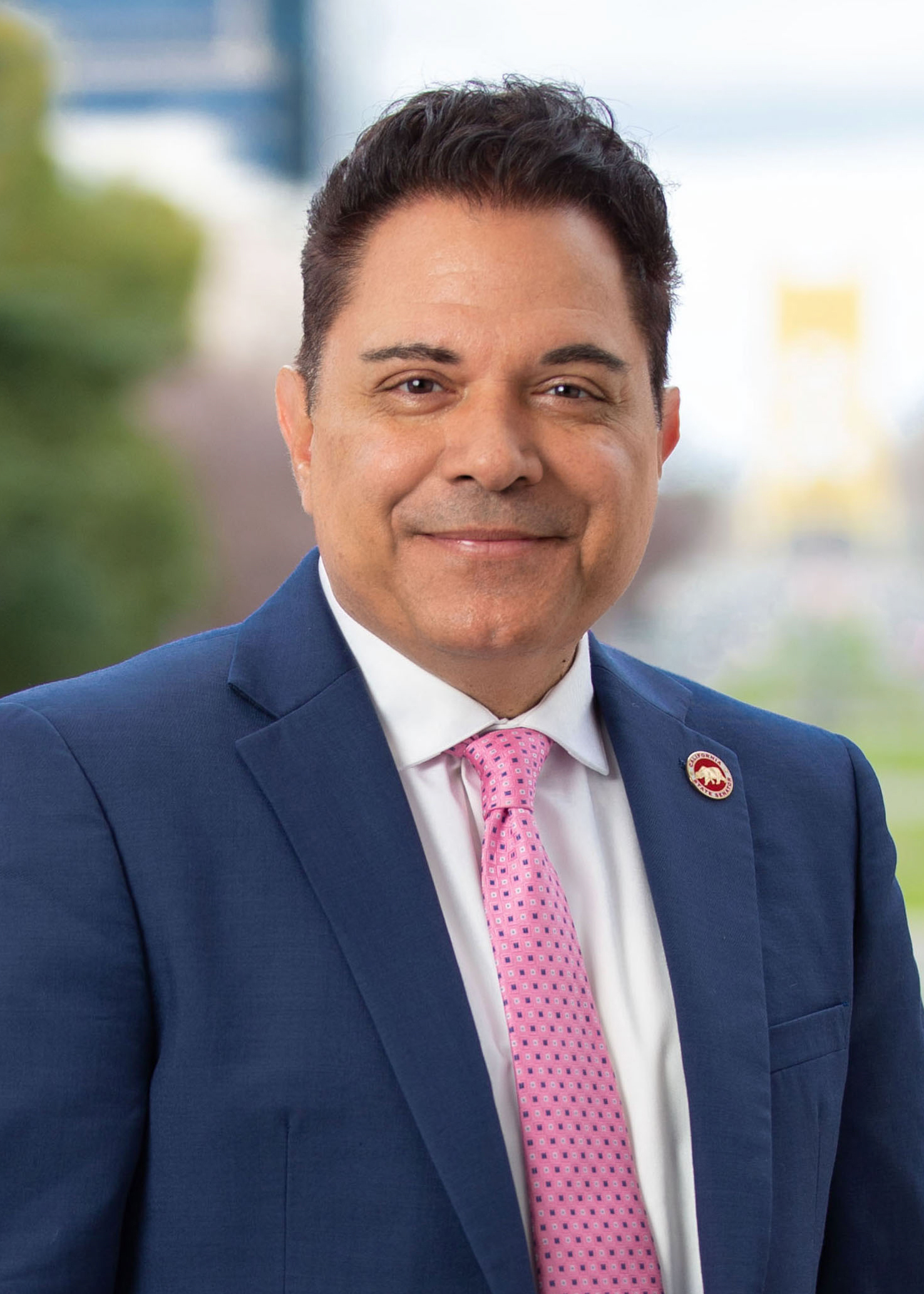
Steve Padilla
97% support rate
Top opponent
Natasha Johnson
4% support rate
Ranked legislators
10
5 support · 5 oppose
Key legislators

Who's moving budget & taxes in California

Legislators moving budget & taxes in California
Legislator Party Stance Support rate Votes
Steve Padilla
Steve Padilla Senate · District 18
D
Strong +
97% 408
JA
Jesse Arreguín Senate · District 7
D
Strong +
97% 509
Susan Rubio
Susan Rubio Senate · District 22
D
Strong +
97% 390
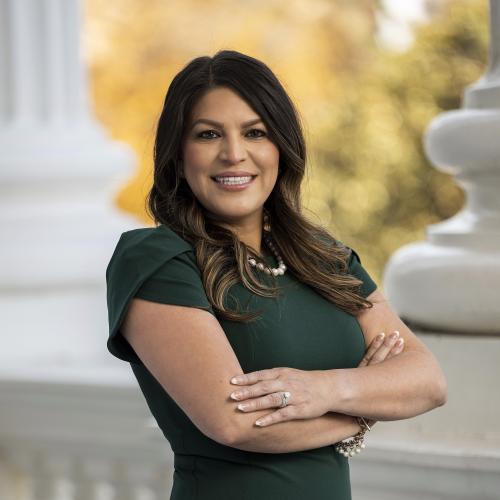
Esmeralda Soria
Esmeralda Soria House · District 27
D
Strong +
97% 342
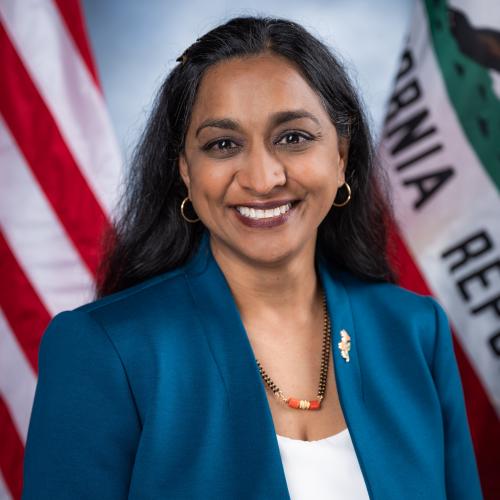
Darsh Patel
Darsh Patel House · District 76
D
Strong +
97% 368
Natasha Johnson
Natasha Johnson House · District 63
R
Strong −
4% 215
Kelly Seyarto
Kelly Seyarto Senate · District 32
R
Strong −
4% 633
Brian Jones
Brian Jones Senate · District 40
R
Strong −
5% 346
Stan Ellis
Stan Ellis House · District 32
R
Strong −
5% 410
Ali Macedo
Ali Macedo House · District 33
R
Strong −
6% 447
Showing 181–190 of 427 bills

All budget & taxes bills

passed both · California · Senate Aug 24, 2026

SB 881: Income taxation: credits: voluntary contributions: food bank donations.

(1) The Personal Income Tax Law and the Corporation Tax Law allow various credits against the taxes imposed by those laws, including, for taxable years beginning on or after January 1, 2017, and before January 1, 2027, a credit for qualified taxpayers in an amount equal to 15% of the qualified value of fresh fruits or vegetables and specified raw agricultural products or processed foods donated to a food bank. This bill would extend the authorization for those tax credits for taxable years beginning before January 1, 2032. Existing law requires any bill authorizing a new tax expenditure to contain, among other things, specific goals that the tax expenditure will achieve, detailed performance indicators, and data collection requirements. For purposes of complying with these requirements, existing law requires the Franchise Tax Board to submit a report to the Legislature regarding the utilization of the above-described credit on or before December 1 of each year until January 1, 2026. This bill would extend that reporting requirement to January 1, 2031. The bill would make related findings and declarations. (2) Existing law authorizes individuals to contribute amounts in excess of their personal income tax liability for the support of specified funds, including the Emergency Food for Families Voluntary Tax Contribution Fund. Under existing law, the provisions governing that voluntary contribution fund are in effect until January 1, 2026, and are repealed as of December 1 of that year. This bill would extend the provisions that apply to the Emergency Food for Families Voluntary Tax Contribution Fund until January 1, 2033, as provided. The bill would additionally make a nonsubstantive change reflective of existing law. By extending the term of a continuously appropriated fund, the bill would make an appropriation. (3) This bill would declare that it is to take effect immediately as an urgency statute.
passed both · California · Assembly Aug 28, 2026

AB 1633: Taxation: private detention facilities.

Existing law imposes taxes upon income and real property, and taxes upon certain transactions and excise taxes. The Fee Collection Procedures Law provides procedures for the collection of certain fees and surcharges and is administered by the California Department of Tax and Fee Administration (CDTFA) . Under existing law, a violation of the Fee Collection Procedures Law is a crime. This bill would, beginning July 1, 2028, establish the Private Detention Facility Tax Law, which would impose an annual tax on each private detention facility operator, as defined, equal to 25% of the operator's gross income, as defined, for the prior fiscal year, as defined. The bill would establish the Due Process for All Fund in the State Treasury, except as provided, and would require all revenues collected, less refunds and reimbursement to the CDTFA, be deposited into the fund. In the event that Assembly Bill 2465 is enacted, the bill would instead require all revenues be deposited into the Due Process for All Fund as established by that bill. The bill would direct moneys in the fund, upon appropriation by the Legislature, be used for immigration-related services. The bill would require the CDTFA to administer and collect the tax pursuant to the Fee Collection Procedures Law. By expanding the application of the crimes associated with the Fee Collection Procedures Law, the bill would impose a state-mandated local program. This bill would include a change in state statute that would result in a taxpayer paying a higher tax within the meaning of Section 3 of Article XIIIA of the California Constitution, and thus would require for passage the approval of 23 of the membership of each house of the Legislature. The California Constitution requires the state to reimburse local agencies and school districts for certain costs mandated by the state. Statutory provisions establish procedures for making that reimbursement. This bill would provide that no reimbursement is required by this act for a specified reason. This bill would take effect immediately as a tax levy.
passed both · California · Assembly Aug 27, 2026

AB 1668: Property tax: welfare exemption.

The California Constitution authorizes the Legislature to exempt from taxation, in whole or in part, property that is used exclusively for religious, hospital, or charitable purposes, and is owned or held in trust by a nonprofit entity. Pursuant to that authority, existing law provides for a welfare exemption under which property used exclusively for an exempt purpose and owned and operated by specified entities, including foundations, limited liability companies, or corporations meeting certain statutory requirements is exempt from taxation. Existing law also provides that property used exclusively for the preservation of specified natural resources or open-space lands owned or operated by a specified entity meeting specified criteria is deemed to be included within the welfare exemption. Existing law makes that provision operative up to, and including, the lien date in 2027 and repeals that provision on January 1, 2028. This bill would extend the above-described operative date up to, and including, the lien date in 2032 and would extend the corresponding repeal date to January 1, 2033. By imposing additional duties upon local tax officials, this bill would impose a state-mandated local program. Existing law requires any bill authorizing a new tax expenditure to contain, among other things, specific goals, purposes, and objectives that the tax expenditure will achieve, detailed performance indicators, and data collection requirements. This bill would state that it is the intent of the Legislature to apply those requirements to the bill and would set forth specified information relating to those requirements. The California Constitution requires the state to reimburse local agencies and school districts for certain costs mandated by the state. Statutory provisions establish procedures for making that reimbursement. This bill would provide that, if the Commission on State Mandates determines that the bill contains costs mandated by the state, reimbursement for those costs shall be made pursuant to the statutory provisions noted above. Existing law requires the state to reimburse local agencies annually for certain property tax revenues lost as a result of any exemption or classification of property for purposes of ad valorem property taxation. This bill would provide that, notwithstanding those provisions, no appropriation is made and the state shall not reimburse local agencies for property tax revenues lost by them pursuant to the bill. This bill would take effect immediately as a tax levy.
in committee · California · Assembly Apr 27, 2026

AB 1550: Personal income taxes: deductions: tips: overtime compensation.

The Personal Income Tax Law, in modified conformity with federal income tax laws, allows various deductions in calculating taxable income and allows a taxpayer to elect to take a standard deduction in lieu of itemizing deductions. Existing federal income tax law, for taxable years beginning before January 1, 2029, allows deductions in determining taxable income, as defined, for amounts equal to the qualified tips, as defined, and qualified overtime compensation, as defined, received by a taxpayer during the taxable year, not to exceed certain amounts, as specified. This bill would, for taxable years beginning on or after January 1, 2026, and before January 1, 2029, conform to federal income tax law with regard to qualified tips and qualified overtime compensation. The bill would, in that regard, allow the above-described deductions to be taken in addition to the standard deduction. Existing law requires any bill authorizing a new tax expenditure to contain, among other things, specific goals that the tax expenditure will achieve, detailed performance indicators, and data collection requirements. This bill also would include additional information required for any bill authorizing a new tax expenditure. This bill would take effect immediately as a tax levy.
in committee · California · Assembly May 14, 2026

AB 1606: Personal Income Tax Law: Corporation Tax Law: credits: cleanup costs.

The Personal Income Tax Law and the Corporation Tax Law allow various credits against the taxes imposed by those laws. This bill, for taxable years beginning on or after January 1, 2027, and before January 1, 2032, would allow a credit against those taxes to a qualified taxpayer, as defined, for 30% of the qualified cleanup expenses paid or incurred during the taxable year, and would limit the credit to $20,000 per taxable year. The bill would define qualified cleanup expenses for this purpose to mean costs directly related to the one-time removal and disposal of unauthorized encampments, illegal dumping, and abandoned property, as provided. The bill would require a taxpayer to certify, under penalty of perjury, that the costs reflected in documentation are directly related to qualified cleanup expenses. The bill would make related findings. By expanding the crime of perjury, this bill would impose a state-mandated local program. Existing law requires any bill authorizing a new tax expenditure to contain, among other things, specific goals, purposes, and objectives that the tax expenditure will achieve, detailed performance indicators, and data collection requirements. This bill also would include additional information required for any bill authorizing a new tax expenditure. The California Constitution requires the state to reimburse local agencies and school districts for certain costs mandated by the state. Statutory provisions establish procedures for making that reimbursement. This bill would provide that no reimbursement is required by this act for a specified reason. This bill would take effect immediately as a tax levy.
passed · California · Senate May 11, 2026

SB 914: School accountability: audits: annual review.

Existing law requires the governing board of each local educational agency to either provide for an audit of the books and accounts of the local educational agency or make arrangements with the respective county superintendent of schools to provide for that auditing. Existing law requires the governing board of each local educational agency, by January 31 of each year, to review, at a public meeting as an item on the agenda, the annual audit of the local educational agency for the prior year, any audit exceptions identified in that audit, the recommendations or findings of any management letter issued by the auditor, and any description of correction or plans to correct any exceptions or management letter issue, as provided. This bill would change the date by which the governing board or body of each school district, educational joint powers authority, county superintendent of schools, or charter school is required to review the above-described annual audit of the local educational agency at a public meeting from January 31 of each year to instead be within 45 days after the issuance of an audit report. The bill would additionally require the governing board or body of the local educational agency, at the public meeting described above, to accept or reject the annual audit report. To the extent the bill would impose additional duties on local educational agencies or other local entities or officials, the bill would impose a state-mandated local program. The California Constitution requires the state to reimburse local agencies and school districts for certain costs mandated by the state. Statutory provisions establish procedures for making that reimbursement. This bill would provide that, if the Commission on State Mandates determines that the bill contains costs mandated by the state, reimbursement for those costs shall be made pursuant to the statutory provisions noted above.
in committee · California · Assembly Jan 8, 2026

ACA 16: A resolution to propose to the people of the State of California an amendment to the Constitution of the State, by amending Section 12 of Article IV thereof, and adding Section 8.5 to Article V thereof, relating to the state budget.

The California Constitution includes a balanced budget provision that prohibits the Legislature from sending a budget bill to the Governor, and prohibits the Governor from signing a budget bill, if the total amount of General Fund appropriations and reserve deposits for the fiscal year exceed General Fund revenues for the fiscal year estimated as of the date of the budget bill's passage. The Constitution requires the Legislature to include that revenue estimate in the budget bill. The Constitution also requires the Legislature to pass a budget bill by midnight on June 15 of each year. If that deadline is not met, the Members of the Legislature forfeit any salary or reimbursement for travel or living expenses from midnight on June 15 until the day that the budget bill is presented to the Governor. This measure would authorize the Controller, no later than 30 days after the date of the budget bill's passage, to determine that the budget bill violates the balanced budget provision. If the Controller makes that determination, the Members of the Legislature and the Governor would forfeit their salary and reimbursement for travel or living expenses from the day immediately following the date on which the Controller makes the determination until the date on which a budget bill is enacted.
Sub-Topics State Budget
in committee · California · Assembly Apr 27, 2026

AB 1596: Sales and Use Tax Law: exemptions: infant car seats.

Existing state sales and use tax laws impose a tax on retailers measured by the gross receipts from the sale of tangible personal property sold at retail in this state or on the storage, use, or other consumption in this state of tangible personal property purchased from a retailer for storage, use, or other consumption in this state. The Sales and Use Tax Law provides various exemptions from those taxes. This bill would, on and after January 1, 2027, and before January 1, 2032, exempt from those taxes the gross receipts from the sale of, and the storage, use, or other consumption of, infant car seats, as defined. Existing law requires a bill authorizing a new tax expenditure to contain, among other things, specific goals the tax expenditure will achieve, detailed performance indicators, and data collection requirements. This bill would include additional information required for any bill authorizing a new tax expenditure. The Bradley-Burns Uniform Local Sales and Use Tax Law authorizes counties and cities to impose local sales and use taxes in conformity with the Sales and Use Tax Law, and existing laws authorize districts, as specified, to impose transactions and use taxes in accordance with the Transactions and Use Tax Law, which generally conforms to the Sales and Use Tax Law. Amendments to the Sales and Use Tax Law are automatically incorporated into the local tax laws. This bill would provide that the exemption created by the bill does not apply to local sales and use taxes or transactions and use taxes. Existing law imposes or dedicates certain state sales and use tax rates for local funding, including through the Local Revenue Fund 2011. Existing law requires the state to reimburse counties and cities for revenue losses caused by the enactment of sales and use tax exemptions. This bill would provide that, notwithstanding Section 2230 of the Revenue and Taxation Code, no appropriation is made and the state shall not reimburse any local agencies for sales and use tax revenues lost by them pursuant to this bill. This bill would take effect immediately as a tax levy.
passed both · California · Senate Aug 27, 2026

SB 920: The Gambling Control Act: regulatory fees.

Existing law, the Gambling Control Act, provides for the licensure and regulation of various legalized gambling activities and establishments by the California Gambling Control Commission and the investigation and enforcement of those activities and establishments by the Department of Justice. Existing law establishes the Gambling Control Fund within the State Treasury for the receipt and deposit of fees and revenue collected pursuant to the act. Under the act, specified licensing fees are required to be paid for the issuance or renewal of a state gambling license, as specified. Existing law requires that all fees and revenue collected pursuant to the act, except all fines and penalties, be available, upon appropriation by the Legislature, for expenditure exclusively for the support of the department and the commission in carrying out their duties and responsibilities under the act. This bill would require the commission or the department, upon the adoption or amendment of a fee that is deposited into the Gambling Control Fund, to post on its public internet website a detailed statement of the need for, purpose of, and authorized use of the fee, including the general activities the fee is intended to support, along with reference to publicly available rulemaking materials. The bill would state that these provisions do not apply to a fee adopted or amended prior to January 1, 2027.
in committee · California · Senate Jan 12, 2026

SB 879: Budget Act of 2026.

This bill would make appropriations for the support of state government for the 2026–27 fiscal year. This bill would declare that it is to take effect immediately as a Budget Bill.
Showing 181 to 190 of 427 bills
Previous 1 18 19 20 43 Next