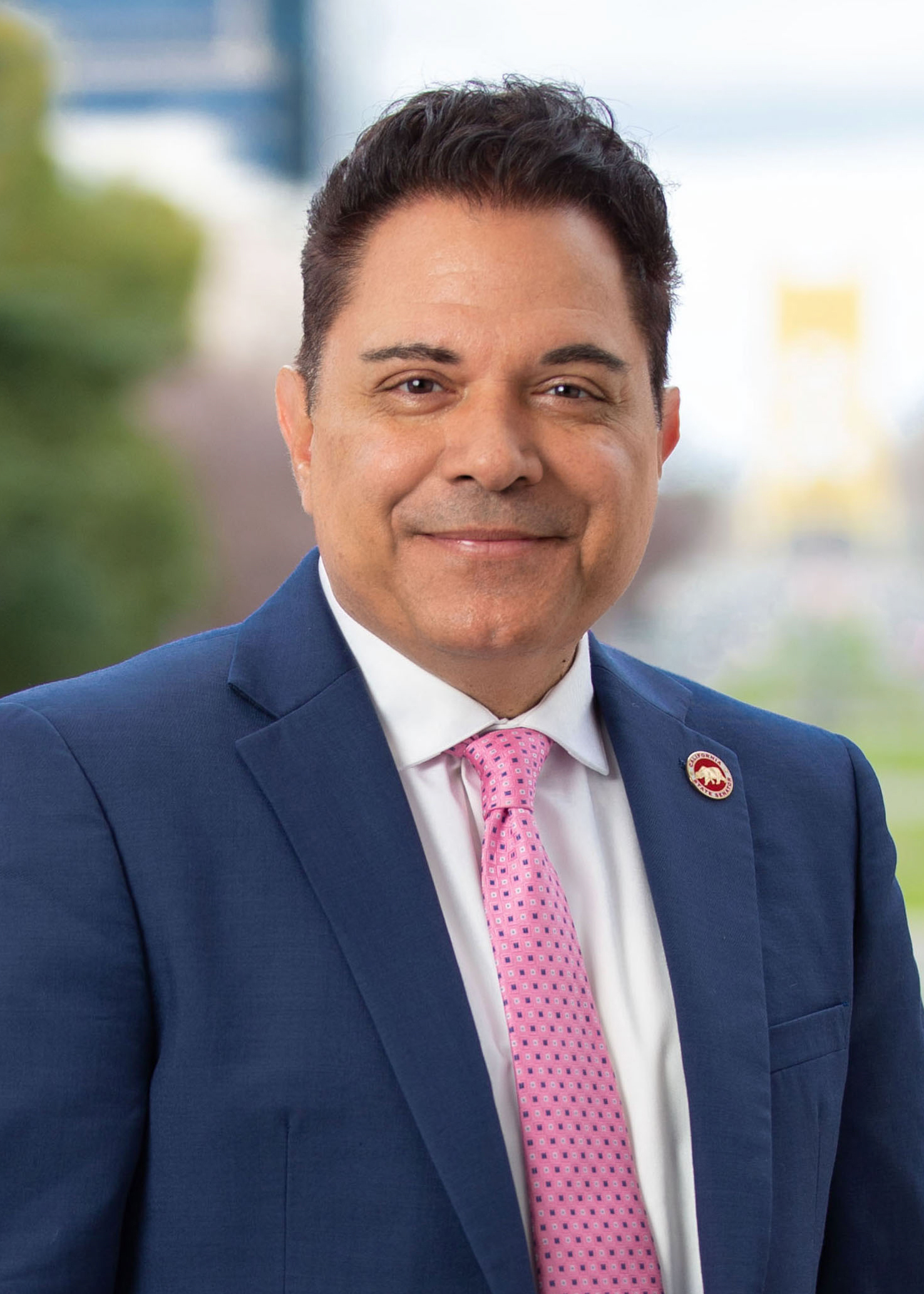
Existing law establishes the State Department of Social Services in the Health and Welfare Agency and sets forth its powers and duties relating to the administration of various programs relating to public social services. Prior law, until June 30, 2026, enacted the Community Response Initiative to Strengthen Emergency Systems Act, or the C.R.I.S.E.S. Act, for purposes of creating, implementing, and evaluating the C.R.I.S.E.S. Grant Pilot Program, which the act established. The act required the department to administer the program if appropriate funding was made available to the department. The act required, on or before January 1, 2023, the department to award grants to qualified grantees, including city, county, and tribal departments of social services, disability services, health services, public health, or behavioral health, based on grant eligibility criteria developed in partnership with a stakeholder workgroup. This bill would establish the Community Response Initiative to Strength Emergency Systems Act 2.0, or the C.R.I.S.E.S. Act 2.0, and the C.R.I.S.E.S. Grant Pilot Program 2.0, until June 30, 2032. The bill would require the department to administer the program if appropriate funding is made available in the annual Budget Act. The bill would require the department to award grants to grantees, which are community-based organizations, on or before October 1, 2027, and annually thereafter, subject to appropriate funding. The bill would reestablish the Community Response Initiative to Strengthen Emergency Systems Program Fund within the State Treasury, and would authorize, upon appropriation by the Legislature, the moneys to be expended by the department for purposes of the program. The bill would prohibit more than 10% of the grant funds to be used for implementation and administration of the program. The bill would authorize the department to enter into agreements with one or more entities to facilitate the implementation of the program, not to exceed 5% of the appropriated funds. The bill would require the department to convene a stakeholder workgroup consisting of specified individuals. The bill would require the department to award grants of at least $250,000 each to eligible grantees, which are community-based organizations, based on criteria developed by the department in consultation with the stakeholder workgroup. The bill would require a grantee to report at least annually to the department on the use of funding awarded under the program. The bill would require the department to issue a public report, to be posted on its internet website 6 months following the end of the program, with specified information. The bill would authorize the department to implement, interpret, or make specific the provisions of the program without taking regulatory action, as specified. This bill would make these provisions inoperative on June 30, 2032, and would repeal them as of January 1, 2033.
Existing law establishes the Office of Small Business Advocate "SBA", within the Governor's Office of Business and Economic Development, also known as "GO-Biz," and provides for the appointment by the Governor of the Small Business Advocate, also known as the Director of the Office of Small Business Advocate, to, among other things, serve as the principal advocate in the state on behalf of small businesses. This bill would establish the California Music Festival Preservation Grant Program within the SBA, under the direct authority of the director, to provide grants to eligible independent live music events promoters to preserve large-scale music festivals and to support their continued ability to provide equitable access to the arts for all Californians. The bill would specify requirements for eligibility and, subject to appropriation by the Legislature, would require the office to allocate the sum of $20,000,000 in grants to eligible independent live music events promoters that meet those requirements, as specified. The bill would exempt the SBA from the Administrative Procedure Act for purposes of implementing the program.
The California Prompt Payment Act requires a state agency that awards a grant or that acquires property or services pursuant to a contract to make timely payments pursuant to the grant or contract. If a state agency or the Controller fails to take certain timely actions and payment is not issued within 45 calendar days from the state agency receipt of an undisputed invoice, the act requires the state agency or the Controller, as applicable, to pay certain penalties. The act provides an exception to certain penalty provisions applicable to services or equipment under the Medi-Cal program if the grant or contract was awarded to a nonprofit organization in an amount less than $500,000. The act defines the term "grant" to mean a signed final agreement between any state agency and a local government agency or organization authorized to accept grant funding for victim services or prevention programs administered by any state agency or restoration activities performed by a resource conservation district. The act also defines "nonprofit service organization" to mean a nonprofit entity that is organized to provide services to the public, but the act does not use that term in its provisions. This bill would revise the definition of "grant" to also mean a signed final agreement between a state agency and a nonprofit organization and would delete the $500,000 exception described above. The bill would remove the definition of "nonprofit service organization," and instead would define "nonprofit organization" to mean an organization that qualifies as an exempt organization under Section 501(c) (3) of the Internal Revenue Code. The act authorizes a state agency to dispute for reasonable cause an invoice, refund request, or claim for Medi-Cal reimbursement, as specified, and defines "reasonable cause" to mean a determination by a state agency that any of certain conditions exist, including that there is a discrepancy between the invoice or claimed amount and either the claimant's actual delivery of property or services to the state or the state's acceptance of those deliveries. This bill would revise the condition described above to require the discrepancy to be of an amount greater than $250 or 5% of the invoice or claimed amount, whichever is less, in order to qualify as a reasonable cause for the state agency to dispute it. Existing law establishes the Department of General Services in the Government Operations Agency for purposes of providing centralized services of state government. Existing law establishes various state grant programs. Existing federal law provides uniform administrative requirements, cost principles, and audit requirements for federal grant awards to nonfederal entities and provides guidelines for determining direct and indirect costs, as defined, charged to federal awards. This bill would require a state agency administering a grant program to reimburse a grantee's indirect costs, as defined, at one of specified rates as requested by the grantee in their grant program application, not to exceed 35% of the total grant award, unless prohibited by any other state or federal law. The bill would authorize the establishment of indirect cost pools, as specified. The bill would make these provisions applicable to a grant program administered by a state agency, regardless of whether the funding source is state funds, federal funds, or a combination thereof.
(1) Existing law establishes the State Water Pollution Control Revolving Fund program, pursuant to which state and federal funds are continuously appropriated from the State Water Pollution Control Revolving Fund to the State Water Resources Control Board for loans and other financial assistance for purposes related to the federal Clean Water Act. Existing law establishes the State Water Pollution Control Revolving Fund Administration Fund (administration fund) to provide funds, upon appropriation by the Legislature, to be expended by the state board for payment of the reasonable costs of administering the State Water Pollution Control Revolving Fund. Existing law authorizes the state board to assess an annual charge for financial assistance services, not to exceed 1% of the financial assistance repayment amount and computed according to the true interest cost method, as provided, and requires those annual charges to be deposited into the administration fund. Existing law authorizes the financial service rate to be applied at any time during the term of the financial assistance and requires the rate to remain unchanged for the duration of the financial assistance. Existing law prohibits the financial assistance rate from increasing the financial assistance repayment amount after being applied. Existing law requires the state board to, at least once each fiscal year, adjust the financial assistance service rate. Existing law requires the state board to set the total amount of revenue collected each year through the annual charges at an amount that is equal as practicable to the appropriation amount set forth in the annual Budget Act. This bill would additionally authorize the state board to assess fees in place of an annual charge for financial assistance and would authorize the fees or annual charge to be assessed at any rate as permitted by federal law. The bill would delete the provision prohibiting the changing of the financial assistance rate during the financial assistance and the increasing of the financial assistance repayment amount. The bill would delete the requirement relating to the appropriation amount set forth in the annual Budget Act. (2) Existing law authorizes moneys in the State Water Pollution Control Revolving Fund to be used for loans that meet specified requirements, including that the loans be made at or below market interest rates and, to the extent permitted by federal law, requiring that the combined interest and loan service rate be set at a rate not to exceed 50% of the interest rate paid by the state on the most recent sale of state general obligation bonds, as provided. Existing law requires the combined interest and loan service rate to be 0% for certain applicants who provide matching funds. This bill would delete the provision requiring that the combined interest and loan service rate be set at a rate not to exceed 50% of the interest rate paid by the state on the most recent sale of state general obligation bonds. The bill would require the loans to be made at below market interest rates. (3) Existing law prohibits a person or public agency, including a state agency, city, county, city and county, district, or any other political subdivision of the state, from using water from any source of quality suitable for potable domestic use for nonpotable uses, including, among other locations, parks, if suitable recycled water is available, as provided. Existing law provides that incidental amounts of spray, mist, or runoff are to be permitted to enter outdoor eating areas of parks and open spaces when irrigated with disinfected tertiary treated recycled water that complies with a specified regulation regarding irrigation. This bill would instead provide that incidental runoff is allowed to enter outdoor eating areas of parks and open spaces when irrigated with disinfected tertiary treated recycled water that complies with a specified regulation regarding irrigation. The bill would define "incidental runoff" as unintended amounts of runoff, such as unintended, minimal overspray from sprinklers that escapes the area of intended use.
Existing law establishes the Expanded Learning Opportunities Program and requires the Superintendent to allocate $2,750 per unit of average daily attendance, as specified, to local educational agencies with a prior fiscal year unduplicated pupil percentage of 55% or more, and requires those local educational agencies, as a condition of receiving that funding, to offer access to expanded learning opportunity programs to all pupils and to provide access to any pupil whose parent or guardian requests their placement in a program. Existing law defines unduplicated pupils for these purposes to mean a pupil who is classified as an English learner, eligible for a free or reduced-price meal, or a foster youth, as specified. This bill would require local educational agencies, for purposes of offering access to expanded learning opportunity programs pursuant to those provisions, to prioritize offering access to unduplicated pupils, which the bill would authorize to include, but not be limited to, specialized outreach to the parents and guardians of unduplicated pupils and providing assistance with enrollment of unduplicated pupils.
The Personal Income Tax Law and the Corporation Tax Law allow a credit against the taxes imposed by those laws, for taxable years beginning on or after January 1, 2021, and before January 1, 2027, for rehabilitation of certified historic structures, as defined, and, under the Personal Income Tax Law, for a qualified residence, as defined. Existing law allows an increased credit of 25% of the qualified rehabilitation expenditures with respect to a certified historic structure meeting any of certain criteria, including a rehabilitated structure that includes affordable housing for lower income households. Existing law requires a taxpayer to receive an allocation from the California Tax Credit Allocation Committee (CTCAC) to be eligible for the credit. Existing law limits the aggregate amount of money that can be allocated for these credits per calendar year. Existing law requires, on an annual basis beginning January 1, 2021, until January 1, 2027, the Legislative Analyst to collaborate with the CTCAC and the State Office of Historic Preservation to review the effectiveness of these tax credits, as described. This bill would require the Legislative Analyst to submit a review of the effectiveness of the tax credits for taxable years beginning on or after January 1, 2025, and before January 1, 2027, to the Legislature, as specified. This bill, for taxable years beginning on or after January 1, 2027, and before January 1, 2032, would enact a similar credit against the taxes imposed by the Personal Income Tax Law and the Corporation Tax Law for the rehabilitation of certified historic structures, as provided. The bill, for tax credits allocated for those taxable years, would remove the above-described increased credit of 25% and would remove the credit for a qualified residence. The bill would also remove the limit on the amount of money that can be allocated per calendar year, and would instead require the limit to be set by the Legislature in the annual Budget Act or another measure. The bill would provide additional requirements relating to the manner in which the credits are allocated. Existing law requires any bill authorizing a new tax expenditure, as defined, to include exclusions from income, to contain, among other things, specific goals, purposes, and objectives that the tax credit will achieve, detailed performance indicators, and data collection requirements. This bill would include findings and reporting requirements in compliance with this requirement. This bill would take effect immediately as a tax levy.
(1) The Personal Income Tax Law and the Corporation Tax Law allow various credits against the taxes imposed by those laws, including, for taxable years beginning on or after January 1, 2017, and before January 1, 2027, a credit for qualified taxpayers in an amount equal to 15% of the qualified value of fresh fruits or vegetables and specified raw agricultural products or processed foods donated to a food bank. This bill would extend the authorization for those tax credits for taxable years beginning before January 1, 2032. Existing law requires any bill authorizing a new tax expenditure to contain, among other things, specific goals that the tax expenditure will achieve, detailed performance indicators, and data collection requirements. For purposes of complying with these requirements, existing law requires the Franchise Tax Board to submit a report to the Legislature regarding the utilization of the above-described credit on or before December 1 of each year until January 1, 2026. This bill would extend that reporting requirement to January 1, 2031. The bill would make related findings and declarations. (2) Existing law authorizes individuals to contribute amounts in excess of their personal income tax liability for the support of specified funds, including the Emergency Food for Families Voluntary Tax Contribution Fund. Under existing law, the provisions governing that voluntary contribution fund are in effect until January 1, 2026, and are repealed as of December 1 of that year. This bill would extend the provisions that apply to the Emergency Food for Families Voluntary Tax Contribution Fund until January 1, 2033, as provided. The bill would additionally make a nonsubstantive change reflective of existing law. By extending the term of a continuously appropriated fund, the bill would make an appropriation. (3) This bill would declare that it is to take effect immediately as an urgency statute.
Existing law prohibits the Golden Gate Bridge, Highway and Transportation District from issuing general obligation or revenue bonds, or any other form of long-term indebtedness, except to finance an interim system of buses and ferries or to finance capital improvements or modifications relating to seismic safety of the Golden Gate Bridge. This bill would authorize the district to accept contributions and loans from this state and the United States for the purpose of financing capital improvements or modifications related to seismic safety on the Golden Gate Bridge, as specified.
Existing law establishes the Multifamily Housing Program, administered by the Department of Housing and Community Development, to provide financial assistance in the form of deferred payment loans to pay for the eligible costs of development of specified types of housing projects. Existing law requires that specified funds appropriated to provide housing for individuals and families who are experiencing homelessness or who are at risk of homelessness and who are inherently impacted by or at increased risk for medical diseases or conditions due to the COVID-19 pandemic or other communicable diseases be disbursed in accordance with the Multifamily Housing Program for specified uses, including acquisition or rehabilitation of motels, hotels, hostels, or other sites, as provided. This disbursement program is referred to as Homekey. Existing law, upon appropriation, requires Homekey awards to be expended within 8 months of the date of the award, as provided. This bill would, for Homekey awards made on or after July 1, 2026, require the department to consider allowing applicants that utilize funds for adaptive reuse projects if the adaptive reuse involves substantial rehabilitation, reconstruction, or demolition of an existing structure, as defined and specified.
This Senate Resolution highlights the importance of medically supportive food and nutrition services, often called "food as medicine," in improving health outcomes and reducing healthcare costs for Californians. It notes that these services, which include medically tailored meals and groceries, are already a key part of the state's Medi-Cal program and have been shown to lower emergency room visits and hospitalizations. The resolution emphasizes the value of these programs in addressing diet-related health issues and encourages continued collaboration among healthcare providers and community organizations to expand access. Additionally, it supports sourcing food from local farms to benefit the economy and environment while ensuring high-quality, culturally relevant care for patients.