

Maddy summarySB 1133 requires Arizona high schools to include a comparative discussion of political ideologies - such as communism and totalitarianism - in social studies curriculum, emphasizing how these systems conflict with U.S. democratic principles. It also mandates that students pass a civics test based on the U.S. naturalization exam to graduate, starting with a 60% score for the 2025 class and increasing to 70% for 2026 and later graduates. Students may take the test in middle school to avoid retaking it in high school, with schools documenting only pass/fail results. This bill directly affects all Arizona public high school students and schools, requiring adjustments to curriculum standards and graduation testing procedures.
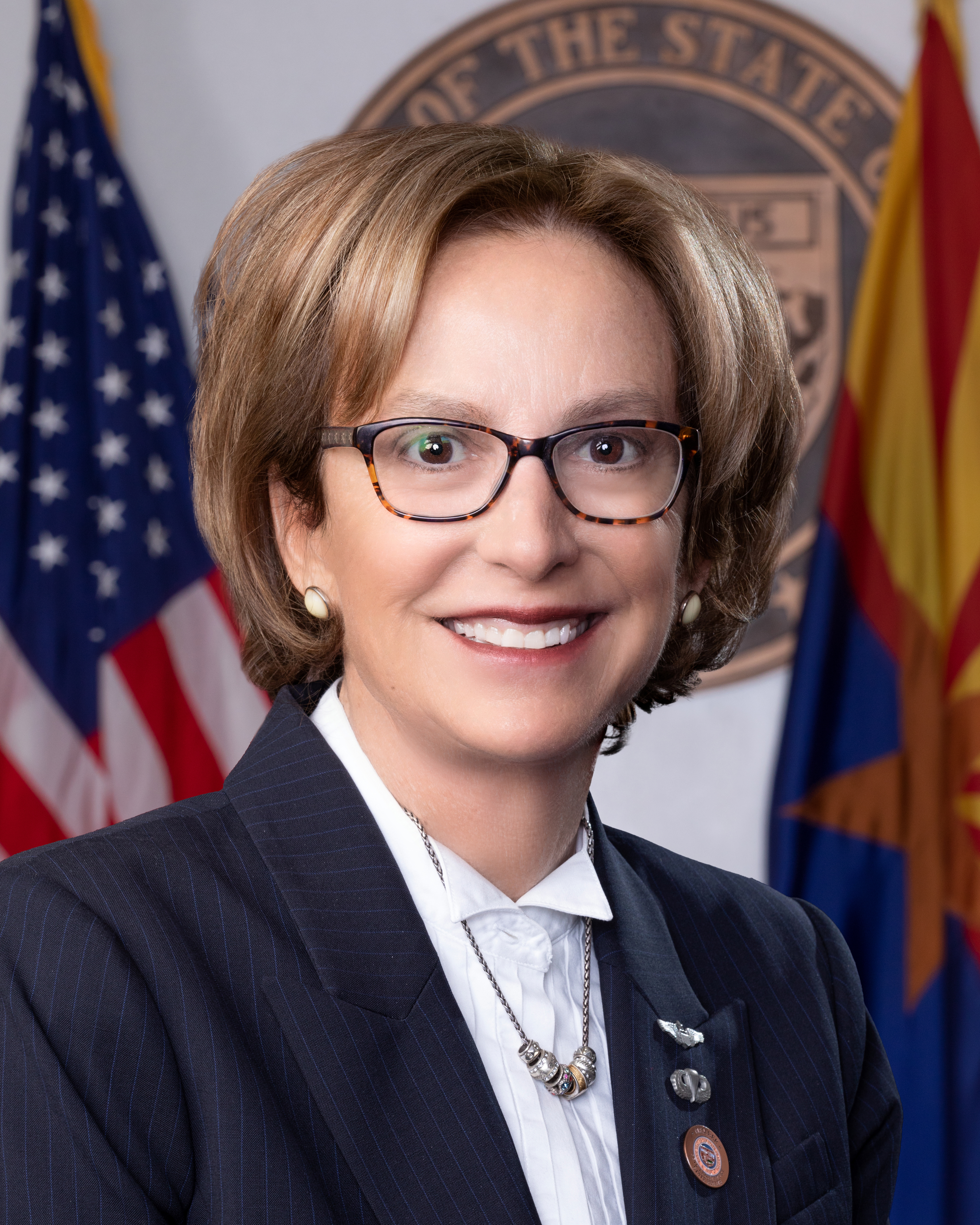
Sen. Wendy Rogers
Sponsored bills
Maddy summarySB 1657 amends Arizona law to change how cities and towns can pass emergency measures. It requires emergency ordinances to be approved by a three-fourths vote of the full council (recorded by ayes/noes) and include a clear statement explaining why immediate action is needed for public safety. The bill also clarifies that emergency measures remain subject to the same 30-day voter petition process and referendum rules as regular local laws. If voters reject an emergency measure through referendum, it is no longer in effect.
Maddy summarySB 1593 clarifies who can legally challenge local government ordinances with immediate "emergency" provisions. It grants standing to residents of cities or counties, as well as businesses operating in those areas, to sue in court if a city council or county board adopts an ordinance with an emergency clause (a provision making the ordinance effective right away). The bill defines "emergency clause" as any language causing an ordinance to take effect immediately. This is a procedural change affecting legal access to challenge local emergency measures, not a policy change to local governance.
Maddy summaryThis bill allows Arizona assisted living facilities to offer mild hyperbaric oxygen therapy to residents using FDA-registered home-use chambers. Facilities must obtain a physician's order, have trained staff present during sessions, and provide residents with a notice explaining the FDA's limited approval (only for mild symptoms like altitude sickness) and potential risks. The therapy cannot be provided to residents requiring directed care without specific physician approval and written consent. The law also permits the state department to create implementing rules.
Maddy summaryHB 2635 amends Arizona's tax code to add new sales tax exemptions for specific items. It exempts sales of "cash equivalents" (like gift cards, stored-value cards, and prepaid digital payment tools) and "precious metal bullion" (refined gold, silver, etc.) from retail sales tax. The bill defines "cash equivalents" as pre-paid items denominated in money redeemable for goods/services, excluding telecom prepaids, and clarifies that "monetized bullion" (coins used as currency) is exempt. This directly affects retailers selling these items, removing tax liability on such transactions. The bill focuses solely on tax policy, with no provisions related to firearm storage devices as inaccurately suggested in the title.
Maddy summaryThis bill, which failed in March 2025, would have renamed Arizona's State Route 260 as the "Donald J. Trump Highway" and required the State Board on Geographic and Historic Names to install corresponding signage. It is a commemorative resolution (not a policy bill) directly affecting Arizona's transportation infrastructure by changing the official name of a specific highway. The bill included extensive justifications for the naming but contained no substantive policy changes or new regulations. The proposed action was purely symbolic, seeking to honor former President Trump through a highway designation.
Maddy summarySB 1323 expands the Arizona Auditor General's authority to conduct performance audits, directly affecting state agencies, school districts, counties, and cities/towns receiving highway funds. Key provisions require annual financial audits of state agencies, mandatory performance audits of transportation excise tax spending by counties, and a new schoolwide audit team to track how much school district funding goes directly to classrooms. School districts must publicly post this classroom spending percentage on their websites and respond to audit findings within two years. The bill also mandates audits of counties and local governments using highway user revenues to ensure compliance with spending rules.
Maddy summarySCR 1001 is a proposed constitutional amendment that would add virtual currency to Arizona's list of tax-exempt property. It defines virtual currency as a digital medium of exchange, unit of account, and store of value (excluding U.S. or foreign currency). The amendment would automatically exempt virtual currency from property taxes without requiring owners to apply for the exemption. If approved by voters, this change would take effect as part of Arizona's constitution, following the bill's recent passage by both legislative chambers. This is a procedural constitutional amendment requiring voter approval, not an immediate law.
Maddy summarySB 1023 prohibits Arizona businesses and government entities from entering agreements involving critical infrastructure (like power grids or water systems) with companies owned by citizens of China, Iran, North Korea, or Russia, or controlled by those countries' governments. It specifically bans agreements allowing foreign entities to access or control infrastructure, except when the Foreign Investment Committee clears the transaction or the foreign owners are also U.S. citizens. The bill defines "critical infrastructure" per existing law and allows the governor to designate threat countries for infrastructure security. It directly affects Arizona organizations managing essential services, aiming to prevent foreign control over key systems. The bill passed the Arizona Senate and is now moving to the House.
Maddy summarySB 1015 prohibits Arizona cities, towns, and counties from banning or taxing individuals who run blockchain nodes (computing equipment that validates transactions) in their homes. It prevents local governments from regulating or imposing fees on this activity, stating such regulation is a statewide issue. The bill explicitly states that only state-level rules apply, overriding local restrictions. It affects homeowners using blockchain technology for transaction validation, ensuring they cannot face local taxes or bans. The law amends Arizona statutes 9-500.42 (for municipalities) and 11-269.22 (for counties).