

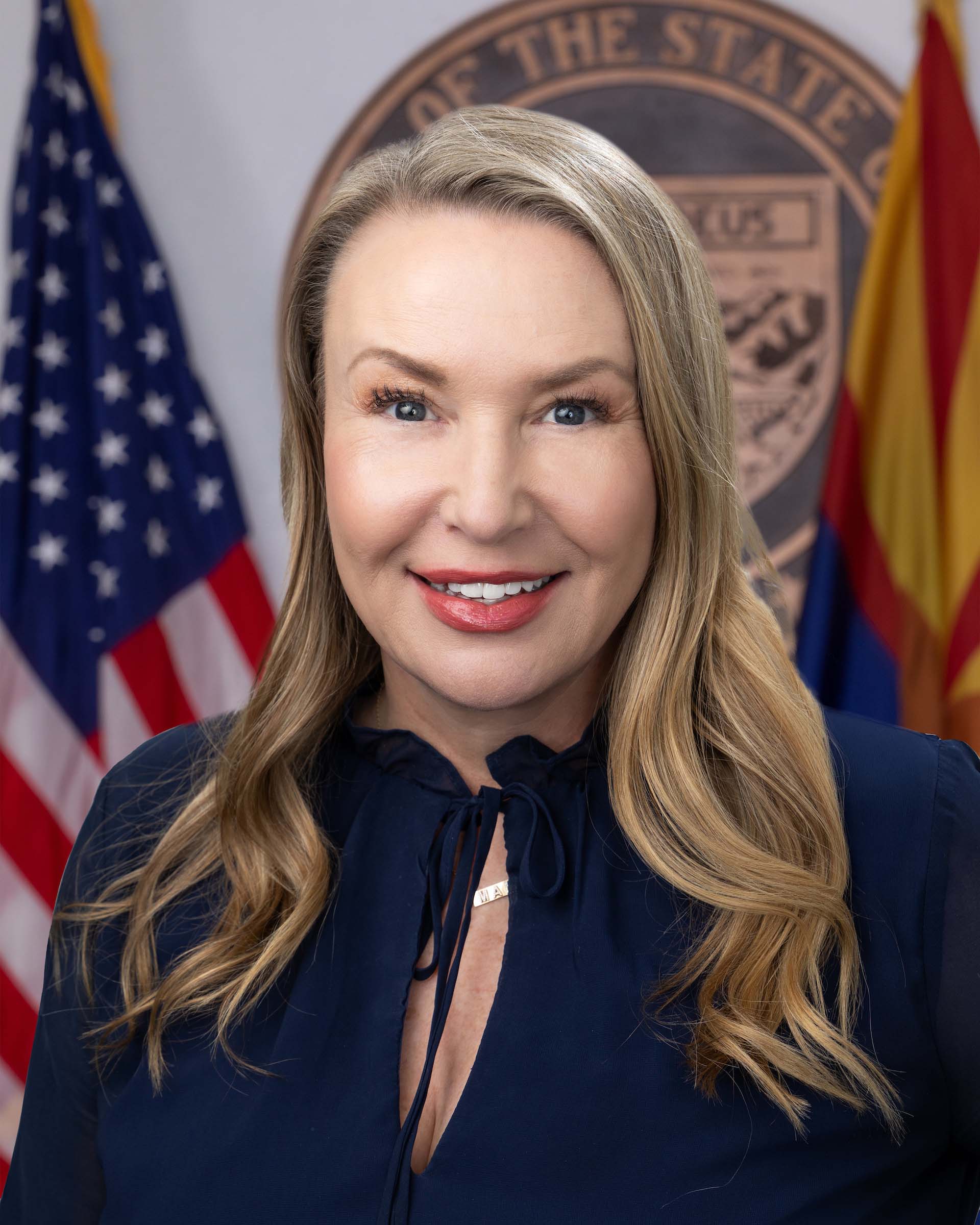
Photo of Carine Werner
R Arizona Senate · District 4 On the 2026 ballot

Sen. Carine Werner

Compare
Total votes
1,589
all sessions
Attendance
97%
48 missed
Near the chamber average
With party
98%
of cast votes
Higher than 83% of chamber peers
Bipartisan score
2%
crosses aisle rarely
Lower than 87% of chamber peers
Sponsored
99
bills & resolutions
Near the chamber average
Committees
4
assignments
99 bills and resolutions

Sponsored bills

Total
99
Primary
57
Co-sponsor
42
This page
99
matching current filters
Co-sponsor SB 1010
Vetoed · Arizona Senate · Co-sponsor
Charlie Kirk highway

Maddy summarySB 1010 renames Arizona's Loop 202 highway as the "Charlie Kirk Highway" in honor of Charlie Kirk. The bill requires the Arizona Department of Transportation to update all official documents, records, and signage to include this new name while maintaining existing designations. It affects public records and highway signage for Loop 202, with no changes to the highway's physical structure or function. This is a ceremonial designation with no substantive policy changes.

Vetoed Mar 27, 2026 1 co-sponsor
Primary SB 1112
Passed · Arizona Senate · Lead sponsor
mental health; hearings; acquaintance witnesses

Maddy summarySB 1112 amends Arizona law (Section 36-539) to change requirements for mental health hearings where a court may order treatment. It directly affects patients in mental health evaluation proceedings by requiring testimony from at least one non-professional witness who knew the patient personally before the evaluation application, limited to observed facts (not expert opinions). The bill specifies that such witnesses must have observed the patient during the alleged mental disorder period but were not formal participants in the evaluation. Courts may waive this witness requirement if clear and convincing evidence of the need for treatment is provided through other testimony or evidence.

Passed Mar 25, 2026 0 co-sponsors
Primary SB 1173
Passed · Arizona Senate · Lead sponsor
behavioral health facilities; fingerprinting

Maddy summarySB 1173 requires operators of specific behavioral health facilities in Arizona to obtain a valid fingerprint clearance card by January 1, 2027, as a condition of licensure. This applies to outpatient behavioral health centers, inpatient facilities, residential facilities, counseling centers, substance abuse transitional programs, and specialized behavioral health transitional facilities. The bill mandates that all applicants, licensees, and facility owners must be U.S. citizens or lawfully present in the U.S. to qualify for the required clearance card. The requirement references existing fingerprinting procedures under Arizona Revised Statutes § 41-1758.07. The bill does not alter existing definitions or create new exemptions beyond the specified facility types.

Passed Mar 24, 2026 0 co-sponsors
Primary SB 1120
Failed · Arizona Senate · Lead sponsor
radiation protection systems; installation requirement

Maddy summarySB 1120 requires hospitals, outpatient surgical centers, and other healthcare facilities performing real-time X-ray procedures (such as cardiac catheterization) to equip at least half of their relevant procedure rooms with radiation protection systems by July 1, 2027. These systems must provide shielding equivalent to a 0.25mm lead-equivalent apron and include real-time dosimetry to measure radiation exposure for staff during procedures. The bill directly affects healthcare institutions conducting interventional medical procedures involving ionizing radiation. It mandates specific technical standards for radiation protection, focusing on staff safety during common medical imaging procedures.

Failed Mar 23, 2026 0 co-sponsors
Primary SB 1115
Passed · Arizona Senate · Lead sponsor
AHCCCS; remote work; prohibition

Maddy summarySB 1115 prohibits Arizona Health Care Cost Containment System (AHCCCS) employees from working remotely as their primary arrangement. The bill directly affects all AHCCCS employees by requiring them to report to the agency's physical worksite regularly, rather than working from home or other remote locations. It defines "work remotely" as having a primary worksite outside the agency's location and mandates that employees not be expected to work remotely on a regular basis. This policy change applies specifically to AHCCCS, Arizona's Medicaid program, and amends the state statutes governing the agency.

Passed Mar 23, 2026 0 co-sponsors
Co-sponsor SB 1628
Passed · Arizona Senate · Co-sponsor
claims denial; prior authorization; reporting

Maddy summarySB 1628 requires Arizona health insurance companies to annually report detailed data on claims denials to the state department by July 1, starting in 2027. This includes the total number of denied claims, top denied services (like medical procedures or mental health care), and reasons for denials. The state department must then compile this data into a public report by October 31, making it accessible online for at least three years. The bill aims to increase transparency around insurance practices affecting healthcare providers and patients, without changing how insurers process claims directly.

Passed Mar 23, 2026 1 co-sponsor
Primary SB 1234
Passed · Arizona Senate · Lead sponsor
juvenile court proceedings; appointment; attorney

Maddy summarySB 1234 requires courts in Arizona to appoint attorneys for children in specific juvenile court cases, including delinquency cases involving detention, dependency proceedings, and termination of parental rights. It mandates that attorneys be appointed before the first hearing in delinquency cases and ensures representation for indigent parents seeking counsel. The bill also requires courts to appoint a guardian ad litem (who must be an attorney) in abuse or neglect cases to protect the child’s best interests, and sets deadlines for attorneys to meet with juveniles before key hearings. Counties may fund these appointments, and public defenders may serve in certain cases with court authorization. This law directly affects juveniles, parents, and court staff by standardizing legal representation in critical child welfare and justice proceedings.

Passed Mar 19, 2026 0 co-sponsors
Primary SB 1554
Passed · Arizona Senate · Lead sponsor
unfair claims settlement practices; chiropractic

Maddy summarySB 1554 requires Arizona insurers to pay for reasonable and necessary chiropractic services equally to other physicians, prohibiting discriminatory payment practices. It directly affects chiropractors (who provide these services) and insurers (who must cover them without bias). The key provision amends Arizona law to mandate coverage for chiropractic care within the physician's scope, regardless of how the condition or service is described. This ensures chiropractors receive the same payment treatment as other healthcare providers for covered services.

Passed Mar 18, 2026 0 co-sponsors
Primary SB 1169
Passed · Arizona Senate · Lead sponsor
appropriations; graduate medical education program

Maddy summarySB 1169 appropriates $10 million from Arizona's general fund and $18.768 million in funding authority for the Arizona Health Care Cost Containment System Administration to support graduate medical education programs. The bill directly affects hospitals operating residency programs by providing funds to cover their direct and indirect costs, including start-up expenses for new programs. These funds are intended to address Arizona's physician shortage by supplementing, but not replacing, existing local payments to hospitals. The appropriation is exempt from standard state budget lapse rules to ensure continued funding for this purpose.

Passed Mar 17, 2026 0 co-sponsors
Primary SB 1632
Passed · Arizona Senate · Lead sponsor
DES; credentialing; application; deficiencies

Maddy summarySB 1632 requires Arizona's Department of Economic Security (DES) to give vendors 14 business days to fix problems in their credentialing applications if denied, rather than immediately rejecting them. This applies to vendors seeking to contract with DES to provide services to people using state programs. After vendors correct the issues, DES must re-evaluate their application. If still denied, vendors can appeal through established procedures under Article 3 of the chapter. The bill clarifies that "credentialing" means verifying vendors' qualifications to work with DES programs.

Passed Mar 17, 2026 0 co-sponsors
Showing 41 to 50 of 99 bills
Previous 1 4 5 6 10 Next