

Maddy summarySB 1583 requires Maricopa County and the City of Tucson to return any unspent funds from the School Safety Interoperability Fund to the Arizona Department of Administration by September 30, 2026. These funds were originally distributed under 2021 and 2022 laws (Laws 2021, Ch. 408, Sec. 89; Laws 2022, Ch. 414, Sec. 5). The returned money must be deposited back into the same School Safety Interoperability Fund established under Arizona Revised Statutes § 41-1733. This is a procedural bill focused on returning unused state funds, not creating new policy.
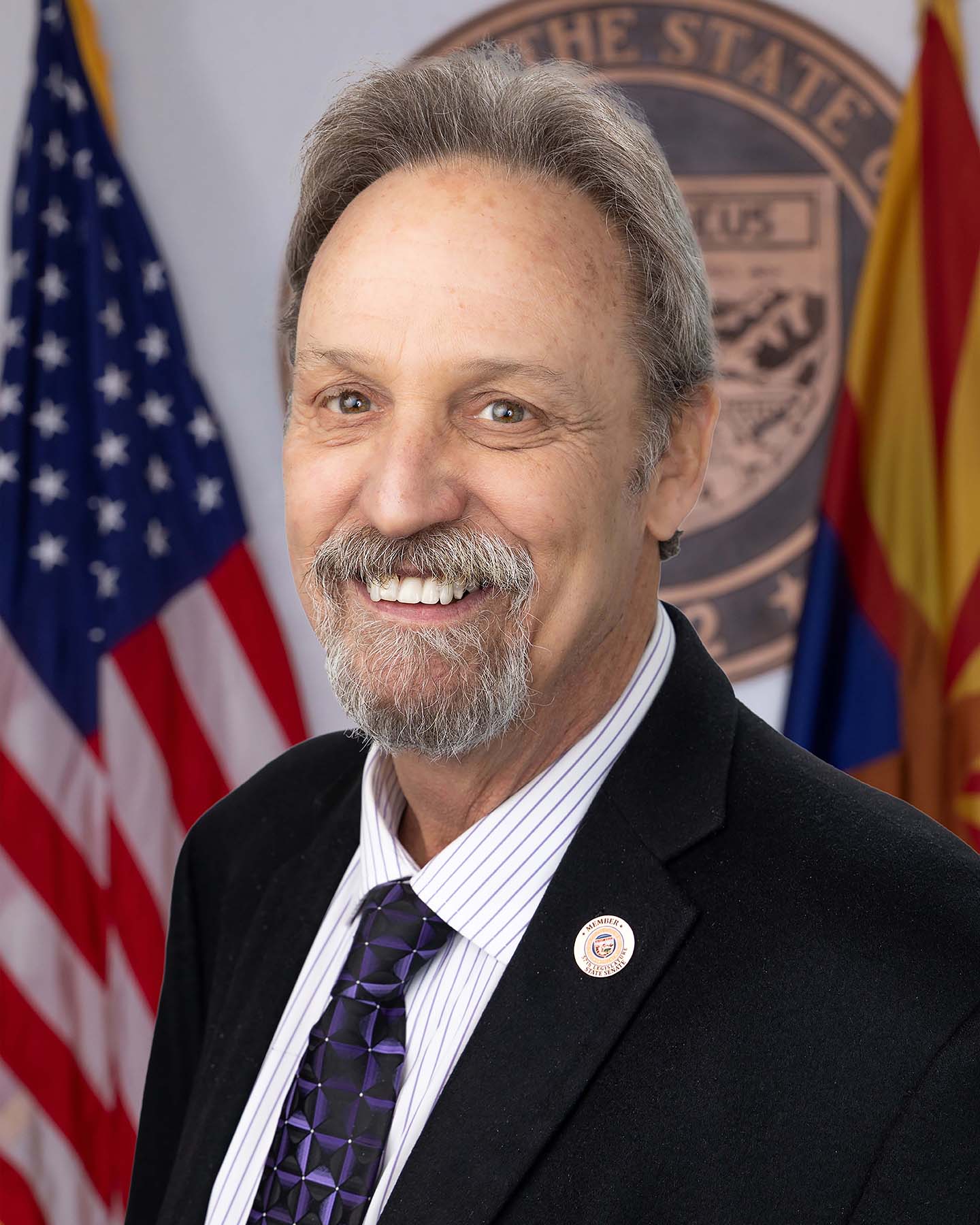
Sen. Kevin Payne
Sponsored bills
Maddy summarySB 1111 defines "automatic license plate reader system" in Arizona law as a system using mobile or fixed cameras to capture license plate images and convert them to computer-readable data. This bill solely adds this definition to Arizona Revised Statutes Section 28-601; it does not create new enforcement rules or affect how such systems are used. The bill does not change existing traffic laws or directly impact any specific group of people. It is a purely definitional measure with no substantive policy changes.
Maddy summarySB 1192 adds a new exemption to Arizona's medical licensing rules, allowing unlicensed individuals to provide basic first aid without legal risk. The exemption applies when someone gives basic first aid in good faith and without payment, after getting consent from the injured person (or a parent/guardian if the person is under 15), and notifying law enforcement if the injured person is a minor. Basic first aid is defined as minor treatments like cleaning cuts, treating minor burns, applying bandages, or providing fluids for heat stress. This directly affects everyday citizens who assist others in non-emergency situations, such as at community events or sports activities, without needing medical training or a license.
Maddy summaryThis resolution honors the late Mark Brnovich, a former Arizona Attorney General who passed away in January 2026. It formally expresses the state legislature's regret over his death and extends condolences to his family and friends. The document does not create new laws or policies but serves as a ceremonial tribute to his public service career. It acknowledges his contributions as a prosecutor and government official without altering any legal provisions.
Maddy summaryHB 2725 prevents AHCCCS (Arizona's Medicaid program) from requiring patients to switch from non-opioid pain medications to opioids when a doctor prescribes a non-opioid for chronic or acute pain. It also prohibits stricter coverage rules - like more difficult prior authorization or step therapy - for non-opioid pain drugs compared to opioid alternatives. The bill directly affects AHCCCS members prescribed pain medication and their healthcare providers. Key provisions mandate equal treatment in coverage policies for clinically appropriate non-opioid and opioid pain drugs. This bill is pending in the Arizona legislature after its first reading in January 2026.
Maddy summarySB 1542 requires Arizona employers to cover workers' compensation for firefighters and certified peace officers diagnosed with PTSD who need Midomafetamine treatment, provided an independent medical exam approves it as a necessary treatment. The bill mandates annual cost reports to the legislature starting in 2029 and specifies that Midomafetamine must meet state controlled substance regulations. It also allocates $10 million for clinical research and training on Midomafetamine treatment for PTSD, specifically targeting first responders and veterans. The coverage and funding provisions are conditional on the FDA approving Midomafetamine for PTSD treatment by 2029.
Maddy summarySB 1579 allocates $3,091,800 in state funds for fiscal year 2026-2027 to expand a pilot program connecting law enforcement records management and computer-aided dispatch systems. The bill directly provides funding to 52 local law enforcement agencies across Arizona, including city police departments, county sheriff's offices, and university police units. The key provision is the appropriation of specific dollar amounts to these entities to enhance system interoperability under the existing 2024 pilot program. This is a funding measure, not a policy change, with no new requirements or obligations imposed on the recipients.
Maddy summarySB 1581 allocates $328,000 to Flagstaff Police, $660,000 to Glendale Police, and other specific funds from Arizona's peace officer training equipment fund for public safety training simulators and pepper ball equipment. The bill directs funding to 29 police departments and sheriff's offices across Arizona, including Tucson Police ($200,000 for pepper balls) and Yuma Police ($121,434 for pepper balls). It requires simulator funds to teach de-escalation tactics, specifically including training for individuals who are deaf/hard of hearing, have autism, or experience mental illness. The bill is purely procedural funding with no new policy provisions, as it specifies existing equipment purchases for current training programs.
Maddy summaryThis bill amends Arizona Revised Statutes § 15-342 to update school district board travel reimbursement rules. It specifies that board members may claim expenses based on their actual residence (not the school district office) for travel related to school purposes, aligning with existing state travel regulations. The bill does not create new school security projects or allocate capital funding - its focus is solely on administrative procedures for board member reimbursement. The title "school security projects; capital finance" misrepresents the actual content, which is a procedural amendment to existing school district powers.
Maddy summaryThis bill (SB 1640) is a definitional amendment to Arizona's naturopathic medicine licensing laws, not a substantive policy change. It revises specific terms used in the chapter governing naturopathic physicians, such as "adequate medical records," "direct supervision," "approved clinical training program," and "chelation therapy." The bill does not create new requirements or affect marijuana use, despite its title suggesting otherwise. It solely clarifies existing terminology for regulatory consistency. (Note: The bill text provided contains no provisions related to marijuana or medical complaints, only definitions.)