

Maddy summaryThis Arizona constitutional amendment (SCR 1049) would allow death row inmates to choose their method of execution from three options: firing squad, lethal injection, or lethal gas. If an inmate does not select a method, lethal injection becomes the default. The bill specifies that if a chosen method becomes unavailable or is invalidated, the inmate may select another available option, with execution to occur by the most lawful means possible. This proposal requires voter approval at the next general election and would not affect existing death sentences for offenses committed before the amendment's effective date.
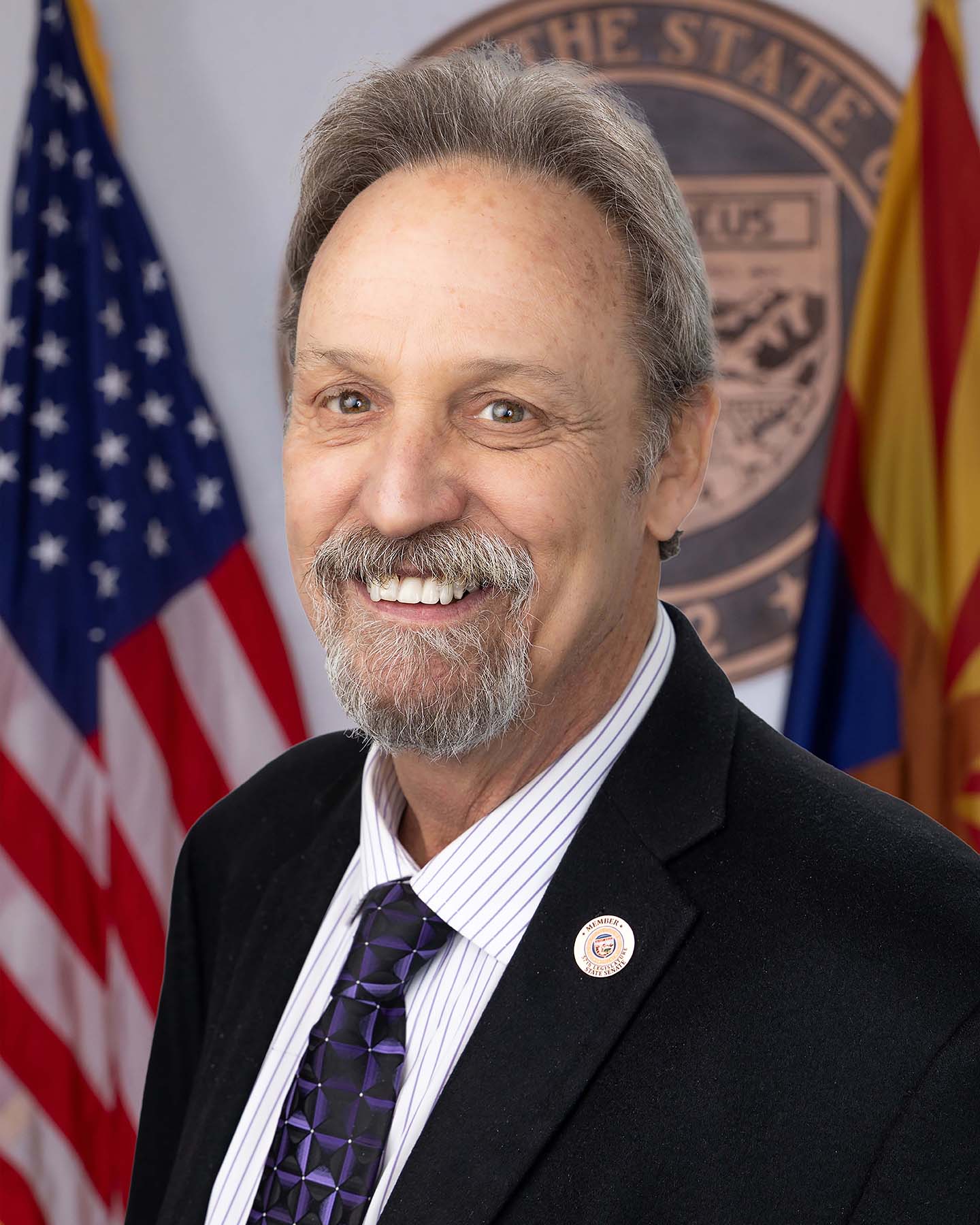
Sen. Kevin Payne
Sponsored bills
Maddy summarySB 1317 appropriates $20 million from Arizona’s consumer restitution fund to the Attorney General for grants to counties. These grants fund coordinated reentry planning services programs designed to support individuals transitioning from incarceration back into communities. Counties receiving funds must establish coalitions, hire dedicated jail-based staff, implement a statewide recidivism tracking database, create data-sharing agreements, and use screening tools within a two-year grant cycle. The bill requires grantees to demonstrate these specific program elements and commit to local funding contributions before receiving funds.
Maddy summarySB 1537 modifies Arizona law to redirect $4 from each traffic diversion program fee and $4 from each traffic penalty assessment to the Peace Officer Training Equipment Fund. This directly affects drivers who attend court-authorized traffic diversion programs (like defensive driving) or pay fines for traffic violations. The fund, established under Section 41-1731, is specifically designated for purchasing peace officer equipment and cannot be diverted to other state funds. The bill also repeals Section 41-1732, which was related to the fund's administration.
Maddy summarySB 1580 appropriates $1.5 million from Arizona's general fund to 10 fire departments (including Scottsdale Fire Department, which receives $1.04 million) for a secure incident management platform. The funds must purchase hardware and software that meets federal emergency management standards, enabling standardized resource tracking, secure communication, and real-time collaboration during emergencies - especially in areas without internet access. This platform will standardize incident command, improve responder safety, and streamline resource management across fire and law enforcement agencies.
Maddy summaryHB 2671 changes Arizona's rules for prosecuting juveniles (ages 14-17) as adults, specifically targeting those with prior felony convictions. It requires prosecutors to file notice if a juvenile is a "chronic felony offender" (defined as having two prior felony convictions classified as serious offenses), triggering a court hearing to confirm this status. If confirmed, the juvenile faces adult criminal sentencing; if not, the case transfers to juvenile court. This directly affects juveniles with prior felony convictions who commit new serious offenses, shifting jurisdiction from juvenile to criminal court. The bill creates a clear process for determining chronic offender status before trial.
Maddy summarySB 1584 allocates $1,000,000 from Arizona's general fund for the state Department of Corrections (DOC) during fiscal year 2026-2027 specifically for recruitment and training programs. This funding directly supports the DOC in hiring and training correctional staff. The bill is procedural, focusing solely on budget allocation without altering policies or creating new requirements. It has advanced to the Senate for further consideration.
Maddy summarySB 1641 amends Arizona law to clarify and define "marijuana producer" as an entity licensed to operate a single facility for growing, processing, and manufacturing marijuana products - but not for direct consumer sales. This bill directly affects businesses seeking to operate production facilities, distinguishing them from retail marijuana establishments. Key provisions include defining the scope of production activities (e.g., cultivation, processing, packaging) and specifying that producers cannot sell products directly to consumers. The bill also updates licensing rules to require background checks and ensure compliance with safety standards for these facilities. It is part of Arizona’s regulatory framework for marijuana operations, pending further legislative action.
Maddy summarySCR 1047 is a constitutional resolution (requiring voter approval) that establishes an Attorney General marijuana enforcement fund and a receiver system for social equity marijuana licenses. It creates a dedicated fund using existing marijuana-related monies to investigate fraud, enforce social equity program rules, support reentry programs for prior marijuana offenses, and fund community grants. The bill allows the Attorney General to appoint a receiver to take control of a social equity license if fraud, non-compliance, or predatory agreements occur, with strict qualifications for receivers. This directly affects social equity marijuana license holders, particularly those who may face license revocation or restoration processes due to violations. The resolution aims to strengthen enforcement of marijuana licensing rules while prioritizing community impact and program integrity.
Maddy summarySB 1295 creates a process for releasing Arizona inmates who are elderly or disabled to medical facilities. It requires inmates to first pass a preliminary eligibility check (based on age, disability, citizenship, and residency), then receive approval from Arizona's long-term care system. The bill mandates that victims of the inmate's crime be notified of the release and provides a mechanism for returning inmates to prison if they lose long-term care eligibility. This directly affects inmates qualifying for Arizona's long-term care system, which includes assisted living facilities or healthcare institutions contracted with the state.
Maddy summaryThis is a ceremonial resolution (HCR 2064) expressing the Arizona Legislature's condolences upon the passing of former state legislator Barbara Leff. It honors her 1996-2006 service representing Paradise Valley, her work on HMO reform and economic development, and her contributions to voter information systems. The resolution extends sympathy to her surviving family members (husband, children, grandchildren) and acknowledges her community leadership. It has no policy impact or legislative effect beyond this expression of respect.