

Maddy summarySB 1264 requires a mandatory review of Arizona's Empowerment Scholarship Accounts (ESA) program 17 months before its scheduled termination on July 1, 2034. The bill directs legislative committees to evaluate the program's effectiveness, manage efficiency, and whether it meets original goals, including conducting a performance audit by the state auditor general. It mandates public hearings and requires the legislature to decide by July 1, 2034 whether to continue the program. This bill directly affects the ESA program and the state's legislative process for reviewing state-funded education initiatives.
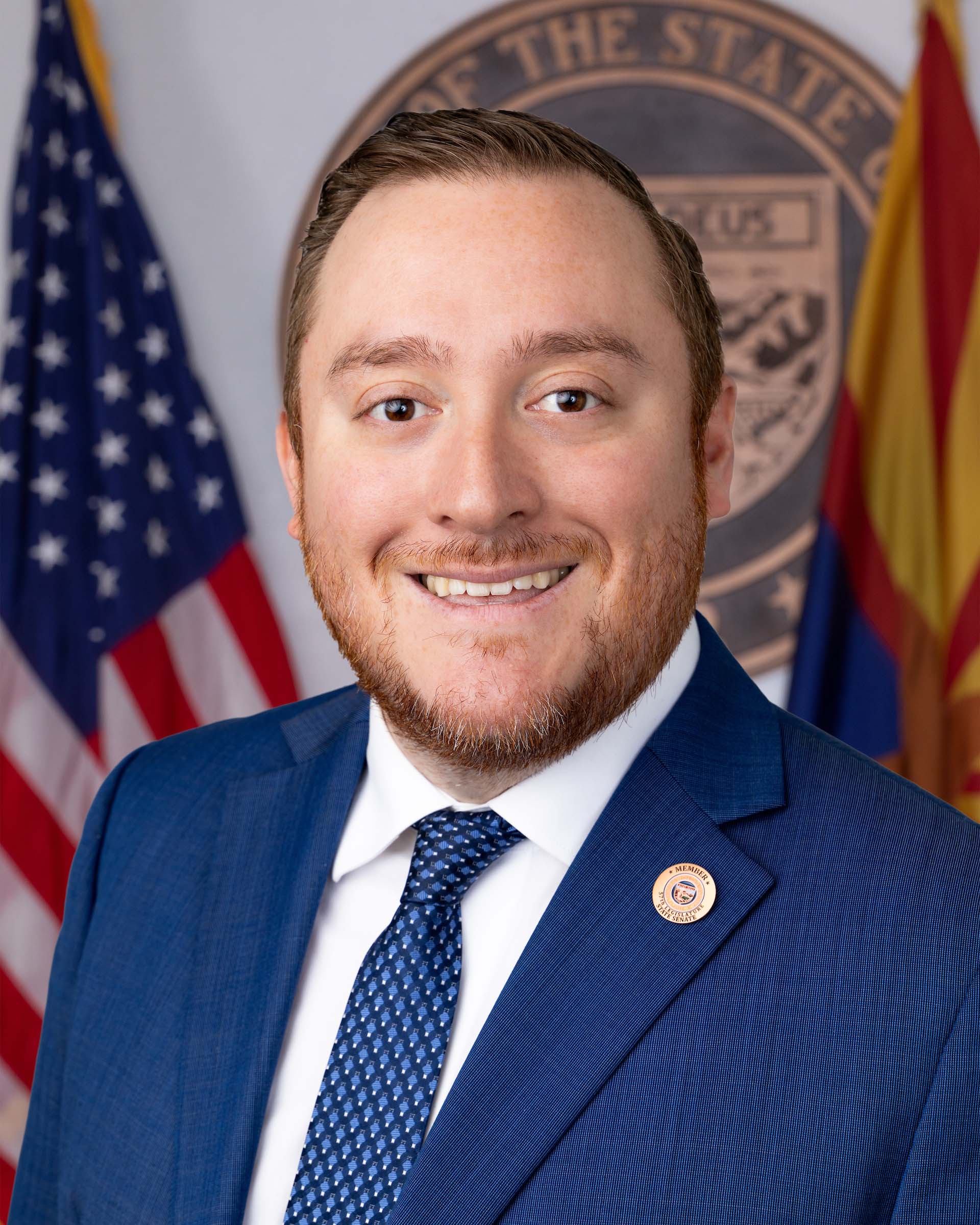
Sen. Flavio Bravo
Sponsored bills
Maddy summaryHB 2699 prohibits Arizona state and local government agencies from requiring contractors on public works projects to pay prevailing wages or enter specific labor agreements. It specifically blocks requirements for project labor agreements, neutrality agreements with unions, and participation in federally registered apprenticeship programs as conditions for public construction contracts. The law applies to contracts involving public building construction, repair, or improvement, affecting both contractors and government agencies awarding such projects. It does not impact private contracts or activities protected under federal labor law.
Maddy summarySB 1247 establishes Arizona's Teachers Academy, a scholarship program for students pursuing teaching careers at eligible community colleges and universities. It provides up to four years of tuition and fee coverage for undergraduate students (or two years for community college students) after other financial aid, in exchange for a commitment to teach one year in an Arizona public school for each year of scholarship received. The program prioritizes high-demand areas like special education, STEM, rural schools, and schools serving students with disabilities. Funds for the academy come from state appropriations and existing scholarship mechanisms, administered by the Arizona Board of Regents to support recruitment, scholarships, and teacher induction services.
Maddy summaryHB 2704 redirects 82% of certain tax revenues to county stadium districts starting in 2026. Specifically, it directs the state treasurer to transfer these funds annually from tax revenues reported under Section 43-209, subsection D to the county stadium district fund established under Section 48-4231. This allocation applies to tax revenues collected under Title 42, Chapter 5 (transaction privilege tax) and runs from January 1, 2026, through December 31, 2056. The bill directly affects county stadium districts by creating a dedicated, long-term funding source for stadium-related projects and operations.
Maddy summaryHB 2465 is a procedural bill that repeals Section 13-3605 of Arizona’s Revised Statutes. It does not create new policies or affect specific groups, as it solely removes an existing legal provision. The bill is currently in its early legislative stage, having received its first House reading on June 27, 2025. The summary cannot describe the repealed law’s content, as the bill text does not specify what Section 13-3605 previously regulated.
Maddy summaryHB 2463 repeals Section 36-3604 of the Arizona Revised Statutes, which prohibited abortion services provided through telemedicine. This repeal removes a specific legal restriction that previously blocked telehealth providers from offering abortion care in Arizona. The bill does not create new abortion policies but eliminates an existing prohibition on telemedicine for abortion services. As a result, abortion providers could potentially offer telemedicine-based abortion care without violating this statute if the bill becomes law.
Maddy summaryHB 2744, titled the "Arizona Right to Contraception Act," establishes a legal right for Arizonans to access contraception and for health professionals to provide it. The bill prohibits any state or local law that singles out contraception services or makes access harder - such as requiring special permits for birth control or restricting where it can be distributed. It also mandates that patients must give voluntary, informed consent for sterilization procedures. This bill does not create new access to contraception but aims to protect existing access by preventing restrictive laws targeting contraceptive care.
Maddy summaryHB 2464 repeals Arizona's Section 36-2160, which previously restricted the mailing of abortion medication. This repeal removes a specific legal barrier that limited how such medication could be delivered via mail. The bill directly affects individuals seeking abortion care and healthcare providers who may use mail to distribute medication. It does not create new policy but eliminates an existing restriction on mailing abortion-related medication. The bill is currently at House First Reading (June 27, 2025).
Maddy summaryHB 2679 establishes a new framework for Arizona public power entities (like municipal utilities) to finance infrastructure upgrades by issuing "Transition Bonds." These bonds are secured by future customer payments called "Financing Charges," which become nonbypassable fees added to all customers' utility bills until the costs are fully recovered. The bill creates specific definitions for terms like "Financing Charges," "Qualified Special Purpose Entity," and "Transition Bonds," ensuring these payments cannot be avoided regardless of the customer's service provider or asset ownership. This mechanism allows public power entities to shift financing costs to customers over time rather than relying solely on traditional rate increases.
Maddy summarySB 1311 creates a new "West Valley Charity Special Plate" for Arizona vehicle owners. To implement this, a person must pay $32,000 to the state department upfront, then vehicle owners pay a $25 annual fee ($17 of which is donated to the West Valley Charity Special Plate Fund). The department issues the plates after design approval, and the fund receives all $17 annual donations from plate fees. This program affects Arizona drivers who choose this specialty plate, with the charity fund supporting West Valley community initiatives.