

Maddy summarySB 1343, the Arizona State Voting Rights Act, requires covered political subdivisions (like cities or counties meeting specific language minority criteria) to provide voting materials and bilingual election staff in minority languages. It mandates that areas with over 2% of voting-age residents in a single language minority group (or over 4,000 members of such a group) must offer ballots, registration forms, and polling place staff fluent in that language. Covered subdivisions face penalties of up to $250,000 for failing to provide these materials or bilingual staff within strict timeframes after notice of noncompliance. The law establishes legal standing for affected voters or organizations to sue if these requirements are violated.
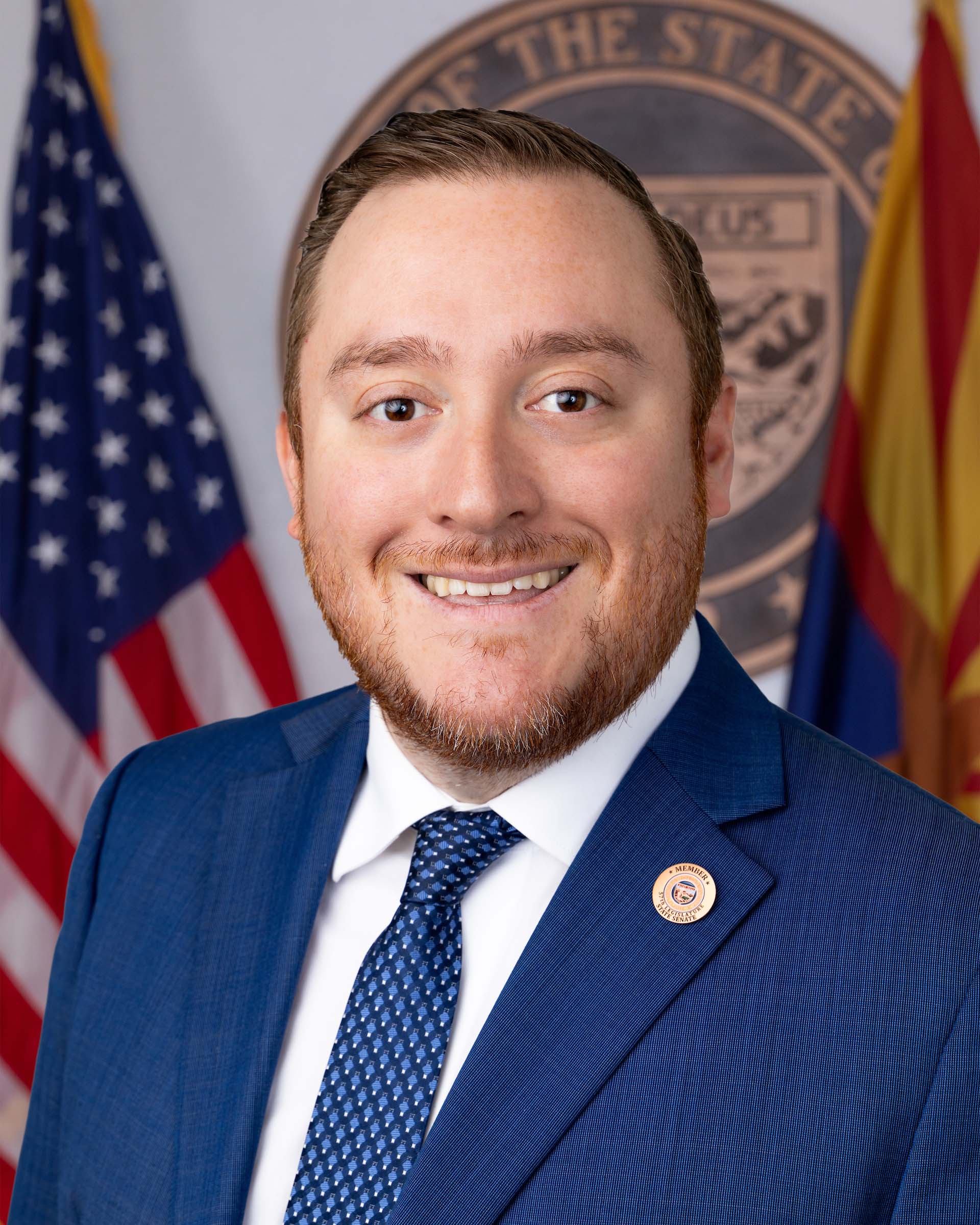
Sen. Flavio Bravo
Sponsored bills
Maddy summarySB 1380 requires large electricity consumers in Arizona to pay directly for the energy costs (including fuel, generation, and transmission) tied to their own usage, rather than having those costs shared with other customers. It defines "large load customers" as entities using at least 50 megawatts during peak demand, specifically including data centers, cryptocurrency mining operations, industrial facilities, manufacturing plants, hydrogen production sites, and large buildings. The bill prohibits these large customers from passing their energy costs to other public power or public service corporation customers. This applies to both public power entities (like municipal utilities) and public service corporations (like investor-owned utilities). The law aims to allocate energy costs more directly to the users responsible for high demand.
Maddy summarySB 1383 repeals Arizona's existing greenhouse gas program framework, specifically removing Title 49, Chapter 1, Article 6 of the Arizona Revised Statutes. This bill directly affects any current or future state programs operating under that repealed legal authority. The bill contains no new provisions or mechanisms - it solely eliminates the existing statutory structure for greenhouse gas programs. No new requirements or prohibitions are created; the action is purely a repeal of prior law.
Maddy summaryArizona's SB 1396, the "Arizona Right to Contraception Act," establishes a legal right for individuals to access contraceptives and engage in contraception, and for health professionals to provide them. The bill prohibits state or local government actions that single out contraceptive services or impede access, such as restricting providers or facilities offering these services. It specifically clarifies that the law does not override requirements for voluntary, informed consent in sterilization procedures. The act directly affects patients seeking contraception and healthcare providers who prescribe or distribute contraceptive methods like birth control pills, IUDs, or condoms.
Maddy summarySB 1341 amends Arizona's anti-discrimination law to explicitly include "gender identity and gender expression" as protected characteristics in employment, housing, and public accommodations. It defines these terms and requires new public restrooms or major renovations of existing public restrooms to designate single-occupancy facilities as gender-neutral. The bill directly affects businesses, public entities, and service providers operating in public spaces like restaurants, hotels, and recreational facilities. These changes expand existing protections that previously did not cover gender identity or expression.
Maddy summaryArizona's SB 1342 prohibits municipal law enforcement agencies and health care facilities from stopping, detaining, or questioning people based on immigration status, sharing databases with federal immigration authorities, or using local resources to assist federal immigration enforcement. It requires agencies to collect immigration-related information only when strictly necessary for public services and prohibits disclosing such records without specific written consent from the individual. Agencies must also submit annual reports tracking federal immigration requests (like detainers) and their responses. The law does not block compliance with valid federal warrants or actions required by federal law.
Maddy summarySCR 1018 proposes amending Arizona's constitution to protect marriage equality. It would repeal the current constitutional section defining marriage as between one man and one woman and replace it with a new section stating that marriage cannot be prohibited based on sex, race, ethnicity, or national origin. This constitutional change would directly affect all Arizona residents by guaranteeing marriage rights regardless of sexual orientation. The amendment requires voter approval at the next general election, as specified by the Secretary of State.
Maddy summaryArizona's SB 1300 would adopt the National Popular Vote Interstate Compact, requiring the state to award all presidential electors to the candidate winning the national popular vote *if* participating states collectively hold 270+ electoral votes. The bill amends Arizona law to align with the compact's rules: when in effect, Arizona's electors would cast votes for the national popular vote winner, not the state's winner. This directly affects Arizona's electoral process and presidential election outcomes, shifting from winner-takes-all state results to a national vote tally. The change would take effect only after enough states join the compact to control a majority of electoral votes (270+), as specified in the compact's Article I.
Maddy summaryArizona's SB 1299 establishes a "Stop the Bleed" pilot program requiring school districts to implement bleeding control measures. It mandates each school to have at least one specialized first aid kit (containing tourniquets, bandages, and gloves) in an accessible location, include kits in safety plans, and conduct annual inspections. The state will provide $180,000 in FY 2026-27 to fund initial kits for participating districts that complete training, with the program set to expire after December 31, 2029. This directly affects all Arizona public school districts, requiring them to integrate bleeding control resources into school safety protocols.
Maddy summarySB 1262 amends Arizona voter registration procedures to improve address verification and citizenship documentation. County recorders must send follow-up notices if mail is returned, giving voters 35 days to update addresses or citizenship proof before registration becomes inactive. It specifies acceptable citizenship evidence (e.g., driver’s licenses showing citizenship, birth certificates, passports) and requires counties to participate in a multistate voter registration database. The bill directly affects voters with changed addresses or those needing to verify citizenship, streamlining registration maintenance while requiring counties to update records using postal service data and electronic systems.