

Maddy summarySB 1430 repeals a law requiring abortion providers in Arizona to submit certain reports to the state. The bill removes this reporting obligation, directly affecting healthcare providers who previously had to comply with these requirements. It does not add new provisions or mechanisms; the sole action is eliminating the existing legal requirement under Arizona Revised Statutes Title 36, Chapter 20, Article 2. The bill is currently in early legislative stages (Senate First/Second Reading).
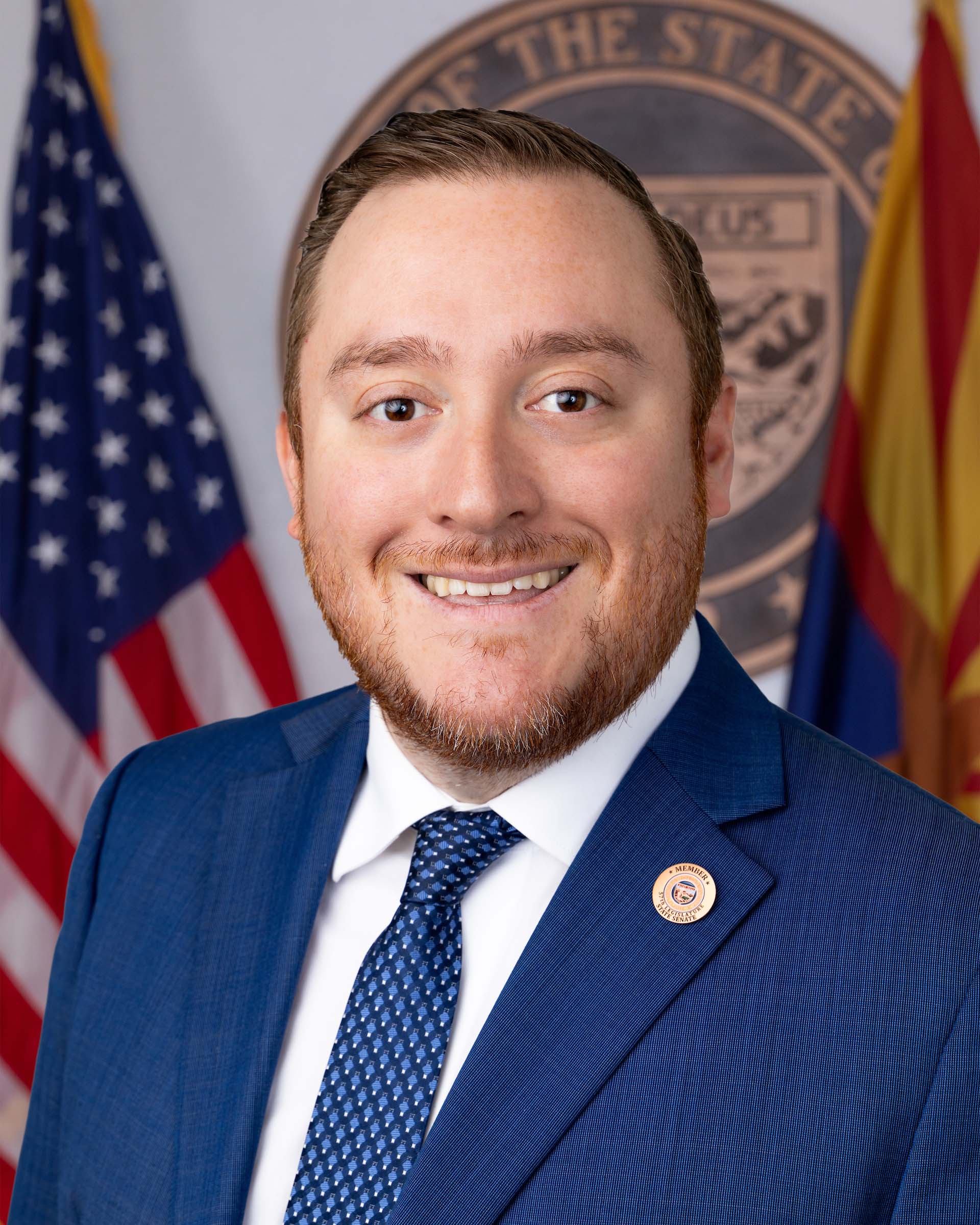
Sen. Flavio Bravo
Sponsored bills
Maddy summarySB 1431 defines "fertility treatment" in Arizona law to include services like IVF, egg/sperm preservation, artificial insemination, and related medications. It establishes three key rights: individuals can access these treatments without unreasonable barriers, healthcare providers can perform them within their scope, and insurers may cover them. The bill requires the Department of Health Services and health profession boards to create implementing rules within one year, exempting them from standard rulemaking procedures for that initial year. This law directly affects patients seeking fertility care, healthcare providers offering such services, and insurance companies covering these treatments.
Maddy summarySB 1314 terminates the governing board of the Arizona State Schools for the Deaf and the Blind (ASDB) on July 1, 2033, and repeals related statutes on January 1, 2034. The bill directly affects the ASDB board of directors and its administrative structure, though it maintains the schools' purpose of providing educational services for sensory-impaired children. Key provisions include setting specific termination dates for the board and related legal sections, ensuring a transition period before full implementation. The legislature states this continuation aims to "promote and maintain educational opportunities of adequate scope and quality" for sensory-impaired students until the board's end date.
Maddy summaryArizona's Senate resolution SR 1001 designates February 2025 as a "month of remembrance and solidarity" to honor lives lost and advocate for peace in Palestine, Lebanon, Sudan, and Congo. It directs the state to recognize the humanitarian crises in these regions, acknowledge the resilience of survivors, and support efforts promoting healing and justice. The resolution emphasizes community solidarity, the work of advocacy groups, and the importance of education in fostering empathy for global humanitarian issues. This is a symbolic declaration with no new funding or legal requirements.
Maddy summarySB 1338 would allow Arizona to join the National Popular Vote Interstate Compact (NPVIC), an agreement among states to award all electoral votes to the candidate who wins the national popular vote. If enacted and if enough states join to control 270+ electoral votes, Arizona would no longer award votes based on its own state election results but instead assign all electoral votes to the candidate with the most votes nationwide. This bill does not change how Arizona voters cast ballots but alters how the state’s presidential electors are selected, requiring the chief election official to calculate national vote totals and certify electors based on the national popular vote winner. The compact takes effect only when member states collectively hold a majority of electoral votes, and Arizona would remain subject to this system only if the agreement is active.
Maddy summaryHB 2459 amends Arizona law to establish new procedures for strip searches and pat searches of prisoners in state correctional facilities. The bill requires that strip searches be conducted only by an officer of the same gender in a designated room (with limited exceptions for immediate needs), prohibits touching body parts except during hair inspections, and mandates documentation for cross-gender pat searches in emergencies. Pat searches must generally be performed by an officer of the same gender, but opposite-gender searches are permitted in emergencies if documented with officer details, prisoner information, and the reason, and conducted with a witness when possible. The law directly affects prisoners and correctional officers in Arizona Department of Corrections facilities by standardizing search protocols to address privacy concerns.
Maddy summaryHB 2461 establishes Arizona's state-run family and medical leave insurance program, providing wage replacement benefits to eligible workers. It directly affects employees who meet specific wage requirements (based on past earnings) or self-employed individuals who elect coverage, allowing them to take paid leave for qualifying reasons like childbirth, caring for a family member with a serious health condition, personal medical needs requiring hospitalization, military family exigencies, or safe leave related to domestic violence or stalking. Benefits cover up to 26 weeks for personal medical needs (e.g., childbirth recovery) or 24 weeks for other qualifying reasons, with payments starting within two weeks of a claim filing. The program, effective January 1, 2028, is administered by Arizona's Industrial Commission.
Maddy summaryHB 2458 requires Arizona prisons to provide free medical care and feminine hygiene products to female inmates, with specific exemptions for pregnant inmates from paying medical fees, prescriptions, or hygiene costs. The bill mandates that prison staff explain the consequences of refusing non-life-threatening medical treatment and document any refusal in writing, while prohibiting denial of care due to financial reasons. It explicitly exempts pregnant inmates from all medical and health service fees (including prescriptions) and ensures they receive necessary feminine hygiene products at no cost. These provisions directly affect incarcerated women in Arizona, particularly pregnant inmates, by improving access to essential healthcare services.
Maddy summarySB 1190 creates "community college access and success special plates" in Arizona. Community colleges must pay a $32,000 implementation fee to the state to offer these plates, which will feature a design similar to pre-1992 collegiate plates (with possible district-specific adjustments). Vehicle owners pay a $25 annual fee for the plates, with $17 of that amount designated as a donation to a community college fund. The plates can be combined with personalized plate requests, and the Arizona Department of Transportation will issue them under specified design and fee rules.
Maddy summaryHB 2476 sets aside $100 million from Arizona's general fund for the water conservation grant fund during fiscal year 2025-2026. This funding supports local projects that reduce water waste, such as upgrading infrastructure or promoting efficient irrigation practices. It directly benefits municipalities, water districts, and other entities applying for these grants under Arizona law. The bill provides concrete financial resources for water conservation initiatives without creating new regulations.