

Maddy summarySB 1118 amends Arizona's barbering and cosmetology licensing laws by clarifying definitions for key terms like "aesthetician," "barber," "cosmetologist," and "eyelash technician." It specifically defines "eyelash technician" as a non-licensed person who performs only eyelash extensions (excluding tattoos or chemicals), and updates descriptions of services such as facial treatments, hair removal methods, and nail technology. This bill directly affects licensed professionals (barbers, cosmetologists, aestheticians) and new practitioners seeking to offer eyelash extensions without full licensure. The changes aim to modernize regulatory language to better reflect current industry practices without creating new licensing requirements.
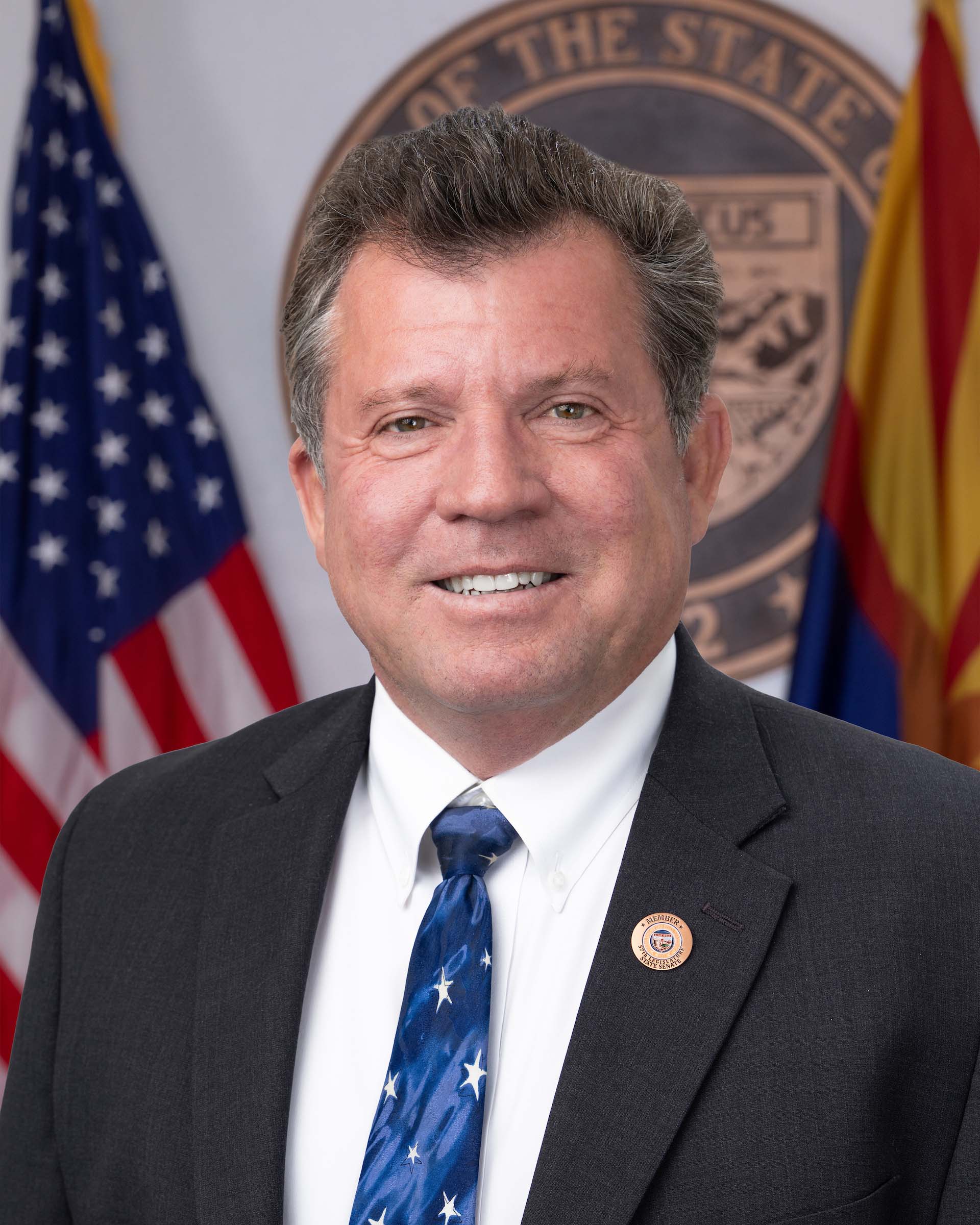
Sen. Tim Dunn
Sponsored bills
Maddy summarySB 1084 establishes a new program to help adults aged 18+ earn high school diplomas and industry-recognized certificates through approved nonprofit service providers. It directly affects disadvantaged adult learners facing barriers like lack of childcare, transportation, or educational gaps, and requires participating providers to have at least 10 years of experience serving such adults. The bill provides $7,700 per full-time student in funding (with proportional funding for part-time learners), exempts program schools from standard requirements like English proficiency tests and residency records, and mandates support services including on-site childcare, transportation assistance, and career counseling. Program schools must partner with school districts or charter schools and demonstrate how they will help learners overcome specific barriers to education.
Maddy summarySB 1085 clarifies that certain aircraft are exempt from Arizona's use tax when they are already exempt from registration. This specifically applies to commercial airlines operating regularly scheduled flights and nonresident aircraft temporarily based in Arizona for up to 90 days per year. The bill ensures these aircraft don't face double taxation by aligning tax exemptions with registration rules. It directly affects aviation businesses, including airlines and operators of temporary aircraft, by streamlining compliance with Arizona's tax and registration requirements.
Maddy summarySB 1078 allows manufacturers in Arizona to operate unladen company vehicles (without registration) using special test plates. It directly affects manufacturers, their full-time employees, and contracted personnel who use these vehicles for business. The key provision requires a written contract or documented assignment on file inside the vehicle to permit personal use transportation, while prohibiting use on leased vehicles, cargo-heavy vehicles, or sold vehicles. This law modifies vehicle registration rules under Arizona Revised Statutes §28-4539. The bill passed the legislature and was signed by the governor in March 2025.
Maddy summarySB 1520 establishes procedures for designating "basin management areas" in Arizona's Gila Bend, Hualapai Valley, and Willcox groundwater basins. It allows designation either through the director's findings (e.g., land subsidence, declining water levels) or via a voter petition signed by 10% of basin residents. If approved by voters, the director issues water use permits based on historical usage: municipal/industrial users get permits for their average 5-year usage, while irrigation users get permits based on their 10-year average. The bill directly affects groundwater users in those specific basins by formalizing how their water rights are documented and managed. This is a technical correction to streamline existing groundwater management processes.
Maddy summarySB 1128 requires Arizona's air quality agency to consider emissions from other U.S. states and solar radiation effects when updating air quality plans, while explicitly excluding emissions originating outside the United States. It also authorizes Arizona's attorney general to sue the EPA if the agency refuses to approve plans demonstrating Arizona would meet ozone standards without foreign emissions. The bill is based on Arizona's claim that over 80% of ozone pollution in the Maricopa nonattainment area (Phoenix metro) comes from outside U.S. borders. This changes how Arizona factors external pollution into its air quality strategy and provides a legal path to challenge the EPA's interpretation of federal law.
Maddy summarySB 1264, titled "technical correction; game and fish" (though the bill text addresses medical funding), appropriates $7 million from Arizona's state general fund for fiscal year 2025-2026 to construct a University of Arizona regional medical center in Yuma. The bill directly affects the University of Arizona and Yuma residents by funding the facility's construction and establishing an intent for ongoing state funding for its maintenance and operations. Key provisions include the specific allocation amount and the legislative intent to treat this as recurring annual funding beyond the initial construction phase. This is a funding bill focused on healthcare infrastructure, not a technical correction related to game or fish management as the title suggests.
Maddy summarySB 1442 allocates $25 million from Arizona's state general fund for fiscal year 2025-2026 to fund new or retrofitted secure behavioral health residential facilities. It directly affects licensed facilities serving two specific populations: individuals with serious mental illness who are chronically treatment-resistant (court-ordered under A.R.S. § 36-550.09) or those committed via court order (A.R.S. § 13-4521). Funds must be used solely for facility construction or retrofitting, with recipients required to measure clinical outcomes, independent living skills, program participation, and physical health metrics. Facilities must report these results annually to state leadership, and the appropriation is exempt from standard funding lapsing rules. The bill requires a request for proposals by January 2026, prioritizing facilities that can open within 12 months and meet geographic needs.
Maddy summarySB 1439 allocates $400,000 annually from Arizona's general fund to the state Department of Corrections for its braille transcription program, doubling the current $200,000 yearly budget. This funding directly supports incarcerated individuals who rely on braille materials for access to reading and educational resources. The bill establishes this increased amount as ongoing funding for future fiscal years, ensuring sustained support beyond the current allocation. It does not create new requirements but secures stable financial resources for an existing program serving inmates with visual impairments.
Maddy summarySB 1234 amends Arizona's animal cruelty law to explicitly prohibit failing to provide necessary medical care to prevent unreasonable suffering in domestic animals under a person's custody. It directly affects pet owners, breeders, and anyone responsible for domestic animals. The key change adds a specific violation for "intentionally, knowingly or recklessly fails to provide medical attention necessary to prevent unreasonable suffering." Violations range from class 1 misdemeanors (for neglect) to class 5 or 6 felonies (for severe harm or killing), with penalties including compensation for service animal replacement costs.