

Maddy summarySB 1575 appropriates $3 million from Arizona's state general fund for fiscal year 2025-2026 to the Department of Health Services. This funding is specifically for Sage Memorial Hospital in Ganado to construct and operate a new dialysis unit. The bill exempts this appropriation from standard rules requiring annual renewal, ensuring the funds remain available for the hospital's dialysis services. The measure directly affects patients in Ganado who require dialysis treatment and Sage Memorial Hospital's ability to provide this critical care.
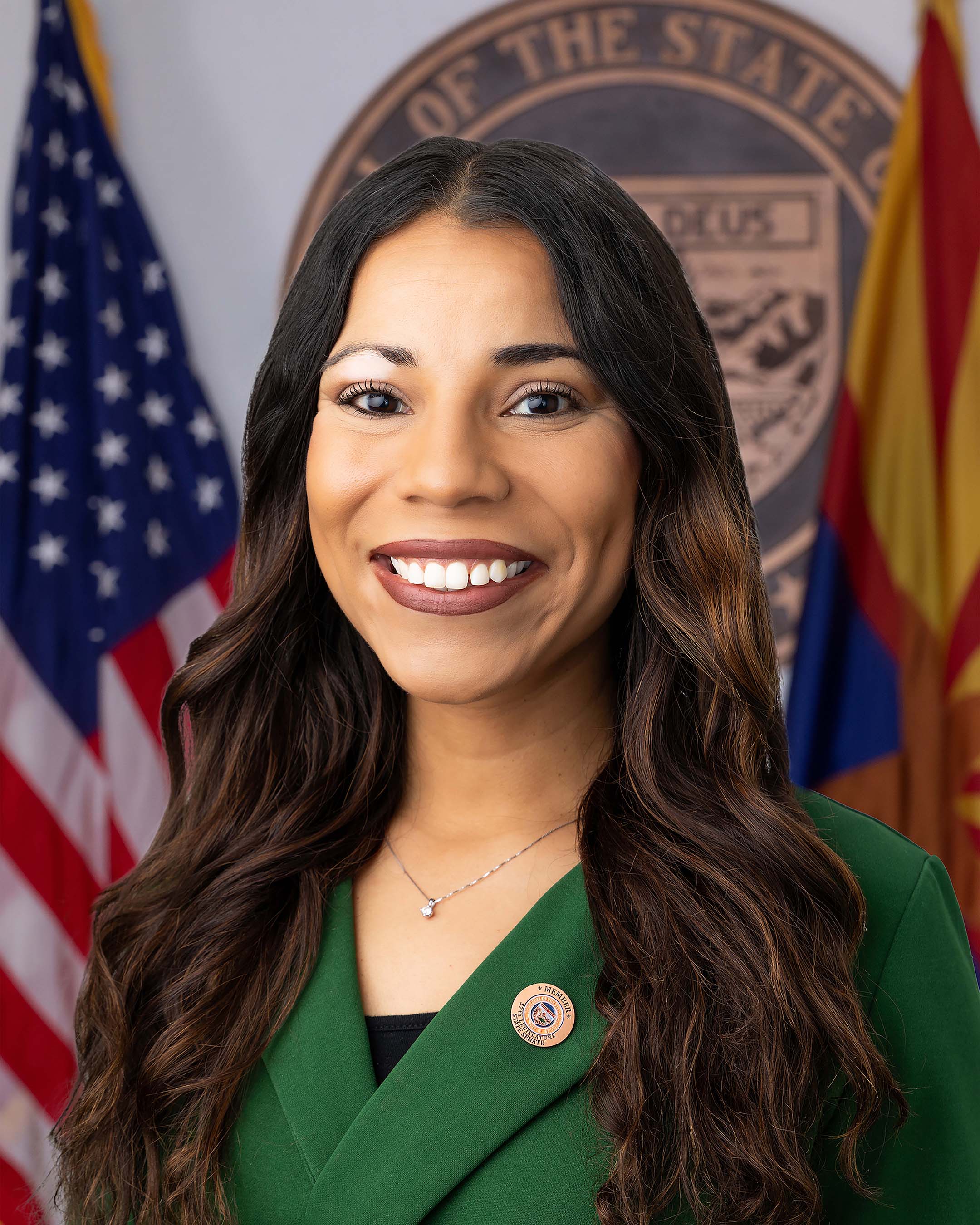
Sen. Analise Ortiz
Sponsored bills
Maddy summarySB 1632 creates a program for Hopi Tribe special license plates in Arizona. To implement this, a person must pay $32,000 to the Department of Transportation by December 31, 2025, design the plates (subject to department approval), and can combine the request with personalized plates. Vehicle owners who obtain these plates pay a $25 annual fee, with $17 of that amount designated as an annual donation to a special fund. The bill directly affects Hopi Tribe members (through the plate design and fund) and vehicle owners who choose to purchase these specialty plates.
Maddy summaryHB 2789 requires construction projects designed to reach at least 60 feet above ground level or 48 feet below ground level to include a functional elevator for employee use. The elevator must be installed and operational once the structure reaches 36 feet in height, measured from ground level to the highest point of the structure (excluding antennas, smokestacks, and similar attachments). This bill directly affects construction companies building large-scale projects in Arizona, mandating elevator access for workers before significant height is achieved. The law specifies exact height measurements and what structures count toward those measurements to clarify compliance.
Maddy summaryHB 2213 allocates $3.8 million from Arizona's state general fund for fiscal year 2025-2026 to provide free school lunches to children meeting federal income eligibility requirements under the National School Lunch Program. The funding is directed to the Arizona Department of Education to cover existing federal program standards, directly benefiting low-income students in public schools. The bill specifies this appropriation should be treated as ongoing funding for future years, building on current federal guidelines. It does not change eligibility rules but provides state financial support for meals already covered under federal law.
Maddy summaryHB 2289 would increase Arizona's minimum wage in phased steps, starting at $10 per hour in 2017 and rising to $18 per hour by 2025. After 2025, the wage would automatically adjust annually based on the U.S. Consumer Price Index (CPI) to account for cost-of-living changes. The bill also allows employers to pay tipped workers a base wage up to $3 less per hour, provided total tips and wages meet the minimum wage requirement for all hours worked. This applies to most covered employees in Arizona, excluding certain agricultural or seasonal workers as defined by existing law. The bill requires a three-fourths vote in both legislative chambers to become effective.
Maddy summaryHCR 2030 requires Arizona public schools to identify the primary language of all new students and assess English proficiency using state-approved tests. It mandates that students not proficient in English be enrolled in structured English immersion programs with specific daily instructional time (120 minutes for K-5, 100 minutes for grades 6-12). The bill repeals older language education rules and creates a framework for the state board to approve research-based English instruction models, including annual reviews and budget procedures for schools. This directly affects English language learners (ELLs) and their schools, focusing on standardized assessment, program enrollment, and funding mechanisms. The bill establishes the Arizona English Language Learner Fund to support these programs.
Maddy summaryHB 2506 adds two new official state holidays to Arizona's calendar: "Cesar Chavez Day" on March 31 and "Dolores Huerta Day" on April 1. The bill amends Arizona's statutes to include these dates in the list of recognized holidays for state employees and institutions. It directly affects state operations by designating these specific dates as days when state offices and schools would typically close. The key provision is the formal inclusion of these observances into the state's holiday schedule, honoring these civil rights leaders through official recognition.
Maddy summarySB 1185 requires Arizona municipalities to provide 24-hour access to public restrooms and potable water for homeless individuals, and counties to do the same for county-maintained facilities. The bill establishes statewide preemption, prohibiting local governments from adding further regulations on this requirement. It declares homelessness a statewide concern, making the access mandate uniform across all jurisdictions. The bill failed to pass on February 20, 2025, after advancing through Senate readings.
Maddy summarySB 1228 imposes a temporary moratorium on new housing regulations in Arizona, preventing municipalities from adopting or enforcing new rules for single-family homes, subdivisions, or planned developments from its effective date through June 30, 2028. The law only allows new regulations that protect public health/safety or reduce construction costs. It directly affects local governments (cities and towns) by restricting their ability to create new housing development standards during this period. The bill expires on June 30, 2028, and stems from legislative findings that non-essential regulations are worsening Arizona's housing shortage and affordability crisis.
Maddy summaryHB 2284 prohibits cities and local authorities in Arizona from enacting or enforcing ordinances that ban "cruising" - defined as repetitive driving past the same location without a destination within a specific time period. The bill amends traffic laws to prevent local governments from banning this activity, ensuring uniform state traffic regulations apply across all communities. It clarifies that cities may still adopt other traffic rules not conflicting with state law, but cannot target cruising through local ordinances. The bill does not create new traffic rules but limits local authority to ban a specific driving behavior. This directly affects cities' ability to regulate traffic patterns under local ordinances.